Buying Appliances: Voltage Spikes and Why You Need a Stabilizer
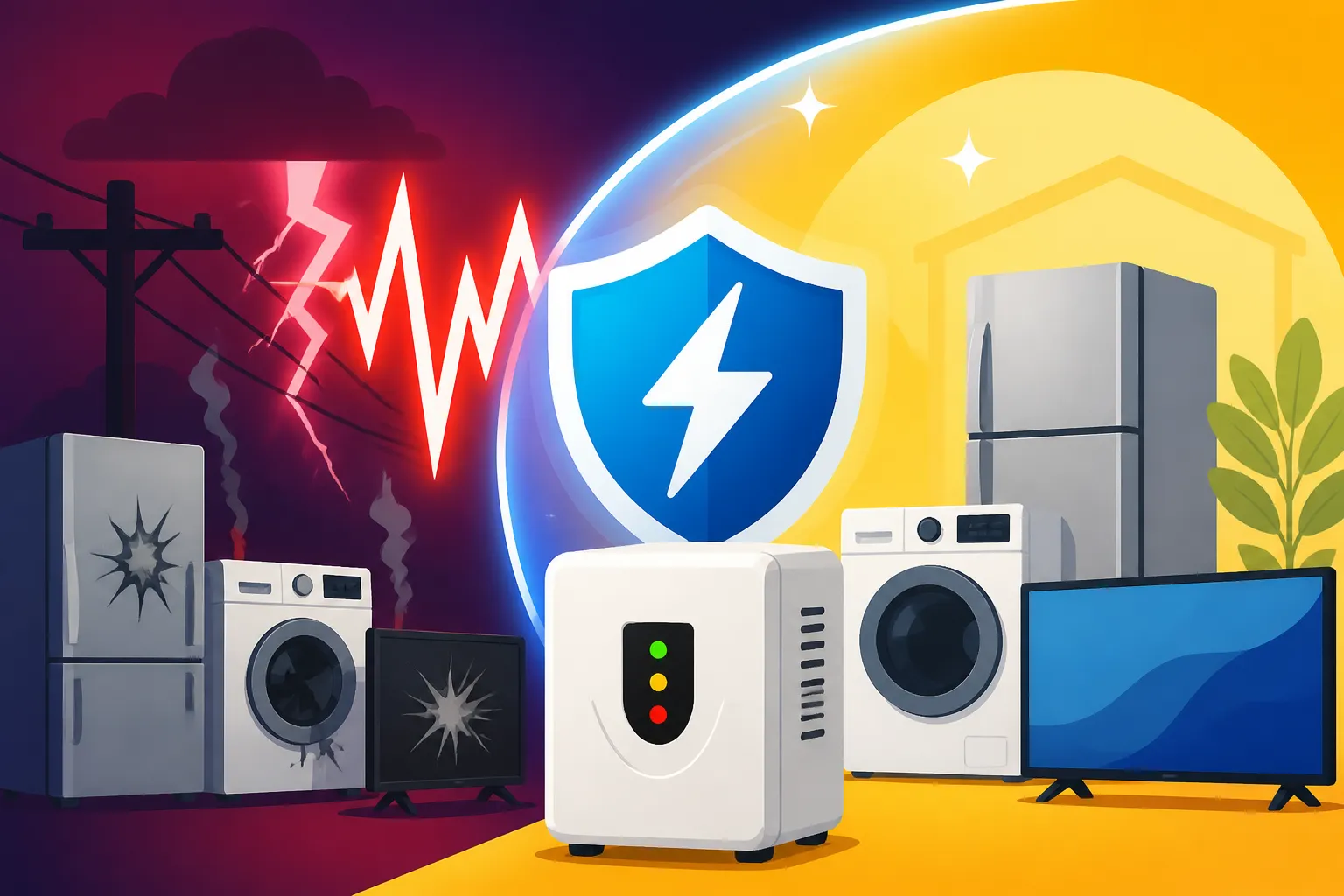
One of the most heartbreaking sounds an expat can hear in Indonesia is the sharp "pop" of a high-end OLED TV or a brand-new espresso machine surrendering to a power surge. I personally learned this the hard way when my imported microwave turned into a very expensive breadbox during a thunderstorm in South Jakarta. This guide solves the mystery of Indonesia’s erratic power grid and explains exactly why a voltage stabilizer is the most important investment you will make for your home.
Understanding the Indonesian Power Grid: The Struggle is Real
Living in Indonesia means making peace with the fact that electricity is a living, breathing, and sometimes temperamental entity. While the national power company, PLN, has made massive strides in stability over the last few years, the infrastructure in many neighborhoods—especially in older parts of Jakarta or rapidly developing areas of Bali—still struggles to maintain a consistent flow. You are not just dealing with occasional blackouts; you are dealing with "brownouts" and "surges" that occur behind the scenes every single day.
Frequent Blackouts and the Jeglek Problem
If you have spent more than 24 hours in a rental villa, you have probably encountered the "jeglek." This is the local term for the circuit breaker tripping because the total wattage of your appliances exceeded the allocated power limit of your house. Many expats are surprised to find that even luxury homes might only have a 3,500 VA or 5,500 VA limit. When you try to run three air conditioners, a pool pump, and a hairdryer simultaneously, everything goes dark.
This frequent tripping is more than an inconvenience; it is a mechanical stress test for your electronics. Every time the power cuts and abruptly rushes back in, your appliances take a "hit" of high-voltage electricity that slowly degrades their internal components. This is why understanding Utilities and Setup: PLN Electricity, PDAM Water, and Home Internet in Indonesia is crucial before you start plugging in your expensive gear.
Voltage Fluctuations: Why 220V Is Not Always 220V
In a perfect world, your wall outlet provides a steady 220 volts. In Indonesia, that number is often a suggestion rather than a rule. During peak hours, like early evening when everyone turns on their AC units, the voltage can drop as low as 170V or 180V. Conversely, in the middle of the night or right after a blackout ends, the voltage can spike well above 240V.
Sensitive electronics like refrigerators, washing machines, and computers are designed to handle minor variations, but the extreme swings common in Indonesia will fry motherboards and burn out compressors. If you are tracking your Cost of Living in Jakarta 2026: Rent, Schooling, and Lifestyle Benchmarks, you quickly realize that replacing a fried fridge every two years is a budget-killer you didn't account for.
What is a Voltage Stabilizer and Why is it Mandatory
A voltage stabilizer, often called a "Stavol" locally (from the brand name STAVOL), is a device that sits between your wall outlet and your appliance. Its job is to "clean" the incoming electricity. If the power drops too low, the stabilizer boosts it; if it spikes too high, the stabilizer bucks it down. The result is a steady, safe 220V flow to your precious devices.
The Difference Between a Surge Protector and a Stabilizer
Back home, you might have used a simple power strip with a surge protector. In Indonesia, a surge protector is like bringing a knife to a gunfight. A surge protector only guards against massive spikes (like lightning strikes) by blowing a fuse. It does absolutely nothing for low-voltage situations.
A stabilizer, however, is an active device. It constantly monitors the current and adjusts it in real-time. For appliances with motors, like a refrigerator or an air conditioner, low voltage is actually more dangerous than a spike. When the voltage drops, the motor tries to draw more current to compensate, which causes it to overheat and eventually melt the internal wiring. This is why Setting Up PLN Electricity: Token Systems (Prabayar) vs Postpaid Billing often involves a discussion about how to protect the heavy hitters in your household.
Servomotor vs Relay Stabilizers: Which One Should You Buy
When you go shopping on Shopee or visit an electronic store, you will see two main types of stabilizers. Relay-type stabilizers are cheaper and faster, but they adjust the voltage in "steps," which can cause a slight flicker. They are fine for basic lamps or fans.
However, for your TV, computer, or refrigerator, you want a Servomotor Stabilizer. These use a small motor to move a carbon brush over a copper coil, providing a very smooth and precise adjustment. Brands like Matsunaga or Stavol are the gold standards here. They might be heavy and make a soft "whirring" sound as they work, but that sound is the sweet music of your electronics being saved from an early grave.
How to Choose the Right Stabilizer for Your Indonesian Home
Choosing a stabilizer isn't just about picking the cheapest box on the shelf. You need to calculate the "VA" (Volt-Ampere) rating, which is different from the "Watt" rating listed on your appliance. In the world of Indonesian physics, you should never load a stabilizer to 100% of its capacity.
Calculating VA vs Watts: The 80 Percent Rule
Most stabilizers are rated in VA. To convert this to usable Watts, a safe rule of thumb is to multiply the VA by 0.8. For example, a 1,000 VA stabilizer can safely handle about 800 Watts of load. However, if the incoming voltage is very low (below 190V), the stabilizer's efficiency drops further.
I always recommend the "2x Rule" for appliances with compressors. If your refrigerator is rated at 200 Watts, buy at least a 500 VA or even a 1,000 VA stabilizer. The initial "kick" needed to start the compressor requires a massive burst of energy, and a weak stabilizer will just trip its own internal breaker every time the fridge tries to cool down.
Essential Appliances That Need Protection First
Not every lightbulb needs a stabilizer, but you should prioritize your "Big Three" to avoid massive replacement costs.
- The Refrigerator: This is the most vulnerable because it is always on. A 1,000 VA servomotor stabilizer is the standard recommendation for a medium-sized fridge.
- Entertainment Systems: Your 4K TV and gaming consoles are essentially high-powered computers. They hate voltage fluctuations.
- The Home Office: If you are working remotely and using Airalo to stay connected while your home internet flails, the last thing you need is your laptop's power brick melting.
| Appliance Type | Typical Wattage | Recommended Stabilizer (VA) | Priority Level |
|---|---|---|---|
| Single-Door Fridge | 100W – 150W | 500 VA | Critical |
| Double-Door / Inverter Fridge | 200W – 400W | 1,000 VA | Critical |
| 55-inch LED TV | 150W – 200W | 500 VA | High |
| Gaming PC (High End) | 500W – 800W | 2,000 VA | High |
| Microwave / Oven | 800W – 1,200W | 2,000 VA | Medium |
| Washing Machine | 350W – 500W | 1,000 VA | Medium |
Buying Appliances in Indonesia: Smart Shopping Tips
When you are ready to furnish your place, whether you found it through Agoda for a long-term stay or a local agent, where you buy matters just as much as what you buy. The Indonesian market is flooded with "parallel imports" (black market goods) that may look identical to the official versions but come with zero protection.
Warranty Realities: Why International Warranty Often Fails
Many expats arrive with the assumption that an "International Warranty" will be honored at the local service center. In Indonesia, this is rarely the case. Most major brands like Samsung, LG, and Sony are managed by local Indonesian subsidiaries. If your serial number doesn't match their local database, they will refuse to touch it, even if you offer to pay.
Always look for the "Kartu Garansi Resmi" (Official Warranty Card) inside the box. When Buying Electronics in Indonesia: Warranty Norms and Import Taxes, ensure the shop stamps the warranty card. Without that stamp and a local receipt, you are essentially on your own when things go wrong.
Where to Shop: From Electronic City to Shopee
For big-ticket items like washing machines and fridges, I usually recommend physical stores like Electronic City or Best Denki. They offer delivery and, more importantly, they handle the initial installation. If the delivery crew drops your fridge, it's their problem. If you buy it on Shopee and it arrives damaged, the return process can be a bureaucratic nightmare involving many photos and "unboxing videos."
However, for smaller items and the stabilizers themselves, Shopee is fantastic. You can find specialized brands that malls don't carry. Just make sure to filter for "Star Sellers" or "Shopee Mall" to avoid counterfeit servomotors that are actually just empty boxes with a light inside (yes, it happens).
Practical Maintenance: Dealing with Humidity and Heat
Even with a perfect stabilizer, the Indonesian environment is trying to kill your electronics in other ways. The humidity is a silent assassin that causes "creeping" corrosion on circuit boards.
Preventing Mold and Rust on Your Tech
In areas like Bali or coastal Jakarta, the salty, humid air can kill a laptop in eighteen months. I highly recommend using silica gel packets inside your camera bags and keeping your most expensive tech in air-conditioned rooms. If you have Household Staff: Hiring and Managing a Pembantu, Driver, and Nanny, teach them never to use a wet cloth to clean the back of the TV or the gaming console. Dust combined with humidity creates a conductive paste that leads to short circuits.
You should also read up on Humidity and Mold: Preventing Damage to Clothes and Leather in the Tropics because the same principles apply to the rubber gaskets and internal fans of your household appliances.
Why a Grounded Connection (Arde) is Your Best Friend
Indonesian homes often use two-prong plugs, but for any major appliance, you need a three-prong grounded connection, known locally as "Arde." Many landlords cut corners and don't actually connect the ground wire to a copper rod in the earth. This results in that "tingling" sensation you feel when you touch the metal casing of your laptop or fridge.
A lack of grounding makes your stabilizer's job harder and increases the risk of a fire during a major surge. When you move in, ask a local electrician to check the "Arde" at your main outlets. If you are worried about the cost of maintenance, remember that you can always check How to Buy PLN Electricity Tokens via Mobile Banking at 2 AM to stay on top of your usage and avoid the "jeglek" before it happens. Finally, when your old electronics eventually give up the ghost, make sure you know How to Properly Dispose of Electronic Waste (E-Waste) in Major Cities to keep the "Island of the Gods" clean.
Disclaimer
This guide is for informational purposes only and reflects the personal experiences of expatriates living in Indonesia. Electrical standards and regulations may change, and the quality of power infrastructure varies significantly by region. Always consult with a certified Indonesian electrician (Tukang Listrik) before installing high-voltage stabilizers or making significant changes to your home's electrical wiring. We are not responsible for any damage to property or injury resulting from the use of the information provided in this article.