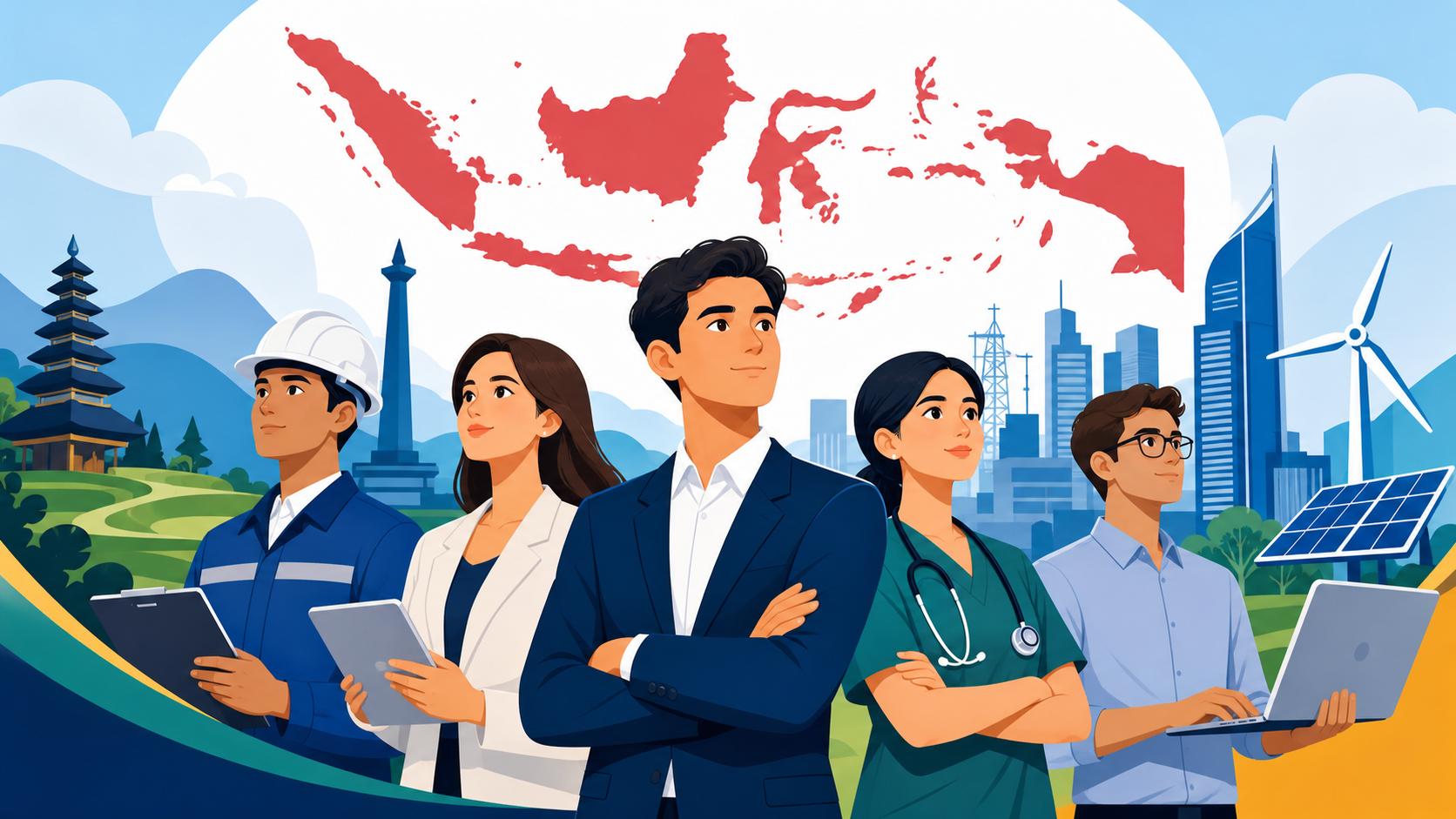
Indonesia Job Market Overview 2027: Key Industries Hiring Foreign Talent
Finding a legitimate job in Indonesia often feels like trying to find a parking spot in Senopati on a Friday night—exhausting, confusing, and occasionally making you want to give up entirely. I spent my first six months here bouncing between "maybe" emails and visa stress before landing a stable role. This guide breaks down the 2026 market realities so you don't waste time on dead-end leads.
The Reality of the Indonesian Job Market in 2026
The landscape for foreign workers in Indonesia has shifted dramatically over the last few years. Gone are the days when simply being a native English speaker or having a "Western" degree was a golden ticket to a high-paying executive role. In 2026, the government’s focus on "downstreaming" (hilirisasi) and local labor protection means the bar for hiring an expat is higher than ever. You are no longer competing just with other expats; you are competing with a highly educated, tech-savvy generation of Indonesians who have returned from top-tier universities abroad.
To thrive here, you need to be a specialist. The Ministry of Manpower has become increasingly strict about the types of roles foreigners can fill. If a local can do the job, the government generally expects the company to hire a local. However, for those with "high-demand" technical skills—think renewable energy engineering, specialized medical expertise, or senior-level fintech architecture—the red carpet is still rolled out, albeit with a lot of paperwork attached. You have to prove that your presence adds value that cannot be found locally.
The "Negative Investment List" (now the Priority Investment List) still dictates much of where you can and cannot work. Certain sectors, like low-level retail, human resources, and legal services, are effectively closed to us. Understanding this regulatory wall is the first step in your job hunt. If you're looking for English-Speaking Jobs in Indonesia: Realistic Paths Outside English Teaching, you need to look toward industries that are currently in a growth spurt and lack enough domestic senior-level talent to keep up with the pace.
The Shift from Generalists to Specialists
In the early 2020s, you could find many "General Manager" roles filled by expats who were essentially there to provide a bridge between a foreign headquarters and the local office. Today, those roles are largely localized. Companies in 2026 are looking for what they call "T-shaped" professionals: people with deep expertise in one specific niche but enough broad knowledge to manage cross-functional teams. For example, a "Marketing Director" is now expected to be a "Data-Driven Growth Architect" who understands the nuances of the Indonesian consumer's digital behavior.
This specialization is particularly evident in the technical sectors. If you are a civil engineer with experience in sinking-city mitigation or a software architect specialized in decentralized finance, your phone will be ringing. The government’s massive infrastructure projects, including the continued development of the new capital city, Nusantara (IKN), require a level of technical oversight that still relies heavily on international consultants and project managers. These are the "Foreign Expert" roles that qualify for easier visa processing and competitive packages.
Understanding the Regulatory Hurdle
Every expat job in Indonesia is governed by the need for an RPTKA (Expatriate Placement Plan). This is a document where your employer must justify to the government exactly why they need you instead of an Indonesian citizen. This justification is scrutinzed more than ever. You aren't just an employee; you are a "knowledge transfer" agent. Legally, you are often required to have a local "understudy" whom you are training to eventually take over your position.
This means that during your interview, you shouldn't just talk about what you can do for the company's bottom line. You should also talk about your experience in mentorship and training. Employers love to hear that you have a plan to upskill their local team because it makes their job much easier when they have to renew your work permit next year. It’s a realistic hurdle that requires a shift in how you present your professional value.
Key Industries Actively Seeking Foreign Talent
While some doors have closed, others have swung wide open. The Indonesian economy is defined by three major pillars: Digital Transformation, Green Energy, and High-End Manufacturing. These industries are receiving the lion's share of foreign direct investment (FDI), and where the money flows, the jobs follow. If your background aligns with these sectors, you are in a much stronger negotiating position.
The tech scene in Jakarta, particularly in the SCBD and BSD City areas, has matured from a "growth-at-all-costs" startup phase to a "profitability and sustainability" phase. This has created a massive demand for senior leaders who have "seen the movie before"—executives who have navigated market downturns or scaled companies through IPOs in other regions. Meanwhile, the remote regions of Kalimantan and Sulawesi are booming with mining and smelting operations that require international environmental and safety experts.
Technology and the Fintech Explosion
Jakarta remains the heart of Southeast Asian fintech. In 2026, the focus has shifted toward financial inclusion for the "unbanked" population in Tier 2 and Tier 3 cities. This requires sophisticated cybersecurity, AI-driven credit scoring, and complex blockchain integrations. If you are a Cybersecurity Lead or a Data Scientist with experience in emerging markets, you’ll find that the fintech giants like GoTo or the newly minted "soonicorns" in the space are constantly looking for talent.
However, working in Indonesian tech isn't just about the code. It’s about understanding the culture of the "warung" and how digital payments integrate with traditional trade. This is where learning the language becomes a massive advantage. I’ve found that using tools like IndonesianPod101 to pick up the specific vocabulary of the office and the streets can make a huge difference in how your local developers respect your leadership. It’s one thing to give a technical directive; it’s another to do it in a way that aligns with Indonesian Work Culture: Communication, Hierarchy, and Career Dynamics.
Sustainable Energy and Green Infrastructure
Indonesia is currently a global hub for the electric vehicle (EV) supply chain, thanks to its massive nickel reserves. This isn't just about mining; it's about the high-tech processing plants and battery manufacturing facilities popping up in industrial parks like IMIP in Morowali. These projects are often joint ventures with Chinese, Korean, or European firms, creating a unique tri-cultural working environment that is desperate for project managers who can bridge the gap between international standards and local realities.
Beyond mining, the transition to solar and geothermal energy is picking up steam. The government has set ambitious net-zero targets, and foreign engineering firms are the primary contractors for these massive solar farms. If you have a background in Renewable Energy Engineering or Environmental Impact Assessment, the job market is your oyster. Just be prepared for the reality of "site life"—many of these roles involve living in remote areas for weeks at a time, far from the comforts of Jakarta's malls.
Education and the Evolution of International Schooling
The education sector has undergone a massive rebranding. While the demand for general ESL (English as a Second Language) teachers has stabilized or even dipped slightly, the demand for "Subject Matter Experts" in international schools is at an all-time high. Schools are no longer just looking for someone with a TEFL; they want licensed teachers with experience in IB (International Baccalaureate) or Cambridge curricula, specifically in STEM subjects.
Parental expectations in Indonesia are incredibly high. Expats moving to Jakarta or Bali for work are looking for the best possible education for their kids, which drives competition between top-tier institutions. If you are looking at this sector, it's worth Comparing Jakarta Intercultural School (JIS) and British School Jakarta (BSJ) to understand the different vibes and requirements of the "big" schools. These roles often come with the best "Expat Packages," including housing allowances and full tuition for your own children, which can be a game-changer for your family's budget.
| Industry | Primary Hub | Demand Level | Key Roles |
|---|---|---|---|
| Fintech & AI | Jakarta (SCBD) | Very High | CTOs, Data Scientists, Compliance Officers |
| Mining & EV Battery | Sulawesi/Halmahera | High | Metallurgists, Safety Directors, Logistics Managers |
| Renewable Energy | West Java/Nusantara | Medium-High | Solar Engineers, ESG Consultants |
| International Education | Jakarta/Bali | Stable | IB Subject Teachers, School Principals |
| Specialized Healthcare | Bali/Jakarta | Growing | Hospital Administrators, Specialized Surgeons |
Navigating the Hiring Process as an Expat
If you think you can just "Apply Now" on LinkedIn and get a job in Indonesia, you're in for a long wait. While LinkedIn is a great tool for research, the Indonesian job market runs on a currency of trust and personal introductions. The "hidden job market" here is massive. Often, a role is filled before the job description is even drafted because someone’s former colleague mentioned a "great guy/girl" who just arrived in town.
You need to get comfortable with the "Ngopi" culture. In Jakarta, the real business happens over coffee in the lobbies of Pacific Place or the cafes of Senopati. For a newcomer, your job is to build a network of "Cultural Navigators"—other expats and well-connected locals who can vouch for your character. It’s a slow process that requires patience and a thick skin, but it is the only way to bypass the "black hole" of online application portals.
Networking: The SCBD Coffee Culture
Networking in Indonesia isn't about the hard sell; it’s about the "Silaturahmi" (building relationships). If you reach out to someone on LinkedIn for a coffee, don't immediately pitch them your CV. Ask them about their experience in the country, the challenges they've faced, and their thoughts on the market. Indonesians, and long-term expats here, are generally very helpful, but they want to know that you are a "good fit" for the community before they put their reputation on the line by recommending you.
When you finally get that coffee meeting, you need to be prepared. This isn't just a casual chat; it’s an informal interview. You should have a clear "elevator pitch" that highlights your specific niche expertise. If you're struggling with how to initiate these conversations, I highly recommend checking out Networking scripts: How to ask for a 'Ngopi' (coffee chat) in Jakarta. Knowing the right way to frame your request can be the difference between a "Seen" message and a scheduled meeting.
The Role of Headhunters and Recruitment Agencies
For senior roles, particularly in multinational corporations (MNCs) or large Indonesian conglomerates (the "Big 4" and beyond), headhunters are the gatekeepers. Firms like Robert Walters, Michael Page, and Monroe Consulting have dedicated "Industrial" or "Tech" desks that specialize in expat placements. However, they are selective. They don't just want a CV; they want a candidate who is "visa-ready" or has a clear understanding of the Indonesian context.
Registering with these agencies is a must, but don't be passive. You need to follow up and ensure the recruiter understands that you are committed to being in Indonesia. Often, recruiters are hesitant to work with people who are "still abroad" because of the complexities of the current visa climate. If you can show them that you have a deep interest in the local culture—perhaps by mentioning you’re actively using IndonesianPod101 to reach professional fluency—it signals that you are a low-risk, high-commitment candidate. You can find more details on this in my guide on Using Headhunters in Jakarta: Navigating Executive Search Firms.
Legal Requirements and Salary Benchmarks
One of the biggest shocks for new expats is the "Total Package" vs. "Take-Home Pay" conversation. In Indonesia, your salary is usually discussed in "Net" terms (what hits your bank account), but the "Gross" cost to the company is much higher due to taxes and mandatory social security. Furthermore, the government has set minimum salary requirements for foreign workers, which vary by sector but generally start around IDR 15,000,000 to 20,000,000 for junior-level roles (though most expat roles are much higher).
Negotiating your contract in 2026 requires a firm grasp of the local currency's volatility and the mandatory benefits. You aren't just negotiating a number; you are negotiating a lifestyle. This includes your housing allowance, car or transportation budget, and the very important THR (Religious Holiday Bonus). Understanding these components is vital so you don't end up with a number that looks good on paper but disappears once you pay your rent upfront.
RPTKA and the Justification of Foreign Hire
We touched on this earlier, but it deserves its own deep dive. The RPTKA process is the "Big Boss" of Indonesian bureaucracy. Your employer has to upload your credentials into a government portal and wait for approval from the Ministry of Manpower. If your degree doesn't match your job title, or if you don't have at least five years of documented experience in that specific role, the application will likely be rejected.
This is why "Title Matching" is so important. If you are hired as a "Technical Advisor" but your degree is in Art History, the company will have a very hard time justifying your visa. Before you sign an offer, ask the HR team about their experience with The RPTKA Document: Why Your Employer Must Justify Hiring a Foreigner. If they seem confused or tell you "don't worry, we'll figure it out," that is a massive red flag. You want an employer who has a clean record and a dedicated legal team for immigration.
Negotiating Your Expat Package
In 2026, the "Golden Age" of the expat package has evolved into what we call "Local Plus." Companies are less likely to give you a massive mansion in Kemang and a full-time driver for free. Instead, they give you a base salary plus a "flex allowance." This gives you more freedom but also more responsibility to manage your own costs. When negotiating, always ask if the company handles the tax on your benefits-in-kind (like housing), as the 2026 tax laws have become quite aggressive regarding these perks.
You also need to factor in inflation. The Rupiah can be a bit of a rollercoaster. I always suggest Negotiating Salary in IDR: Factoring in Inflation and Currency Devaluation to protect your purchasing power, especially if you have student loans or a mortgage back home. And never forget the THR! It is a mandatory one-month salary bonus paid out once a year (usually before Lebaran). Make sure your contract clearly states whether your quoted monthly salary is "including" or "excluding" Understanding THR (Tunjangan Hari Raya): The Mandatory Religious Bonus.
Essential Skills to Stay Competitive
To survive and thrive in an Indonesian office, your technical skills are only half the battle. The other half is "Cultural Intelligence" (CQ). Indonesia is a high-context culture where what is not said is often more important than what is said. If you come in with a "Western" style of direct confrontation and "efficiency at all costs," you will quickly find yourself isolated and your projects stalled by a mysterious lack of cooperation.
The most successful expats I know are those who have invested time in learning the "shadow language" of the office. This involves understanding the hierarchy, the importance of "saving face," and the slow, consensus-building nature of Indonesian decision-making. It’s about knowing when to push and when to "makan siang" (have lunch) and let things settle.
Mastering the Language: Beyond the Basics
I cannot stress this enough: Learn Bahasa Indonesia. Even if your entire office speaks English, being able to joke with the security guards, order your own Gojek, and understand the banter in the elevator changes how you are perceived. It moves you from "temporary visitor" to "respected resident." It also makes you much more effective in meetings where the "real" discussion often happens in Indonesian before being summarized for you in English.
You don't need to be a linguist, but you do need to be functional. Using a resource like IndonesianPod101 for 20 minutes a day can get you to a "business-functional" level within six months. Being able to write a professional email or deliver a short speech at a company dinner is a massive power move. It shows respect for the host country, and in Indonesia, respect is the most valuable currency you have. For the specifics on formal communication, take a look at Bahasa Indonesia for Business: Kehormatan, Emails, and Meeting Etiquette.
Cultural Intelligence: The Art of Indirectness
In an Indonesian workplace, "Yes" doesn't always mean "I agree." Sometimes it means "I hear you," or "I don't want to embarrass you by saying no in front of everyone." This can be incredibly frustrating for expats who are used to clear, actionable feedback. Learning to decode these signals is a superpower. You have to learn the art of "checking in" individually with team members after a meeting to get their true thoughts.
The office hierarchy is also very real. The "Bapak" (Father/Boss) culture means that people will often wait for the most senior person to speak before offering an opinion. As an expat leader, your job is to create a "safe" space for feedback without breaking that hierarchy. If you go in guns blazing, you'll break the "Harmoni" (harmony) that Indonesians value above almost everything else. I've written extensively on Navigating Workplace Hierarchy (Bapak/Ibu Culture) Without Offense to help you avoid these common pitfalls.
Disclaimer
The information provided in this guide is for general informational purposes only and does not constitute legal, financial, or professional career advice. Employment laws, visa regulations, and market conditions in Indonesia are subject to frequent changes. Always consult with a qualified legal professional or a registered immigration agent before making any life-changing decisions regarding your employment or residency in Indonesia.