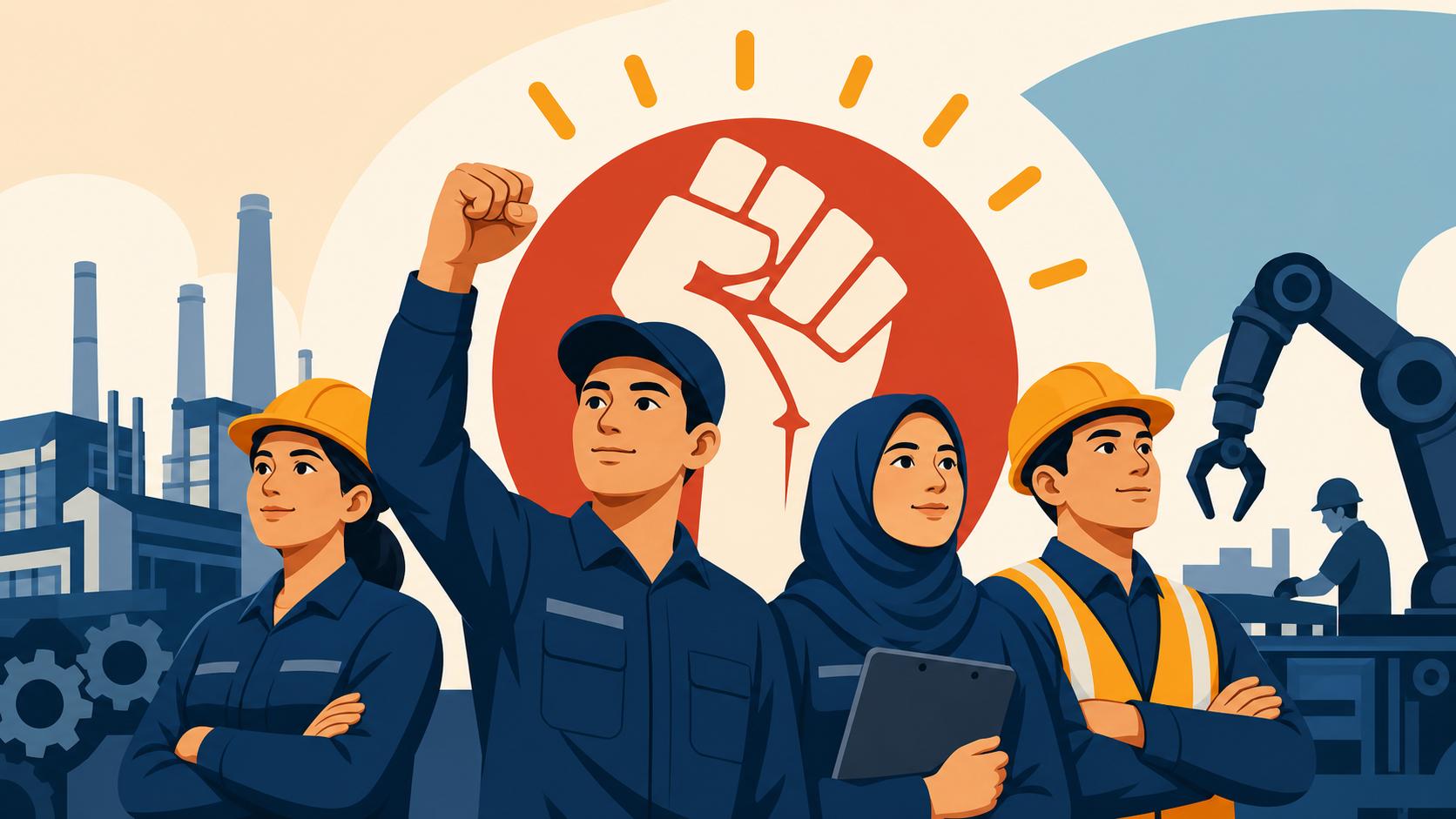
The Role of Labor Unions (Serikat Pekerja) in Indonesian Manufacturing
Navigating the complex world of Indonesian manufacturing often feels like walking through a linguistic and bureaucratic maze where the rules seem to change mid-step. I remember my first month managing a production line in Tangerang, feeling completely blindsided when a union representative requested a formal meeting regarding the Collective Labor Agreement. This guide breaks down the essential role of labor unions (Serikat Pekerja) so you can lead with confidence and cultural sensitivity.
The Legal Framework of Serikat Pekerja in Indonesian Manufacturing
In Indonesia, the right to form and join a labor union is not just a workplace policy; it is a fundamental right protected by Law No. 21 of 2000 regarding Trade Unions. For an expat entering the manufacturing sector, whether as a factory manager, a technical consultant, or an HR director, understanding this legal backbone is non-negotiable. The law allows any group of at least ten workers to form a union, which then grants them the legal standing to represent employees in industrial relations.
One of the most critical documents you will encounter is the Perjanjian Kerja Bersama (PKB), or the Collective Labor Agreement. Unlike a standard employment contract, the PKB is a negotiated agreement between the employer and the union that sets the terms for wages, working hours, and benefits. If you are coming from a corporate background where Working in Indonesia as a Foreigner: Jobs, Corporate Culture, and Hiring (2027) was your primary focus, the shift to a unionized factory environment can be jarring. The PKB often provides protections and benefits that exceed the minimum requirements of the national labor law, and failing to adhere to its specific clauses can lead to immediate and vocal friction on the factory floor.
The recent implementation of the UU Cipta Kerja (Omnibus Law) has significantly altered the landscape of labor relations. While the government aimed to make the market more flexible for investors, many unions viewed these changes as a reduction in job security. This tension means that your role as an expat leader often involves bridging the gap between corporate directives from HQ and the local reality of a workforce that feels increasingly protective of their rights. Validating these concerns through open dialogue is often more effective than strictly quoting the latest revisions of the labor code.
Communication and the Indirect Barrier in Labor Relations
If there is one thing that will save your sanity in an Indonesian manufacturing plant, it is mastering the art of indirect communication. In Western corporate cultures, we are taught to be "direct and honest," but in the context of an Indonesian factory, being too blunt can be perceived as a lack of respect, leading to a "loss of face" for the union leaders. This is where Indonesian Work Culture: Communication, Hierarchy, and Career Dynamics becomes your most valuable field manual.
Labor unions in Indonesia operate on a foundation of "Musyawarah untuk Mufakat" (deliberation to reach a consensus). If a dispute arises over overtime pay or safety equipment, do not expect a quick "yes" or "no" in the first meeting. There is a ritual to these discussions—sharing tea, discussing family, and slowly circling the core issue. I spent many late afternoons in the breakroom of a textile plant just listening, realizing that the real complaints were often hidden behind layers of polite conversation. To navigate these subtleties, I highly recommend using IndonesianPod101 to improve your language skills, as even a basic grasp of Bahasa Indonesia shows the union representatives that you respect their culture enough to try.
When communication breaks down, the "Bapak" (Father/Leader) culture comes into play. As an expat manager, you are often viewed as a father figure to the workforce. This carries a heavy burden of responsibility. If a worker is facing a family crisis, the union may bring this to your attention not as a contractual demand, but as a test of your empathy. Managing these expectations requires a delicate balance of professional boundaries and local compassion. Learning the nuances of Navigating Workplace Hierarchy (Bapak/Ibu Culture) Without Offense is essential if you want to maintain a peaceful production line during high-stress periods like the lead-up to major holidays.
Mandatory Benefits and Compliance Hurdles
The intersection of labor unions and government compliance is where most administrative headaches occur. Unions in the manufacturing sector are incredibly diligent about monitoring Employment Rights: PT PMA Contracts, Leave, and BPJS Ketenagakerjaan. They will often have a dedicated representative whose sole job is to ensure that every deduction on a worker's payslip is accurate. This includes the mandatory contributions to BPJS Kesehatan (Healthcare) and BPJS Ketenagakerjaan (Social Security).
One of the biggest flashpoints for union activity in Indonesia is the Tunjangan Hari Raya (THR). This is not just a "bonus" in the Western sense; it is a legally mandated religious holiday allowance that must be paid at least seven days before the holiday (usually Idul Fitri). I have seen entire factories grind to a halt because the THR calculation was off by a few thousand Rupiah. Understanding the specifics of Understanding THR (Tunjangan Hari Raya): The Mandatory Religious Bonus is crucial for any expat with budget oversight. Unions will often push for the THR to be paid earlier or in a higher amount than the legal minimum, and these negotiations usually begin months in advance.
To help you visualize the common differences in how labor is handled in unionized vs. non-unionized settings, consider the following table:
| Feature | Unionized (Serikat Pekerja) | Non-Unionized / Small Scale |
|---|---|---|
| Contract Type | Heavily reliant on PKB (Collective Agreement) | Standard PKWT/PKWTT contracts |
| Dispute Resolution | Formal bipartite and tripartite mediation | Individual negotiation with HR |
| Wage Increases | Annual collective bargaining sessions | Performance-based or UMR-linked |
| Communication | Through elected union representatives | Direct manager-to-employee |
| Social Benefits | Often include extra subsidies (meal/transport) | Strictly following legal minimums |
Managing the financial expectations of a unionized workforce also means being transparent about BPJS Ketenagakerjaan: Calculating JKK, JKM, JHT, and Pension Contributions. When workers see the deductions on their slips, they may turn to the union for an explanation. If your HR department isn't prepared to explain these benefits clearly in the local language, the union will fill that information vacuum—sometimes with inaccuracies that can lead to distrust. Using tools like IndonesianPod101 can help you learn the specific terminology needed to explain these complex financial concepts to your team.
Navigating Strikes and Industrial Disputes
Despite your best efforts, there may come a time when the union decides to take industrial action. In the manufacturing hubs of Bekasi, Karawang, or Sidoarjo, "Unjuk Rasa" (demonstrations) are a common sight. As an expat, seeing a crowd of workers outside the factory gates in red or orange vests can be incredibly intimidating. However, it is important to remember that most of these actions are highly organized and follow a specific legal protocol.
Before a strike can legally occur, there must be a failed bipartite negotiation (between the company and the union) and a failed tripartite mediation (involving the Disnaker, or local labor office). If you find yourself in this position, your first step should be seeking Legal Assistance for Employment Contract Disputes. Never attempt to handle a strike by threatening workers or firing union leaders; under Indonesian law, union busting is a criminal offense that can lead to heavy fines or even jail time for the directors.
During these periods of tension, the pressure on the management team is immense. You might be asked to manage Managing Overtime Expectations in High-Pressure Jakarta Law and Finance Firms while simultaneously dealing with a workforce that is refusing to work. The key is to keep the lines of communication open. Even during a strike, the union leaders will usually agree to a "coordination meeting." These meetings are less about the technical details of the dispute and more about maintaining the "Silaturahmi" (social bond). If you can maintain a level of personal respect with the union head, the path to a resolution is much smoother.
The "Serikat Pekerja" also plays a vital role in ensuring safety standards on the factory floor. They are often the first to report faulty machinery or inadequate PPE. Instead of seeing this as a nuisance, veteran expats learn to view the union as a built-in auditing system. By collaborating with them on safety committees, you can actually improve productivity and reduce the risk of accidents that could lead to even more severe legal repercussions.
Finally, remember that your ability to resolve these issues often depends on your cultural integration. Spending time on IndonesianPod101 to learn how to express empathy and professional firmness in Bahasa Indonesia can be the difference between a three-day strike and a successful afternoon negotiation. The goal is not to "defeat" the union, but to build a stable environment where both the company's targets and the workers' welfare are respected.
Disclaimer
The information provided in this guide is for informational purposes only and does not constitute legal or professional advice. Labor laws in Indonesia, including the UU Cipta Kerja and regional minimum wage regulations, are subject to frequent changes and varying interpretations by local labor offices (Disnaker). Foreign residents and business owners are strongly encouraged to consult with qualified Indonesian legal counsel or a certified HR consultant before making decisions regarding labor relations, collective bargaining agreements, or the termination of employment. The author and publisher are not liable for any actions taken based on the content of this article.