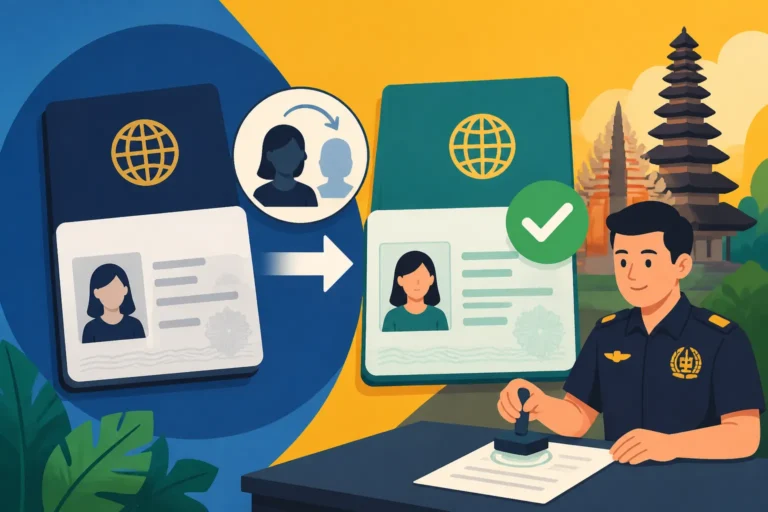
Employer Sponsorship: Navigating the RPTKA and Work Permit Process
The paperwork involved in moving to Indonesia often feels like an intentionally designed labyrinth, where one wrong turn leads to a dead end of "missing stamps" and "incorrect colors." I spent three weeks chasing a single signature at a ministry office in Jakarta, and that was just the beginning. This guide deconstructs the employer sponsorship maze, explaining the RPTKA and work permit process to ensure your professional transition is as seamless as possible.
Understanding the Foundation: What is the RPTKA
The RPTKA, or Rencana Penggunaan Tenaga Kerja Asing, is arguably the most misunderstood document in the Indonesian immigration lexicon. In plain English, it is the Foreign Labor Utilization Plan. Unlike many other countries where you apply for a job and the visa follows, in Indonesia, the employer must first obtain government permission to hire any foreigner before your name even appears on a document. This is a corporate-level approval that justifies why a local Indonesian cannot perform the role you are being hired for.
When I first navigated this, I assumed the RPTKA was a personal permit. It isn’t. It is a quota system. A company must specify how many expats they need, what their job titles will be, and how long they will stay. The Ministry of Manpower (Kemnaker) reviews this plan with a critical eye, often demanding that the company prove they are also hiring a specific ratio of local staff to "balance" the presence of foreign workers. If the company’s RPTKA is not approved or has expired, you cannot legally begin the next steps of your residency.
For the expat, the RPTKA represents the legal bridge between a job offer and a plane ticket. It is essential to ensure your employer has a valid RPTKA for your specific department. I have seen situations where an expat was hired for "Marketing" but the company only had an RPTKA quota for "Engineering." This mismatch can lead to months of delays or, worse, an immediate rejection from the Ministry of Manpower. You should always ask your HR department for confirmation that their RPTKA covers your exact job title before you resign from your current role back home.
Why the Government Limits Foreign Labor
The Indonesian government operates under a protectionist labor philosophy, which is important to understand so you don’t take the bureaucracy personally. The primary goal of the Ministry of Manpower is to maximize employment for Indonesian citizens. Therefore, every RPTKA application must include a "Technology Transfer" plan. This means your employer must appoint a local "companion" (Tenaga Kerja Pendamping) whom you are technically supposed to train.
This requirement often feels like a formality to many expats, but on a legal level, it is the justification for your existence in the Indonesian workforce. The government wants to ensure that your specialized skills—whether in fintech, hospitality management, or deep-sea engineering—are eventually absorbed by the local talent pool. When your company submits the RPTKA, they are essentially promising the state that you are a temporary asset who will leave the country better than you found it.
Understanding this context helps when you are asked for an overwhelming amount of documentation regarding your education and experience. They aren't just checking if you're qualified; they are checking if you are "expert" enough to warrant bypassing a local hire. This is why services like iVisa can be helpful for initial document checks, but the heavy lifting of the RPTKA remains a corporate responsibility that requires deep coordination between HR and the Ministry.
The Role of the Ministry of Manpower
The Ministry of Manpower (Kemnaker) is the gatekeeper of the RPTKA. They are separate from the Immigration Department (Ditjen Imigrasi), which handles your actual passport stamps. This separation of powers is why the process feels so disjointed. Kemnaker cares about your job description, your salary, and your qualifications; Imigrasi cares about your physical presence and your background check.
During the RPTKA approval process, the Ministry may conduct an "expose" or interview with your employer. They might ask why a certain position cannot be filled by a graduate from a top Indonesian university like UI or ITB. For high-level director roles, this is usually a breeze, but for mid-management positions, the scrutiny can be intense. It is at this stage where a well-prepared HR team makes all the difference.
I’ve found that the best employers are those who use the TKA Online system efficiently. This digital platform has theoretically sped up the process, but it still requires meticulous data entry. If your employer is a PT PMA (Foreign Owned Company), they generally have a clearer path, but the requirements for paid-up capital are high to ensure they are serious investors. To understand the different categories of residency that follow this labor approval, you should read our guide on KITAS Explained: Working, Dependent, and Investor Temporary Stay Permits.
The Step-by-Step Sponsorship Lifecycle
The path from a job interview to a legal work desk involves three distinct phases. The first phase is entirely about the company's legal standing. Before they can even look at your CV, the company must be registered in the Online Single Submission (OSS) system and have a Business Identification Number (NIB). Without these, the RPTKA application cannot even begin. This is often where small startups or new branch offices get stuck for months.
Once the company's "house" is in order, the second phase focuses on the RPTKA itself. This involves submitting the job description, the required qualifications for the role, and the details of the local companion worker. It is a period of waiting, often lasting two to four weeks, while the Ministry of Manpower verifies the company’s need for foreign labor. You are usually a passive observer during this time, but it is the most critical period for the legality of your future stay.
The third phase is the "Link and Match" between the RPTKA and you, the individual. This is where you provide your transcripts, your CV, and your passport copies. Your employer then pays the mandatory DKP-TKA (Compensation Fund for the Use of Foreign Workers), which currently stands at $100 per month, paid annually upfront. Only after this $1,200 payment is verified will the Ministry issue your work permit notification, which then triggers the immigration process.
Phase 1: Company Registration and NIB
For an expat, the "Phase 1" hurdles are invisible but deadly to your timeline. If your employer tells you the visa is "in progress" but they haven't yet updated their NIB (Nomor Induk Berusaha) to include the latest government categories, the RPTKA will be rejected immediately. In 2026, the integration between the OSS system and the Ministry of Manpower's database is tighter than ever. Any discrepancy in the company's address or tax status will halt your application.
I remember one colleague who waited three months for his visa, only to find out the company hadn't paid their local property taxes, which flagged their NIB and blocked all foreign labor hires. This is why it is vital to work with an employer that has a dedicated HR team or a reputable "Biro Jasa" (agent). You can learn more about how these entities interact in our article on Understanding Visa Sponsorship: Agency vs Corporate vs Individual Sponsors.
If you are joining a newly formed PT PMA, be prepared for "Phase 1" to take longer than expected. The government recently increased the scrutiny on minimum capital requirements to ensure that companies aren't just "visa shells." A solid company should have no problem proving their IDR 10 billion investment plan, but the paperwork to prove this to the Ministry can be a mountain of its own.
Phase 2: Submission and Approval of the RPTKA
The actual submission of the RPTKA is a digital dance of PDFs. Your employer will upload the "Expatriate Placement Plan." At this point, you should provide your employer with high-quality scans of your university degree and a detailed CV that matches the job description perfectly. If the RPTKA says they need a "Senior Software Architect" and your degree is in "Fine Arts," the Ministry will likely flag it.
During this approval window, there is often a "Technical Recommendation" required if you are working in specific sectors like oil and gas, mining, or education. These sectors have their own specific ministries that must give a "green light" before the Ministry of Manpower approves the RPTKA. For example, teachers need a recommendation from the Ministry of Education. This adds an extra layer of bureaucracy that can tack on another 14 to 21 days to your wait.
I always advise expats to have their documents professionally translated during this phase. The Ministry of Manpower officially requires documents in Bahasa Indonesia. Using a service like RushTranslate for your university transcripts and previous work experience certificates ensures that the government officials are reading exactly what you want them to read, reducing the risk of a "clarification request" that could reset your waiting clock.
Phase 3: The Work Permit and Payment
Once the RPTKA is approved, the Ministry issues a "billing code" for the DKP-TKA. This is the $1,200 annual fee mentioned earlier. This money is technically used to fund the training of local Indonesian workers. It is a non-refundable tax on your employment. In my experience, most reputable companies pay this without a second thought, but if an employer asks you to pay this fee, it is a significant red flag regarding their financial stability or their understanding of labor laws.
After the payment is made through a state-owned bank (like Mandiri or BNI), the system automatically generates the "Notifikasi TKA." This is your official work permit. It contains a QR code that labor inspectors can scan to verify your identity and your right to work in that specific location. For a deeper look at what the government expects from your employer during this stage, see The RPTKA Document: Why Your Employer Must Justify Hiring a Foreigner.
The issuance of the Notifikasi TKA is the "point of no return." From this moment, the data is pushed to the Directorate General of Immigration. The immigration system (Molina) will then generate your e-Visa (usually a C312 index for work). This e-Visa allows you to enter Indonesia with the intent to work, but remember: the e-Visa is not your final permit. It is merely the ticket that gets you through the airport and toward your biometric appointment.
Transitioning from Work Permit to Residency
Entering Indonesia on your C312 e-Visa is a relief, but the clock starts ticking the moment the immigration officer stamps your passport. You typically have 30 days to "convert" that entry stamp into a physical (or digital) KITAS. This is the residency part of the "Work Visa" equation. Many expats make the mistake of thinking they are "done" once they land in Jakarta or Bali. In reality, you are only 70% of the way through the process.
The transition involves reporting to the local immigration office (Kantor Imigrasi or "Kanim") that has jurisdiction over your place of residence or your office. This is where the bureaucracy gets personal. You will be required to go in person for "Biometrics"—which is a fancy way of saying they will take your photos and all ten of your fingerprints. It is a rite of passage for every expat in Indonesia.
During this transition, you are technically in a state of "processing." I highly recommend not planning any international travel during the two weeks following your arrival. If you leave the country before your KITAS is finalized without the proper re-entry permits, you could inadvertently cancel your entire application, forcing your employer to start the RPTKA process from scratch.
The Biometric Process at Kanim
The visit to the "Kanim" is a unique Indonesian experience. You will likely be told to "dress sopan" (respectfully), which means no shorts, no flip-flops, and no sleeveless shirts. I once saw a guy turned away from the Kuningan office in Jakarta because he was wearing designer sandals. It didn't matter that he was a C-level executive; the rules of the office come first.
At the office, you will wait for your number to be called. When you reach the booth, the officer will verify your original passport against the digital records sent by the Ministry of Manpower. They will take your photo—pro tip: wear a collared shirt in a color that isn't red or blue, as those are often the background colors used for different permit types. Once your fingerprints are scanned, you will be given a receipt.
This receipt is your temporary ID. Within a few days to a week, you will receive an email with your electronic KITAS (e-ITAS). This PDF is your most important document in Indonesia. You should keep a printed copy in your bag and a digital copy on your phone at all times. If you are ever asked for your ID by authorities, this e-ITAS, combined with your passport, is your legal shield. For those living in the capital, navigating these offices can be tricky; our Jakarta Healthcare Guide for Expats: International Clinics and After-Hours Options often mentions locations near these administrative hubs.
The Importance of the MERP
In the old days, you had to apply for a "Re-entry Permit" every time you wanted to fly home for Christmas. Today, the Work KITAS almost always comes with a "Multiple Exit Re-entry Permit" (MERP) bundled into it. This allows you to leave and enter Indonesia as many times as you like during the validity of your permit. However, always double-check your e-ITAS PDF to ensure the MERP is explicitly mentioned.
The MERP is tied to the expiration date of your KITAS. If your KITAS expires on December 1st, your MERP also expires on December 1st. If you are outside the country when that date passes, your KITAS is automatically voided. I have seen many expats get "locked out" of Indonesia because they miscalculated their return date by 24 hours. Re-entering on a tourist visa when you have an expired work permit is a nightmare that involves the Exit Permit Only (EPO) vs ERP: Closing Your Visa Before Leaving Indonesia process.
One final note on the MERP: it does not exempt you from showing your documents at the airport. You still need to use the "KITAS/KITAP Holder" lanes at immigration. Many major airports like Soekarno-Hatta and Ngurah Rai have Autogates for KITAS holders, but these only work if your biometrics were correctly uploaded during your Kanim visit. If the Autogate fails, don’t panic—just head to the manual counter.
Financial Implications and Employer Obligations
Sponsoring a foreign worker is an expensive endeavor for an Indonesian company. Beyond your salary, the company is committing to a range of mandatory payments and social protections. If you are negotiating a contract, you must clarify who covers these costs. In a standard "Expat Package," the employer handles everything. In a "Local Plus" contract, there might be some cost-sharing, though the government-mandated fees must legally be paid by the employer.
The DKP-TKA fee is just the tip of the iceberg. Employers are also legally required to enroll you in the national social security systems. This includes health insurance (BPJS Kesehatan) and labor insurance (BPJS Ketenagakerjaan). These aren't optional extras; they are legal requirements for the company to maintain its RPTKA. If the company fails to pay these, their ability to renew your visa next year will be blocked.
Furthermore, your employer is your tax "withholder." In Indonesia, the PPh 21 (Income Tax) is generally deducted at the source. The rates are progressive and can reach 35% for high earners. It is vital to discuss whether your salary is "Net" (take-home) or "Gross" (before tax). Most expats in Indonesia negotiate for a "Net" salary to avoid the headache of calculating local tax liabilities. For more on this, check out Employer Responsibilities: What Your PT PMA Must Pay for Your BPJS.
Social Security: BPJS Health and Labor
Every foreign worker who has been in Indonesia for more than six months must be enrolled in BPJS. BPJS Kesehatan covers your healthcare, while BPJS Ketenagakerjaan covers work-related accidents, death benefits, and old-age savings (JHT). While many expats also maintain private international insurance like Cigna Global, the BPJS contribution is still mandatory by law.
The labor insurance (BPJS Ketenagakerjaan) is particularly interesting because the "Old Age Savings" (JHT) portion is essentially a forced savings account. A percentage of your salary is paid in, and when you finally leave Indonesia and cancel your KITAS, you can actually withdraw this money in cash. I’ve known expats who walked away with $10,000 to $20,000 in savings they forgot they had. You can find out more about the math in BPJS Ketenagakerjaan: Calculating JKK, JKM, JHT, and Pension Contributions.
On the health side, BPJS Kesehatan is the national system. While it is excellent for chronic conditions and basic care, most expats prefer private hospitals for emergencies or elective surgeries. However, having that BPJS card is essential for certain administrative tasks and provides a safety net if your private insurance ever hits a coverage limit. To understand how to navigate the public system, read Healthcare in Indonesia for Foreign Residents: Complete System Overview (2027).
Tax Compliance and the NPWP
You cannot have a work KITAS without eventually getting an NPWP (Nomor Pokok Wajib Pajak), which is your individual Tax ID. The government has integrated the NPWP with your NIK (National ID Number), making it impossible to hide from the tax office. Your employer will need your NPWP to file their monthly corporate tax reports.
If you don't have an NPWP, your income tax rate is automatically 20% higher than the standard rate. It is in your best interest to get this sorted in your first month. Most HR departments will handle the application for you, but you may need to provide a "Letter of Domicile" from your local neighborhood head (RT/RW). This is another example of how the "Employer Sponsorship" process bleeds into your personal life in Indonesia.
Remember that Indonesia taxes worldwide income for residents who stay more than 183 days in a year. However, there are "Foreign Expert" exemptions that can protect your overseas assets for the first four years. This is a complex area of law, and I highly recommend reading Registering for an NPWP (Tax ID): How Expats Link NIK to Tax Records in 2027 to ensure you aren't overpaying.
Comparison Table: Sponsorship Types in Indonesia
Choosing the right sponsorship path depends on your role and your company's structure. Here is a breakdown of the primary options available.
| Feature | Work KITAS (Index C312) | Investor KITAS (Index E28A/B) | Remote Worker (E33G) |
|---|---|---|---|
| Sponsor Requirement | Local Company (PT/PT PMA) | Your Own PT PMA | None (Self-Sponsor) |
| RPTKA Required? | Yes, absolutely | No, generally exempt | No |
| DKP-TKA Fee | $1,200 USD per year | Exempt | Exempt |
| Work Rights | Restricted to specific job title | Limited to Director/Commissioner | No local work allowed |
| Validity | 6 months to 2 years | 1 to 2 years | 1 year |
| Tax Status | Taxed on local/world income | Taxed on local/world income | Restricted (Foreign income) |
Common Hurdles and How to Avoid Them
The most common reason for an RPTKA rejection is a "Title-Degree Mismatch." If you are hired as a "Financial Controller" but your degree is in "Sociology," the Ministry of Manpower will likely ask for five to ten years of verifiable work experience in finance to compensate. They want to see that you are an expert. If you can't prove it with a diploma, you must prove it with "Work Experience Letters" (Surat Pengalaman Kerja) from previous employers.
Another hurdle is the "Minimum Capital" requirement for the sponsoring company. A local PT (non-foreign owned) must be of a "Medium" or "Large" size to sponsor a foreigner. This means they must have a paid-up capital of at least IDR 1 billion. If you are being "headhunted" by a small local boutique agency, double-check their capital standing. I’ve seen people sign contracts only to find out the company is legally too small to hire them.
Finally, never underestimate the power of "Legalization." Indonesia recently joined the Apostille Convention, which has simplified things, but many documents still need to be verified. If your degree is from a country that isn't part of the Apostille group, you will need to go through the old-school embassy legalization process. This can take weeks. Always use Certified Translators (Penerjemah Tersumpah) for Immigration Documents to ensure your paperwork is accepted on the first try.
Handling Document Discrepancies
If your middle name is on your passport but not on your university degree, you might face a "Clarification Request." In the Western world, we think this is trivial. In Indonesian bureaucracy, it is a discrepancy. I always recommend having a "Statement Letter" (Surat Pernyataan) ready, signed on a "Materai" (tax stamp), explaining that "John Q. Smith" and "John Smith" are the same person.
These small details are what separate a three-week approval from a three-month nightmare. Your HR team should be proactive, but you are your own best advocate. Keep a "Master Folder" of every document you’ve ever submitted. If an official at the Ministry of Manpower loses a scan—and they will—you need to be able to resend it in thirty seconds.
If you are moving with a family, the complexity doubles. Your spouse and children will need "Dependent KITAS" permits, which are tied to your Work KITAS. Their process cannot finish until yours is 100% complete. This means your family might be on tourist visas for the first two months, which has implications for school enrollment and health insurance. For a breakdown of the family side, see Dependent KITAS: Bringing Your Family to Indonesia on a Work Permit.
Staying Compliant with Local Reporting
Once you have your KITAS and your NPWP, you are still not quite "legal" in the eyes of the local government. You must register with the Catatan Sipil (Civil Registry) to get an SKTT (Surat Keterangan Tempat Tinggal). This is a "Green Card" of sorts for foreigners. It is often required if you want to buy a car, open a bank account, or even get an Indonesian driver's license.
Many employers forget to tell their expats about the SKTT. If you are caught without one during a random immigration check (which does happen, especially in Bali or South Jakarta), you could face a fine. It’s a simple process of visiting the local "Dukcapil" office with your KITAS and your domicile letter. I’ve found that the officials are generally friendly, provided you have all your photocopies in order.
Don't forget that if you move house, you must report your new address to both the Immigration office and the Civil Registry within 14 days. Failure to do so is a violation of your stay permit. Indonesia is a country where "who you know" and "where you are" matters immensely to the state. For tips on managing your finances and legal presence during this time, see our advice on How to Legally Remit Profits from a PT PMA to a Foreign Parent Company.
Post-Approval Maintenance and Compliance
Your Work KITAS is a living document. It requires "maintenance." This means every year (or every two years), your employer must apply for an extension. The extension process should begin at least two months before the expiration date. In 2026, the TKA Online system allows for "Automatic Extensions" for certain sectors, but you should never assume your HR has it under control until you see the new e-ITAS in your inbox.
If you decide to change jobs, you cannot simply "transfer" your KITAS to a new company. You must go through the Exit Permit Only (EPO) vs ERP: Closing Your Visa Before Leaving Indonesia process. This involves your current employer "canceling" your permit, which usually gives you seven days to leave the country. Your new employer then starts the RPTKA process from scratch. It is a cumbersome system designed to prevent "job hopping" among expats.
Finally, always keep an eye on your passport's expiration date. Indonesian Immigration requires your passport to be valid for at least 18 months to issue or renew a one-year KITAS. If your passport is nearing its end, you must renew it at your embassy first, then "transfer" your KITAS data to the new passport number at the Kanim. It is a multi-step process that can easily go wrong if you're traveling frequently.
Disclaimer
The information provided in this guide is for general informational purposes only and does not constitute legal, financial, or professional advice. Indonesian immigration laws and labor regulations are subject to frequent changes, and while we strive to provide the most up-to-date information for 2026, you should always consult with a licensed immigration agent or legal professional before making significant life or career decisions. The author and publisher are not responsible for any actions taken based on the content of this article.