Certified Translators (Penerjemah Tersumpah) for Immigration Documents
You arrive at the immigration office with a folder full of documents, only to be told your birth certificate is "invalid" because the translation isn't sworn. I spent three hours in a sweaty Jakarta waiting room only to realize my DIY translation was useless for my residency permit. This guide explains exactly how to find a Penerjemah Tersumpah to ensure your paperwork is accepted the first time.
What Exactly is a Penerjemah Tersumpah
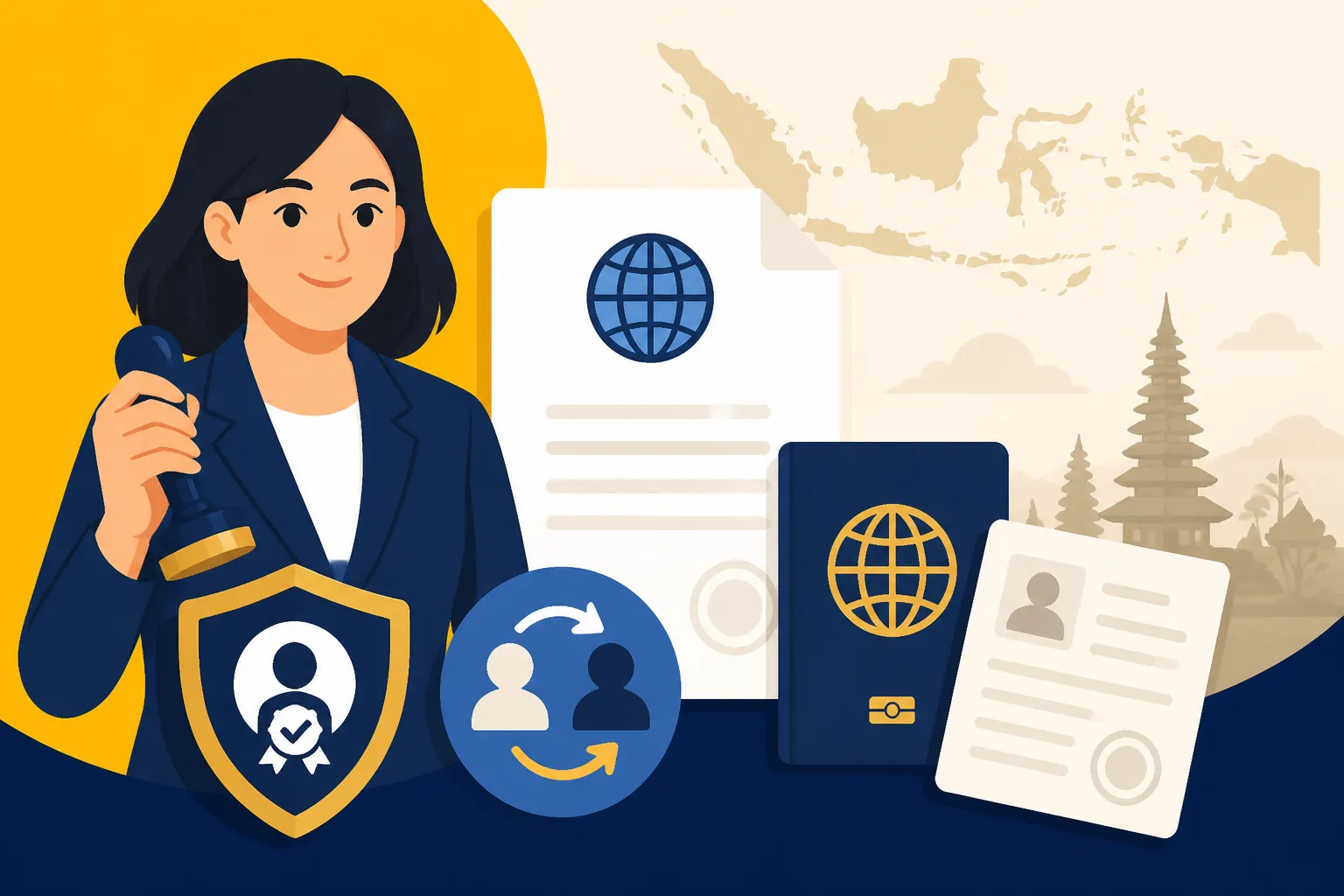
In the complex world of Indonesian bureaucracy, a "Penerjemah Tersumpah" or Sworn Translator is not just someone who speaks two languages fluently. These are professionals who have passed a rigorous examination and have been officially sworn in by the Indonesian government, usually through the Ministry of Law and Human Rights. Their signature and stamp carry legal weight, essentially certifying that the translated document is an exact, legally binding replica of the original.
When you are navigating KITAS Explained: Working, Dependent, and Investor Temporary Stay Permits, the immigration officers aren't just looking for a translation; they are looking for accountability. If there is a discrepancy in your background check or marriage license, the government needs a licensed professional to be responsible for the accuracy of that data. I’ve seen expats try to use high-quality freelance translations, only to have them rejected because the specific "red stamp" was missing. In Indonesia, the stamp is often more important than the text itself.
Beyond just the stamp, these translators are well-versed in the specific legal terminology required by Indonesian ministries. For instance, translating "Common Law Marriage" or "Affidavit of Support" requires specific Indonesian phrasing that a standard translator might miss. Using a service like iVisa to handle the initial entry paperwork is helpful, but once you are on the ground and dealing with local offices (KanIm), you must have these localized, sworn documents ready to go.
Why Your Regular Translation Will Not Work for Immigration
The Indonesian legal system is built on a foundation of "legal certainty." This means that any document not originally in Bahasa Indonesia is considered a "non-document" until it is officially translated by a recognized authority. This is a massive pain point for many of us who come from countries where a simple notarized translation is sufficient. In Indonesia, the "Sworn" status is a higher tier of certification that links the translator directly to the national database of authorized legal practitioners.
If you are Opening a Bank Account in Indonesia: Document Checklists (KITAS, NPWP, Passport), you might get lucky with an English-language contract. However, for anything involving the Ministry of Law and Human Rights, such as a residency extension or a work permit, the requirement is non-negotiable. I once tried to save a few hundred thousand Rupiah by using a friend who was a linguistics professor. The immigration officer didn't even look at the content; they just flipped to the back page, saw no official seal, and handed it back with a polite but firm "tidak bisa" (cannot).
Furthermore, the Indonesian government has recently moved toward more digitized verification. A sworn translator's work often includes a QR code or a registration number that can be cross-referenced. If you are using international documents for things like health coverage, companies like Cigna Global may accept English, but the local Indonesian authorities will still demand the sworn translation to verify your eligibility for local stay. It is about bridging the gap between international standards and local legal requirements.
Key Documents That Require Certified Translation
Not every scrap of paper needs a sworn translation, but the "Big Four" definitely do. These are the documents that define your legal identity and your right to remain in the country. If these are in any language other than Bahasa Indonesia, you need to start looking for a translator immediately.
- Birth Certificates: Essential for almost every visa type, especially dependent visas for children.
- Marriage Certificates: This is vital if you are Marrying an Indonesian: Document Checklist for the KUA vs Civil Registry. Without a sworn translation, your marriage won't be recognized by the Civil Registry (Catatan Sipil).
- Police Clearance/Background Checks: Required for initial work KITAS and certain long-term stay permits.
- Divorce Decrees and Death Certificates: Necessary if you are updating your marital status for a spouse-sponsored visa.
Beyond these, if you are a student or a specialized professional, you will likely need Getting Academic Transcripts Translated and Legalized for Indonesian Visas. Diplomas and transcripts must be translated to prove you meet the educational requirements for your specific job title. I’ve found that even medical records sometimes require this if you are applying for a stay permit based on medical necessity or when Finding Medical Care in Indonesia: Clinics, Hospitals, and International Facilities involves legal insurance claims.
| Document Type | Translation Required? | Apostille Required? | Typical Processing Time |
|---|---|---|---|
| Birth Certificate | Yes (Sworn) | Yes | 2-3 Days |
| Marriage License | Yes (Sworn) | Yes | 2-3 Days |
| University Diploma | Yes (Sworn) | Highly Recommended | 3-5 Days |
| Police Clearance | Yes (Sworn) | Yes | 2 Days |
| Financial Statements | Often Not | No | 1-2 Days |
The Crucial Link Between Translation and the Apostille
One of the biggest changes in the last few years has been Indonesia joining the Hague Apostille Convention. This has fundamentally changed how we handle paperwork. Previously, you had to go through a "triple legalization" process involving the embassy and multiple ministries. Now, the process is streamlined, but the order of operations is critical. You cannot simply translate a document and then expect it to be legal; often, the document must be Apostilled in its country of origin first.
If you are confused about this, you should read Consular Legalization vs Apostille: Indonesia’s New Apostille Rules Explained to understand the hierarchy. Usually, the sequence is: get the original document Apostilled in your home country, then get a Sworn Translation in Indonesia. Some agencies might tell you they can do both, but be careful. A sworn translator in Jakarta cannot "legalize" a document from London; they can only certify the translation of a document that is already legally recognized.
For those of us dealing with international contracts or business disputes, having these documents correctly layered—Apostille followed by Sworn Translation—is the only way to have standing in a local court. If you find yourself in a situation where you need How to Obtain Legal Assistance for Employment Contract Disputes, the first thing a lawyer will ask for is the "Tersumpah" version of your contract. Without it, the court simply won't recognize your evidence.
How to Vet and Find a Reliable Sworn Translator
Finding a translator is easy; finding a legitimate "Penerjemah Tersumpah" requires a bit of detective work. There are many "translation bureaus" in areas like Kemang or Bali that claim to offer sworn services but actually outsource the work to a third party, adding a significant markup and potential for delay. To ensure you are getting the real deal, look for members of the HPI (Himpunan Penerjemah Indonesia), which is the professional association for translators in Indonesia.
When you contact a translator, ask to see a scan of their certification or their official stamp. A legitimate sworn translation will always include the translator's statement of truth, their signature, and their official seal on every single page. If you are outside of Indonesia and need to prepare documents before you arrive, services like RushTranslate are excellent for certified translations that meet international standards, but you must still verify if the specific Indonesian office you are dealing with requires a local Indonesian "Tersumpah" stamp specifically.
I always recommend getting at least three physical "wet-ink" copies of any translation. Digital copies are becoming more accepted, but in the provinces or smaller immigration offices, they still love their paper. If you are also handling Pre-Nuptial Agreements (Pisah Harta): Protecting Property Rights Before Marriage, your notary will definitely require original, physical sworn translations of any foreign identity documents. Don't settle for just a PDF.
The Step by Step Process for Getting Your Documents Ready
The process usually begins with a high-resolution scan of your original document. Most sworn translators in Indonesia work via WhatsApp or email, so you don't necessarily have to visit an office in Central Jakarta or Denpasar. Once you send the scan, they will provide a quote based on the number of pages or the word count. Be wary of anyone who gives you a flat "per document" price without seeing the complexity of the text first.
Once you agree on the price, the translator will produce a draft. I cannot stress this enough: check the spelling of names, dates, and place names yourself. I once had a KITAS application delayed by two weeks because the translator spelled "California" incorrectly, and the immigration officer wouldn't accept it. Even though they are "sworn," they are still human and make typos. After you approve the draft, they will print, sign, and stamp the final version.
Finally, consider the delivery. If you are in a rush, most translators can send the documents via a Gojek or Grab courier within the same city. If you are in Bali and your translator is in Jakarta, you'll need to factor in a couple of days for JNE or Tiki shipping. Always ask for a digital scan of the stamped version immediately so you can at least upload it to the online visa systems while waiting for the physical copies to arrive.
Common Pitfalls and How to Avoid Them
The most common mistake is waiting until the last minute. The "Tersumpah" process is not instantaneous. If you have a visa expiring and you realize on Friday afternoon that you need a translated birth certificate, you are going to pay a massive "express" fee, or worse, face an overstay fine. I always suggest starting the translation process the moment you have your original documents in hand.
Another pitfall is the "translation of a translation." Some expats try to translate a document from, say, German to English, and then English to Indonesian. This is a recipe for disaster. Indonesian authorities generally require the translation to be directly from the original language to Bahasa Indonesia. If your birth certificate is in French, find a French-to-Indonesian sworn translator. It might be more expensive and harder to find, but it is the only way to guarantee acceptance.
Lastly, be mindful of the validity period. While a birth certificate translation doesn't "expire," a police clearance translation might be rejected if the original document is more than six months old. Always check the requirements of your specific visa type before spending money on translations. It’s better to double-check with your agent or the immigration website than to pay for a translation of an outdated document.
Essential Considerations for Foreign Residents in Indonesia
This guide is part of a broader effort to simplify the administrative hurdles of living in Indonesia. While the translation process seems like a small detail, it is often the gatekeeper to your residency, your marriage, or your business. Taking the time to do it correctly—using a legitimate sworn professional—saves you from the stress and "hidden costs" of bureaucracy.
Disclaimer
The information provided in this article is for informational purposes only and does not constitute legal or professional advice. While we strive to keep the information up to date, Indonesian regulations regarding sworn translations and immigration requirements change frequently. Always consult with an official immigration officer or a certified legal professional before submitting documents.