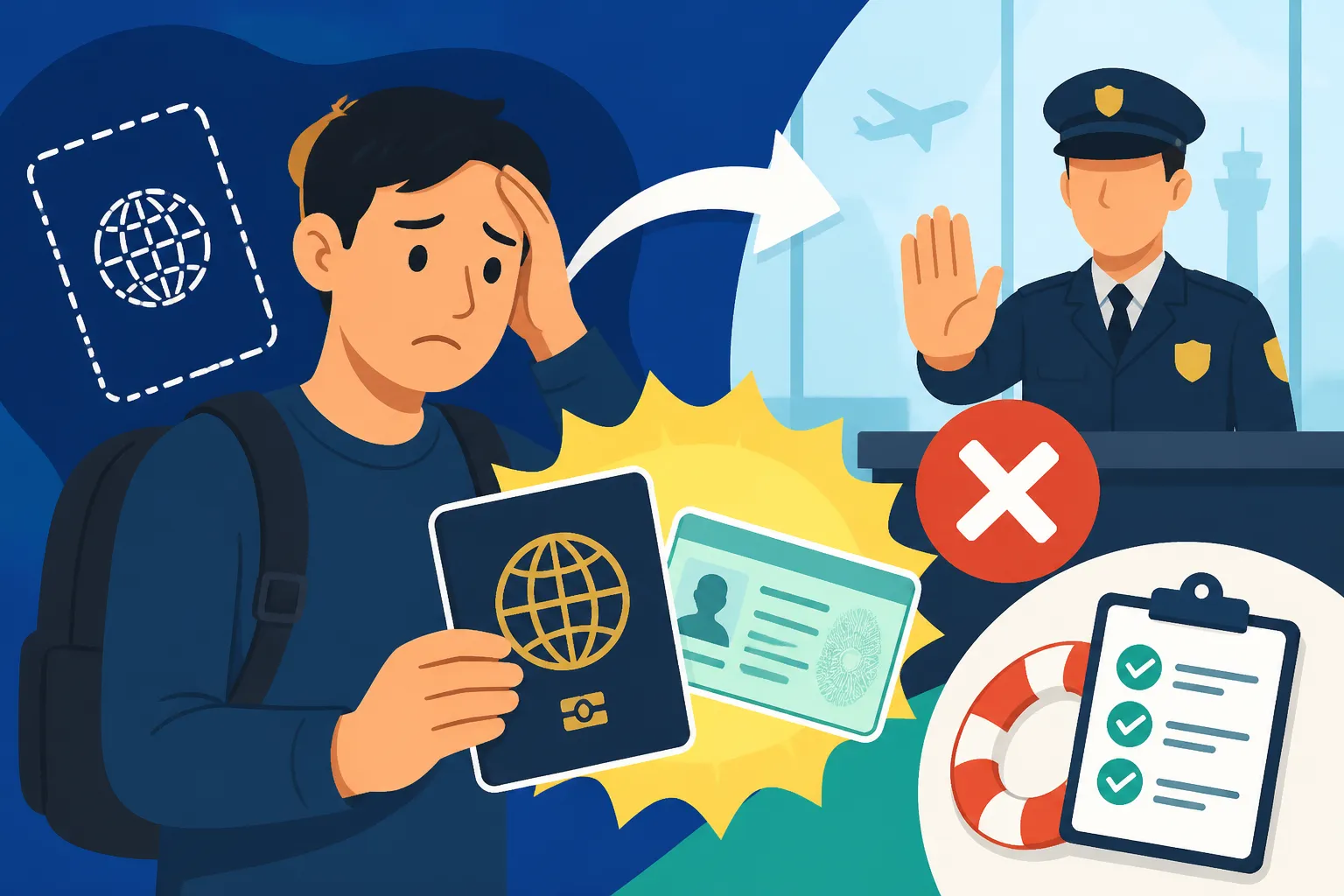
Lost Passport with a Valid KITAS: Re-entry Risks and Emergency Steps
Finding out your passport is missing while holding a valid KITAS is a special kind of Indonesian bureaucratic nightmare that can stop your heart in an instant. I remember the cold sweat I felt when I realized my travel folder wasn't in my bag after a hectic weekend in Bali. This guide provides the exact emergency steps and re-entry risk mitigations you need to protect your residency status and get back on track.
Immediate Steps: What to Do the Moment You Realize It Is Gone
The very first thing you must do is stop searching and start documenting. In Indonesia, a missing passport isn't just a lost item; it is a lost legal identity. Without that physical book, your KITAS (Limited Stay Permit) is effectively floating in a legal vacuum. You cannot wait until Monday morning if you realize this on a Friday night. You need to create a paper trail immediately to prove you haven't simply overstayed or abandoned your visa obligations.
The Police Report (Surat Keterangan Kehilangan)
Your first stop is the nearest police station (Polsek). You must obtain a Surat Keterangan Kehilangan (Lost Property Report). This document is the foundation of every other step in the recovery process. Be prepared to explain exactly where and when you last saw the passport. If you suspect it was stolen, emphasize that, but for administrative ease, a "lost" report is often processed faster. Ensure the police include your passport number and your KITAS details on the report. This paper is what will keep you from being detained during a random immigration check or while traveling domestically within the country.
Contacting Your Embassy or Consulate
Once you have the police report, you must contact your home country’s embassy or consulate, likely in Jakarta or Bali. Most embassies require you to apply for an Emergency Travel Document (ETD) or a replacement passport immediately. Note that an ETD is usually only valid for a single trip back to your home country. If you intend to stay in Indonesia and finish your contract, you need to push for a full passport replacement. During this time, check if you need any documents translated for your embassy; services like certified translators (Penerjemah Tersumpah) can help if they require certified English or Indonesian versions of your birth certificate or other ID.
Notifying Your Sponsor and Immigration
You have a legal obligation to inform the Indonesian authorities. If you are on a work permit, your company’s HR or your agent must be notified within 24 to 48 hours. They will need to coordinate with the Kantor Imigrasi (Immigration Office) that issued your KITAS. Failing to report a lost passport to Immigration can lead to complications later, especially when it comes time for Renewing Your KITAS: Timelines, Police Certificates (SKLD), and Paperwork. The authorities need to "link" your lost status to your electronic record so that your MERP (Multiple Exit Re-Entry Permit) remains valid in their system.
The Re-entry Nightmare: Risks of Being Outside Indonesia
If you lose your passport while you are traveling outside of Indonesia, the situation becomes significantly more complex. Your KITAS is technically a digital permit linked to your passport number. When that passport is gone, the physical proof of your right to re-enter Indonesia vanishes. Many expats assume they can just show a scan of their KITAS at the border and walk through, but airlines are the first hurdle—they will often refuse to board you without a valid passport and a visible visa or residency stamp.
The Problem with Emergency Travel Documents
Most Indonesian immigration officers at the airport are hesitant to process a KITAS holder entering on a temporary Emergency Travel Document (ETD). An ETD is meant for going home, not for returning to a place of residency. If you are stuck abroad, you may need to use a service like a Biro Jasa (immigration agent) to check if you can obtain a temporary entry visa just to get back into the country to fix your paperwork, though this is a "last resort" maneuver. Ideally, you should wait at your current location until your embassy can issue a full replacement passport.
Understanding the MERP and Port of Entry Risks
Your Multiple Exit Re-Entry Permit (MERP): Leaving Indonesia Without Losing Your KITAS is your golden ticket back into the country. However, the MERP is stamped inside the lost passport. When you arrive at the border with a brand-new passport, it will be empty. Even if the officer can see your KITAS in the system, they may require you to go through a "Verification of Status" process at the airport’s immigration office. This can take hours and, in some cases, may require your sponsor to physically come to the airport to vouch for you.
Why You Should Avoid the Tourist Visa Loophole
It is tempting to just buy a Visa on Arrival (VoA) to get back into Indonesia quickly. Do not do this. Entering on a tourist visa while you have an active KITAS can create a "double status" conflict in the immigration database. This can lead to the automatic cancellation of your KITAS, forcing you to go through the entire Exit Permit Only (EPO) vs ERP: Closing Your Visa Before Leaving Indonesia process and starting your residency application from scratch. It is always better to enter correctly as a resident, even if it requires more paperwork at the border.
Step-by-Step Recovery: Transferring Your KITAS to a New Passport
Once you have your new passport in hand—whether you got it at an embassy in Jakarta or while stuck abroad—the real work begins. You cannot simply carry both the new passport and the police report forever. You must perform what is known as a Mutasi Paspor (Passport Mutation) at the immigration office. This process officially transfers your KITAS data from the old, lost passport number to the new one.
| Required Document | Description | Where to Get It |
|---|---|---|
| New Passport | Original replacement book | Your Embassy |
| Police Report | Original Surat Kehilangan | Local Police Station |
| Domicile Letter | Proof of where you live | Reporting Address Changes: Why Immigration Will Check Your Domicile Letter |
| Sponsor Letter | Letter of Request and Guarantee | Your Employer or Spouse |
| Old Passport Scan | A copy of the lost passport (if available) | Your Digital Backups |
| KITAS / ITAS | Electronic permit printout | Your Email/Immigration Portal |
The Mutation Process (Mutasi Paspor)
The mutation process usually takes between 3 to 7 working days. You will submit your new passport to the KITAS Explained: Working, Dependent, and Investor Temporary Stay Permits section of your local immigration office. They will verify your identity, take new biometrics (fingerprints and photo) if necessary, and then issue a new electronic KITAS that reflects your new passport number. This is critical because your KTP WNA (Foreigner ID Card): Why Banks Will Ask You For It and other local documents are all tied to this data.
Updating the Civil Registry (Catatan Sipil)
Once Immigration has updated your record, your work isn't done. You must also update your records with the local The Civil Registry (Catatan Sipil): SKTT and KTP WNA Explained. Your SKTT (Temporary Resident Card) contains your passport number. If the number on your card doesn't match the number in your hand, you may face issues with banking, registering a vehicle, or even checking into certain domestic flights. While you are at it, check if your health insurance provider needs a copy of the new passport to keep your coverage active, as they often use passport numbers as primary identifiers.
The Cost of Neglect
Ignoring the mutation process can lead to massive fines. If you attempt to leave Indonesia with a new passport that hasn't been "mutated" with your KITAS, you will likely be stopped at the airport. Immigration will see the discrepancy and may charge you for an "unreported change of status" or, worse, suspect you of Obtaining Indonesian Citizenship: Naturalization Rules and Dual Citizenship Bans violations or identity fraud. Always close the loop on your paperwork.
Emergency Checklist and Best Practices for Expats
Living in Indonesia requires a proactive approach to document security. The "I'll do it tomorrow" attitude doesn't work well with the e-Visa and Molina System: How to Apply Online Without Visiting an Embassy or the physical reality of Indonesian paperwork. After you have recovered from the initial loss, you need to "future-proof" your stay so that a second occurrence (heaven forbid) is merely a nuisance rather than a catastrophe.
Maintain a "Cloud" Folder
Every expat should have a secure digital folder (Google Drive, Dropbox, or iCloud) containing high-resolution scans of every page of their passport, their current KITAS, their MERP stamp, and their work permit (IMTA/RPTKA). Having these scans makes the police report and embassy replacement process 90% faster. If you are traveling, keep a printed set of these copies in a separate bag from your actual passport.
The Value of Notarized Copies
In Indonesia, a simple photocopy often isn't enough for high-level bureaucratic hurdles. Consider having a few sets of your passport and KITAS notarized or translated by a Certified Translators (Penerjemah Tersumpah) for Immigration Documents service. These "official" copies are sometimes accepted by local police or even domestic airlines in an absolute pinch while you are waiting for your replacement book to arrive.
Physical Security and Handling
In humid climates like Bali or Jakarta, passports can easily be damaged by mold or water. This is considered "damaged," which in the eyes of Indonesian Immigration is often treated the same as "lost." Use a waterproof pouch and never leave your passport in a motorbike seat or a hotel safe that looks flimsy. If you are moving houses, ensure you follow the rules for Reporting Address Changes: Why Immigration Will Check Your Domicile Letter immediately, as Immigration may visit your home to verify your documents after you report a loss.
Disclaimer
The information provided in this article is for general informational purposes only and does not constitute legal advice. Immigration laws and procedures in Indonesia are subject to frequent change without notice. While we strive to provide accurate and up-to-date information, readers should always consult with a qualified immigration lawyer, a registered visa agent, or the official Indonesian Directorate General of Immigration (Migrasi) before making decisions regarding their residency status or travel plans. Use of third-party services mentioned is at the reader's own risk.