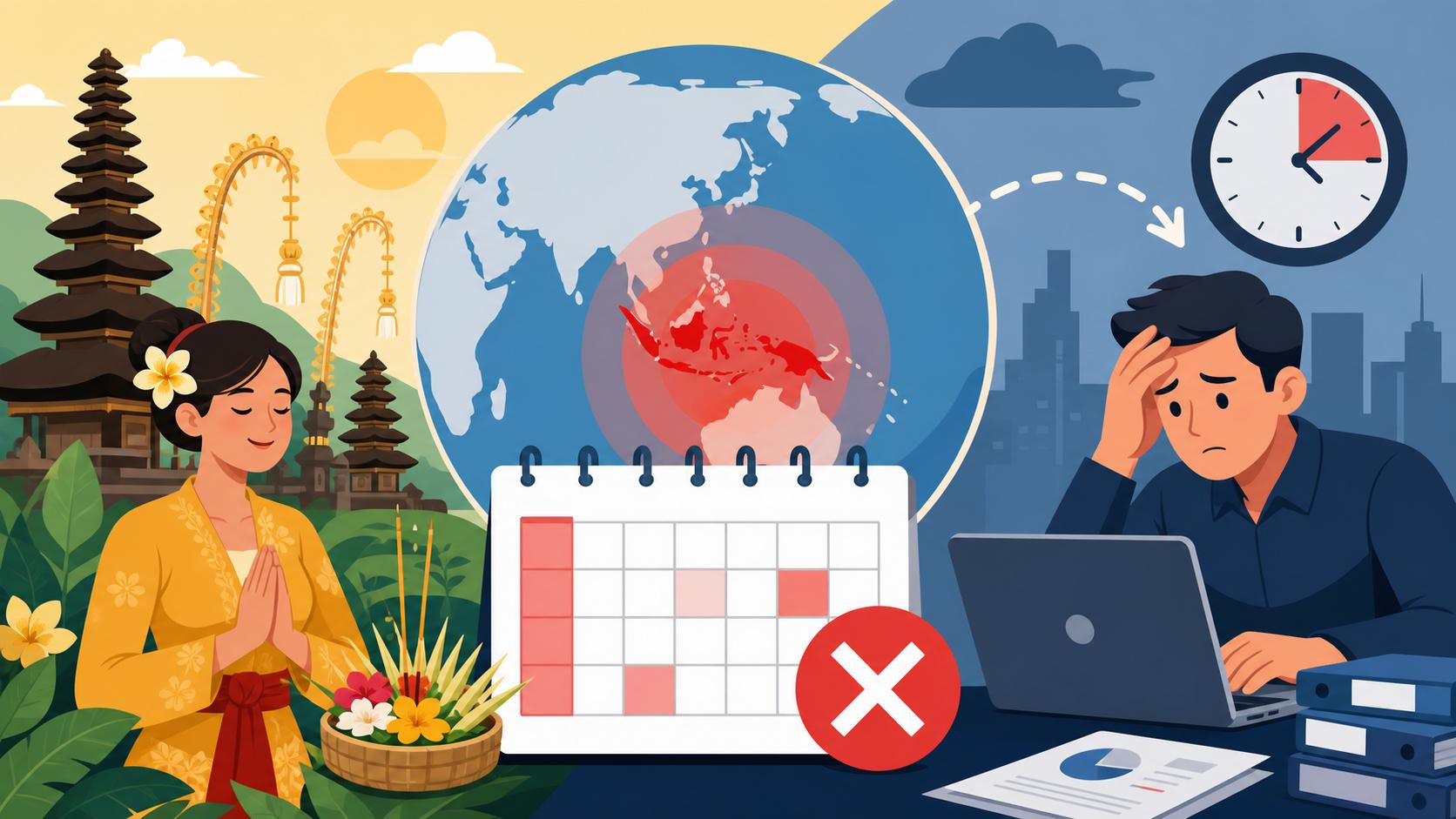
The Impact of Indonesian Public Holidays on Global Project Deadlines
You’ve set a strict Monday deadline for your Jakarta-based team, only to realize on Friday afternoon that the entire country is shutting down for a four-day long weekend you didn't see coming. I once lost an entire week of software development progress because I underestimated how "Cuti Bersama" could turn a simple religious holiday into a nationwide ghost town. This guide breaks down how to navigate the complex Indonesian holiday calendar so your global project deadlines remain intact and your team stays motivated.
The Cultural Weight of Indonesian Public Holidays
In many Western corporate environments, a holiday is simply a day off where you might catch up on sleep or run errands. In Indonesia, holidays—especially religious ones—carry a profound social and spiritual weight that takes precedence over almost any professional obligation. To manage global projects effectively, you first have to understand that "National Holidays" (Hari Libur Nasional) are only one part of the puzzle. The real challenge for project managers is the "Cuti Bersama" or joint leave days.
These are government-mandated bridge days usually added to religious holidays to create "Long Weekends." While they are technically "optional" for the private sector, in practice, most offices in Jakarta and Surabaya follow them to avoid being the only ones working while their clients and vendors are offline. When you are Working in Indonesia as a Foreigner: Jobs, Corporate Culture, and Hiring (2027), the first thing you’ll notice is how these "red dates" (Tanggal Merah) on the calendar can seemingly appear or expand with relatively short notice from the government.
Furthermore, the concept of "Mudik" (the annual homecoming) means that for major holidays like Idul Fitri, millions of people leave the cities. This isn't just a day off; it’s a massive logistical migration. If your project relies on physical logistics, supply chains, or government approvals, everything will grind to a halt at least three days before and three days after the actual holiday.
| Holiday Type | Impact Level | Typical Duration | Project Management Strategy |
|---|---|---|---|
| Single National Holiday | Moderate | 1 Day | No meetings; avoid same-day deadlines. |
| Cuti Bersama (Joint Leave) | High | 2–4 Days | Expect total radio silence; build a 1-week buffer. |
| Idul Fitri (Lebaran) | Critical | 7–10 Days | Freeze all major releases; settle Understanding THR (Tunjangan Hari Raya): The Mandatory Religious Bonus early. |
| Nyepi (Bali Only) | High (Regional) | 24 Hours | No internet or movement; total shutdown of Bali operations. |
The Logistical Ripple Effect on Global Timelines
When your headquarters is in New York, London, or Singapore, the expectation is often "business as usual" regardless of local festivities. However, the Indonesian Work Culture: Communication, Hierarchy, and Career Dynamics dictates that family and religious duties are non-negotiable. If you try to force a deadline during a major holiday, you won't just face delays; you’ll face a significant drop in team morale and potentially high-quality talent looking for the exit.
One of the most overlooked impacts is the "Post-Holiday Hangover." After a major break like Lebaran or Christmas/New Year, productivity doesn't return to 100% the moment the office doors open. There is a period of "Halal bi Halal" (social gatherings for forgiveness) where teams spend the first few days back reconnecting. If you haven't accounted for this in your Career Checklist for Your First 90 Days Working in Jakarta, your Q2 or Q4 projections will be skewed.
Administrative bottlenecks are another reality. If your project requires permits, notarized documents, or any interaction with the "Kanim" (Immigration) or tax offices, you need to factor in that these departments often close earlier during the month of Ramadan and shut down completely during Cuti Bersama. Planning your Indonesian Public Holidays: Long Weekends (Cuti Bersama) and Travel Chaos avoidance strategy is essential for any project involving physical infrastructure or legal compliance.
Strategic Planning and Buffer Management
The secret to successfully managing global projects in Indonesia is "The Two-Week Rule." Never set a critical milestone within two weeks of Idul Fitri or one week of any Cuti Bersama period. If you are coordinating between a local team and an international client, you must be the "cultural translator." This means explaining to the client in February that the May deadlines need to be moved up because the country will effectively be offline for ten days.
To facilitate better communication during these periods, I highly recommend using tools like IndonesianPod101. Learning even basic phrases allows you to ask your team about their holiday plans in a way that feels respectful rather than intrusive. Knowing how to use Essential Business Vocabulary in Bahasa Indonesia for Meetings can help you negotiate "standby" roles or skeleton crews for urgent tasks without offending the local staff.
Communication styles also shift during holidays. While your team might usually be responsive on Slack or email, during holidays, they may only check WhatsApp—and even then, only for emergencies. As an expat manager, you should establish a "Break glass in case of emergency" protocol well in advance. Make sure your team knows exactly what constitutes a project-stopping emergency versus something that can wait until the "Tanggal Merah" has passed.
Navigating the Peak: Lebaran and the THR Factor
Idul Fitri (Lebaran) is the "Super Bowl" of Indonesian holidays. It’s the time when project managers face the highest risk of delays. Not only is the team absent, but there are specific financial obligations you must manage. You need to be aware of When is THR Paid? Rules for Idul Fitri and Christmas Bonuses because financial stress can impact your team's focus in the weeks leading up to the holiday. If the THR (Mandatory Religious Bonus) is delayed, your project productivity will plummet.
During this period, many employees will also ask for additional Paid Leave (Cuti Tahunan) in Indonesia: Accrual Rules and Religious Holidays to extend their time in their hometowns. As a manager, you’ll need to handle Requesting Leave During Lebaran (Eid): Unspoken Rules for Foreigners with a mix of firmness and empathy. I’ve found that the best approach is to allow staggered leave—letting some people go early if they promise to be the first ones back.
If you are working on Strategies for Effective Cross-Cultural Collaboration in Indonesian Teams, you should also consider the impact of the fasting month (Ramadan) preceding Lebaran. Energy levels may be lower in the mid-afternoon, and the "Jam Pulang" (going home time) often shifts earlier so people can break their fast (Buka Puasa) with their families. Scheduling high-intensity brainstorming sessions for 3:00 PM in April or May is a recipe for poor results. Move your critical meetings to the morning when energy is highest.
Managing Stakeholder Expectations Abroad
The hardest part of your job isn't managing the local team; it’s managing the stakeholders in the home office who don't understand why a "one-day holiday" has turned into a "four-day silence." You have to be proactive. Send out a "Holiday Impact Report" at the start of every quarter. Detail exactly which days the office will be closed and, more importantly, which services (like local couriers or ISPs) might be slower.
In my experience, showing a calendar with the Indonesian holidays overlaid against the project's Gantt chart is a wake-up call for most Western directors. It visualizes the "blackout zones" and makes your request for a deadline extension look like a calculated risk-mitigation strategy rather than an excuse. You aren't just "giving the team a break"; you are ensuring the quality of the output isn't compromised by a rushed, holiday-interrupted schedule.
Remember that Indonesia uses a mix of Gregorian, Islamic, and Chinese calendars for its holidays. This means dates shift every year. What was a Tuesday holiday last year might be a "Long Weekend" this year. Always check the official government decree (SKB Menpan-RB) which is usually released in late Q3 for the following year. This allows you to set your global project milestones with 12 months of foresight, giving you a massive advantage over competitors who are scrambling to adjust their Trello boards at the last minute.
Practical Tips for the "Holiday Season"
- Audit Your Vendors: Don't just check your internal team. Check your local vendors, landlords, and service providers. If your office internet goes down on a Saturday during a Cuti Bersama, don't expect a technician to show up until Tuesday.
- Settling Accounts: Ensure all local invoices are paid before the major holidays. Many small Indonesian businesses rely on that cash flow to pay their own staff's THR bonuses.
- Social Presence: If you are in a leadership position, sending a "Selamat Hari Raya" message to your team via WhatsApp or a card is more than just a courtesy; it's a vital part of building the "Keluarga" (Family) atmosphere that drives loyalty in the Indonesian workplace.
- The Friday Trap: In Indonesia, Friday afternoon is often "low-productivity" time due to extended lunch breaks for Friday prayers. If a holiday falls on a Thursday, do not expect a single productive hour on that Friday. Just count it as part of the break.
By treating the Indonesian holiday calendar as a fixed logistical reality rather than a nuisance, you can build a more resilient, loyal, and efficient operation. You’ll find that when you respect the team's need for these cultural and religious milestones, they are much more likely to "all hands on deck" when a real project emergency hits during the working weeks.
Disclaimer
The information provided in this article is for informational purposes only and does not constitute legal or professional labor advice. Holiday regulations and "Cuti Bersama" mandates in Indonesia are subject to change by government decree. Always consult with your local HR department or a qualified legal professional regarding specific employment laws and mandatory leave requirements.