Internet Installation Wait Times: Dealing with Cable Access in New Areas
Moving into a brand-new villa in Pererenan or a fresh apartment complex in BSD City feels like the ultimate win until you try to join your first work call and realize the "high-speed fiber" promised by the landlord doesn't actually exist yet. I spent my first three weeks in Bali tethering from a phone hanging out of a second-story window because the local fiber exchange was "full." This guide solves the complex puzzle of navigating internet installation wait times and securing cable access in Indonesia’s rapidly developing areas.
Understanding the Infrastructure Landscape in New Developments
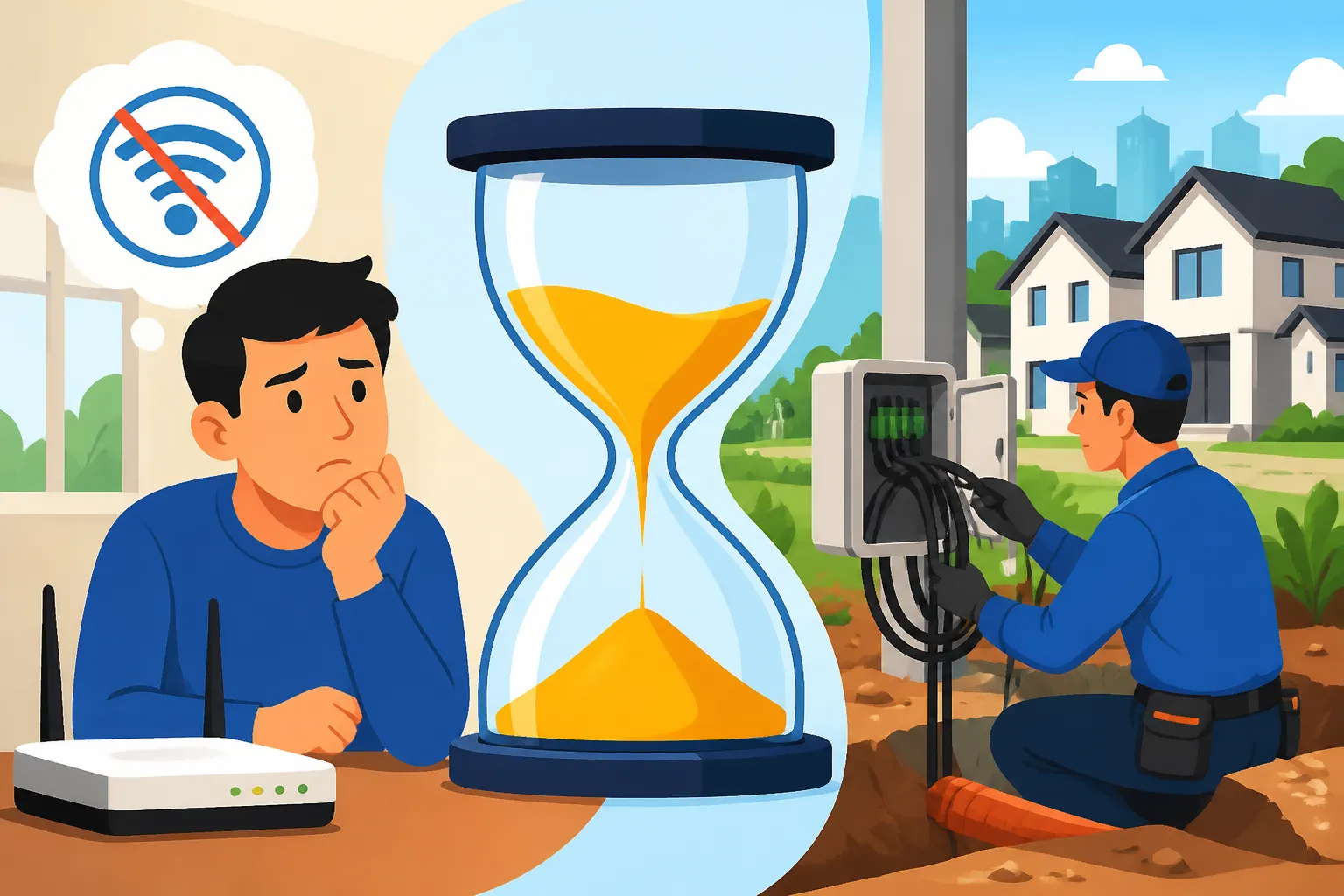
When you look at the vibrant expansion of residential zones in Indonesia, it is easy to assume that digital infrastructure keeps pace with construction. Unfortunately, the physical reality of laying fiber optic cables often lags months or even years behind the completion of a building. In many "new areas," the primary challenge is not a lack of providers, but a lack of physical "ports" on the Fiber Access Terminal (FAT) boxes you see strapped to utility poles. If the FAT box in your street is at capacity, a provider cannot simply "plug you in." They must install a new terminal, which requires a bureaucratic process involving regional planning and local neighborhood approvals.
Another layer of complexity is the presence of developer monopolies or local community "exclusives." In some high-end gated communities or apartment blocks, the developer may have a private agreement with a specific provider, such as IndiHome or MyRepublic. If you prefer a different service, you might find that the provider you want is legally barred from entering the premises. This is why checking the availability of Home Internet Providers: IndiHome, Biznet, and Starlink Options in 2027 is a critical step before you even sign a lease. Understanding these hidden "zones" is as much a part of Living in Indonesia as an Expat: The Complete Starter Guide (2027) as finding a good grocery store.
The geography of Indonesia also plays a massive role in installation delays. In a place like Bali, where new villas are popping up in formerly rural rice fields, the "last mile" of cable might need to traverse private land or areas controlled by a local Banjar (community council). If the provider hasn't secured "pole rights" from the Banjar, they cannot string the cable to your house. I’ve seen installations stalled for weeks because of a dispute over where a single wooden pole could be placed. It’s a classic example of the administrative hurdles explained in Utilities and Setup: PLN Electricity, PDAM Water, and Home Internet in Indonesia, where local customs and modern technology often collide.
Realistic Timelines and the Installation Lifecycle
The word "besok" (tomorrow) in the Indonesian language is famously flexible. When a technician tells you they will come "besok" for a survey, it is best to view this as a statement of intent rather than a binding appointment. In a new area, the installation process typically follows a three-stage lifecycle: the Survey, the Cable Pull, and the Activation. Each of these stages can have its own set of delays that can stretch a "three-day" estimate into a three-week ordeal.
The Survey is the most critical hurdle. A technician will visit your location to check the distance from the nearest FAT box. If the distance is more than 150 to 200 meters, many providers will refuse the installation or charge a significant "excess cable" fee. If they find that the FAT is full, your application will likely be put on a "waiting list" that is rarely updated. For those living in the Where to Live in Bali: Canggu, Sanur, Ubud, and Uluwatu Area Breakdown, this is a frequent occurrence as the infrastructure struggles to keep up with the density of new arrivals.
Once the survey is approved, the "Cable Pull" team arrives. These are often third-party contractors who only handle the physical stringing of the wire. They do not set up the router or activate the signal. If they encounter any physical obstructions—like a neighbor’s overgrown tree or a lack of utility poles—they may simply leave and report the job as "undeliverable." It is often necessary to be physically present and "assist" the process by talking to neighbors or offering a small tip (uang rokok) to ensure they find a creative way to get the cable to your doorstep.
| Stage | Expected Duration | Common Bottleneck |
|---|---|---|
| Registration | 24 – 48 Hours | Verification of KITAS/NIK documents |
| Site Survey | 3 – 7 Days | Technician availability or "Full Port" status |
| Physical Cable Pull | 1 – 2 Days | Pole permissions and physical distance |
| Final Activation | 24 Hours | System back-end sync and router config |
Immediate Alternatives While You Wait for Fiber
If you are a digital nomad or someone on the Remote Work in Indonesia: The Complete E33G Digital Nomad Visa Guide, a week without internet isn't just an inconvenience—it’s a financial risk. You cannot afford to wait for a technician who may or may not show up on a Tuesday. The first thing you should do upon arrival is secure a reliable mobile data backup. While you can get a local SIM at the airport, I highly recommend using Airalo to get an eSIM as soon as you land. This ensures you have immediate connectivity to navigate to your new home and message your landlord or agent without hunting for a Wi-Fi password.
For a more robust home solution, look into Fixed Wireless Access (FWA) or 4G/5G routers. Devices like the Telkomsel Orbit are widely available on Shopee and can be delivered to your door within a day. These routers use the cellular network but provide a more stable signal than a phone hotspot. While they are more expensive per gigabyte than fiber, they are a lifesaver in new areas where the "cable pull" is delayed. You can easily manage the top-ups using local payment methods, which you can learn about in our guide on Digital Banking and E-Wallets: How to Register for GoPay, OVO, and Dana.
If you find yourself in a "black zone" where fiber is months away and 4G is spotty, Starlink has become the gold standard for expats in remote or new areas of Indonesia. It is now legally available and surprisingly easy to set up. While the upfront hardware cost is higher than a standard modem, the independence it provides is priceless. If the house you are renting through Agoda or a local agent doesn't have reliable Wi-Fi, having your own Starlink kit can be the difference between staying productive and having to relocate to a co-working space. For more on this, check out the Bali Co-Working Culture: Avoiding Scams and Securing Reliable Workspaces to see which hubs have the best backup systems.
Practical Strategies for Speeding Up the Process
Getting internet in a new Indonesian neighborhood often requires more than just filling out an online form. It requires "social engineering." The first person you should speak to isn't the customer service rep on a 147-hotline, but your local RT (Rukun Tetangga) head or the building management. These individuals often know exactly which provider has the best "port" availability in your specific block. In some cases, they might even have a direct WhatsApp contact for a local sales agent. These agents are far more motivated to get you connected than a faceless corporate office because they work on commission.
Monitoring your order is another area where you need to be proactive. Indonesian service providers are very active on social media, particularly X (Twitter) and Instagram. If your installation is stalled, "tagging" the provider's official support handle with your order ID often triggers a faster response than a standard phone call. Keep your documentation ready; you will likely need to upload a photo of your passport and your stay permit. The Cost of Living in Bali 2026: Budgeting for Digital Nomads and Retirees often includes these hidden costs of "expediting" services through higher-tier packages or local assistance.
Finally, always have a "Plan B" workspace mapped out. Even if the cable is pulled and the router is blinking green, the stability of internet in new areas can be unpredictable due to ongoing construction nearby. A backhoe digging a new drainage trench can easily sever a fiber line. Knowing the nearest cafe with a generator and high-speed fiber is essential. As you settle in, remember that building your local network is the best way to solve these administrative headaches, a theme we cover extensively in our guides for those navigating the Utilities and Setup: PLN Electricity, PDAM Water, and Home Internet in Indonesia.
Disclaimer
The information provided in this guide is based on personal expat experiences and the prevailing infrastructure conditions in Indonesia as of 2026. Internet availability, installation fees, and provider policies can change rapidly without notice. We are not affiliated with any specific telecommunications provider, and readers are encouraged to verify current coverage maps and "port" availability directly with providers before entering into long-term rental agreements. Always confirm local Banjar or building management rules regarding third-party cable installations to avoid legal disputes.