Gas Cylinders (LPG): How to Swap 3kg and 12kg Tanks at the Warung
One morning you will wake up, craving that first cup of coffee or a hot breakfast, and your stove will simply refuse to light. I remember my first week in Bali, standing over a cold burner with a half-cooked meal, staring at a heavy metal cylinder I had no idea how to replace. This guide breaks down the essential logistics of swapping LPG tanks at a local warung, ensuring you never face the "cold stove" crisis alone.
Understanding the Indonesian LPG Landscape
In Indonesia, the majority of households, including expat villas and apartments, rely on Liquefied Petroleum Gas (LPG) for cooking. Unlike many Western countries where gas is piped directly into the home, here it is a portable, tangible commodity. The state-owned oil and gas company, Pertamina, controls the lion’s share of the market. When you look at the corner of your kitchen or under the sink, you are likely to see one of three distinct canisters. Understanding which one you have—and which one you actually want—is the first step in mastering Living in Indonesia as an Expat: The Complete Starter Guide (2027).
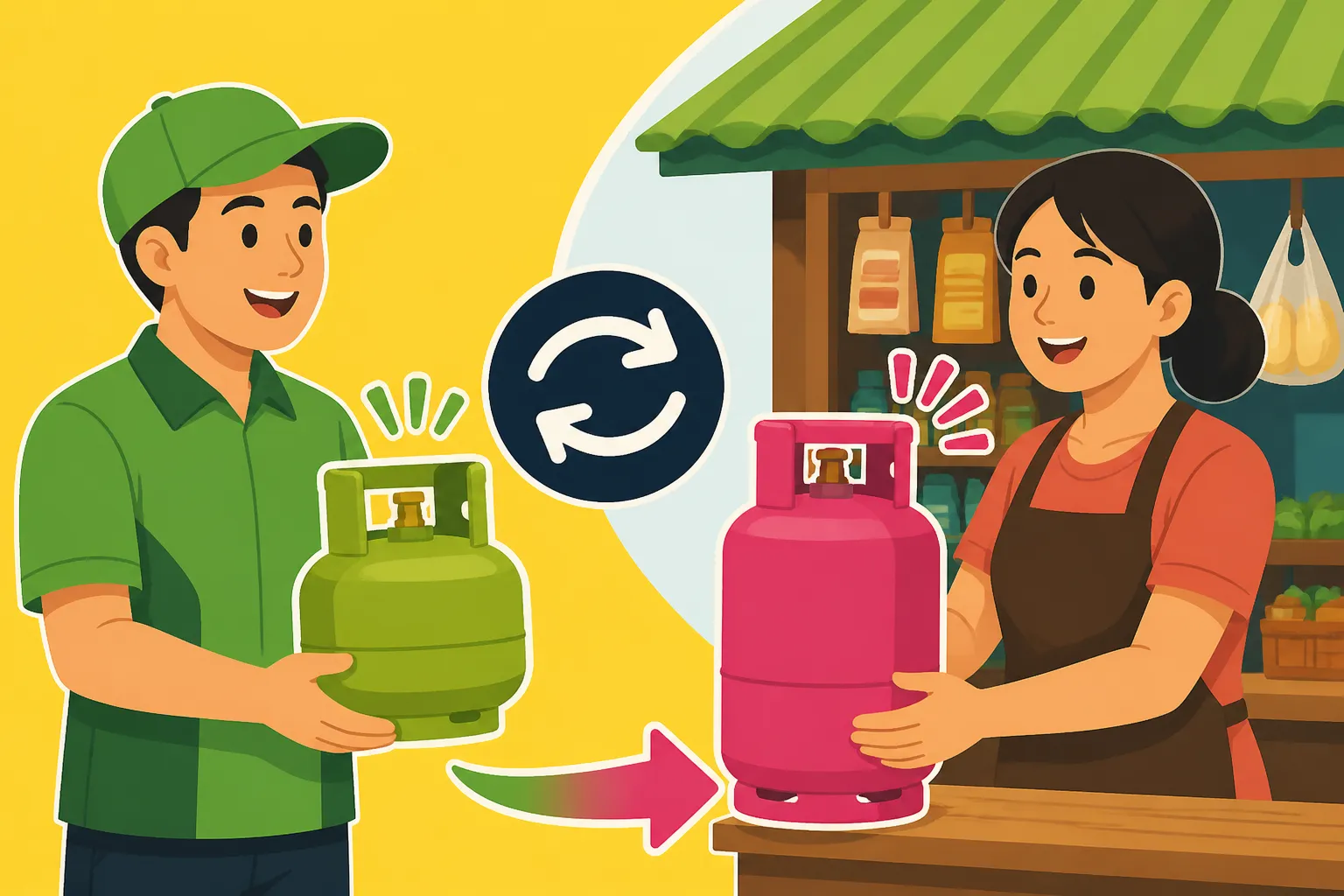
The most ubiquitous sight in Indonesia is the 3kg green cylinder, affectionately known by locals as the "Melon." These are technically subsidized for lower-income households, which is why you will often see "Hanya untuk Masyarakat Miskin" (Only for the poor) printed on the side. Despite this, they are found in almost every neighborhood warung and are used by nearly everyone due to their sheer convenience and light weight. However, as an expat, you might find the 3kg tanks frustrating because they run out quickly—sometimes in just a week if you do a lot of heavy cooking. Furthermore, there have been historical concerns regarding the safety valves on these smaller, high-turnover units.
The professional standard for most expats is the Bright Gas series, which comes in 5.5kg (pink) and 12kg (pink or blue) variants. The 12kg tank is the gold standard for a family home or a long-term rental. It lasts significantly longer, usually two to three months for a moderate cook, and features a double-spindle valve system for enhanced safety. If you are currently Renting in Indonesia: The 1-Year Upfront Rule, Contracts, and Avoiding Scams, check your lease to see if the initial tank is provided. If not, you will need to buy the "bottle" (the physical canister) first, which is a one-time investment, after which you only pay for the gas refill through a process called "tukar tambah" or trade-in.
| Cylinder Type | Color | Capacity | Typical Use Case |
|---|---|---|---|
| Subsidized LPG | Bright Green | 3kg | Small households, emergency backup, high portability |
| Bright Gas | Pink | 5.5kg | Singles or couples, limited kitchen space |
| Bright Gas / LPG | Pink or Blue | 12kg | Families, heavy cooking, standard for villas |
The Art of the Warung Swap: Step-by-Step Logistics
Once your tank is empty, the real adventure begins. You don't "refill" a tank in the sense of a gas station filling up your car; you swap your empty canister for a pre-filled one. This happens at a "warung"—the small, family-run roadside shops that are the heartbeat of Indonesian commerce. Look for a shop with a stack of green or blue cylinders out front. If you are staying in a managed villa, you might simply call your property manager, but knowing how to do this yourself is a rite of passage.
The first challenge is the "Scooter Balancing Act." If you are using the 3kg tanks, you can easily carry two of them on the floorboard of a NMAX or Vario. However, the 12kg tank is a different beast. It is heavy, awkward, and potentially dangerous to transport on a bike if you aren't experienced. Most expats prefer the delivery route. You can walk to the nearest warung and ask, "Bisa kirim gas ke rumah?" (Can you send gas to the house?). Usually, within twenty minutes, a man on a modified motorbike with a side rack will pull up to your gate.
When the delivery arrives, the "tukar tambah" happens. You give them your empty tank, and they give you a full one. Always check the seal. A full Pertamina tank will have a plastic wrap or a plastic "cap" over the nozzle, often with a holographic seal. If that seal is broken or missing, politely ask for a different one. This ensures you are getting the full weight and that the gas hasn't been tampered with. This is a small but vital part of navigating Everyday Etiquette: Religion, Culture, Garbage, and Community Norms; being observant but polite is the key to good local relations.
If you are more tech-savvy, you can actually skip the walk to the warung. Many residents now use Shopee to find local vendors who deliver. It allows you to see the price upfront and often provides a bit more accountability than a random roadside stall. For those just arriving and staying in temporary accommodation booked via Agoda, your host will usually handle this, but it’s worth asking them to show you where their "regular" guy is located so you have a backup plan.
Installation and Safety: Preventing the Hiss
Installing the new tank is where most newcomers get nervous. The system consists of the tank, a rubber ring, a regulator, and a hose leading to your stove. When you remove the plastic seal from the new tank, you’ll see a hole with a small red or black rubber ring (the "karet") inside. This tiny piece of rubber is the most important component in your kitchen. If it is cracked, missing, or the wrong size, gas will leak, resulting in a terrifying "hisssss" the moment you attach the regulator.
Pro tip from a veteran: always keep a bag of spare rubber rings in your kitchen drawer. You can buy a pack of ten for a few thousand Rupiah at any hardware store or even some larger warungs. If the new tank leaks, don't panic. Turn the regulator handle to the "off" position, remove it, and swap the rubber ring for a fresh one. Sometimes, simply flipping the existing ring over works. You can also use a bit of plumber's tape or a piece of a rubber band to thicken the seal in an emergency, though a proper ring is always safer.
Once the regulator is clamped on, you shouldn't smell anything. If you do, perform the "soapy water test." Smear some dish soap suds around the connection point. If bubbles start forming and growing, you have a leak. This is a critical skill for managing your Utilities and Setup: PLN Electricity, PDAM Water, and Home Internet in Indonesia. Never ignore the smell of gas in a tropical climate; because houses are often semi-open, the gas can dissipate, but in an enclosed kitchen, it is a major hazard.
For those who are just moving in and still setting up their digital life, make sure you have a reliable data connection to look up "how-to" videos or translate terms. Using an eSIM from Airalo is a lifesaver during those first few weeks when your home Wi-Fi might still be pending installation. Being able to quickly Google "how to fix leaking LPG regulator Indonesia" while standing in your kitchen can save your morning.
Managing the Service: Delivery and Staff
If you have Hiring a Domestic Helper (Pembantu): Salaries, THR, and Live-In Arrangements, the gas swap will likely fall under their list of responsibilities. However, you should still understand the costs. The price of the gas itself is regulated, but the "delivery fee" varies. Usually, adding 5,000 to 10,000 IDR to the shop price is standard for the "Abang" (delivery man) who has to lug a 12kg tank into your kitchen and install it for you.
There are times when the supply chain falters. During major holidays like Idul Fitri or Galungan in Bali, the "gas guys" might go back to their villages. You might find your usual warung closed for three days. This is why many expats keep a single 3kg "Melon" tank as a backup. When the big 12kg tank runs out on a Sunday evening, you can just plug in the 3kg tank to get through the night. It's a small insurance policy that prevents a lot of frustration.
In more urban areas like Jakarta, you might have access to specialized delivery apps or even Gojek vs Grab vs Bluebird: Which is Safest and Most Reliable in Jakarta? delivery services. You can use GoShop to ask a driver to pick up a tank for you, though they may charge extra for the heavy lifting. Always be clear about the tank size you need—if you ask for "Gas" without specifying, they will almost always bring the 3kg green tank.
| Service Item | Estimated Cost (IDR) | Frequency |
|---|---|---|
| 12kg Gas Refill (Trade-in) | 210,000 – 230,000 | Every 2-3 months |
| 3kg Gas Refill (Trade-in) | 20,000 – 25,000 | Every 1-2 weeks |
| New 12kg Cylinder (First purchase) | 500,000 – 600,000 | Once |
| Delivery & Installation Tip | 5,000 – 15,000 | Per delivery |
Troubleshooting and Local Etiquette
One of the most confusing things for newcomers is the concept of the "empty" shop. You might walk to a warung and see twenty blue tanks, but the owner says "Habis" (Finished/Empty). In Indonesia, shops keep their empty canisters out front to be picked up by the distributor. Just because you see a tank doesn't mean it has gas in it. Look for the tanks that still have the plastic seals on top; those are the full ones.
Developing a relationship with your local warung owner is part of the beauty of living here. If you are a regular, they will often prioritize your delivery when the supply is low. This is especially true if you are Navigating the Traditional Market (Pasar Tradisional) Early Morning Rush and stop by for a chat or to buy your daily eggs and fruit. A little "Terima kasih, Pak" goes a long way.
If you are living in a neighborhood with strict community rules, be mindful of Dealing with Neighborhood Noise: Mosques, Roosters, and Construction Etiquette. The gas delivery bikes are often quite loud and might arrive early in the morning. If you have a specific gate code or a tricky driveway, make sure you or your staff are ready to meet them so they aren't revving their engine outside your neighbor's bedroom at 7 AM.
Finally, remember that your gas bill isn't just about the fuel; it's about the service. If you are lucky enough to have a landlord who includes a "diplomatic clause" in your How to Include a Break Clause (Diplomatic Clause) in Your Jakarta Lease, you won't have to worry about what happens to those expensive 12kg canisters when you leave. You can simply hand them back to the landlord or sell the "bottle" back to the warung for a portion of the original deposit.
Understanding the rhythm of the LPG swap is a fundamental part of local life. It’s a physical reminder that in Indonesia, everything is connected through local networks and neighborhood shops. Once you’ve successfully managed your first "tukar tambah" without a single "hiss" from the regulator, you can truly say you've settled into your new home. Whether you are checking How to Pay Utilities via M-Banking Apps (BCA Mobile, Livin' by Mandiri) for your electricity or calling the local guy for your gas, you are now part of the local ecosystem.
Disclaimer
This guide is intended for informational purposes for expatriates and tourists in Indonesia. While every effort has been made to ensure accuracy as of 2026, local regulations and prices for LPG can change frequently. Handling pressurized gas cylinders carries inherent risks; always ensure your kitchen is well-ventilated and consult a professional if you are unsure about the safety of your connections or equipment.