Renting in Indonesia: The 1-Year Upfront Rule, Contracts, and Avoiding Scams
Landing in Jakarta or Bali for the first time is exhilarating, but the housing market here will quickly ground you with a dose of reality that feels like a punch to the wallet. I still vividly remember the cold sweat I broke into when my first landlord casually requested twelve months of rent upfront in a single bank transfer. This guide breaks down the notorious upfront payment culture, the legal maze of contracts, and the hard-won lessons on avoiding the scams that target even the most seasoned expats.
The Reality of the One Year Upfront Rule
Let’s be honest: the financial transition to Indonesia is often more expensive than people expect because of the "Full Year Rule." In most Western countries, you’re used to a security deposit and the first month of rent. In Indonesia, specifically when dealing with private landlords for houses or villas, it is standard practice to pay the entire year's rent before you even get the keys. This isn't just a suggestion; it’s the foundational expectation of the local real estate market.
Why Landlords Demand Cash Upfront
You might wonder why a landlord wouldn’t prefer the steady monthly income that most of the world operates on. From a local perspective, it’s about security and liquidity. Interest rates on savings accounts in Indonesia can be higher than what you might see in Europe or North America, so receiving a massive lump sum allows the owner to immediately invest that money or pay down their own high-interest debts. Furthermore, the banking system here makes it difficult for landlords to "chase" a tenant who stops paying monthly. By taking it all at once, they eliminate the risk of a tenant disappearing mid-lease.
I’ve had many conversations with local friends who explain that this lump sum is often used to fund family ceremonies, school fees, or home renovations. It’s a cultural financial cycle that you are entering as an expat. While it feels like a massive risk to you, it feels like basic security to them. This is why you will find that many landlords are genuinely confused or even offended if you suggest a monthly payment plan without a significant increase in the total price.
Strategies for Negotiating Shorter Terms
If you simply do not have the liquid capital to drop 300 million Rupiah in one go, there are ways to negotiate, but you need to be strategic. The most effective method is to offer a slightly higher total rent in exchange for quarterly or bi-annual payments. For example, if a villa is listed at 200 million IDR per year, you might offer to pay 110 million IDR every six months. This gives the landlord a "premium" for the inconvenience of waiting for the second half of their money.
Another approach is to look for managed apartment buildings or properties owned by large developers rather than individual families. These corporate entities are much more likely to have accounting systems that handle monthly billing. However, even then, you’ll often find that the "monthly price" is significantly higher than the "annual price" broken down. If you are scouting options from abroad, using a platform like Agoda for a one-month "bridge" stay can give you the feet-on-the-ground presence needed to negotiate these deals in person, which is always more effective than over WhatsApp.
The Impact of Currency and Tax
When you agree on a price, make sure you are clear on whether the tax (PPN) is included. As of 2026, Value Added Tax is a significant consideration. Most private landlords won't mention it because they prefer "under the table" cash deals, but if you are working for a multinational company that requires a formal invoice, the landlord will likely add 12% to the price to cover the tax they now have to report.
Always negotiate in Indonesian Rupiah (IDR). Even if the landlord quotes you in USD or AUD—which is common in high-end Bali areas—the actual transaction must legally be done in Rupiah. I have seen expats lose thousands of dollars because they agreed to a USD price and the exchange rate shifted dramatically between the verbal agreement and the signing day. Fix the price in IDR to protect your budget from the volatility of the currency market.
Choosing Your Type of Home in Indonesia
The housing landscape in Indonesia is incredibly diverse, ranging from high-rise luxury in the SCBD to traditional wooden villas in the rice fields of Ubud. Your choice will dictate not just your lifestyle, but also the complexity of your utility bills and your relationship with the local community. It is a decision that requires weighing modern convenience against cultural immersion.
Apartments vs Landed Houses
For many newcomers, the debate between Apartment vs Landed House (Rumah Tapak): Pros and Cons for Expats is the first major hurdle. If you choose an apartment in a city like Jakarta or Surabaya, you are essentially buying into a "lifestyle bubble." You get 24-hour security, a gym, a pool, and usually a maintenance team that will fix a leaky faucet within an hour. The downside is the Service Charge (IPL), which can be quite steep and is often billed quarterly on top of your rent.
Landed houses, or rumah tapak, offer more space and a sense of "real" Indonesia. You’ll have a garden, perhaps a private pool, and no neighbors living directly above your head. However, the maintenance is entirely your responsibility. If the roof leaks during monsoon season or the water pump dies at 2 AM, you are the one calling the repairman. You also have to navigate the social expectations of the local neighborhood, which is far more involved than living in a sterile high-rise.
The Rise of Boarding Houses for Nomads
If you are a solo traveler or a digital nomad, you might find that a traditional lease is too much commitment. This is where Kos-Kosan (Boarding Houses) for Digital Nomads: Affordable Monthly Options come into play. A kos is essentially a private room with an ensuite bathroom, often with shared kitchen facilities. In the past, these were simple rooms for students, but "Exclusive Kos" have become a massive trend. These are essentially boutique mini-apartments that include high-speed internet, laundry services, and weekly cleaning in the monthly price.
The beauty of a kos is the flexibility. Most allow you to pay month-to-month, which is the perfect antidote to the 1-year upfront rule. You can find high-end kos in areas like Canggu or South Jakarta that feel like hotels but cost a fraction of the price. They are also a great way to meet people, as the communal areas tend to be social hubs for other expats and young Indonesian professionals.
Housing Comparison for Expats
| Feature | Apartment | Landed House | Exclusive Kos |
|---|---|---|---|
| Payment Term | Usually 1 Year (Negotiable) | 1 Year Upfront (Strict) | Monthly |
| Security | High (Gated/Keycard) | Variable (Depends on Area) | Medium (CCTV/Guard) |
| Maintenance | Included in Service Charge | Tenant Responsibility | Fully Managed |
| Community | Private/Individualistic | Local Neighborhood (RT/RW) | Social/Shared |
| Best For | Families/Busy Professionals | Long-term Residents | Nomads/Singles |
Navigating the Lease Agreement and Legal Protections
Never, under any circumstances, hand over money without a signed contract that has a Materai (legal stamp) on it. In Indonesia, a contract is just a piece of paper until it is "activated" by this stamp and, ideally, witnessed by a notary. The legal system here can be opaque for foreigners, so your contract is your only real shield if things go south.
Essential Clauses to Include
A standard Indonesian lease is often very basic—sometimes just a single page. You need to insist on more detail. Specifically, ensure there is a clear inventory of every item in the house, from the AC units to the number of forks in the kitchen. I once lost half my deposit because the landlord claimed I "stole" a microwave that was never there in the first place. Documentation is your best friend.
One of the most critical additions for any expat is knowing How to Include a Break Clause (Diplomatic Clause) in Your Jakarta Lease. This clause allows you to terminate the lease and get a pro-rated refund if your company transfers you out of the country or if your KITAS (residency permit) is canceled. Without this, if you have to leave Indonesia six months into a one-year lease, the landlord is legally entitled to keep the remaining six months of rent. Many landlords will resist this clause, but if you explain that it is a standard corporate requirement, they usually concede.
The Role of the Notary and the Materai
To make a document legally binding in an Indonesian court, it must feature a Materai 10,000 stamp. You sign across the stamp so that your signature touches both the paper and the stamp itself. For long-term leases involving large sums of money, it is highly recommended to have the contract drafted or at least reviewed by a Notaris. A notary in Indonesia is a high-level legal official, and their seal carries significant weight.
Make sure the contract is in both Bahasa Indonesia and English. If there is a dispute, the Indonesian version will be the one used in court, so having a professional translation is vital. You should also check Understanding Indonesian Lease Agreements: Notarized Contracts and Stamp Duty to ensure you aren't missing any regional specificities, especially if you are renting in Bali where traditional Adat (customary) laws can sometimes overlap with national regulations.
Hidden Costs and Utility Management
The price you see on the listing is rarely the price you actually pay every month. Utilities in Indonesia are a mix of modern digital systems and old-school manual labor. Understanding how to manage these will save you from the "surprise" of having your power cut off in the middle of a Zoom call.
The Prepaid Electricity System
Most modern homes and apartments use a "Token" system. You have a meter on the wall, and you must "top it up" by buying a 20-digit code. I actually prefer this because it prevents the dreaded "bill shock" at the end of the month. You can easily buy these tokens through apps like Shopee or at any local Indomaret. If your meter starts beeping, it means you have about 10-20 kWh left—ignore it at your peril.
When you move in, ask the landlord for the ID Pelanggan (Customer ID) for the electricity meter. You should also check Setting Up PLN Electricity: Token Systems (Prabayar) vs Postpaid Billing to see if the house has enough "Power" (measured in VA) to run all your AC units at once. Many older houses have low power limits, and if you turn on the oven while the AC is running, the whole house will trip. Upgrading the power is possible, but it requires an application to the state electricity company (PLN) and a fee.
Water, Gas, and Waste
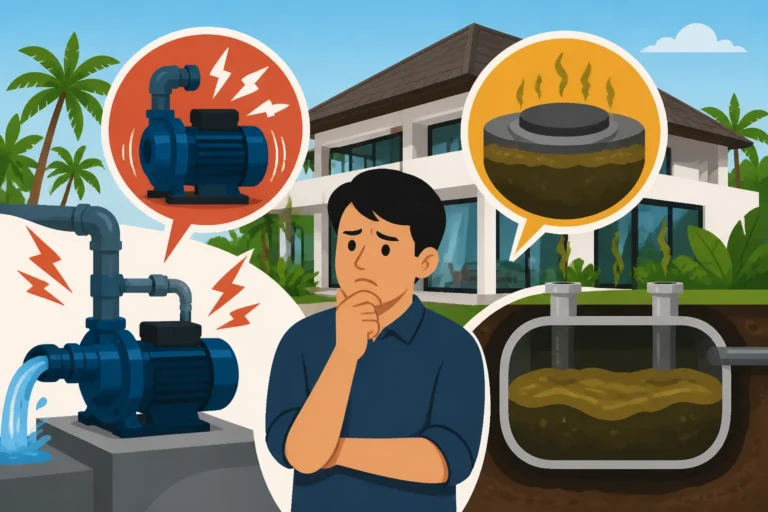
Water supply is the next big hurdle. In apartments, you’ll get a monthly bill for city water. In houses, you are likely using Water Supply in Indonesia: PDAM City Water vs Borewells (Sumur Bor). If you have a borewell, you aren't paying for the water itself, but you are paying for the electricity to run the pump. Be warned: borewell water in some parts of Bali and Jakarta can be salty or high in minerals, which will ruin your hair and your washing machine over time. Always check if there is a filtration system installed.
For cooking, very few houses have piped gas. Instead, you will use "LPG Gallons"—bright green 3kg tanks or blue 12kg tanks. You don't "buy" the gas; you swap your empty tank for a full one at the local warung (small shop). It’s cheap, but it always seems to run out right when you’re halfway through cooking a Sunday roast. Having a spare tank in the garage is the ultimate "veteran expat" move.
Dealing with Neighborhood Dynamics and Local Authorities
In Indonesia, you don't just rent a house; you join a community. This is particularly true if you live in a landed house. There is an unspoken social contract that involves the local neighborhood heads, known as the RT and RW. Ignoring these figures is the fastest way to make your life difficult.
The Importance of the RT and RW
Every neighborhood is divided into units called Rukun Tetangga (RT) and Rukun Warga (RW). The RT is the head of your immediate street. When you move in, it is customary (and often legally required) to "report" yourself to the RT. You provide a copy of your passport and KITAS, and in return, you are officially recognized as a resident. This isn't just bureaucracy; the RT is the person who handles local security, coordinates garbage collection, and mediates disputes between neighbors.
You will likely be asked to pay a small monthly "contribution" (usually around 50,000 to 200,000 IDR) for security and trash. For more details on this process, see Rukun Tetangga (RT) / Rukun Warga (RW): Registering with the Local Village Chief. Building a good relationship with your RT can be a lifesaver. When my internet provider refused to fix a cable that was blocked by a neighbor’s tree, one call to my RT solved the problem in thirty minutes.
Respecting the Local Rhythm
Living in a local neighborhood means adapting to the Dealing with Neighborhood Noise: Mosques, Roosters, and Construction Etiquette. If you are sensitive to noise, you need to scout your location carefully. Is there a mosque next door? In Indonesia, the call to prayer (Adzan) starts around 4:30 AM and happens five times a day. For many, it's a beautiful part of the atmosphere, but if you’re a light sleeper, you’ll want to invest in high-quality earplugs or soundproof windows.
Beyond the religious sounds, there is the general "liveliness" of Indonesian streets. The bakso cart man with his clanging bell, the neighbors chatting at sunset, and the occasional rooster symphony. This is the heartbeat of the country. If you approach it with frustration, you will be miserable. If you approach it with a smile and a "Halo Pak!" to your neighbors, you will find that the community will look out for you in ways you never expected back home.
How to Spot and Avoid Common Rental Scams
Unfortunately, the high-demand rental market in Indonesia attracts its fair share of bad actors. Scams have become increasingly sophisticated in 2026, often involving fake listings on social media or people posing as agents for properties they don't actually manage.
The Fake Landlord Scam
This is the most common trap, especially in Bali. A scammer will take photos from a legitimate Airbnb listing, post them on Facebook Marketplace at a "too good to be true" price, and claim they are the owner. They will tell you there is "high interest" and you need to pay a deposit immediately to hold the villa. They may even send you a fake copy of a land certificate (Sertifikat).
Always insist on a physical viewing of the property. If the "owner" says they are currently in another city and can't show you the house, walk away. Legitimate agents or owners will always find a way to get you inside. You should also be wary of Spotting Rental Scams in Bali: Unregistered Owners and Fake Subleases where a tenant tries to sublet a property without the actual owner's permission. If the owner finds out, they can evict you, and you will lose every cent of that upfront rent.
Digital Safety and Phishing
In the age of WhatsApp, many scams happen through your phone. You might receive a message from someone claiming to be your electricity provider or your landlord, asking you to click a link to "verify" a payment. These are almost always phishing attempts. Before clicking anything, check How to Spot WhatsApp Phishing and Local E-Commerce Delivery Scams to see the latest tactics being used.
When searching for homes, keep your data connection secure. I always use a local eSIM via Airalo to ensure I have constant access to maps and translation tools while I'm out scouting. Never rely on "free" public Wi-Fi in cafes when you are discussing sensitive financial details or reviewing contracts. If an agent seems pushy or refuses to provide their office address, it’s a red flag. A legitimate Biro Jasa (service agency) will have a physical presence and a reputation you can verify with other expats.
Moving In and Setting Up Your Tropical Life
Once the contract is signed and the money is sent, the real work begins. Moving in Indonesia is an exercise in patience and logistics. From registering your phone to getting your first load of groceries, the first 48 hours will be a whirlwind.
The IMEI Bottleneck
One of the most frustrating things for new arrivals is realizing their phone has stopped working. Indonesia has strict rules about IMEI registration for foreign devices. if you stay for more than 90 days, your phone will be blocked from local networks unless you pay a customs tax. If you’re moving into a new house, you’ll need a working phone to coordinate with the movers and the internet installers. Make sure you handle this at the airport or at a customs office early on.
Furnishing on a Budget
If you’ve rented an unfurnished house, you’ll likely be heading to IKEA in Alam Sutera or browsing Shopee for everything from curtains to kettles. Shopee is a powerhouse in Indonesia—you can get almost anything delivered within 24 hours. However, for big-ticket items like teak bed frames or dining tables, I recommend taking a trip to a local furniture cluster. You’ll get much higher quality at a lower price than in the big malls, and you’re supporting local craftsmen.
Dealing with Repairs, Maintenance, and Deposits
The end of a lease is often the most stressful part of the expat experience. Getting a deposit back in Indonesia can sometimes feel like pulling teeth. The key is to manage expectations from day one and stay on top of maintenance throughout the year.
Who is Responsible for What?
In most Indonesian leases, "major" repairs (leaky roofs, structural issues) are the landlord's responsibility, while "minor" repairs (broken lightbulbs, AC cleaning) are yours. The problem is that the line between "major" and "minor" is often blurry. If the AC unit dies because it’s 15 years old, is that your fault or the landlord's?
I always suggest including a specific clause that defines the dollar value of a "minor" repair. For example, any repair under 500,000 IDR is the tenant's responsibility, while anything over that is the landlord's. This prevents arguments over small things. For a deeper dive into these norms, check Who Pays for Repairs? Typical Maintenance Responsibilities in Leases. Also, remember that AC units in the tropics need servicing every 3-4 months. If you don't do this and the unit breaks, the landlord will definitely charge you for it.
The Final Walkthrough
When it’s time to move out, do a joint walkthrough with the landlord. Bring your original move-in inventory and take photos of everything. If there are damages, agree on the cost of repair right then and there. Many expats find it helpful to read Getting Your Deposit Back: Common Deductions and Move-Out Cleaning to understand what is considered "fair wear and tear" in the Indonesian context.
It is common practice for landlords to hold the deposit for 14-30 days after you move out to "check for hidden electricity bills" or "unseen damage." While this is standard, it can be nerve-wracking if you are leaving the country. One way to mitigate this is to pay your final utility bills yourself and show the receipts to the landlord on the final day, removing their excuse to hold the cash.
Disclaimer
The information provided in this guide is for general informational purposes only and does not constitute legal, financial, or professional real estate advice. Rental laws, tax rates, and immigration regulations in Indonesia are subject to frequent changes. While we strive to keep this information accurate and up-to-date as of 2026, we recommend consulting with a licensed Indonesian legal professional or a reputable real estate agency before signing any contracts or transferring large sums of money. The author and publisher are not responsible for any financial losses or legal disputes arising from the use of this guide.