Water Supply in Indonesia: PDAM City Water vs Borewells (Sumur Bor)
Moving into a new home in Indonesia often comes with a steep learning curve regarding basic utilities that many of us took for granted back home. I still vividly remember my first week in a Canggu villa when the shower suddenly began smelling like a rusty nail factory, leaving my skin itchy and my white laundry a dull shade of orange. This guide breaks down the critical choice between PDAM city water and Sumur Bor (borewells) to ensure your daily life remains comfortable and your household plumbing stays functional.
Understanding PDAM (Perusahaan Daerah Air Minum) City Water
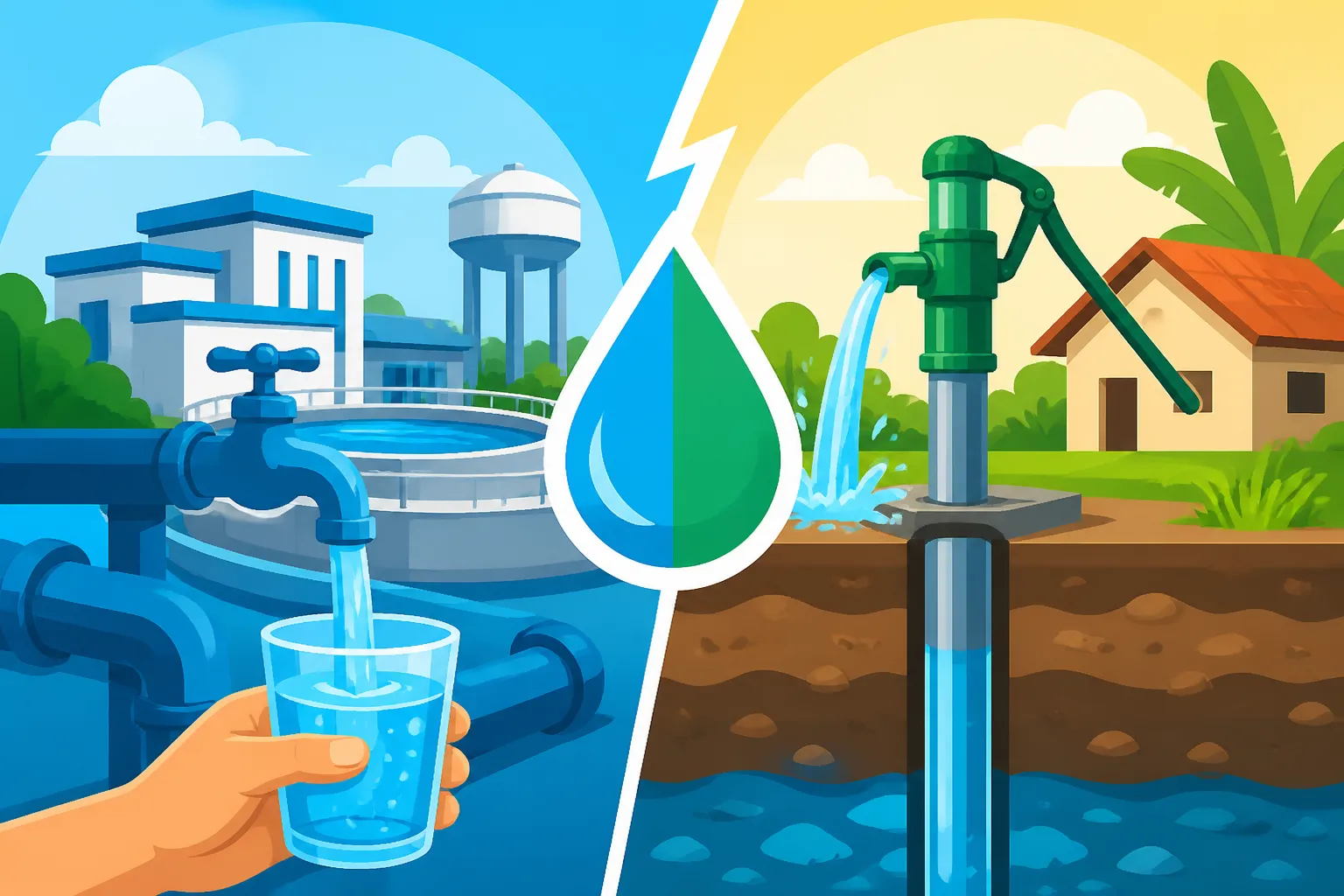
PDAM is the state-owned enterprise responsible for providing treated water to residents across the Indonesian archipelago. For many expats living in high-density areas, this is the primary source of water. However, the availability and quality of PDAM services vary wildly depending on whether you are navigating Jakarta Neighborhoods: Kemang, SCBD, Pondok Indah, and Menteng or settling into a more residential pocket of Surabaya.
Infrastructure and Reliability in Urban Areas
The reliability of PDAM is often tied to the age of the local infrastructure. In older parts of Jakarta or Bandung, the pipe networks can be decades old, leading to frequent leaks and occasional pressure drops. When you are Living in Indonesia as an Expat: The Complete Starter Guide (2027), you quickly learn that PDAM water isn't always a "set it and forget it" utility. During peak hours, such as early morning or early evening when everyone is bathing, the pressure can dwindle to a trickle if your home does not have a proper storage tank and booster pump system.
Furthermore, PDAM service can be interrupted by external factors like heavy rainfall or flooding. Excessive silt in the rivers that supply the treatment plants can force a temporary shutdown of the system. I’ve spent more than one afternoon waiting for the "air mati" (water is dead) status to clear after a tropical downpour. It is essential to check the local PDAM office's social media or website for outage announcements, as they are surprisingly proactive about digital communication these days.
The Quality of Treated Water
While PDAM water is treated with chlorine to kill bacteria, it is universally understood in Indonesia that this water is not potable. You should never drink it straight from the tap. The treatment process is generally sufficient for bathing and washing dishes, but the journey through aging city pipes can introduce sediments, rust, and even secondary contamination. If you are staying in a temporary rental found on Agoda while scouting for long-term housing, you might notice a slight chlorine scent, which is actually a sign that the water has been treated, though it can be harsh on sensitive skin.
For those with young children or sensitive health conditions, the quality of PDAM water still necessitates a secondary filtration system at the point of entry. It is a common misconception that "city water" is inherently safer than a well. In reality, both require vigilance. If you find the water has a cloudy appearance, it usually indicates air in the pipes or a high concentration of minerals that have been stirred up by a recent repair in the neighborhood line.
Cost Structure and Billing Processes
One of the major advantages of PDAM is the low monthly cost. Billing is based on cubic meter usage, and for a standard expat household, the monthly bill is usually quite negligible compared to electricity. You will receive a physical bill, or more commonly now, you can check your usage and pay through various digital platforms. Paying for your utilities is one of those small hurdles that becomes routine once you have your banking apps sorted.
For those who prefer convenience, you can easily pay your PDAM bills through Shopee or local banking apps like BCA Mobile or Mandiri Livin'. The system is surprisingly efficient. However, ensure that your landlord has settled all previous bills before you sign your lease. When Renting in Indonesia: The 1-Year Upfront Rule, Contracts, and Avoiding Scams, it is vital to include a clause stating that the property is handed over with all utility bills paid in full to avoid any sudden service disconnections.
The Borewell Solution (Sumur Bor) Deep Dive
Sumur Bor, or a borewell, is the most common water source for villas in Bali and detached houses in suburban Java. This involves drilling deep into the ground to reach the local water table. While it offers a sense of independence from city infrastructure, it brings a unique set of maintenance responsibilities that can be daunting for the uninitiated.
How Borewells Work in Indonesia
In Indonesia, borewells are categorized by their depth. A "Sumur Dangkal" (shallow well) usually reaches 10 to 15 meters, while a "Sumur Dalam" (deep well) can go 30 to 60 meters or more. The depth is determined by the geological conditions of your specific neighborhood. For example, in many Bali Neighborhoods: Seminyak, Canggu, Sanur, Ubud, and the Bukit, the water table can be quite shallow, but the quality of that shallow water is often compromised by proximity to septic tanks or saltwater intrusion if you are near the coast.
The system relies on a submersible pump or a jet pump to draw water up into a storage tank (toren). This independence means that even if the city water mains break, you still have your own supply. However, this also means you are entirely responsible for the "health" of your well. If the pump fails or the well runs dry, the burden of repair falls squarely on you or your landlord, depending on your contract.
Installation Costs and Technical Requirements
Installing a new borewell is a significant undertaking. It requires a team of specialized "tukang sumur" (well diggers) who use heavy machinery to drill through rock and soil layers. The cost varies based on the depth required and the diameter of the casing. A deep well is significantly more expensive but generally provides more stable water quality and a more reliable flow during the dry season.
Technical requirements include a high-quality pump—brands like Grundfos or Sanyo are the gold standards here—and a reliable electricity supply. Since the pump runs on electricity, a power outage means no water unless you have a backup generator or a large enough storage tank to tide you over. When setting up your Utilities and Setup: PLN Electricity, PDAM Water, and Home Internet in Indonesia, ensure your electrical capacity (VA) is high enough to handle the starting current of a powerful water pump without tripping your circuit breakers.
Seasonal Challenges and Groundwater Sustainability
The most significant risk with a Sumur Bor is the dry season. From August to October, the water table in many parts of Indonesia drops. If your well is too shallow, you may find yourself with a dry tap in the middle of a shower. This is a common frustration in Bali's Bukit peninsula, where the limestone ground makes water retention difficult. I have seen many expats forced to "order water" via a truck—a costly and inconvenient temporary fix.
Beyond individual convenience, there is the larger issue of groundwater sustainability. In cities like Jakarta, the over-extraction of groundwater via illegal borewells is causing the city to sink at an alarming rate. As a responsible resident, it is important to check if your area has restrictions on new wells. Some luxury developments will mandate the use of PDAM to protect the local environment. If you are Buying Property as a Foreigner: Hak Pakai, Hak Milik Nominees, and Risks, understanding the long-term viability of your water source is a crucial part of your due diligence.
Comparative Analysis: PDAM vs. Sumur Bor
Choosing between these two often depends on what is already installed in the property, but if you are building or renovating, you might have the luxury of choice. Below is a comparison to help you weigh the pros and cons of each system based on typical Indonesian conditions.
| Feature | PDAM (City Water) | Sumur Bor (Borewell) |
|---|---|---|
| Initial Cost | Low (Connection fee only) | High (Drilling and pump costs) |
| Monthly Cost | Low (Metered usage) | Very Low (Electricity for pump only) |
| Reliability | Moderate (Subject to city outages) | High (Independent, if well is deep) |
| Water Quality | Chemically treated, usually clear | Natural, may contain minerals/bacteria |
| Maintenance | Minimal (Handled by city) | High (Owner responsible for pump/well) |
| Sustainability | Better for the environment | Risks depleting the water table |
| Power Dependency | None (Gravity/City pressure) | Absolute (Requires pump electricity) |
Initial Investment vs. Monthly Operational Costs
If you are moving into a home that already has a PDAM connection, your initial cost is essentially zero. You just need to ensure the account is transferred or updated. However, if you are in a remote area of Bali where the PDAM pipes don't reach, you will have no choice but to invest in a borewell. This initial investment can range from 10 million to 30 million IDR or more, depending on the depth and equipment.
On the flip side, the monthly operational cost of a borewell is essentially just the electricity used to run the pump. If you have a large garden or a swimming pool, a borewell is significantly cheaper in the long run because you aren't paying for every cubic meter of water used to keep your grass green or your pool topped up. For many, this long-term saving justifies the high upfront cost.
Maintenance and Long-term Durability
PDAM requires almost no maintenance from the tenant or owner, other than checking for leaks in your own internal plumbing. If there is a problem with the main line, you simply call the PDAM office and wait for them to fix it. This is ideal for those who don't want to deal with technical headaches. You can easily manage your life while using an Airalo eSIM to stay connected with the local "RT" (neighborhood head) for updates on any city-wide repairs.
Sumur Bor requires a more hands-on approach. Pumps can burn out, especially during the frequent voltage fluctuations common in Indonesia. The pipes inside the well can crack, and the foot valve (the part that keeps water in the pipe) can fail. If you aren't comfortable managing a relationship with a local plumber or "tukang," a borewell might be a source of constant stress.
Quality Control and Health Risks
The health risks associated with water in Indonesia are a primary concern for any expat. PDAM water is generally safer from a bacterial standpoint because of the chlorination, but it can be contaminated by heavy metals from old city pipes. Borewell water is "natural," but that isn't always a good thing. In agricultural areas, pesticides can leach into the groundwater. In densely populated urban areas, E. coli contamination from nearby septic tanks is a very real threat.
Regardless of which system you use, I always recommend professional water testing once a year. You can take a sample to a local "Labkesda" (Regional Health Laboratory) or a private lab like Prodia. This is a small price to pay for peace of mind, especially when you consider that Healthcare in Indonesia for Foreign Residents: Complete System Overview (2027) emphasizes prevention as the best way to avoid the dreaded "Bali Belly" or more serious water-borne illnesses.
Filtration and Treatment: Making Indonesian Water Safe
Whether you choose PDAM or Sumur Bor, the water coming out of the pipe is rarely ready for household use without a bit of help. An Indonesian water system is almost never complete without a multi-stage filtration setup.
Choosing the Right Water Filter System for Safe Brushing and Cooking
For most expat homes, a three-stage "point of entry" filter is the standard. This usually consists of a sediment filter (to catch sand and dirt), a manganese or greensand filter (to remove iron and manganese), and a carbon filter (to remove odors and chlorine). Choosing the Right Water Filter System for Safe Brushing and Cooking is a task you should prioritize within your first month of arrival.
I personally recommend a system that allows for "backwashing." This means you can reverse the flow of water once a week to flush out the trapped sediment, extending the life of your filter media. If you are buying these components yourself, Shopee is an excellent resource for finding everything from replacement cartridges to complete pressure-tank systems.
Dealing with Common Contaminants (Sulfur, Iron, and E. coli)
If you have a borewell, you might encounter the "rotten egg" smell of sulfur. This is caused by hydrogen sulfide gas and is common in volcanic soils. It isn't necessarily harmful in low concentrations, but it makes bathing unpleasant and can tarnish silverware. A specialized aeration system or a dedicated sulfur filter is needed to fix this.
Iron is another common culprit, especially in Java. Water that looks clear when it comes out of the tap but turns brown after sitting for an hour is high in dissolved iron that oxidizes when it hits the air. This will ruin your clothes and stain your toilets. If you see brown rings in your sinks, your filter media needs replacing. E. coli, however, is the invisible enemy. It doesn't smell or change the color of the water, but it will make you incredibly sick.
The Role of UV Sterilizers and Reverse Osmosis
To combat bacteria like E. coli, many expat homes install a UV (Ultraviolet) sterilizer as the final stage of their water system. As water flows through a chamber, it is exposed to UV light that kills bacteria and viruses. It is a highly effective, chemical-free way to ensure the water you use for brushing your teeth is safe.
For drinking water, many people opt for a Reverse Osmosis (RO) system under the kitchen sink. While most expats still rely on the iconic "Aqua" or "Vit" 19-liter gallons delivered to their door, a high-quality RO system can provide pure drinking water directly from your tap. This is not only more convenient but also reduces the plastic waste associated with gallon consumption.
Practical Living with Indonesian Water Systems
Managing your water supply involves more than just picking a source; it requires understanding the "toren" and pump ecosystem that keeps your home running.
Troubleshooting Noisy Water Pumps and Septic Tank Issues in Villas
In a typical Indonesian house, the water from the PDAM or well is pumped into a large orange or blue plastic tank called a "toren," usually located on the roof. From there, gravity or a secondary "booster pump" sends the water to your taps. If you hear a constant clicking or humming coming from your pump at night, it usually means there is a small leak in your plumbing or the pressure switch is failing. Troubleshooting Noisy Water Pumps and Septic Tank Issues in Villas is a skill every long-term resident eventually develops.
Septic tanks are another "hidden" part of the water system. In Indonesia, most homes use individual septic tanks rather than a centralized sewer system. If your septic tank is too close to your borewell, you are at risk of cross-contamination. Always ensure that the "sedot tinja" (septic pumping) service is called every 2 to 3 years to prevent overflows that can seep into the groundwater.
Water Conservation and Storage Solutions (Toren Air)
The "toren" is your best friend during an outage. A standard 1,000-liter tank can sustain a small family for a day or two of conservative use if the PDAM goes down or the power fails. I always recommend having the largest tank your roof structure can safely support. Some modern homes now use "ground tanks" (tandon bawah) to avoid the aesthetic of a large tank on the roof, which also helps keep the water cooler in the tropical heat.
Water conservation is also becoming increasingly important in Indonesia. Simple habits like using a bucket instead of a hose to wash your scooter or installing low-flow showerheads can make a difference. Not only does this save money on your PDAM bill or electricity, but it also reduces the strain on the local infrastructure, which is often stretched to its limit.
Managing Water Scarcity During the Dry Season
If you find yourself in a situation where the water supply is dwindling during a particularly harsh dry season, don't panic. There are "air tangki" (water truck) services in almost every neighborhood. You can order 5,000 liters of water to be pumped directly into your toren or well. It is a common sight in Bali during the peak of the dry season to see these trucks navigating the narrow "gangs" (alleys).
To avoid this, many residents are now looking into rainwater harvesting. While not yet a standard feature in most homes, collecting tropical rainwater during the wet season to use for gardening or flushing toilets is a great way to future-proof your home against the inevitable water shortages that occur every few years.
Environmental and Legal Considerations
As an expat, it is important to be aware of the local regulations and the environmental impact of your choices. Indonesia is increasingly tightening its grip on water management to protect its natural resources.
Local Regulations on Groundwater Usage
In many parts of Jakarta and Bali, there are now regulations requiring a permit (SIPA) for deep borewells. While many private residences still operate without them, the government is cracking down on commercial properties and large villas. If you are involved in a building project, ensure your contractor is aware of the latest local "Perda" (Regional Regulation) regarding water. Using PDAM wherever possible is generally the more legally "safe" and environmentally friendly route.
The Impact of Rapid Urbanization on the Water Table
The rapid development of areas like Berawa and Pererenan in Bali has placed immense pressure on the local water table. When hundreds of new villas are built in a small area, each with its own deep well and swimming pool, the groundwater cannot recharge fast enough. This leads to saltwater intrusion, where seawater seeps into the freshwater aquifer, making the well water salty and unusable. This is already a major issue in parts of North Jakarta and is becoming a concern in coastal Bali.
Future-Proofing Your Home's Water Supply
If you are looking for long-term stability, the best approach is often a hybrid system. Many high-end homes have both a PDAM connection for daily indoor use and a borewell for the garden and pool. This gives you the reliability of the city supply with the cost-savings and independence of a well.
As Indonesia continues to modernize, we can expect PDAM services to improve, but the "well and toren" system will likely remain a staple of Indonesian life for decades to come. By understanding the nuances of these systems now, you can avoid the "rusty nail" showers of my early days and enjoy a seamless, comfortable life in the tropics.
Disclaimer
This guide is intended for informational purposes only and reflects the personal experiences and research of the author. Water quality, regulations, and infrastructure can change rapidly in Indonesia. Always consult with a qualified local engineer, plumber, or the relevant government authorities (PDAM) before making significant changes to your home's water supply or signing a long-term lease. The author and publisher are not responsible for any health issues, legal disputes, or property damage resulting from the use of this information.