Choosing the Right Water Filter System for Safe Brushing and Cooking
You brush your teeth with a splash of tap water, and twenty-four hours later, your entire week is cancelled due to a brutal stomach bug. I remember my first month in Jakarta when I ignored the "don't drink the water" rule for just a few seconds, and the resulting "Bali Belly" was a wake-up call I'll never forget. This guide breaks down exactly how to choose and install a water filter system to make your daily routine safe and stress-free.
The Reality of Water Quality in Indonesian Households
Whether you are living in a high-rise apartment in South Jakarta or a cozy villa in Canggu, you have to accept one universal truth: the tap water is not potable. Even if the government-provided PDAM water leaves the treatment plant at a decent standard, the aging pipe infrastructure across the archipelago often introduces contaminants, heavy metals, and bacteria before the water ever reaches your faucet. Most expats find that the water is fine for a quick shower, but the moment it involves ingestion—like rinsing your mouth or washing vegetables—the risks skyrocket.
In many parts of the country, especially in residential areas, you won't even be using city water. Instead, you'll likely be relying on a "sumur bor" or a deep-well bore system. I have lived in houses where the well water smelled faintly of sulfur or left a strange orange stain on the bathroom tiles within a week. This is usually due to high levels of iron or manganese, which are incredibly common in the local soil. Understanding the source of your water is the first step in the Utilities and Setup: PLN Electricity, PDAM Water, and Home Internet in Indonesia process. If you are just arriving and staying in temporary accommodation found via Agoda while you hunt for a long-term home, take note of the water quality in different neighborhoods, as it varies wildly.
The frustration is real when you realize you are constantly buying plastic "gallons" of mineral water just to cook pasta or brush your teeth. It’s expensive, bad for the environment, and a logistical headache to manage. This is why a dedicated filtration system isn't just a luxury; it is an essential part of Living in Indonesia as an Expat: The Complete Starter Guide (2027). You need a solution that addresses both the biological threats, like E. coli, and the chemical ones, like chlorine or heavy metals.
Types of Water Filtration Systems for Expats
When you start browsing for solutions on Shopee, you will see everything from tiny faucet attachments to massive industrial tanks. It is easy to get overwhelmed, but most expat homes benefit from a two-tiered approach: Point of Entry (POE) and Point of Use (POU). A POE system filters all the water entering the house, protecting your skin and your appliances, while a POU system provides high-grade drinking and cooking water at a specific tap.
Sediment and Carbon Pre-Filtration
For most houses, the first line of defense is a "housing" filter containing a 10-micron or 5-micron sediment cartridge. This is designed to catch the visible gunk—the silt, sand, and rust that often plagues Indonesian plumbing. If you have ever experienced Troubleshooting Noisy Water Pumps and Septic Tank Issues in Villas, you know that sediment buildup can wreck your pump’s internal components. Adding a carbon block filter alongside the sediment filter helps remove the chemical "pool" smell of chlorine often found in PDAM water.
These filters are relatively cheap and easy to find. I usually recommend buying a "double housing" set from Shopee and having your local handyman or "tukang" install it right after your water tank or pump. You will need to change these cartridges every one to three months depending on your usage. If you notice the water pressure dropping, that is your signal that the filters are clogged with the debris that would have otherwise ended up on your skin or in your stomach.
Reverse Osmosis (RO) Systems
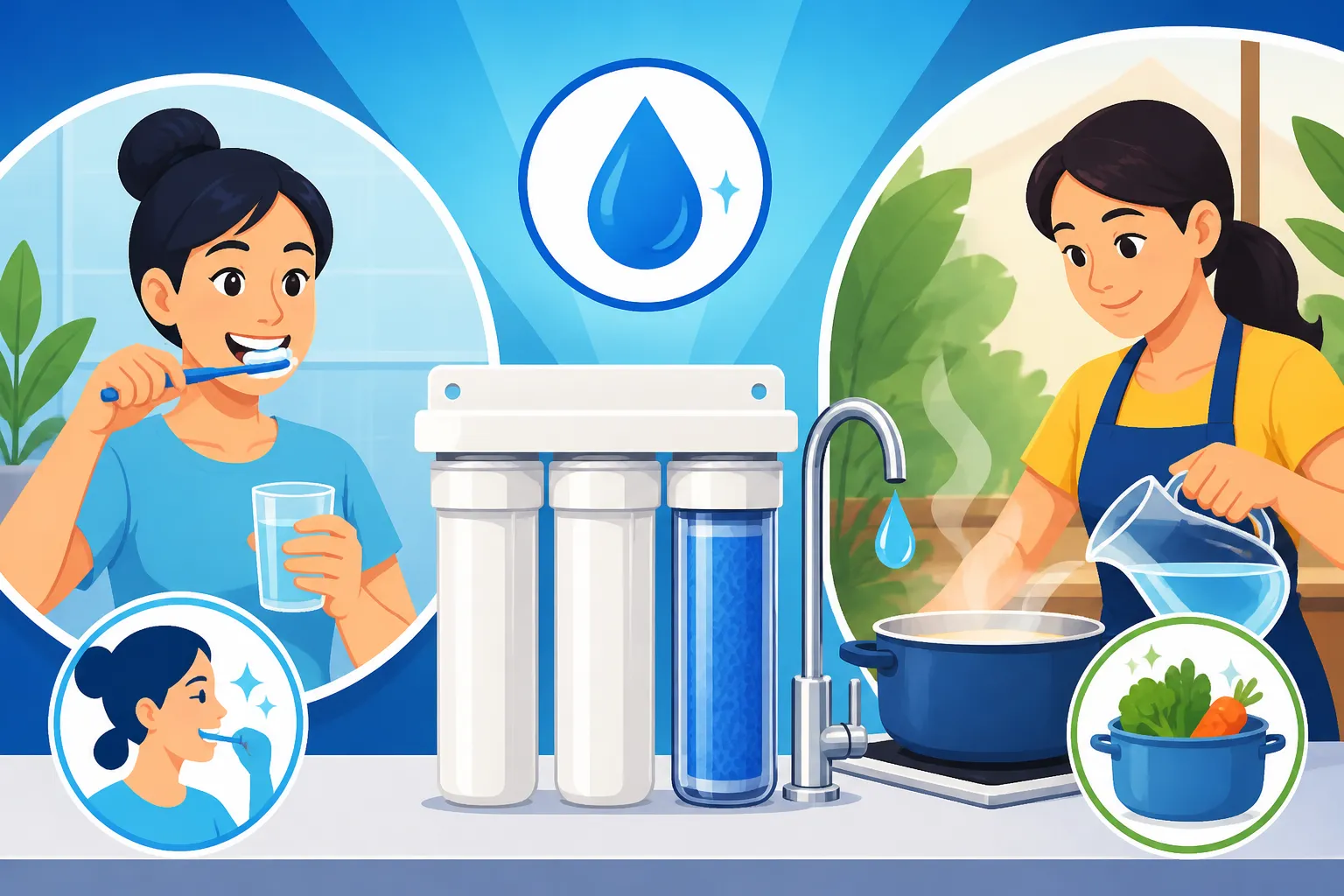
If your goal is to stop buying plastic gallons entirely, a Reverse Osmosis (RO) system is the gold standard. RO systems use a semi-permeable membrane to remove almost all contaminants, including dissolved solids and bacteria. Most residential RO units come with a 5-stage or 6-stage process, including a final "re-mineralization" stage to make the water taste better.
While these are the most effective, they are also the most wasteful, typically discarding several liters of "brine" for every liter of pure water produced. In a country where water conservation is becoming a bigger topic, this is something to consider. However, for the peace of mind of being able to cook a large pot of soup or rinse your toothbrush without a second thought, many find it indispensable. This is a common line item when calculating the Cost of Living in Bali 2026: Budgeting for Digital Nomads and Retirees.
Ultra-Violet (UV) Sterilization
UV filters are a fantastic, low-maintenance way to kill bacteria and viruses without changing the taste of the water. They work by passing the water through a chamber where it is exposed to high-intensity UV light. If you are already confident in the mineral content of your water but are terrified of bacterial infections, a UV light added to your under-sink system is a great choice. Just remember that UV lights require a constant electricity connection and the bulbs need to be replaced annually, which is something to manage alongside your other Utilities and Setup: PLN Electricity, PDAM Water, and Home Internet in Indonesia tasks.
| Filter Type | Primary Target | Pros | Cons |
|---|---|---|---|
| Sediment Filter | Silt, Rust, Sand | Cheap, protects appliances | Doesn't kill bacteria |
| Activated Carbon | Chlorine, Odors | Improves taste/smell | Needs frequent replacement |
| Reverse Osmosis | Heavy Metals, TDS | Purest water possible | High water waste, slow flow |
| UV Sterilizer | Bacteria, Viruses | No chemicals, low waste | Requires electricity, no sediment removal |
| Ultra-Filtration | Large Bacteria, Silt | No waste, good flow | Doesn't remove dissolved solids |
Choosing the Right Setup for Your Living Situation
Your choice depends heavily on whether you are renting an apartment, a house, or a villa. In a modern apartment in SCBD or Mega Kuningan, you might only need a high-quality under-sink filter because the building likely already has some form of central treatment. However, if you are in a standalone house, you are the "water manager" for your family.
Apartments and Compact Living
In an apartment, you usually cannot modify the main water inlet. Your best bet is a Point of Use (POU) system. Look for a "hollow fiber membrane" or a 3-stage under-sink filter. These are compact and can be installed under the kitchen sink with minimal drilling. When you move out, they are easy to remove so you can get your deposit back. I’ve seen many expats use these successfully to wash fruit and brush teeth, while still relying on a brand like Aqua for actual drinking water just to be safe.
While you are setting up your apartment, make sure you have your connectivity sorted with Airalo so you can research local installers and read reviews. It’s much easier to coordinate a "tukang" for your filter installation when you aren't struggling with a dead SIM card.
Houses and Villas with Bore Wells
For those in villas, the setup needs to be more robust. I strongly suggest a "Big Blue" 20-inch housing system at the Point of Entry. This ensures that the water in your shower and bathroom sinks is at least sediment-free. There is nothing worse than having a luxury rain shower that smells like a rusty pipe. Beyond the physical health benefits, this also prevents the white laundry from turning a muddy grey over time—a common frustration for those new to Bali Belly and Food Safety: Avoiding and Treating Stomach Bugs prevention strategies.
If your well water has a strong "iron" smell, you might need a specialized media filter tank filled with manganese greensand or ferrolite. This is a bit more of an investment, but it saves your skin from the dryness and irritation caused by heavy metals. If you are hearing strange sounds from your plumbing, you might also want to check our guide on Troubleshooting Noisy Water Pumps and Septic Tank Issues in Villas to ensure your filtration isn't putting too much strain on your pump.
Maintenance and the "Tukang" Culture
The most important thing I have learned as an expat in Indonesia is that a filter is only as good as its last maintenance check. The tropical heat and the high biological load in the water mean that filters can grow algae or become breeding grounds for bacteria if neglected.
I recommend setting a recurring calendar reminder every two months to check your sediment filters. You can easily order replacements in bulk on Shopee for a fraction of the cost of buying them in a hardware store like Ace Hardware. If you aren't handy with a wrench, building a relationship with a local "tukang" (handyman) is vital. Most neighborhoods have a local WhatsApp group where you can find recommendations. When they come to service your AC or help with Dealing with Neighborhood Noise: Mosques, Roosters, and Construction Etiquette issues like fixing a fence, ask them to check your water filters too.
When you are first moving in and looking for stays on Agoda, don't be afraid to ask the host or manager about their water filtration. If they have a "full house" system, it’s a sign they take maintenance seriously. For your own home, keep a small stock of "O-rings" and silicone grease. The heat here can make rubber seals brittle, and there is nothing more annoying than a slow drip from your filter housing at 2 AM.
Final Thoughts on Water Safety
Choosing a water filter system is one of the best investments you can make for your health and sanity in Indonesia. While it might seem like a lot of effort initially, the freedom of being able to brush your teeth, wash your face, and cook your meals using the water from your own tap is a game-changer. It shifts your focus from "survival mode" to actually enjoying the incredible lifestyle this country offers.
Start with a simple sediment and carbon setup for your whole house, and then add a high-quality RO or UV system for your kitchen. Your stomach, your skin, and your wallet will thank you in the long run.
Disclaimer
The information provided in this guide is for informational purposes only and based on personal experience and general knowledge of the Indonesian housing market. Water quality can vary significantly by location and specific property. Always consult with a professional water treatment specialist or technician before installing complex filtration systems. The author and publisher are not responsible for any health issues, property damage, or legal disputes arising from the use of the information contained herein. Always ensure your installations comply with local building regulations and landlord agreements.