Typhoon and Monsoon Prep: Keeping Your Roof and Drainage Clear
Every year, the first heavy downpour in Jakarta or Bali feels like a romantic tropical escape until the ceiling starts dripping onto your laptop and the street outside turns into a river. I remember my first monsoon in Canggu; I spent three hours bailing water out of my living room because I ignored a single clogged gutter. This guide solves your seasonal anxiety by detailing how to keep your roof and drainage clear before the rains hit.
Understanding the Indonesian Monsoon Cycle
The Indonesian climate is dictated by two primary seasons: the dry season and the monsoon (rainy) season. While the timing can shift slightly every year, you can generally expect the heavens to open up from October through April. For those living in Java or Bali, the peak intensity usually hits in January and February. During these months, the rain isn't just a light drizzle; it is a relentless, horizontal sheet of water that can dump several inches in an hour.
Foreigners often underestimate the sheer volume of water. A roof that survived a light shower in August will frequently fail during a December "cloudburst." This is the time when humidity levels skyrocket, leading to various household and health issues. If you aren't prepared, you might find yourself searching for Dealing with Tropical Skin Conditions: Humidity, Rashes, and Fungal Infections because of the constant dampness in your living environment.
Unlike some neighboring countries, Indonesia is rarely hit by full-scale typhoons due to its proximity to the equator, but "tropical cyclones" in the Indian Ocean frequently cause collateral damage in the form of high winds and extreme tidal surges. Preparing your home is not just about staying dry; it is about protecting your investment and your sanity.
Roof Maintenance: Your First Line of Defense
In Indonesia, most residential roofs are made of clay tiles known locally as genting. While these are excellent for ventilation, they are notorious for shifting during high winds or when a particularly heavy-footed cat traverses your roof. A single displaced tile is all it takes for a monsoon storm to ruin your gypsum ceiling.
Inspecting and Securing Tiles
Before the season begins, you must hire a local handyman, or tukang, to get on the roof. Do not try to do this yourself unless you have the right equipment; Indonesian roof structures can be surprisingly fragile. Have the tukang check for cracked tiles and ensure the "ridge caps" (the tiles at the very top) are properly cemented.
If you are looking for specific waterproofing materials like Aquaproof or No Drop, you can easily find them on Shopee. These liquid membranes are essential for sealing the gaps around your chimney or where the roof meets the wall. I always keep a few cans in the garage because once the rain starts, these items often sell out at local hardware stores.
Dealing with Overhanging Trees
Tropical vegetation grows at an alarming rate. That beautiful frangipani or mango tree hanging over your villa is a major hazard during a storm. Heavy branches can snap and crush your roof tiles, or worse, the falling leaves will instantly clog your gutter system.
It is standard practice to trim these back significantly before October. If you are renting, check your contract to see who is responsible for garden maintenance. If the landlord is slow to act, it is often worth paying a gardener a few hundred thousand Rupiah to do it yourself rather than dealing with a collapsed roof later. This is also a good time to ensure your external units are clear, similar to the advice found in AC Maintenance: Routine Servicing and Freon Rules for Tropical Climates.
Clearing the Path: Gutters and Ground Drainage
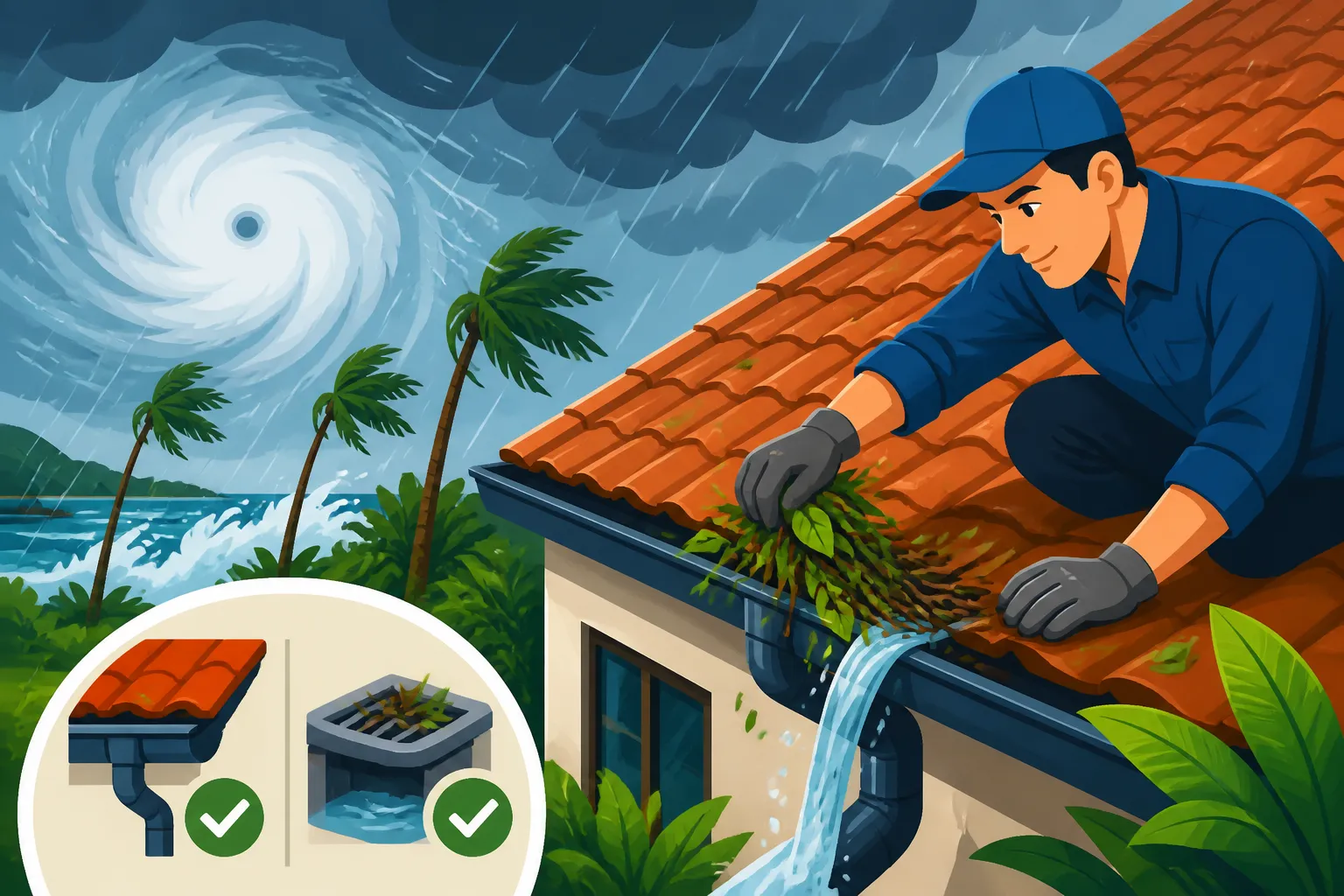
The most common cause of indoor flooding in Indonesian homes isn't a hole in the roof, but a backup in the gutters. When the water has nowhere to go, it flows backward under the tiles and into your light fixtures.
Gutter Debris and Animal Nests
In the dry season, gutters become a graveyard for dried leaves, dust, and even bird or gecko nests. When the first monsoon rain hits, all this debris is washed toward the downpipes, creating a solid plug.
You should have your gutters cleaned at least twice a year. If you live in a high-foliage area like Ubud or Kerobokan, make it once a month during the peak season. Ensure the tukang checks the exit point of the downpipes as well. Often, these pipes lead into small concrete channels on the ground that can also become blocked by trash or silt.
Managing the Ground Drainage System
Most Indonesian neighborhoods use an open drainage system called "selokan." These are the trenches you see running along the front of houses. During a heavy storm, if the selokan is full of plastic waste or sediment, the water will overflow into your yard and eventually your house.
This is where the concept of "Gotong Royong" (communal work) comes in. Often, the local neighborhood head will organize a day to clean these drains. Participate or contribute to the fund; it is the best way to ensure your street stays navigable. If your area is prone to rising water, you should read up on Flooding in Jakarta: How to Check if a Neighborhood is Prone to 'Banjir'.
| Maintenance Task | Frequency | Estimated Cost (IDR) |
|---|---|---|
| Roof Tile Inspection | Annually (Sept) | 200,000 – 500,000 |
| Gutter Cleaning | Bi-annually | 150,000 – 300,000 |
| Tree Trimming | Bi-annually | 200,000 – 700,000 |
| Drain Desilting | Annually | 100,000 – 250,000 |
Protecting Your Interior from Humidity and Leaks
Even with a perfect roof, the Indonesian monsoon brings a level of humidity that can destroy electronics, leather goods, and clothing. The air becomes so saturated that mold can begin to grow on your walls within days.
Using Dehumidifiers and Absorbers
For your closets, I highly recommend buying "Dagus" or "Thirsty Hippo" moisture absorbers. You can buy these in bulk on Shopee. For larger living spaces, a dedicated electric dehumidifier is a lifesaver. It prevents that "musty" smell that defines many expat homes in January.
If your home does suffer a leak, the damage is often to the ceiling boards. Once the rain stops, make sure to dry the area thoroughly before repainting, or the mold will simply grow back under the new coat of paint. For those managing a household staff, ensure they know how to handle these situations by reviewing Managing a Full-Time Driver: Providing Meals, Overtime, and Responsibilities.
Safeguarding Electronics
Power surges are incredibly common during tropical storms. Lightning strikes frequently hit transformers, sending a spike through the local grid. If you have expensive computers or home theater systems, you absolutely need a stabilizer or a UPS (Uninterruptible Power Supply).
I’ve lost a fridge and a MacBook to Jakarta lightning because I thought a standard power strip was enough. Check out Buying Appliances: Voltage Spikes and Why You Need a Stabilizer for a deeper dive into protecting your tech.
Staying Connected and Mobile During a Storm
When the monsoon hits its peak, "mati lampu" (power outages) are a regular occurrence. The state electricity company, PLN, often shuts down power in flooded areas for safety. Being prepared means ensuring you can still communicate and function in the dark.
Backup Power and Connectivity
Always keep your power banks charged. If your home internet (usually fiber) goes down because of a local outage, you will need a reliable mobile data plan. I personally use Airalo for an e-SIM backup if my local Telkomsel signal gets throttled during heavy usage. It’s a seamless way to stay connected when the lines are down.
If you find yourself stuck at home and unable to cook, apps like Gojek or Grab still operate, though you should expect significantly longer wait times and should tip your driver generously for braving the rain. If the situation at your home becomes untenable due to flooding or a major leak, you might need to book a quick staycation at a nearby hotel using Agoda to wait out the repairs.
Emergency Supplies and Information
Keep a physical "monsoon kit" in an accessible place. This should include:
- High-quality flashlights (batteries removed to prevent corrosion).
- A basic first aid kit.
- A few "Aqua gallons" of drinking water.
- Emergency contact numbers for your landlord and local emergency services.
In the event of a major weather event, keep an eye on the BMKG (Meteorology, Climatology, and Geophysical Agency) app. It provides real-time alerts for heavy rain and potential floods. Understanding these alerts is part of a broader safety strategy, much like Earthquake Preparedness: Alerts (BMKG App) and Evacuation Plans.
Sanitation and Health Considerations
Standing water is the primary breeding ground for mosquitoes, specifically the Aedes aegypti which carries Dengue Fever. The rainy season always sees a spike in Dengue cases across Indonesia.
Eliminating Standing Water
After every storm, walk around your property. Empty any flowerpot saucers, buckets, or discarded tires that have collected water. Even a bottle cap full of water can host hundreds of larvae. If you have a permanent pond or decorative water feature, consider adding "Abate" powder or small fish that eat mosquito larvae.
For more information on staying healthy during this time, you should consult Dengue Fever and Malaria Prevention: Vaccines, Treatments, and Local Realities. Additionally, with the increased moisture, food spoilage happens faster. Be extra cautious with street food during the rainy season to avoid the dreaded Bali Belly and Food Safety: Avoiding and Treating Stomach Bugs.
Septic Tank Maintenance
Heavy rain saturates the ground, which can prevent your septic tank from draining properly. If you notice a slow flush in your toilets during the rainy season, your "soak pit" might be waterlogged. This is a common issue in older villas. You can find more specific advice on this in Troubleshooting Noisy Water Pumps and Septic Tank Issues in Villas.
Handling a Home Emergency
If the worst happens and your roof fails or your garden floods into your living room, do not panic. The first step is to turn off the main power breaker to prevent electrocution.
Most Indonesian landlords are used to these issues and will have a "langganan" (regular) tukang they can call. However, during a major storm, every tukang in the city will be busy. This is why the preventative measures mentioned earlier—clearing the gutters and checking the tiles in September—are so critical.
If you are a new resident, it helps to have a list of local services ready. You can find useful tips for your first few weeks in Health Checklist for Your First 30 Days in Jakarta or Bali. Being proactive is the difference between a cozy evening listening to the rain and a midnight crisis with a mop and bucket.
Disclaimer
The information provided in this guide is based on personal expat experiences and general local knowledge in Indonesia. Weather patterns and local infrastructure vary significantly between regions and neighborhoods. Always consult with professional contractors for structural home repairs and follow official guidance from Indonesian authorities (BMKG, BNPB) during extreme weather events. The author and publisher are not responsible for any property damage or personal injury resulting from the use of this information.