Managing a Full-Time Driver: Providing Meals, Overtime, and Responsibilities
Navigating the gridlock of Jakarta or the narrow, scooter-clogged lanes of Canggu can transform a simple trip to the grocery store into a multi-hour endurance test that leaves you completely drained. I remember my first month in South Jakarta, trying to white-knuckle my way through a tropical downpour in Kuningan; I arrived at my meeting shaking, soaked, and thirty minutes late. This guide solves the logistical and emotional hurdles of hiring a personal driver, ensuring you manage the relationship with the professional clarity and cultural empathy required to make it work.
Defining the Scope: What Does a Full-Time Driver Actually Do
When you hire a full-time driver in Indonesia, you aren't just paying for someone to steer a vehicle. You are hiring a logistics manager, a vehicle caretaker, and often, a guardian for your family. Understanding the boundaries of these responsibilities is the first step toward a harmonious household. In my experience, the most successful expat-driver relationships are built on a written list of expectations provided on day one.
A driver’s primary responsibility is, of course, safe transportation. This includes navigating the complex "odd-even" (ganjil-genap) traffic restrictions in Jakarta or finding the "short-cuts" in Bali that don't appear on Google Maps. Beyond the wheel, the driver is responsible for the vehicle's "health." This means ensuring the car is washed daily—usually before you even wake up—and monitoring the service schedule. They should be the ones taking the car to the bengkel (repair shop) and ensuring the STNK (vehicle registration) is up to date. You can find more about the paperwork side of things in our guide on Car Ownership: Processing the STNK and BPKB on a Foreign Passport.
Many expats also include "messenger" duties in the driver's role. This might involve picking up a package you ordered on Shopee, dropping off documents at a notary, or even doing a quick run to the supermarket for a few items. However, be mindful of "scope creep." If you expect your driver to also act as a bodyguard or a gardener when not driving, this needs to be discussed during the interview and reflected in their salary. If you are still deciding between a car and a driver or just using apps, you might want to compare GoCar vs GrabCar vs Bluebird: Which is Safest and Most Reliable in Jakarta? to see if a full-time employee is truly what you need.
The Financial Breakdown: Salary, Overtime, and Allowances
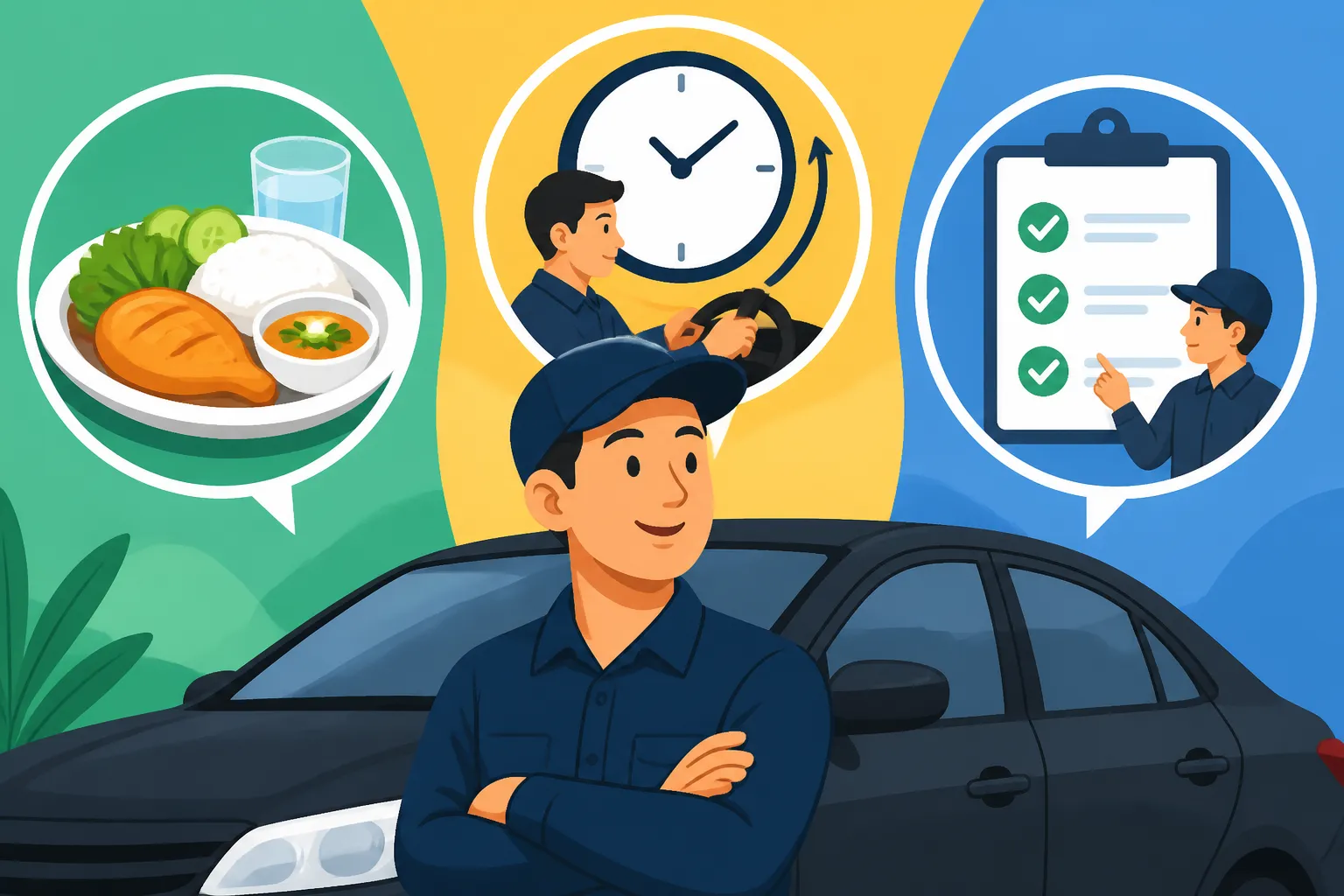
Money is often where the most significant misunderstandings occur between expats and local staff. In Indonesia, the compensation package for a driver is rarely a single "all-in" number. It is typically broken down into a base salary, a meal allowance (uang makan), and overtime (uang lembur).
The base salary is usually influenced by the regional minimum wage, known as UMR (Upah Minimum Regional). However, most experienced expat drivers expect a premium above UMR because they often speak some English and are accustomed to the higher standards of service required by foreign families. For a clearer picture of the market rates, check our article on Budgeting for a Live-In Maid (Pembantu) and Driver: Standard Monthly Wages.
Meal allowances are a critical part of the culture. If your driver is out with you during lunch or dinner hours, it is standard practice to provide a small cash allowance (typically IDR 30,000 to 50,000) so they can eat at a local warung. Alternatively, some employers choose to include a fixed monthly meal allowance in the salary. Overtime is another area that requires strict tracking. A standard work week is 40 hours. Anything beyond that—including early morning school runs or late-night airport pickups—should be paid as lembur. It is helpful to provide your driver with a simple logbook or use a shared spreadsheet to track these hours to avoid disputes at the end of the month.
| Compensation Component | Typical Frequency | Purpose |
|---|---|---|
| Base Salary | Monthly | Core compensation for standard 40-hour week. |
| Uang Makan (Meal Money) | Daily/Monthly | To cover meals while on duty. |
| Uang Lembur (Overtime) | Monthly | Payment for hours exceeding the standard shift. |
| Uang Pulsa (Phone Credit) | Monthly | To ensure the driver can always be reached via WhatsApp. |
| THR (Religious Bonus) | Annual | A mandatory 13th-month salary paid before major holidays. |
Managing the Relationship: Cultural Etiquette and Communication
The Indonesian workplace—even within a private home—is deeply hierarchical yet emphasizes social harmony. As an employer, you are the Bapak (Father) or Ibu (Mother) of the household. This carries a level of responsibility that goes beyond a Western boss-employee relationship. Your driver may look to you for help during family emergencies or health crises. While you must maintain professional boundaries, showing empathy during these times builds immense loyalty.
Communication is best handled through clear, indirect feedback. In Indonesian culture, "saving face" is paramount. If your driver makes a mistake, such as getting lost or failing to clean the car properly, avoid raising your voice or reprimanding them in public. Instead, have a quiet conversation later. For more on this, I highly recommend reading Navigating Cultural Clashes with Domestic Staff: Direct vs Indirect Feedback.
WhatsApp is the lifeblood of communication in Indonesia. Most drivers will expect you to send locations and schedules via the app. Ensuring your driver has a reliable data plan is essential; while many use local SIMs, you might find yourself needing a travel solution like Airalo if you take your driver across islands or to remote areas. Additionally, always remember to respect religious obligations. On Fridays, male Muslim drivers will need time off for Sholat Jumat (Friday prayers), usually between 11:30 AM and 1:30 PM. For a broader understanding of these norms, see our guide on Everyday Etiquette: Religion, Culture, Garbage, and Community Norms.
Logistics of Long-Distance Trips and Special Events
If you are planning a road trip from Jakarta to Bandung or traveling around Bali, your driver’s needs change. When you book a hotel for yourself on Agoda, you must also consider where your driver will stay. Many hotels in Indonesia offer "driver rooms" (kamar sopir) at very low rates, or you can provide a lodging allowance so they can find a local losmen or boarding house nearby.
During these trips, responsibilities often intensify. The driver is on duty for much longer stretches, and the potential for fatigue is real. It is your job as the employer to ensure they are getting enough rest. A tired driver is a safety risk for everyone in the vehicle. You should also clarify who pays for tolls (tol) and parking. Most expats provide a "float" of cash or a topped-up e-money card (like Mandiri e-mony or BCA Flazz) for these expenses. If you are handling your own movements occasionally, make sure you are legal by reading Driving in Indonesia: Getting a SIM A/C License and Traffic Realities.
When the end of the year approaches, you must prepare for the Tunjangan Hari Raya (THR). This is a non-negotiable, legally mandated bonus. For a driver who has worked for you for a year or more, this is equivalent to one month's salary. It is usually paid at least a week before Idul Fitri (for Muslims) or Christmas (for Christians). Failing to pay this correctly can lead to significant friction or even legal complaints. We have a detailed breakdown of this in our post on Giving the 13th Month Bonus (THR) to Your Maid and Driver Legally.
Hiring and Vetting: Finding the Right Fit
Finding a driver often happens through "word of mouth" in expat Facebook groups or via recommendations from friends. While agencies exist, personal referrals are usually more reliable. When interviewing, always ask for their SIM A (driver's license) and check the expiration date. It is also wise to request a "Trial Day" where you sit in the car and observe their driving style. Are they aggressive? Do they use their phone while driving? Do they know how to use GPS?
Security is another factor. While the vast majority of drivers are incredibly honest and hardworking, you are giving this person access to your home and your family’s schedule. Always take a photo of their KTP (ID card) and keep it on file. If they will be driving your children to school, the vetting process should be even more rigorous. For those who choose to live in a more communal setting while searching for staff, you might look into Apartment vs Landed House (Rumah Tapak): Pros and Cons for Expats to see which environment offers better facilities for domestic staff.
Lastly, consider the "off-boarding" process. If you have to let a driver go because you are leaving the country, providing a generous severance and a glowing recommendation letter (if deserved) is the standard practice. This helps them secure their next role and maintains your reputation within the local community. You can find more about the general hiring landscape in Hiring a Domestic Helper (Pembantu): Salaries, THR, and Live-In Arrangements.
Managing Expectations and Safety
Safety should always be your top priority. In Indonesia, the "rules of the road" are often treated as suggestions. It is perfectly acceptable to tell your driver that you prefer a slower, more cautious style, even if it means arriving late. I always tell my drivers, "I prefer to be late and safe than on time and in an accident."
You should also discuss what to do in the event of an accident. Who does the driver call first? Do they have the numbers for your insurance provider? Having a clear emergency protocol saves lives and prevents panic. If you are still getting used to the local systems, keep our guide on Emergency Numbers in Indonesia: 118/119 for Ambulance and What to Expect saved on your phone.
Managing a driver is a learning curve that involves as much personal growth as it does administrative management. You are not just hiring a service; you are entering into a partnership that, when managed with respect and clarity, will significantly improve your quality of life in Indonesia. Whether you are shopping for car cleaners on Shopee or booking your next getaway on Agoda, having a trusted driver by your side makes every aspect of Indonesian life smoother.
Disclaimer
The information provided in this guide is for informational purposes only and does not constitute legal or professional labor advice. Labor laws and minimum wage regulations in Indonesia are subject to frequent change at both the national and regional levels. Always consult with a qualified local legal professional or HR consultant to ensure your employment practices comply with current Indonesian Manpower Law. All internal links provided are for reference and may lead to further informational content.