Flooding in Jakarta: How to Check if a Neighborhood is Prone to ‘Banjir’
Waking up to the sound of torrential rain in Jakarta usually triggers a specific type of anxiety: is my street still there? I remember my first rainy season in Cipete, watching the water creep up my driveway while I frantically moved my motorbike to higher ground. This guide breaks down exactly how to vet Jakarta neighborhoods for flood risk so you don't end up underwater.
Understanding the Root Causes of Banjir in Jakarta
To truly navigate the risk of flooding in this megalopolis, you have to understand that Jakarta isn't just dealing with "a bit of rain." The city is essentially a giant bowl that is slowly sinking. This phenomenon, known as land subsidence, is primarily caused by the excessive extraction of groundwater by millions of residents and commercial buildings. In parts of North Jakarta, the ground is dropping by as much as 10 to 20 centimeters every year. When you combine this with rising sea levels, the northern coastal areas face a double threat of river flooding and tidal flooding, known locally as "Rob."
Beyond the sinking soil, Jakarta is the natural drainage point for thirteen different rivers that flow from the highlands of Bogor and Puncak down to the Java Sea. The Ciliwung River is the most famous, but others like the Pesanggrahan and Sunter rivers play equally critical roles in the city’s hydrology. During the peak of the monsoon season—usually from December to February—these rivers often swell beyond their capacity. If the mountains in West Java experience heavy rain, even a sunny day in South Jakarta can result in a flood as the "kiriman" (sent) water makes its way through the city's river system.
The third pillar of the flood problem is the city’s aging and often clogged infrastructure. Jakarta’s "Got" or drainage ditches are frequently narrow and filled with plastic waste or sediment. While the provincial government has made massive strides in "normalizing" rivers and cleaning out the canals, many secondary and tertiary drains in residential clusters remain inadequate. When a sudden "cloudburst" hits, the water has nowhere to go but the asphalt, turning neighborhood streets into temporary streams within minutes. This is why it is so important to research Jakarta Neighborhoods: Kemang, SCBD, Pondok Indah, and Menteng before signing any long-term leases.
Essential Digital Tools for Real-Time Monitoring
Before you even step foot in a potential new home, you can do a significant amount of "dry" research using local digital tools. The most authoritative source is the Pantau Banjir app, managed by the Jakarta Provincial Government. It provides real-time data on water levels at various floodgates (pintu air) and alerts for specific areas. If you see that the "Katulampa" floodgate in Bogor has reached "Siaga 1" (Level 1 Alert), you know that a massive volume of water will hit the city in about six to eight hours.
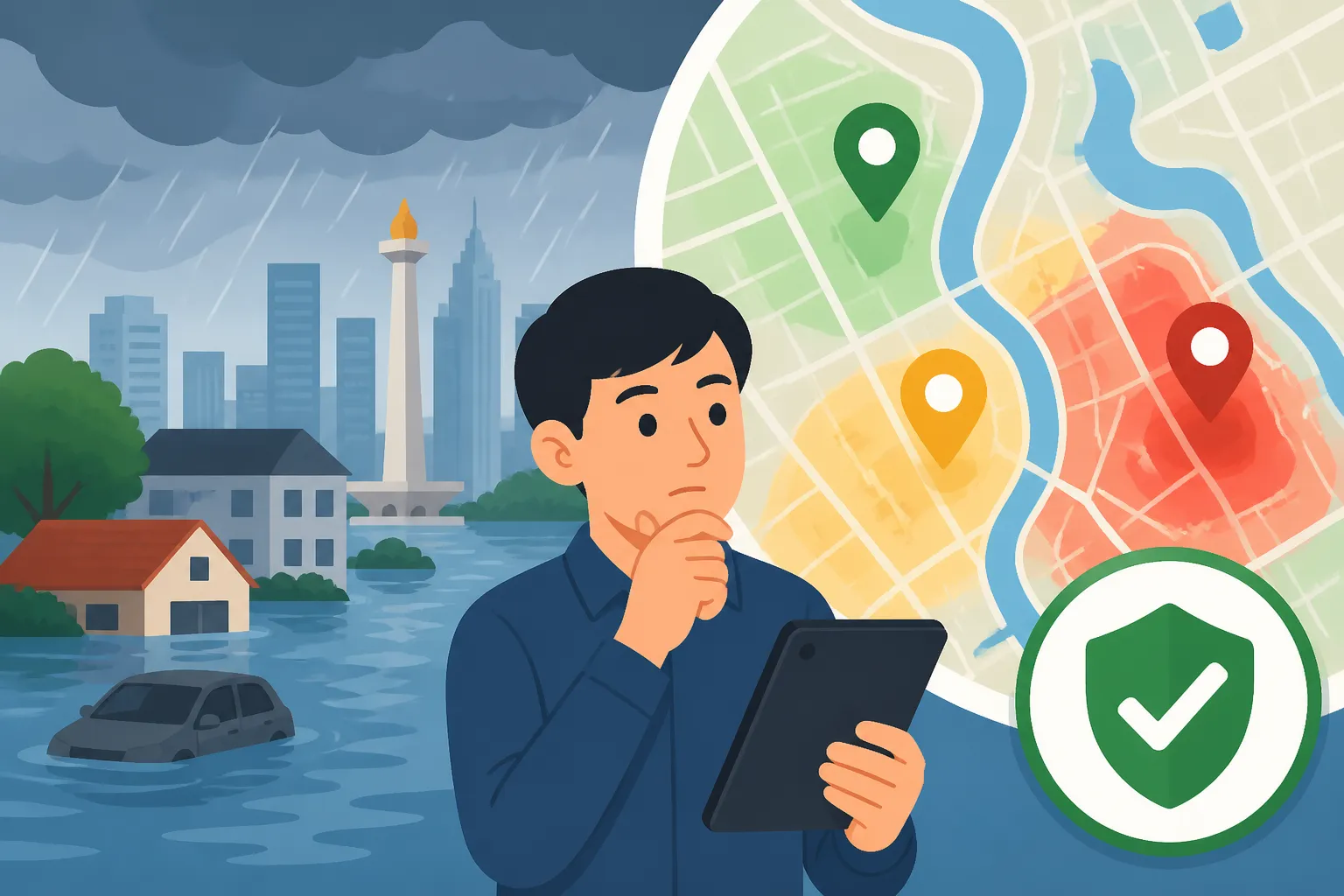
Another indispensable tool is PetaBencana.id. This is a crowdsourced platform that maps reports from residents on the ground. During a major rain event, you can open the map and see exactly which streets are submerged and how deep the water is (indicated by color-coded markers). This is incredibly helpful for checking the historical consistency of a neighborhood. If you see a specific street in Tebet or Kelapa Gading constantly glowing red on the map every time it rains, that’s your signal to look elsewhere. Using a local SIM card with a reliable data plan from a provider you might find via Airalo ensures you can access these maps even when the power goes out.
Social media, particularly X (formerly Twitter), remains the fastest way to get local intel. By following accounts like @TMCPoldaMetro or searching for hashtags like #BanjirJakarta, you can see real-time videos of road conditions. In Jakarta, the "citizen journalist" culture is strong. You will often see "Ojek" drivers or local residents posting updates on the height of the water relative to their tires. This level of granular detail is something you won't find in any official government report, and it’s vital for Everyday Etiquette: Religion, Culture, Garbage, and Community Norms when navigating how to help your neighbors or when to stay off the roads entirely.
Identifying Banjir Red Flags During House Hunting
When you are actually visiting a property, you need to look past the fresh coat of paint. Landlords are notorious for painting over "waterlines" just before the peak rental season starts. Look closely at the exterior walls, especially near the base. If you see a faint, horizontal salt-like residue or a slight discoloration that runs consistently across the wall at a certain height, that is a historical flood mark. Check the bottom of wooden door frames and the insides of kitchen cabinets; if the wood is warped or shows signs of rot, the house has likely seen water inside.
Architecture in Jakarta tells a story of survival. Pay attention to the "Tanggul" or small concrete barriers built at the entrance of driveways or front doors. If every house on the street has a 30-centimeter concrete lip at the gate, it’s not a design choice—it’s a defense mechanism. Similarly, look at the height of the houses relative to the road. Houses that sit significantly lower than the street level are at extreme risk. Over the years, Jakarta’s roads are often repaved by adding layers of asphalt on top of the old ones, effectively "raising" the road and turning the adjacent houses into the lowest point for water to collect.
The most honest information will always come from the "Satpam" (security guards) or the "Ibu-Ibu" at the local "Warung." Strike up a conversation and ask directly, "Sering banjir di sini?" (Does it flood here often?). Ask specifically if the water enters the house or just stays on the street. Sometimes a street might flood 20 centimeters deep—which is annoying for your car—but the house remains dry because it’s built on a high foundation. This nuance is critical when you are Renting in Indonesia: The 1-Year Upfront Rule, Contracts, and Avoiding Scams, as you don't want to pay for a year in advance for a home that becomes a swimming pool in January.
Neighborhood Comparison: High-Risk vs. Low-Risk Areas
Jakarta’s topography is varied, and while no area is 100% immune to the most extreme weather events, some are significantly safer than others. Generally, the "higher" ground is in the south, but even here, localized dips in the landscape can cause havoc. For example, parts of Kemang are famous for flooding because the area sits in a natural basin near the Krukut River. Conversely, areas like Menteng or the SCBD are generally better protected due to higher elevation and more robust, Dutch-era drainage systems that have been modernized.
| Neighborhood | General Risk Level | Primary Cause of Flooding |
|---|---|---|
| Kelapa Gading | High | Low elevation, swampy history, heavy rain accumulation |
| Kemang (Lower parts) | High | Overflow from the Krukut River |
| Pluit / Muara Baru | Very High | Tidal flooding (Rob) and land subsidence |
| Menteng | Low | Higher elevation and priority infrastructure |
| SCBD / Senopati | Low | Robust drainage and central location |
| Pondok Indah | Moderate | Highly street-dependent; some clusters are very safe |
| Kebon Jeruk | Moderate | Localized drainage issues during extreme storms |
If you are looking for long-term stability, it is worth checking Where to Live in Jakarta: Neighborhood Guide for Expat Families and Singles to see which clusters have invested in private pumps and "Polder" systems. Some high-end gated communities (Perumahan) have their own internal water management systems that can keep the streets dry even when the surrounding public roads are underwater. This can be a lifesaver for your commute and your peace of mind.
Logistics and Life Management During the Rainy Season
Living in a flood-prone city requires a shift in how you handle daily logistics. When the heavy rains start, the "Macet" (traffic) becomes legendary. A commute that usually takes 30 minutes can easily turn into three hours. This is where apps like Gojek and Grab become your best friends, though you should expect higher prices and fewer available drivers. It’s also wise to have a backup plan for Utilities and Setup: PLN Electricity, PDAM Water, and Home Internet in Indonesia, as major floods often lead to preventive power cuts by PLN to avoid electrocution risks in submerged neighborhoods.
For supplies, the convenience of e-commerce cannot be overstated. If you find yourself stuck at home, you can order rubber boots, sandbags, or even emergency food supplies through Shopee. It is a good idea to stock up on essentials before the peak of the season. Ensure you have a "Go-Bag" ready with your passport, KITAS documents, and any essential medications. If your area is prone to standing water, you should also be aware of health risks, particularly Dengue Fever and Malaria Prevention: Vaccines, Treatments, and Local Realities, as mosquitoes breed rapidly in the aftermath of a flood.
Finally, always have a list of emergency contacts saved on your phone. Knowing how to reach local rescue services is vital. If a flood becomes severe enough that you need evacuation or if there is a medical emergency during the chaos, refer to Emergency Numbers in Indonesia: 118/119 for Ambulance and What to Expect. Often, the local "RT" (neighborhood head) will have a WhatsApp group for the street where residents share updates and coordinate help. Being part of this group is perhaps the single most effective way to stay safe and informed when the waters start to rise.
Preparing Your Home Infrastructure
If you’ve already moved into a house and realize it has some flood vulnerabilities, there are steps you can take to mitigate the damage. Many expats install "sump pumps" in their basements or lower garage areas. These pumps automatically trigger when water reaches a certain level, pumping it out to the street. It’s also common to have "metal flood barriers" custom-made for the front door. These are slots that you can slide a heavy metal plate into when the rain gets heavy, creating a watertight seal for your entryway.
Check your electrical outlets. In older Jakarta houses, outlets are often placed near the floor. If you are in a flood-prone area, it is worth hiring a licensed electrician to move these outlets to at least one meter above the floor. This simple change can prevent a total electrical short or a fire during a flood. Additionally, ensure your expensive electronics and "hard copy" documents are stored on the second floor of your home. If you are using a platform like Agoda to find temporary housing while your home is being serviced after a flood, make sure to check the "elevation" of the hotel or apartment as well.
Don't forget about your vehicle. If the water starts to rise on your street, don't wait until it reaches the exhaust pipe to move your car. Many malls in Jakarta actually offer "flood parking" during peak season, allowing residents from nearby flooded neighborhoods to park their cars in the upper levels of the parking garage for a fee. It’s a small price to pay to avoid your vehicle being declared a total loss. Having a plan for Earthquake Preparedness: Alerts (BMKG App) and Evacuation Plans and flooding simultaneously is part of the "survival kit" every veteran expat carries in their mind. Stay vigilant, stay dry, and always respect the power of the Jakarta rain.
Finding Medical Care and Support During Emergencies
In the event that a flood leads to an injury or a sudden illness—which is common due to waterborne bacteria—knowing where the nearest high-ground hospital is located is essential. Some clinics in lower-lying areas may become inaccessible or lose power. You should identify the major international-standard hospitals that are situated on higher ground or have significant flood defenses. For a comprehensive list of these facilities, you can check Finding Medical Care in Indonesia: Clinics, Hospitals, and International Facilities.
Flooding also brings secondary risks like skin infections and respiratory issues from mold. If your house has been flooded, the cleanup process is grueling and must be done thoroughly to prevent long-term health problems. Use high-grade disinfectants and ensure the house is completely dry before moving furniture back in. If you are feeling overwhelmed by the administrative and physical toll of managing a flood-damaged property, remember that the expat community in Jakarta is incredibly resilient and helpful; don't be afraid to reach out to local community groups for advice or temporary assistance.
Disclaimer
The information provided in this guide is for general informational purposes only and reflects the personal experiences and observations of the author living in Indonesia. While every effort has been made to ensure the accuracy of the details, flooding patterns in Jakarta are highly unpredictable and subject to changes in infrastructure, climate, and government policy. We do not provide legal, engineering, or professional real estate advice. Readers are encouraged to conduct their own due diligence, consult with local experts, and monitor official government channels (such as BPBD Jakarta) for real-time safety instructions during flood events. The author and publisher are not responsible for any property damage, financial loss, or personal injury resulting from the use of this information.