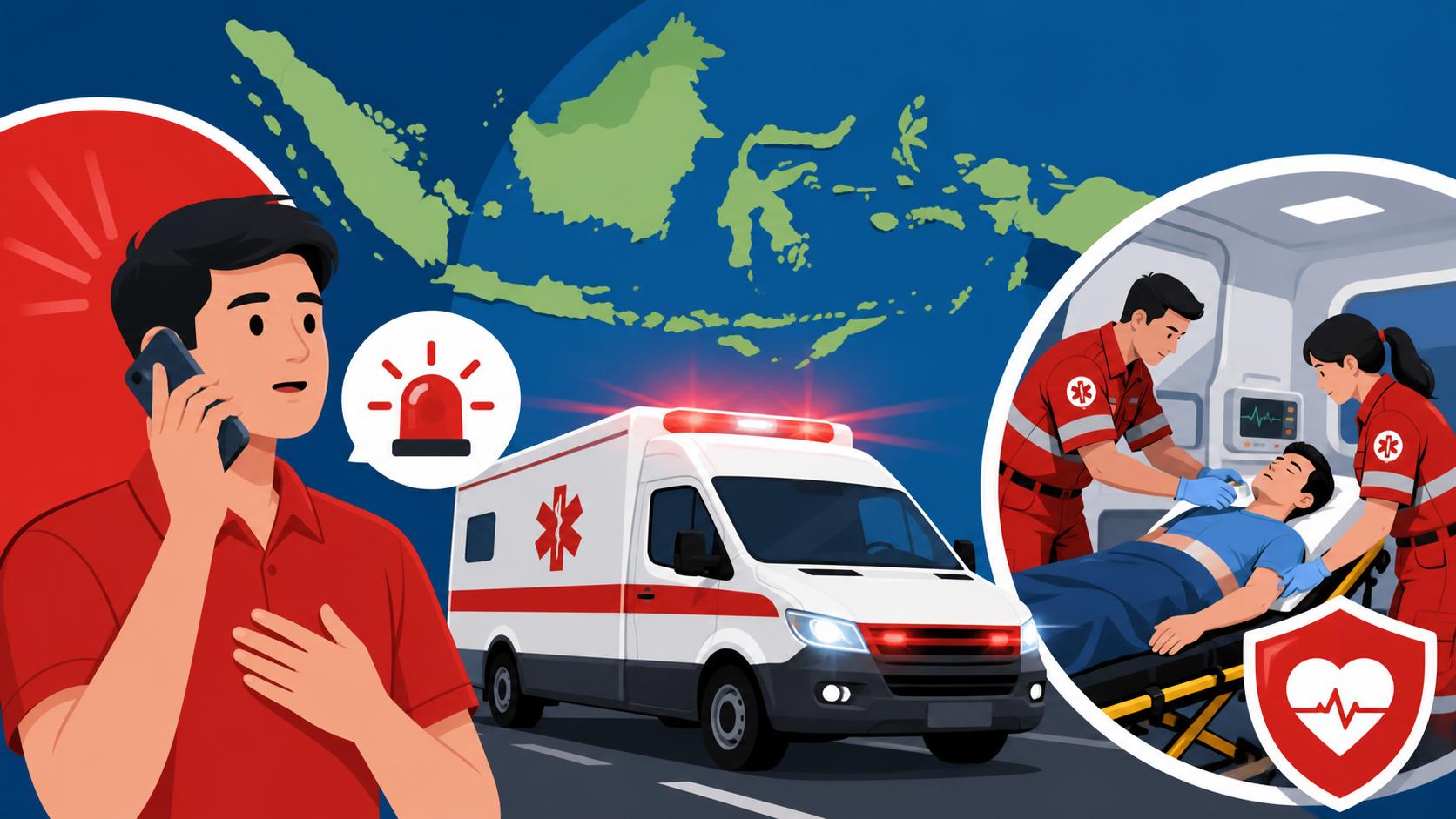
Emergency Numbers in Indonesia: 118/119 for Ambulance and What to Expect
Finding yourself in a medical crisis in a foreign country is a paralyzing experience, especially when the sounds of the city are overwhelming and the language barrier feels like an impassable wall. I remember the sheer panic I felt when a close friend collapsed in a crowded South Jakarta mall, and I realized I didn't actually know the local equivalent of 911. This guide is designed to dismantle that confusion, providing you with the exact numbers to call, the logistical realities of the Indonesian ambulance system, and a survival strategy for navigating the chaotic road to the hospital.
Understanding the National Emergency Numbers
When you are in the middle of a crisis, your brain often reverts to the numbers you grew up with. In Indonesia, the system has undergone significant consolidation to make it more intuitive for both locals and expats, but remnants of the old specialized numbers still exist. The first thing you need to know is the number 112. This is the "Single Emergency Call Number" (Layanan Nomor Tunggal Panggilan Darurat) which acts as an umbrella for police, fire, and medical emergencies. It is designed to work even if your phone is locked or if you have no credit on your prepaid SIM card.
The 112 system is managed at the municipal level, meaning that when you call, you are connected to a local command center in your specific city, such as Jakarta's BPBD or Bali’s regional dispatch. The operators are trained to filter the calls and redirect you to the appropriate service. However, because 112 is a general-purpose number, there can sometimes be a slight delay as the dispatcher relays your information to the medical team. If you are certain you need a medical response and nothing else, moving directly to the healthcare-specific lines can save precious seconds.
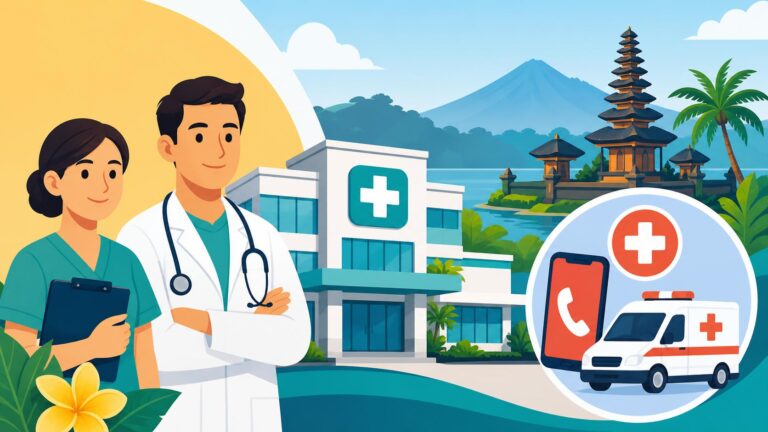
This brings us to the core numbers for medical assistance: 118 and 119. Historically, 118 was the primary number for ambulance services, often associated with the Indonesian Red Cross (PMI). While it still functions in many regions, the government has been heavily promoting 119 as the National Command Center for health emergencies. The 119 service is more integrated with public hospitals and the Emergency Medical Care in Indonesia: Ambulances, ERs, and Evacuation Protocols framework. In my experience, if you are in a major metropolitan area, 119 is generally more responsive for clinical emergencies, whereas 118 remains a solid backup if you cannot get through on the primary line.
The 112 Integrated System vs. Specialized Lines
Choosing between 112 and 119 often depends on your current location and the nature of the emergency. If there is a fire or a criminal element involved alongside the medical need, 112 is your best bet because they can coordinate multiple agencies simultaneously. If you are in a remote area where the 112 system might not be fully "smart" yet, dialing the direct medical lines is often more reliable. It is worth noting that while these services are technically free, the quality of the vehicle and the level of medical equipment inside can vary wildly between districts.
In larger cities like Jakarta or Surabaya, 112 is increasingly efficient. They have digital dashboards that track the location of the nearest available units. However, as an expat, you must be prepared for the fact that not every dispatcher will be fluent in English. I always recommend having a "cheat sheet" on your fridge or saved in your phone with your home address written in Indonesian, along with nearby landmarks. Saying "Saya di Kemang, dekat pertigaan Bank Mandiri" (I am in Kemang, near the Bank Mandiri T-junction) is far more effective than trying to explain a complex street name that the dispatcher might misspell.
The Role of 118 and 119 in Modern Indonesia
The 119 system, known locally as the National Command Center (NCC), is designed to provide a "pre-hospital" care service. When you call 119, the operator is supposed to provide basic medical instructions over the phone while the ambulance is en route. This is a significant step forward for Indonesia’s healthcare infrastructure. They can also assist in identifying which nearby hospitals have available beds in their Emergency Rooms (UGD) in Indonesia: Triage, Payment Upfront, and Documentation units, preventing the nightmare scenario of an ambulance wandering from hospital to hospital because the first three were full.
Despite these improvements, the 119 system still relies heavily on the "Puskesmas" (community health center) network in rural areas. This means that if you are in a remote part of West Java or Sumatra, the ambulance dispatched might be a basic transport van rather than a fully equipped Advanced Life Support (ALS) unit. For this reason, many expats living in major hubs still prefer to keep the direct numbers of private hospitals handy. If you have a high-end international policy like Cigna Global, you might find that your coverage allows for more sophisticated private transport, which we will explore in the next section.
Overcoming the Language Barrier During the Call
One of the biggest hurdles I faced was the realization that in high-stress moments, my limited Bahasa Indonesia completely evaporated. If you call 112 or 119, start by stating "Emergency" or "Darurat" clearly. If you don't speak the language, try to find a local bystander, a security guard (Satpam), or your domestic staff to take over the call. They can provide the hyper-local context that dispatchers need, such as which gate of your housing complex is open or which alleyway is currently blocked by a wedding tent (a very common occurrence in Indonesia).
If you are alone, keep your sentences short and focus on the "Where" and the "What." Use words like "Serangan jantung" (heart attack), "Kecelakaan" (accident), or "Pendarahan" (bleeding). It is also helpful to know that some private hospitals in expat-heavy areas like South Jakarta or Bali have English-speaking operators. If you are struggling with the public lines, calling a private facility like Siloam Hospitals Overview: What Expats Should Know About the Network directly might result in a faster and more linguistically accessible response.
Public vs. Private Ambulance Services
In Indonesia, the ambulance you get is not always the one you expect. The "public" system, accessed via 118/119, primarily uses vehicles from government hospitals (RSUD) or the Red Cross. These are essential services, but for an expat used to Western standards of paramedic care, they can feel rudimentary. These vehicles are often used for basic stabilization and transport. On the other side of the coin, private hospitals and specialized emergency groups offer "boutique" ambulance services that look and feel much more like what you would see in London or New York.
The distinction between public and private transport is not just about the leather seats or the air conditioning; it’s about the equipment on board and the training of the staff. A public ambulance may only have a driver and a basic nurse with limited trauma training. A private ambulance from a top-tier facility will likely have a doctor or a highly trained emergency nurse and advanced cardiac life support equipment. Knowing which one to call depends entirely on your medical needs and, frankly, your insurance status. If you are covered by Cigna Global, you usually have the financial leeway to opt for the more expensive, better-equipped private options without worrying about the upfront cost.
The logistics also differ significantly. Public ambulances are bound by regional protocols and will typically take you to the nearest government facility. If you want to go to a specific international-standard hospital, you are much better off calling that hospital’s direct ambulance line. This is particularly relevant when Calling an Ambulance in Jakarta vs Bali: Dispatch Differences and Private Options because the geography and traffic patterns in these two locations dictate very different response strategies.
The BPJS Ambulance Reality
For those of us enrolled in the national health scheme, it's important to understand how Public vs Private Healthcare in Indonesia: BPJS Kesehatan and Expat Insurance handles emergencies. Under BPJS, the cost of the ambulance is covered if it is deemed a genuine emergency and is used to transport you to a facility that accepts BPJS. However, you cannot "order" a BPJS ambulance like an Uber. It is usually dispatched via the 119 system.
One major caveat is that BPJS ambulances are often in high demand. In a city like Jakarta, you might be told there is a two-hour wait. In a life-or-death situation, this is unacceptable. Most veteran expats keep a "medical fund" in cash or use their private insurance to bypass the BPJS queue. While the national system is a great safety net for routine care, the emergency response side is still catching up to the needs of the massive population.
Private Hospital Ambulances and "Ambulans Motor"
If you are in a "macet" (traffic jam) prone area like SCBD or Kuningan, a standard van ambulance might be useless. This is where private hospitals have innovated with "Ambulans Motor"—paramedics on motorcycles. These first responders can weave through stationary traffic to provide initial stabilization, start an IV, or administer oxygen while the larger van struggles to reach you. Facilities like BIMC Hospital Bali: Services, Costs, and Insurance Direct Billing Options use these tactics effectively in the congested streets of Canggu and Seminyak.
When you call a private hospital, you are essentially paying for a higher level of "dispatch intelligence." They will ask more detailed questions and often give you a realistic ETA based on real-time traffic data. They are also more likely to have a direct line to your doctor if you are a regular patient. This continuity of care is a massive relief when you are in a state of shock. I have found that having the WhatsApp numbers of the emergency rooms of two or three nearby private hospitals is the most effective "safety hack" for any foreigner living in Indonesia.
Medical Evacuation and Medevac Services
For truly catastrophic injuries or illnesses, especially those occurring in remote islands or areas with poor hospital infrastructure, a ground ambulance is only the first step. You may require Medical Evacuation (Medevac) Services in Indonesia: Costs and Insurance Coverage. This involves chartered planes or helicopters equipped with intensive care units to fly you to Jakarta, Singapore, or your home country.
These services are astronomically expensive, often starting at $20,000 USD and climbing quickly. This is where having a robust international health plan is non-negotiable. Policies from Cigna Global are frequently used by the expat community specifically because they include or offer add-ons for international medevac. Without this, you could find yourself stuck in a regional hospital that lacks the specialized surgeons or equipment needed to save a limb or a life. Always check if your policy requires pre-authorization for medevac or if they have a 24/7 emergency hotline that handles the logistics for you.
What to Expect During the Call and Arrival
The moment you dial 118 or 119, the clock starts. But in Indonesia, the "clock" behaves differently than it does in many other countries. You need to be prepared for a series of questions that might feel redundant but are vital for the dispatcher. They will ask for your name, your exact location (with landmarks), the phone number you are calling from, and a description of the patient’s condition. Do not hang up until they tell you to.
When the ambulance arrives, the scene can be chaotic. In a local neighborhood (kampung), a crowd will likely gather. This is usually out of a genuine desire to help, but it can be overwhelming. The paramedics will perform a quick triage. In many cases, they will focus on "scoop and run"—getting you into the vehicle as fast as possible—rather than extensive on-site treatment. You should have your essential documents ready to go, as the hospital will demand them the moment you arrive at the UGD.
One of the most jarring things for newcomers is the payment discussion. Unless it is a government-dispatched ambulance for a major accident, there is often a fee for the transport. Private ambulances will definitely charge you, and they may ask for payment upfront or proof of insurance before they even leave your driveway. This is why knowing What to Bring to an Indonesian ER: BPJS Card, Passport, and Payment Proof is so critical. Having a credit card with a high limit or a significant amount of Rupiah in cash can prevent delays in care.
Crucial Information You Must Provide
The dispatcher needs more than just an address. In Indonesia, street signs are often missing, obscured by trees, or simply non-existent. You must provide the "Patokan" (landmark). For example: "I am in the house with the blue gate, three houses down from the Indomaret." If you live in an apartment, tell them the tower name and the floor, but also tell them if the ambulance can fit into the basement or if they should wait at the lobby.
You should also be ready to provide a brief medical history. Are there allergies? Is the patient on blood thinners? If you’ve been stocking up on specialized supplements from iHerb, like high-dose Vitamin K or specific heart medications, make sure to mention these to the paramedics. It's often helpful to put all current medications in a plastic bag and hand it to the nurse the moment they arrive. This prevents dangerous drug interactions during emergency treatment.
Triage and First Aid on the Scene
Indonesian paramedics are generally very capable at basic trauma care—stopping bleeding, splinting fractures, and administering oxygen. However, don't expect the level of diagnostic equipment you might find in a "hospital on wheels." Their primary goal is stabilization. If you are in a major city, the ambulance will likely have a defibrillator and basic cardiac monitoring. If you are in a rural area, it might literally be a stretcher in the back of a van.
During this time, the "Satpam" (security) of your building or neighborhood will often be your best ally. They can clear the way for the ambulance to park and help carry the stretcher if the paramedics are short-staffed. This is the "Gotong Royong" (mutual aid) spirit of Indonesia in action. Embrace it. If a neighbor offers to ride with you or help with the patient, it’s often a good idea to let them, as they can act as a translator and navigator.
The Reality of Hospital Billing and Deposits
The ambulance ride ends at the Emergency Room (UGD or IGD), and this is where the administrative hurdle begins. Most private hospitals in Indonesia will require a "Deposit" before they admit the patient to a ward, and sometimes even before they begin non-life-saving treatments in the ER. This deposit can range from 5 million to 50 million IDR depending on the severity of the case.
If you have insurance like Cigna Global, the hospital may have a direct billing arrangement, but they will still need to verify your policy, which can take an hour or more. During that window, they might still ask for a credit card swipe as a guarantee. I always recommend carrying a "medical emergency kit" that includes a photocopy of your passport, your insurance card, and a secondary credit card. Having these items ready can mean the difference between a smooth admission and a stressful argument at the billing desk while your loved one is in pain.
| Service Type | Number | Best For | Typical Response Time |
|---|---|---|---|
| National Emergency | 112 | General emergencies, fire, police, multi-agency needs | 15-30 mins (City) |
| Ambulance (Health Min) | 119 | Medical emergencies, hospital bed availability info | 10-20 mins (City) |
| Red Cross (PMI) | 118 | Trauma, accidents, blood services | 20-40 mins |
| Private Hospital | Direct | High-end care, English speakers, known medical history | 10-20 mins (Local area) |
| Search & Rescue | 115 | Natural disasters, lost at sea/mountains | Varies by terrain |
Practical Strategies for Emergency Preparedness
Waiting for an emergency to happen before you learn the numbers is a recipe for disaster. As an expat, you need to be proactive. This starts with "Emergency Drills" for your household. Does your spouse know where the nearest ER is? Does your helper know who to call if you collapse? I recommend programming the numbers into every phone in the house and even putting a physical sticker on the back of the front door with the 112, 119, and the nearest private hospital’s direct line.
Beyond the numbers, you need to think about the physical items you might need. I always keep a "Go-Bag" near the door. It’s not just for earthquakes; it’s for that sudden 3 AM dash to the hospital. Inside, I keep a power bank, a small bottle of water, a list of allergies, and a supply of any essential daily medications. If you regularly order your health essentials from iHerb, ensure you have at least a week’s supply of your "can't-live-without" items in this bag. You never know if a one-day ER visit will turn into a week-long inpatient stay.
Finally, leverage technology. There are several apps in Indonesia that can bridge the gap between you and medical care. Apps like Halodoc or Alodokter are great for tele-consultations, but in a true emergency, they also have features to help you locate the nearest pharmacies and hospitals. However, nothing replaces the speed of a direct voice call to an emergency dispatcher.
The "Go-Bag" and Essential Documents
Your medical "Go-Bag" should be a compact, waterproof pouch. In addition to the items mentioned above, include a copy of your KITAS (residency permit) and your NPWP (tax ID), as hospitals sometimes require these for administrative purposes. If you are using BPJS, your "Kartu JKN" is the most important document in the bag. Even if you have private insurance, having your BPJS card as a backup can save you from massive out-of-pocket expenses if the private insurance has a coverage gap.
I also suggest keeping a small amount of cash in various denominations. When you arrive at the hospital, you might need to pay for small things—a specific brace, a particular medication from an outside "Apotek" (pharmacy), or even just a taxi ride home for a family member. Small details like this are often forgotten in the heat of the moment but can add a layer of frustration to an already difficult day.
Using Telemedicine and Apps for Minor Emergencies
Not every situation requires a 119 call. If you are dealing with "Bali Belly" or a minor infection, calling an ambulance is an overkill that takes resources away from those in life-threatening danger. For these "urgent but not emergency" cases, using apps to talk to a doctor can be a lifesaver. You can describe the symptoms and the doctor can tell you if you need to go to the UGD or if you can manage at home with some hydration salts and probiotics you’ve sourced from iHerb.
These apps also have an "Ambulance" button in some cities, which acts as a private dispatch service. While it’s a bit like a ride-sharing service for medical needs, it can be surprisingly efficient. They use your phone’s GPS to pinpoint your location, which eliminates the landmark-explanation struggle. Just be aware that these are private services and will almost always require a digital payment or a linked credit card.
Local Neighborhood Support (RT/RW)
In Indonesia, you are never truly alone. The neighborhood structure of RT (Rukun Tetangga) and RW (Rukun Warga) is a social safety net that has existed for decades. If you are in an emergency, your "Pak RT" (the head of the neighborhood) is someone you should have on speed dial. They often have the direct numbers for the local "Puskesmas" or know which neighbor has a car and is willing to drive you to the hospital if the ambulance is taking too long.
When I first moved here, I was hesitant to "bother" my neighbors. But after seeing how quickly a neighborhood can mobilize during a fire or a medical crisis, I realized that being part of the community is your best insurance policy. Take the time to introduce yourself to your neighborhood security and the RT head. Let them know you are a foreign resident and that you appreciate their help. In return, they will often look out for you with a level of dedication you won't find in many Western cities.
Region-Specific Emergency Realities
It is a mistake to assume that the emergency response in Jakarta is the same as in Bali or a regional hub like Bandung. The geography of each location creates unique challenges for ambulances. In Jakarta, the primary enemy is "Macet" (traffic). The city is a labyrinth of toll roads and narrow "jalan tikus" (shortcut alleys). An ambulance might be physically close to you but unable to reach you because of a one-way street system or a flooded underpass.
In Bali, the challenge is often the narrow, winding roads of areas like Ubud or the sheer density of tourists in Kuta. The Bali Healthcare Guide: Hospitals, Clinics, and Emergency Contacts for Residents is a must-read for anyone living on the island, as it details which hospitals have the best trauma units and which areas are notoriously difficult for ambulances to reach. The response time in a quiet village in the north of Bali will be vastly different from a medical emergency in the heart of Denpasar.
Navigating Jakarta's Macet
In Jakarta, if you are calling an ambulance during rush hour (6 AM – 10 AM and 4 PM – 8 PM), you must be realistic. Even with sirens and lights, Indonesian drivers don't always pull over immediately. This is not out of malice; often, there is simply nowhere for the cars to go. This is why the "Ambulans Motor" mentioned earlier is so vital in the capital.
If you are in a high-rise apartment in Jakarta Healthcare Guide for Expats: International Clinics and After-Hours Options, check if your building has its own emergency protocol. Some premium residences in areas like Senopati or Mega Kuningan have a dedicated "First Responder" team on-site. Knowing your building’s internal emergency number is just as important as knowing 119.
Bali's Tourist-Focused Infrastructure
Bali has some of the best private emergency infrastructure in Indonesia because it is built to cater to the millions of tourists who visit annually. Hospitals like BIMC and Siloam Sunset Road are world-class. However, because they are so popular, their ambulance services can be booked up. If you live in a more remote area like Amed or Pemuteran, you are essentially on your own for the first hour or more.
For those living the digital nomad life in the Bukit or Canggu, the "Pecalang" (traditional Balinese security) can sometimes help clear traffic for an ambulance during a ceremony or festival. Respecting the local culture and knowing when a major "Upacara" (ceremony) is happening is part of your emergency planning. A road closure for a cremation ceremony can turn a 10-minute drive to the hospital into a 40-minute detour.
Regional Hubs: Surabaya and Bandung
In cities like Surabaya and Bandung, the 112 system is generally quite robust. Surabaya, in particular, has a very proactive municipal government that has invested heavily in emergency response centers. If you are in Surabaya Healthcare Guide: Where to Go and How to Book Medical Appointments, you will find that the response times are often better than in Jakarta simply because the city is more compact and the traffic, while bad, is more predictable.
In Bandung, the hilly terrain and narrow colonial-era streets can be a challenge. If you live in the "Dago Pakar" area or up towards Lembang, an ambulance will take a significant amount of time to climb the hills. In these cases, many residents find it faster to drive the patient themselves if they are stable enough to be moved. Always weigh the "wait for professional help" vs. "drive ourselves" options carefully based on the patient's immediate needs.
Emergency Medical Care in Indonesia: Ambulances, ERs, and Evacuation Protocols
The final piece of the puzzle is understanding the flow of care once you arrive at the hospital. The "Ambulance" part of the journey is just the beginning. Once you are in the UGD, the triage process begins. In Indonesia, triage is based on clinical need, but as an expat, you may find the environment more chaotic than what you are used to. There may be multiple families in the same room, and the noise level can be high.
If you are unsatisfied with the care or if the facility lacks the necessary specialists, you have the right to request a transfer. This is where your private insurance like Cigna Global becomes your strongest advocate. They can coordinate with a "Case Manager" at the hospital to ensure you are being treated correctly and, if necessary, arrange for a transfer to a higher-level facility. Don't be afraid to ask for a "Second Opinion" or to see the "Dokter Spesialis" (Specialist) on duty.
Remember that after-care is just as important as the emergency itself. Once you are discharged, you might need specialized medical supplies or supplements for recovery. This is a great time to restock your cabinet with high-quality items from iHerb, as local pharmacies may have limited stock of specific international brands. Recovery in the tropics requires extra attention to hydration and preventing secondary infections, so stay vigilant even after the sirens have stopped.
Disclaimer
The information provided in this guide is for general informational purposes only and does not constitute professional medical or legal advice. While every effort has been made to ensure the accuracy of the emergency numbers and protocols as of 2026, systems in Indonesia can change without notice. Always verify local emergency contacts in your specific area and consult with your insurance provider regarding coverage and emergency procedures. The author and publisher are not responsible for any actions taken based on the content of this article.