Calling an Ambulance in Jakarta vs Bali: Dispatch Differences and Private Options
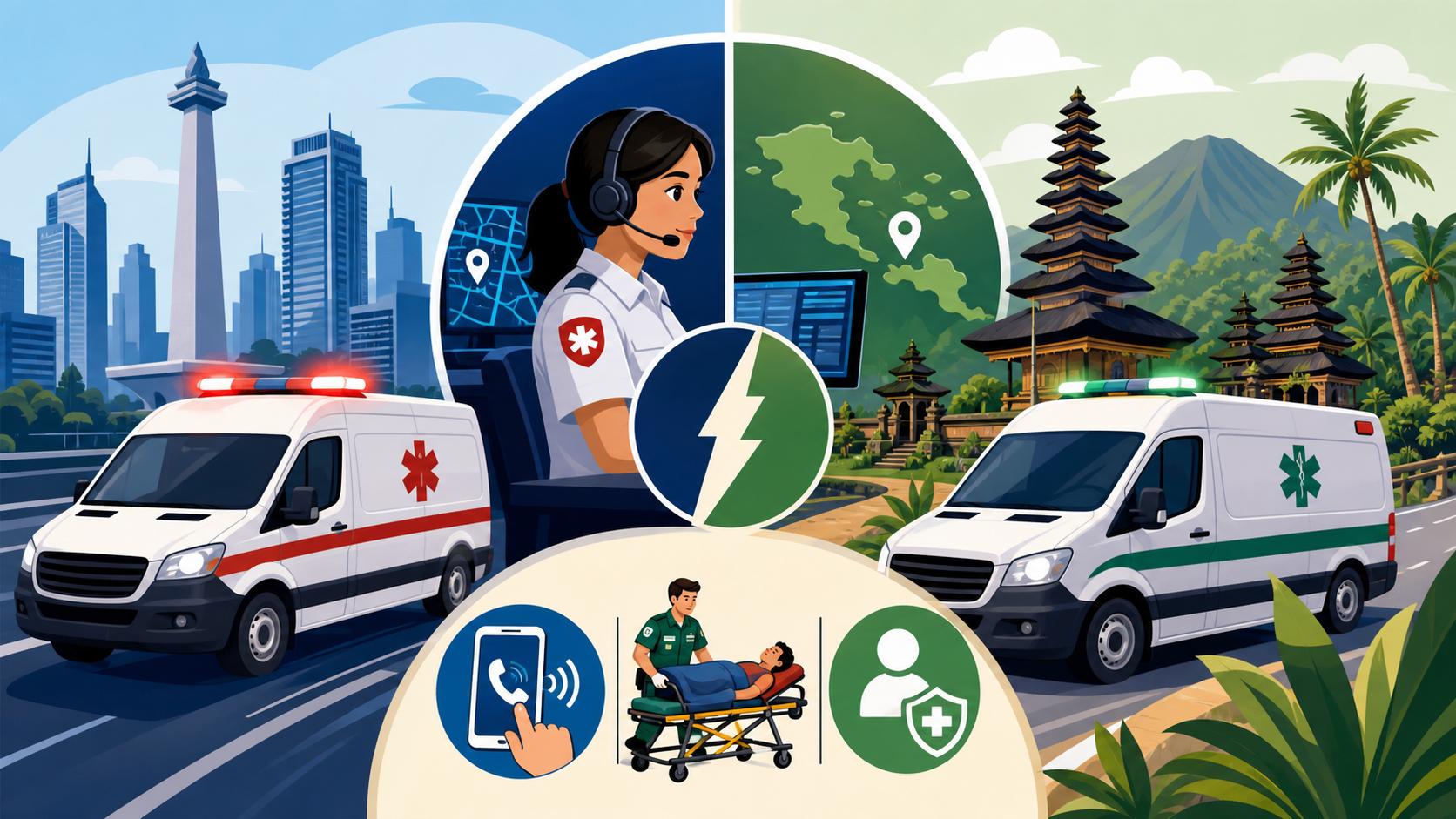
Finding yourself in a medical crisis in Indonesia can be terrifying, especially when you realize that the familiar logic of 911 or 999 doesn't apply here. I remember the absolute panic of my first emergency in Jakarta, watching the gridlocked traffic and wondering if an ambulance could ever reach me in time. This guide breaks down the critical dispatch differences between Jakarta and Bali to ensure you aren't left stranded when seconds count.
The National Emergency Framework: Understanding 119 and 118
In Indonesia, the official emergency numbers are 118 and 119. While the government has made massive strides in integrating these into a centralized Public Safety Center (PSC), the reality on the ground is that "integration" looks very different depending on whether you are in a Jakarta skyscraper or a villa in Canggu. The 119 system is generally the primary number for medical emergencies, intended to connect you with the nearest public hospital (RSUD) or a dedicated ambulance dispatch.
However, calling 119 is not always the seamless experience you might expect. In many cases, the dispatchers may not be fluent in English, which adds a layer of stress to an already high-pressure situation. I always tell newcomers that while 119 is a good fallback, it should rarely be your only plan. You need to understand how the local Emergency Numbers in Indonesia: 118/119 for Ambulance and What to Expect work within the context of your specific neighborhood.
The dispatch logic for 119 is based on proximity, but "proximity" in Indonesia is measured in time, not distance. An ambulance two kilometers away in Jakarta might take 45 minutes to reach you during the Friday afternoon rush. Because of this, the dispatchers often have to make difficult calls about which vehicle to send, and in some cases, they might even suggest you find a private car or a ride-hailing service if the "macet" (traffic) is truly impenetrable.
Jakarta Emergency Dispatch: Navigating the Urban Jungle
In the capital, the ambulance system is divided between the government-run AGD (Ambulans Gawat Darurat) and a massive network of private hospital fleets. The AGD is actually quite sophisticated for a developing city; they have a centralized command center and use GPS tracking to move vehicles through Jakarta’s notorious traffic. When you call for an ambulance in Jakarta, you are essentially entering a race against the city's infrastructure.
The Role of Private Hospital Fleets
Most expats in Jakarta bypass the public system entirely and call private hospitals directly. Institutions like Siloam, Medistra, or RS Pondok Indah maintain their own ambulance fleets that are often better equipped with Advanced Life Support (ALS) technology. If you are living in South Jakarta, you should have the direct emergency numbers for these hospitals saved in your phone. Calling them directly often results in a faster dispatch because they aren't waiting for a centralized government operator to relay the message.
For those residing in specific expat enclaves, the SOS Medika Clinics in Cipete and Kuningan: Services for Jakarta Expats are a lifeline. They offer specialized emergency services and their dispatchers are accustomed to dealing with foreigners who may be in shock and unable to communicate in Bahasa Indonesia. They understand the nuances of Jakarta Healthcare Guide for Expats: International Clinics and After-Hours Options and can often coordinate better with international insurance providers like Cigna Global to ensure that the financial side of the emergency is handled smoothly.
Traffic Mitigation and "Ambulance Escorts"
One unique aspect of Jakarta's emergency response is the "relawan ambulans" or ambulance volunteers. These are often motorcyclists who, upon hearing a siren, will weave through traffic to clear a path for the ambulance. It’s a grassroots solution to a systemic problem. When you are in the back of an ambulance in Jakarta, the ride will be jarring, loud, and potentially slow. The dispatcher will try to route the vehicle through TransJakarta bus lanes, but even then, progress can be frustratingly sluggish.
Digital Dispatch and Telemedicine Integration
In the last few years, we have seen a rise in digital-first emergency responses. Apps like Halodoc or Alodokter are starting to integrate emergency buttons that can help pinpoint your GPS location for dispatchers. This is a game-changer because explaining your exact location in a complex "gang" (alleyway) or a massive apartment complex can be nearly impossible during a crisis. Having these apps set up as part of your Healthcare in Indonesia for Foreign Residents: Complete System Overview (2027) strategy is highly recommended.
Bali Emergency Dispatch: Island Logistics and Community Response
Bali presents a completely different set of challenges. While Jakarta has the "macet," Bali has narrow village roads, mountainous terrain, and a decentralized hospital network. The 119 system exists here too, but its effectiveness varies wildly between the heavily developed south (Kuta, Seminyak, Nusa Dua) and the more remote areas like North Bali or the central highlands.
Private Excellence: BIMC and Siloam Bali
In Bali, the gold standard for ambulance dispatch is undoubtedly the private sector. If you are in a tourist or expat-heavy area, your first call should likely be to BIMC. They have a reputation for the fastest response times and Western-standard paramedics. The BIMC Hospital Bali: Services, Costs, and Insurance Direct Billing Options are well-known among the community for a reason—they are one of the few facilities that can reliably dispatch an English-speaking team with a fully equipped trauma van.
Siloam is another major player, with a heavy presence in Sunset Road. Their dispatch system is integrated with their main hospital, allowing for a seamless transition from the ambulance to the Emergency Rooms (UGD) in Indonesia: Triage, Payment Upfront, and Documentation units. In Bali, where a "minor" scooter accident can quickly escalate into a serious infection or trauma case, having these private numbers is non-negotiable.
The Banjar and Local Community Response
In more traditional parts of Bali, the "Banjar" (local village council) often acts as the de facto first responder. If an ambulance is struggling to find a villa tucked away in the rice fields of Ubud, it is often the local neighbors who will help coordinate the arrival or even transport the patient to a main road. This community-led "dispatch" is incredibly effective but requires you to be on good terms with your local community.
For residents, it's helpful to refer to a Bali Healthcare Guide: Hospitals, Clinics, and Emergency Contacts for Residents to understand which villages have better access to rapid response. In some cases, if the situation is life-threatening and an ambulance is too far, the local "Puskesmas" (community health center) might be the only immediate option for stabilization before a private ambulance can reach you.
Remote Challenges and Air Evacuation
If you are in a remote area like Amed or the Bukit, you must face the reality that a land ambulance might take hours. This is where Medical Evacuation (Medevac) Services in Indonesia: Costs and Insurance Coverage become a vital part of your safety net. In Bali, medevac usually involves a helicopter transfer to a more equipped facility in Denpasar or even a flight to Singapore or Darwin. If you have a policy with Cigna Global, you can often coordinate these high-cost evacuations through their 24-hour emergency helplines, which is a massive relief when local dispatch options are exhausted.
Comparison of Emergency Services in Jakarta and Bali
| Feature | Jakarta Dispatch | Bali Dispatch |
|---|---|---|
| Primary Number | 119 (AGD Jakarta) | 119 (Regency Specific) |
| Best Private Option | SOS Medika / Siloam / Medistra | BIMC / Siloam Bali |
| Main Obstacle | Extreme Traffic (Macet) | Narrow Roads / Remote Terrain |
| Language Support | High in Private / Variable in Public | High in Tourist Areas / Low in Villages |
| Average Response | 30–60 minutes (Traffic dependent) | 20–40 minutes (South Bali) |
| Payment Expectation | Cash/Card Upfront (unless insured) | Cash/Card Upfront (unless insured) |
The Financial Reality: Paying for Your Ambulance
One of the hardest truths to swallow about Indonesian emergency services is that they are rarely "free" for foreigners. Even the 119 service may require a fee, and private ambulances certainly do. In most cases, the hospital will expect payment or a guarantee of cover before the patient is even fully admitted to the ward. This is why I always keep a "crisis envelope" with a few million Rupiah in cash and my passport copies easily accessible.
If you are using Public vs Private Healthcare in Indonesia: BPJS Kesehatan and Expat Insurance, you should know that BPJS does cover ambulance transport, but only if it is deemed medically necessary and the patient is being moved between facilities. It rarely covers the initial "pick up" from your home to the hospital. For that, you are almost always paying out of pocket.
For those with comprehensive international insurance like Cigna Global, the process is much smoother. These providers usually have direct billing arrangements with the major private hospitals. However, you—or a family member—will still need to call the insurance company as soon as possible to issue a "Letter of Guarantee." Without this, you might be stuck at the billing desk while trying to manage a medical crisis.
Essential Phrases for Calling an Ambulance
If you find yourself having to call 119 or a local clinic where English is limited, you need a few key phrases. I keep these taped to the inside of my kitchen cabinet:
- "Saya butuh ambulans sekarang!" (I need an ambulance now!)
- "Ada keadaan darurat medis." (There is a medical emergency.)
- "Lokasi saya di…" (My location is at…) — Always give a landmark, like "near the Indomaret" or "next to the mosque."
- "Pasien tidak sadar." (The patient is unconscious.)
- "Banyak darah." (A lot of blood/bleeding.)
- "Sesak napas." (Difficulty breathing.)
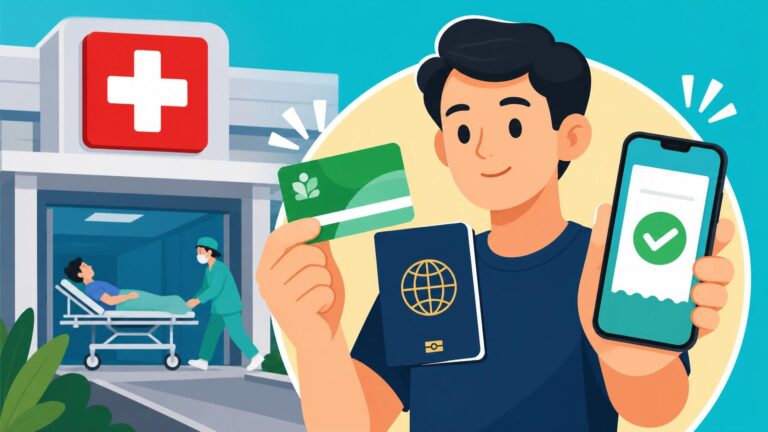
Knowing these few words can be the difference between a dispatcher prioritizing your call or putting you on hold. Once the ambulance arrives, make sure you know What to Bring to an Indonesian ER: BPJS Card, Passport, and Payment Proof so the handoff to the medical team is as fast as possible.
Pre-Emergency Preparation and Prevention
The best way to handle an emergency in Indonesia is to prevent it or be so well-prepared that the response is automatic. This means more than just saving phone numbers. It means knowing the route to the nearest hospital yourself. I’ve had friends who ended up putting a family member in a GoCar because the ambulance was taking too long. In Jakarta, a motorbike "Ojek" can sometimes get a person to a clinic faster than a four-wheeled vehicle if the injury allows for it.
Part of my routine is also making sure my home is stocked with high-quality supplies from iHerb. While you can't treat a heart attack with a supplement, having a robust first aid kit with imported antiseptics, sterile bandages, and reliable diagnostic tools (like a pulse oximeter or a high-quality thermometer) can help you manage a situation while you wait for the dispatch team to arrive.
In Bali, specifically, keep a close eye on "Bali Belly" or tropical fevers. What starts as a stomach ache can lead to severe dehydration in the tropical heat. If you have the right rehydration salts and medications on hand, you might avoid the need for an emergency dispatch altogether. However, never hesitate to call if things look "off." The Indonesian medical system is one where being proactive saves lives.
Final Steps When the Ambulance Arrives
When the siren finally reaches your gate, the chaos doesn't end; it just changes form. You need to be ready to act as the patient's advocate. In both Jakarta and Bali, paramedics will vary in their level of training. Some are highly skilled nurses; others are essentially transport drivers with basic first aid.
- Hand over the ID: Give them the passport copy and insurance card immediately.
- Confirm the destination: Ensure they are taking you to your preferred hospital, not just the "closest" one, unless it is a life-and-death situation.
- Stay with the patient: If possible, one person should ride in the ambulance while another follows in a car or bike with the "emergency bag" (extra cash, chargers, and changes of clothes).
The dispatch differences between the two regions are significant, but the core principle remains the same: the private sector is your friend, and preparation is your only real defense against the logistical hurdles of Indonesia. Whether you are navigating the verticality of Jakarta or the horizontal sprawl of Bali, knowing exactly who to call and having the financial means to pay for it will give you the peace of mind you need to truly enjoy life in the archipelago.
Disclaimer
This guide is for informational purposes only and does not constitute professional medical or legal advice. Emergency response times and protocols in Indonesia can change rapidly due to local regulations or infrastructure projects. Always verify emergency contact numbers with your local embassy, employer, or healthcare provider upon arrival. In a life-threatening situation, use the fastest available means of transport to reach the nearest qualified medical facility.