Medical Evacuation (Medevac) Services in Indonesia: Costs and Insurance Coverage
Getting seriously ill in a remote part of the Indonesian archipelago is a nightmare scenario that keeps many of us up at night. I remember once being stuck in a small village in Flores with a high fever, staring at the ceiling of a basic clinic and wondering if they could handle a real emergency. This guide breaks down how medical evacuation works, the staggering costs, and why the right insurance coverage is non-negotiable for anyone living or traveling here.
Why Medical Evacuation is a Critical Reality in Indonesia
Living as an expat in Indonesia means embracing the beauty of 17,000 islands, but it also means acknowledging the logistical hurdles of the healthcare system. While cities like Jakarta and Surabaya offer high-end facilities, the quality drops significantly once you move into rural areas or even some popular islands. If you are in a remote surf camp in the Mentawais or trekking in Papua and suffer a major injury, the local "Puskesmas" or community health center simply won't have the equipment for complex surgeries or intensive care.
In these moments, a "medevac" (medical evacuation) becomes your only lifeline. It is the process of transporting a patient via air ambulance or specially equipped commercial flight to a facility that can provide the necessary level of care. You can find more details on general urgent care in our Emergency Medical Care in Indonesia: Ambulances, ERs, and Evacuation Protocols guide.
Disparities Between Local and International Care Standards
The gap between a local provincial hospital and an international-standard facility in Singapore or even Jakarta is vast. In many regional hospitals, you might find that life-saving equipment is outdated, or specialized consultants—like neurosurgeons or cardiac specialists—are only available on certain days. I have talked to many expats who felt "stuck" in a local ward because the hospital was hesitant to release them, or they simply didn't know how to initiate a transfer.
For those residing in the capital, the Jakarta Healthcare Guide for Expats: International Clinics and After-Hours Options provides a list of facilities that are better equipped to stabilize you before a long-range evacuation. However, if the condition is life-threatening, "stabilization" is just the first step. The goal of a medevac is often to get you to Singapore or Bangkok, where the medical infrastructure is among the best in the world.
The Geography of the Golden Hour
In emergency medicine, the "Golden Hour" refers to the period immediately following a traumatic injury or medical event where prompt treatment is most likely to prevent death. In Indonesia, the geography works against this. If you are in Bali and need advanced cardiac intervention not available on the island, the flight to Singapore is about two and a half hours. But when you factor in the time it takes to get an air ambulance onto the tarmac at Ngurah Rai, clear customs, and transport you from the hospital to the airport, that "hour" has long since passed.
This is why having a plan beforehand is vital. You cannot start researching providers while you are in a hospital bed. For those living in the most popular expat hub, checking our Bali Healthcare Guide: Hospitals, Clinics, and Emergency Contacts for Residents is a good starting point for identifying local clinics that can coordinate with international evacuation teams.
Navigating the Logistics of an Air Ambulance
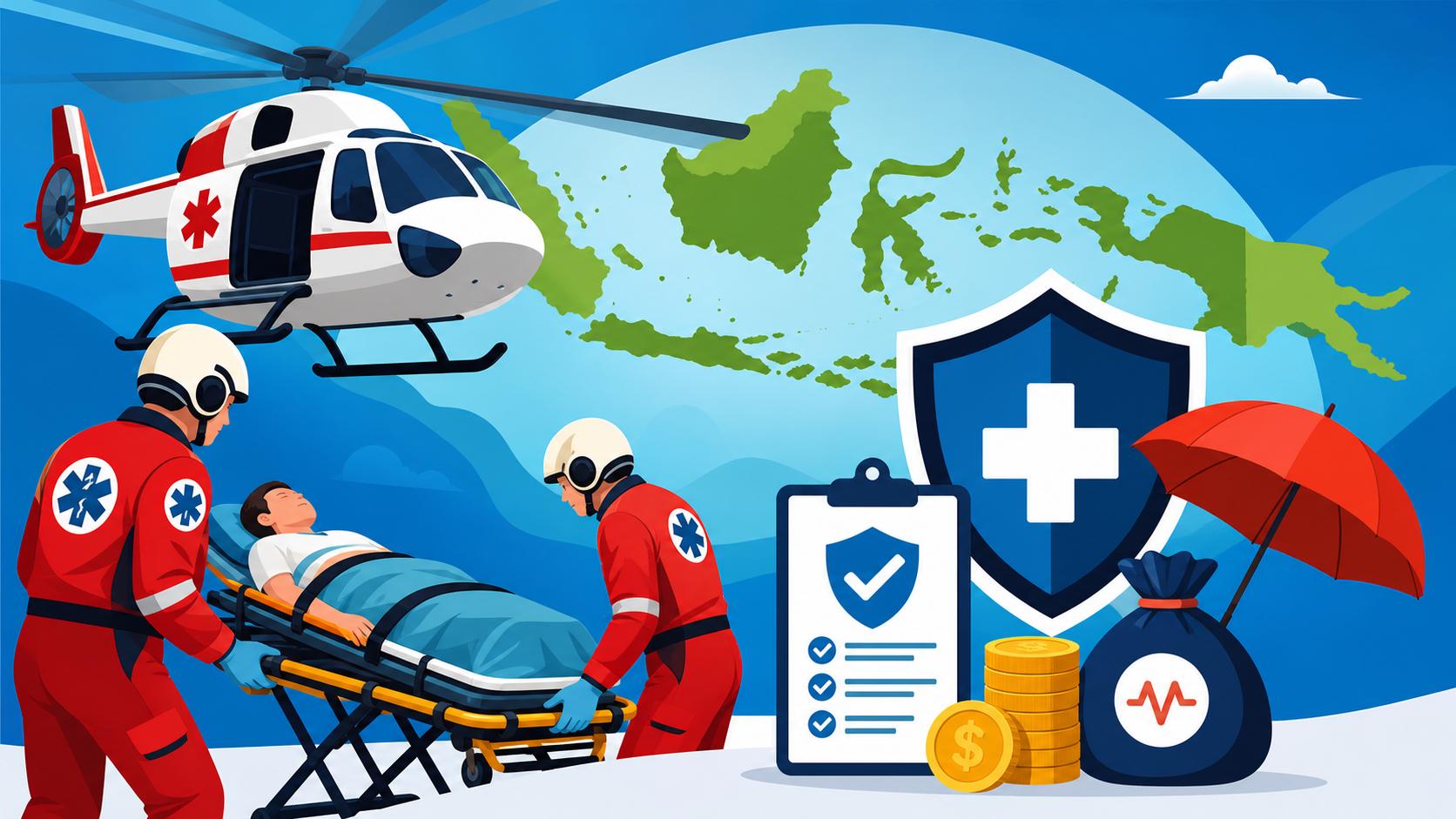
A medical evacuation is not as simple as calling a "flying taxi." It is a highly coordinated dance involving medical teams, aviation authorities, and insurance adjusters. An air ambulance is essentially a flying Intensive Care Unit (ICU). It carries a flight doctor, a flight nurse, and advanced equipment like ventilators, defibrillators, and specialized medication.
When a medevac is triggered, the provider must obtain overflight permits, which can be a bureaucratic headache in Indonesia. This is where professional evacuation companies earn their keep—they have the connections to fast-track these permits even on weekends or public holidays.
Regional Hubs: Jakarta, Bali, and Singapore
Most evacuations in Indonesia follow a specific hierarchy. If you are in a very remote area, the first step might be a helicopter or a small turboprop plane to a regional hub like Bali or Jakarta. If those cities cannot provide the necessary specialized care—especially for complex cancers, neonatal emergencies, or advanced neurology—the next hop is almost always Singapore.
Singapore is the medical "Mecca" for Southeast Asia. Many comprehensive plans, like those offered by Cigna Global, are specifically designed with the understanding that Singapore is the ultimate destination for any serious Indonesian medical emergency. The logistics of entering Singapore for medical reasons are streamlined, but you still need a dedicated team to handle the "bed-to-bed" transfer, ensuring that an ambulance is waiting on the tarmac at Seletar or Changi Airport.
The Triage and Approval Process
Before a plane even takes off, a "fit-to-fly" assessment must be conducted. This is a point of frequent frustration for families. You might want your loved one out immediately, but the flight physician must ensure the patient can survive the changes in cabin pressure and the physical stress of the flight.
The coordination team will speak with the treating physician at the local Indonesian hospital to get a full clinical picture. If you are using a top-tier provider like Cigna Global, their medical directors will often lead this conversation to ensure no details are lost in translation. This is also when the insurance company decides if the evacuation is "medically necessary." If they deem that the local hospital is "adequate"—a very subjective term—they might refuse to pay, which is why choosing a policy with clear evacuation triggers is essential.
Breaking Down the Costs of Medevac Services
Now, let's talk about the part that makes everyone's heart skip a beat: the price tag. Medical evacuation is arguably the most expensive "product" in the travel and health industry. You are paying for a multi-million dollar aircraft, a specialized crew on standby 24/7, fuel, landing fees, and the medical equipment used during the flight.
If you don't have insurance, most providers will require a credit card authorization or a wire transfer of the full amount before the plane leaves the hangar. I’ve seen families desperately trying to raise $50,000 via GoFundMe in the middle of a crisis because they lacked coverage.
Domestic vs International Evacuation Costs
A domestic flight from a place like Labuan Bajo to Jakarta can easily cost between $15,000 and $25,000. If you are moving from Bali to Singapore, you are looking at $30,000 to $50,000. If the patient requires a long-haul evacuation—say, back to Europe or North America—the costs can skyrocket into the hundreds of thousands of dollars.
| Route Type | Estimated Cost (USD) | Primary Vehicle | Common Destination |
|---|---|---|---|
| Local/Regional | $5,000 – $12,000 | Helicopter / Small Prop | Bali or Jakarta |
| Inter-Island (Domestic) | $15,000 – $30,000 | Private Jet (Learjet/King Air) | Jakarta |
| International (Short-haul) | $30,000 – $60,000 | Dedicated Air Ambulance | Singapore |
| International (Long-haul) | $150,000 – $300,000+ | Large Private Jet / Stretcher | Europe / USA |
These figures do not include the hospital stay at the destination, which can add tens of thousands more. For a deeper look at how hospitals in Indonesia charge for their services, read our guide on Hospital Billing in Indonesia: Avoiding Overcharges and Understanding Inpatient Fees.
Hidden Costs and Out-of-Pocket Expenses
Even with insurance, there are often costs that people forget. Ground ambulance transfers at both ends can cost several hundred dollars each. There are also "repatriation of remains" costs if the worst should happen, which is a separate but related service. Furthermore, if you are stabilized in a high-end hospital and then need specialized vitamins or post-op supplements that aren't easily found in local pharmacies, you might find yourself ordering from iHerb and paying hefty import duties.
It is also worth noting that many air ambulance companies operate on a "first-pay, first-serve" basis. If two people need the same plane in Bali, the one whose insurance company (like Cigna Global) guarantees payment first is the one who gets on the flight. This is why having a provider with a 24/7 emergency response team is more important than just having a high coverage limit.
Insurance Coverage and the Fine Print
Most expats in Indonesia are enrolled in the state health system, but as we detail in Public vs Private Healthcare in Indonesia: BPJS Kesehatan and Expat Insurance, BPJS does not cover international medical evacuation. It is designed to get you to the nearest "adequate" Indonesian public hospital, which may not be where you want to be for a complex surgery.
To truly protect yourself, you need a private international health insurance (IPMI) policy. When shopping for a plan, you shouldn't just look at the premium; you need to look at the "Evacuation and Repatriation" section of the policy document.
Evaluating Private Health Insurance Plans
A good policy should have a "limit" for evacuation that is separate from your general inpatient limit. Ideally, this should be "Unlimited" or at least $500,000. Companies like Cigna Global are popular because they offer modular plans where you can add high-limit evacuation coverage to a standard health package.
You should check if the policy allows for "Choice of Hospital." Some lower-end plans will only evacuate you to the nearest facility, which might just be a slightly better hospital in the next Indonesian province. A premium plan will evacuate you to the "most appropriate" facility, which often means Singapore. For more on how to bridge these gaps, see our article on Private Health Insurance in Indonesia: Bridging the Gap When BPJS Isn't Enough.
The Importance of Direct Billing and Pre-Authorization
In an emergency, you do not want to be paying $40,000 on your credit card and waiting six months for a reimbursement. You need "Direct Billing." This means your insurance company deals directly with the air ambulance provider.
However, every medevac requires "Pre-Authorization." This is the point where the insurance company's medical team talks to the local doctor. To speed this up, keep your insurance card and a copy of your policy in an easy-to-find place. If you are recovering from a less severe issue and need to restock on essential health supplies like high-quality probiotics or electrolytes for recovery, iHerb is a reliable source for expats, provided you understand the customs limits.
Top Providers and Facilities for Medevac in Indonesia
Knowing who actually operates the planes is just as important as knowing who pays for them. There are a few major players in the Indonesian market that have a long track record of safety and reliability.
International SOS and BIMC Bali
International SOS is perhaps the most famous name in global evacuation. They have a massive presence in Indonesia, particularly serving the mining and oil and gas industries in remote areas of Kalimantan and Papua. They operate their own assistance centers and have deep experience with Indonesian bureaucracy.
In Bali, BIMC (Bali International Medical Centre) is the go-to for many expats. They have a dedicated "Care Flight" division that handles both domestic and international transfers. They are often the first point of contact for anyone needing to leave the island for medical reasons. You can find more about their services in our Medical Tourism in Southeast Asia: Flying to Singapore or Malaysia for Care overview.
Siloam and Other Specialist Networks
Siloam Hospitals is the largest private hospital chain in Indonesia. They have their own fleet of ambulances and, in some locations, helipads. While they primarily focus on hospital care, they have a dedicated emergency coordination center that can arrange air transfers between their facilities.
Regardless of the provider, you must ensure that they are accredited by bodies like EURAMI (European Aero-Medical Institute) or CAMTS (Commission on Accreditation of Medical Transport Systems). This ensures that the "flying ICU" actually meets international safety and medical standards.
Preparing for a Medical Emergency
Preparation is the difference between a controlled evacuation and a chaotic disaster. As an expat, you should have a "Red Folder"—physical or digital—that contains everything needed for a sudden departure.
Keeping Essential Documents and Contacts Ready
Your Red Folder should include:
- A copy of your passport and KITAS/KITAP.
- Your insurance policy certificate and the 24-hour emergency number (e.g., Cigna Global's hotline).
- A summary of your medical history, including allergies and current medications.
- Contact details for your emergency proxy back home.
It is also wise to keep a small supply of "emergency" health items. While iHerb is great for regular orders of supplements and vitamins, you should have a local "Go-Bag" with basic trauma supplies and any prescription meds you take daily.
Language Barriers and Emergency Translation
In a crisis, your Bahasa Indonesia might fail you, or the local doctor might not speak English. This can lead to dangerous delays in the "fit-to-fly" assessment. If you are in a remote area, try to find a local friend or staff member who can act as a bridge.
Some insurance companies provide translation services as part of their emergency assistance. If you are currently healthy and looking to maintain your well-being to avoid these scenarios, keeping a stock of high-quality antioxidants or immunity boosters from iHerb is a common practice among the expat community here. After all, the best medical evacuation is the one that never has to happen.
Disclaimer
This guide is for informational purposes only and does not constitute medical or legal advice. Medical evacuation protocols and insurance terms change frequently in Indonesia. Always verify coverage details with your specific insurance provider and consult with medical professionals in the event of an emergency.