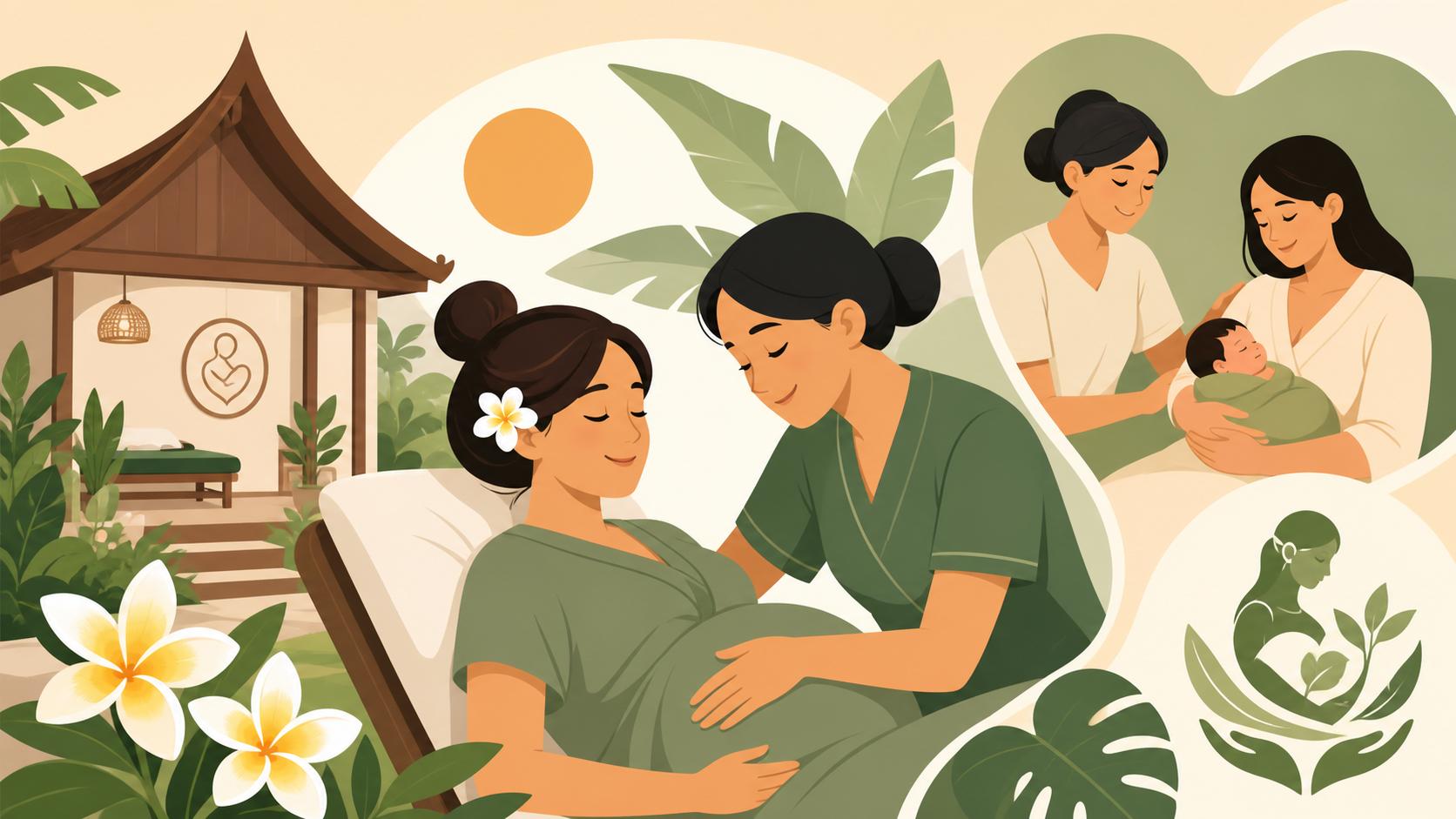
Natural Birth Clinics in Bali: Midwife Services and Yayasan Bumi Sehat
Navigating the Indonesian medical system while pregnant can feel like a high-stakes obstacle course, especially when you realize the local "standard" often defaults to highly medicalized births and high C-section rates. I remember the sheer panic I felt during my first trimester in Bali, realize that my vision of a calm, natural water birth stood in stark contrast to the sterile, surgery-first approach of many urban hospitals. This guide solves that anxiety by breaking down Bali’s world-renowned natural birth clinics, the reality of midwife-led care, and the logistical hurdles of delivering your baby in the tropics.
The Philosophy of Natural Birth and Gentle Birth in Bali
Bali has carved out a global reputation as a sanctuary for gentle birth, a movement that prioritizes the emotional and physical well-being of both mother and child through minimal intervention. Unlike the frantic energy of a major Jakarta hospital, the natural birth scene in Bali is rooted in the "Adat" (traditional) respect for the transition into motherhood, blended with modern midwifery practices. For many expat women, this represents a bridge between the high-tech Western approach and a more intuitive, peaceful experience.
Gentle Birth vs. Medicalized Hospital Birth
In many private Indonesian hospitals, the "active management of labor" is the norm. This often includes routine IV drips, restricted movement, and a significantly higher likelihood of an episiotomy or an unplanned Cesarean. If you have been researching Pregnancy and Childbirth in Indonesia: Prenatal Care, Birth Options, and Hospitals, you likely know that the convenience of the doctor can sometimes take precedence over the natural rhythm of the laboring mother.
In contrast, Bali’s natural birth clinics—often referred to as "Bumi" (Earth) clinics—focus on movement, hydrotherapy (water birth), and delayed cord clamping. Here, birth is viewed as a physiological process rather than a medical emergency. You aren't just a patient on a chart; you are a woman entering motherhood. This distinction is vital for those of us who want to avoid the "cascade of interventions" that can happen when you walk into a standard delivery ward. However, it is important to check the Bali Healthcare Guide: Hospitals, Clinics, and Emergency Contacts for Residents to know where the nearest surgical backup is, just in case.
The Role of the Balinese Midwife or Bidan
The heartbeat of the natural birth movement in Bali is the "Bidan" (Midwife). In Indonesia, bidans are highly respected professionals who often handle the majority of births in rural areas. However, the bidans working in expat-friendly natural birth clinics have usually undergone additional training in "gentle birth" techniques. They speak the language of "rebozo," "spinning babies," and "hypnobirthing."
When you work with a private midwife in Bali, the level of continuity of care is unparalleled. You aren't seeing whichever doctor happens to be on call; you are building a relationship with a woman who will likely be the one catching your baby. This relationship is a cornerstone of the Healthcare in Indonesia for Foreign Residents: Complete System Overview (2027) when it involves the private sector. These midwives are also expert navigators of local culture, often incorporating traditional Balinese blessings or "Jamu" (herbal medicine) into the postpartum recovery if the mother desires.
Top Natural Birth Clinics and Foundations in Bali
While there are several independent midwives, a few established institutions dominate the landscape of natural birthing on the island. These facilities range from charitable foundations to high-end private clinics, each offering a different level of luxury but sharing the same core philosophy of non-intervention for low-risk pregnancies.
Yayasan Bumi Sehat in Nyuh Kuning Ubud
You cannot talk about birth in Bali without mentioning Yayasan Bumi Sehat. Founded by the iconic Robin Lim, a "CNN Hero" and a fierce advocate for maternal health, this clinic is located in the quiet village of Nyuh Kuning, just behind the Monkey Forest in Ubud. Bumi Sehat is a non-profit foundation that provides free or low-cost care to Indonesian families, funded largely by the donations of expat families who choose to give birth there.
Giving birth at Bumi Sehat is a deeply humbling and spiritual experience. The rooms are open to the sounds of the jungle, and the atmosphere is one of profound calm. It is not a "luxury" clinic in the sense of five-star hotel amenities, but it offers a wealth of "luxury" in terms of time, patience, and heart. The midwives here are experts in water birth and have a remarkable track record of successful natural deliveries for even complex cases like VBAC (Vaginal Birth After Cesarean). If you choose this route, you are essentially opting into a community-led model of care.
Private Midwifery Practices and Boutique Clinics
For those who want a bit more privacy or a "boutique" feel, several private clinics have emerged that cater specifically to the expat and "birth tourist" community. These clinics often offer more controlled environments, private suites that feel like high-end villas, and dedicated English-speaking staff available 24/7.
Clinics like Bumi Amma or various independent midwife-led centers in the Sanur and Ubud areas provide a middle ground. They offer the safety protocols of a clinic with the aesthetics of a home birth. Many of these facilities work closely with hospitals like BIMC Hospital Bali: Services, Costs, and Insurance Direct Billing Options for emergency transfers. It is a common strategy for expat moms to do their routine checkups at a private clinic but maintain a "shadow" file at a major hospital in Denpasar just in case a high-risk situation develops.
Robin Lim and the Legacy of Gentle Birth Culture
Robin Lim’s influence on the island's birthing culture cannot be overstated. She brought international attention to the importance of "the golden hour"—the first hour after birth where the baby remains skin-to-skin with the mother—and the practice of lotus birth, where the umbilical cord is not cut but allowed to detach naturally.
Her philosophy has trickled down into how many expat-focused clinics operate. Even if you don't give birth at her foundation, the "Bumi Sehat style" of care has become the benchmark for what natural birth looks like in Bali. This includes a heavy emphasis on nutrition and prenatal support, which is where many expats turn to international resources to supplement local options.
Practical Logistics for an Unmedicated Birth in the Tropics
Choosing a natural birth clinic is only half the battle; the administrative and physical preparation for a birth in Indonesia requires a veteran’s touch. From sourcing high-quality supplements to navigating the labyrinth of international insurance, you need to be proactive.
Preparing Your Body and Mind with Quality Nutrition
The tropical heat and humidity can be draining during the third trimester. Staying hydrated and maintaining mineral balance is critical to avoiding pre-eclampsia or premature contractions. While local markets are great for fresh fruit, high-grade prenatal vitamins can be hard to find in local "Apoteks."
Many expat moms rely on iHerb to ship in high-quality folate (rather than synthetic folic acid), prenatal DHA, and magnesium flakes for those late-pregnancy leg cramps. Having a stash of red raspberry leaf tea and electrolyte powders from iHerb can make a massive difference in your stamina during a long labor. Just ensure you understand the rules for Bringing Medication Into Indonesia: Customs Rules, Limits, and Required Letters if you are carrying them in your luggage versus shipping them.
Insurance Coverage and Out-of-Pocket Costs
One of the biggest shocks for new expats is finding out that many local insurance policies do not cover "alternative" birthing centers or midwife-led clinics that aren't attached to a major hospital. If you are relying on BPJS, you will almost certainly be funneled into a standard hospital ward.
For the level of care provided by private Bali clinics, having a robust international policy like Cigna Global is a lifesaver. Cigna Global often has maternity modules that cover private clinic fees and, more importantly, the costs of a private hospital room or emergency NICU care if a transfer is required. Without a plan from a provider like Cigna Global, you could be looking at paying USD $2,000 to $5,000 upfront for a private clinic birth, and significantly more if things get complicated. Always confirm "direct billing" status, though many natural clinics require you to pay upfront and claim back later.
Legalities: Birth Certificates and Baby Visas
Once the baby arrives, the "honeymoon phase" is quickly interrupted by Indonesian bureaucracy. You will need to obtain the "Surat Keterangan Kenal Lahir" (birth notification) from the clinic, which you then take to the "Catatan Sipil" (Civil Registry) to get the official Indonesian birth certificate (Akta Kelahiran).
For expats, this is just the first step. You then have to navigate the Newborn Health Checks: IDAI Vaccine Schedules and Birth Certificates and eventually secure a passport for the baby from your home embassy and a "Dependent KITAS" from Indonesian immigration. Be aware that the clock starts ticking the moment the baby is born; you usually have a limited window to report the birth to immigration before facing daily overstay fines for your newborn.
Comparison: Private Hospital vs. Natural Birth Clinic in Bali
| Feature | Private Hospital (e.g., Siloam/BIMC) | Natural Birth Clinic (e.g., Bumi Sehat) |
|---|---|---|
| Primary Caregiver | OB/GYN (Dokter Kandungan) | Midwife (Bidan) |
| Pain Management | Epidural, IV Meds available | Water tub, movement, breathing |
| C-Section Rate | High (often 40%+) | Very Low (transfer only) |
| Atmosphere | Clinical, sterile, busy | Homelike, quiet, spiritual |
| Cost (Estimated) | IDR 30M – 80M+ | IDR 15M – 35M (or donation) |
| Postpartum | Standard hospital room | Early discharge or family suite |
| Emergency Backup | On-site | Requires ambulance transfer |
Postpartum Care and the Transition to Motherhood
The support doesn't end when the cord is cut. In Bali, there is a beautiful tradition of "confinement" or specialized care for the new mother. Locally, this might involve "Bengkung" (belly wrapping) and specific herbal drinks. For expats, this is a time to lean into the local infrastructure of affordable domestic help.
Hiring help for the first few weeks is not a luxury here; it’s a standard part of Postpartum Care and Confinement Traditions: Support Services for Expat Mothers. Having a "Suster" (nanny) or a dedicated "Pembantu" (helper) to handle the laundry, cleaning, and cooking allows you to focus entirely on breastfeeding and recovery. Additionally, for the physical recovery of your pelvic floor and core, you might look into Physical Therapy (Fisioterapi): Referrals, Sessions, and Insurance Coverage available in Denpasar or Canggu.
Many moms also find that the transition is easier when they have access to the comforts of home, whether that's specific nursing teas or organic nipple creams ordered via iHerb to avoid the fragrances often found in local baby products. Bali is a place of extremes, and while the natural birth journey is beautiful, the "aftercare" is what ensures you don't succumb to the "expat burnout" that can hit when you're raising a child far from your original village.
Disclaimer
The information provided in this guide is for educational and informational purposes only and does not constitute medical, legal, or professional advice. Always consult with a qualified healthcare provider and an immigration specialist regarding your specific situation in Indonesia. Health regulations and visa laws are subject to frequent changes.