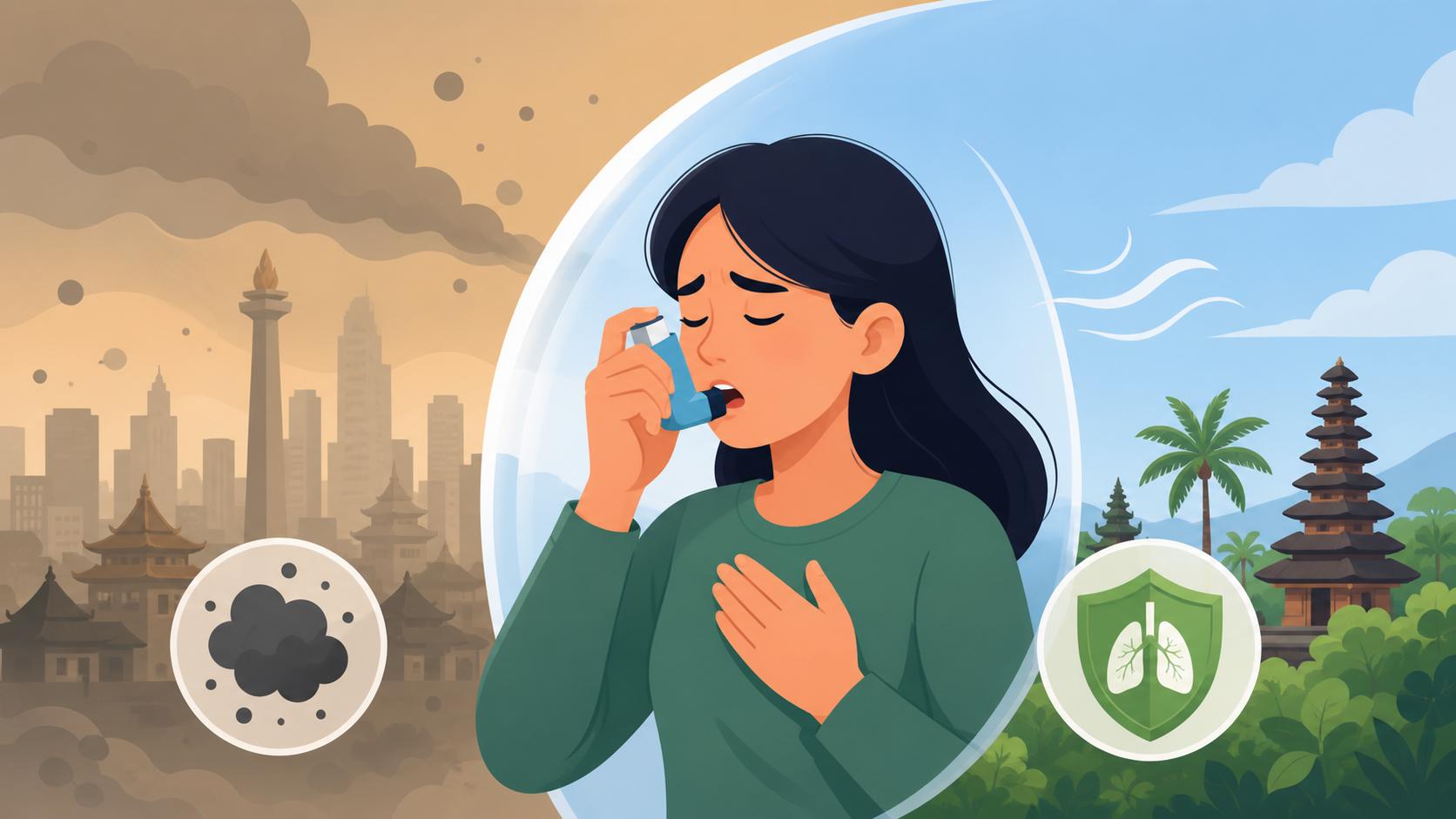
Asthma and Air Quality: Managing Respiratory Issues During Haze Season
Living in Jakarta or Sumatra during the dry season often feels like breathing through a thick, soot-stained curtain. I vividly remember my first "Haze Day" in Pekanbaru; I woke up thinking someone had burned toast in my kitchen, only to realize the entire city was shrouded in woodsmoke. This guide provides essential survival strategies for managing asthma and respiratory health during Indonesia’s challenging air quality cycles.
Understanding the Haze Season and Air Quality Triggers in Indonesia
The phenomenon known as "The Haze" or Kabut Asap is a recurring atmospheric crisis usually triggered by land-clearing fires in Sumatra and Kalimantan. While the government has made strides in recent years to curb the practice of slash-and-burn agriculture, the combination of peatland fires and El Niño weather patterns can still lead to weeks of hazardous air quality. For those of us with sensitive lungs, the impact is immediate. The air doesn't just look gray; it feels heavy, smells like a campfire, and leaves a metallic taste in your mouth.
The Science of PM2.5 and Why It Matters
When you check your air quality apps—most expats use IQAir or Nafas—you will see a heavy focus on PM2.5. These are fine particulate matters that are 2.5 micrometers or less in diameter. To put that in perspective, they are about 30 times smaller than a human hair. Because they are so tiny, they don't just stay in your throat; they travel deep into your lungs and can even enter your bloodstream. For an asthmatic, this is the ultimate trigger. In 2026, air monitoring in Indonesia has become more localized, but the reality remains: during the peak dry season (typically June to October), PM2.5 levels in cities like Jakarta or Pontianak can regularly exceed "Unhealthy" or even "Hazardous" thresholds.
Urban Pollution vs. Agricultural Haze
While the forest fires get the international headlines, those of us living in the Big Durian (Jakarta) or Surabaya face a double whammy. Even when there are no fires in Sumatra, the "macet" (traffic) contributes significantly to poor air quality. The nitrogen dioxide from millions of motorbikes and the sulfur dioxide from nearby coal-fired power plants create a baseline of pollution that makes respiratory recovery difficult. Understanding this distinction is key because while haze season is seasonal, urban pollution is a year-round battle. You might find that your Tropical Allergies: Managing Reactions and Finding Antihistamines Locally act up more during the humid transitions between seasons when the air stays stagnant over the city.
Regional Variations and What to Expect
Not all of Indonesia suffers equally. If you are living in the Bukit or Sanur, you might wonder what all the fuss is about. Bali generally enjoys better air quality due to sea breezes, though even the Island of the Gods isn't immune to volcanic ash or localized trash burning. However, if your work takes you to the industrial heartlands of West Java or the peatlands of Central Kalimantan, your respiratory management plan needs to be far more robust. I’ve seen many new arrivals underestimate the "dry season cough," only to find themselves needing a nebulizer within a month of arrival.
Practical Medical Management and the Local Pharmacy System
Navigating the healthcare landscape in Indonesia for chronic conditions like asthma can be intimidating at first. The good news is that most standard asthma medications are widely available. The challenge lies in understanding the local names, the prescription requirements, and ensuring you aren't overpaying for "imported" brands when local equivalents are just as effective.
Stocking Your Asthma Kit at the Apotek
In Indonesia, the pharmacy is called an Apotek. You will find chains like Kimia Farma, Century, and Guardian in almost every mall and on most major street corners. For your rescue inhalers (like Salbutamol/Ventolin) and controller inhalers (like Seretide or Symbicort), it is vital to keep a healthy buffer. During the peak haze, demand for these medications spikes, and I have experienced "out of stock" situations in smaller neighborhood clinics.
When you go to an Apotek Guide: Prescription Workflow, Refills, and Communicating with Pharmacists, you’ll find that while many things can be bought over-the-counter, asthma maintenance meds technically require a doctor’s note. However, if you show your existing inhaler, many pharmacists are helpful. For high-quality supplements that support lung health, such as Vitamin D3 or specialized antioxidants, many expats use iHerb to ship in brands that aren't readily available on the local shelves.
Navigating Local vs. International Brands
Indonesia has a strong domestic pharmaceutical industry. You will often see "Generik" versions of popular drugs. In my experience, these are generally reliable and significantly cheaper. However, if your body is specifically tuned to a certain brand, be prepared to pay a premium. If you have comprehensive coverage through a provider like Cigna Global, these costs are usually manageable, but for those paying out-of-pocket, the price difference between a local Salbutamol and an imported Ventolin can be three-fold. Check out this guide on Over-the-Counter (OTC) Medicine in Indonesia: Local Brands and Safe Alternatives to help you recognize what is what on the shelf.
Understanding AQI Levels and Required Actions
To manage your health, you need to know when to stay indoors and when it’s safe to go for that morning run. The following table summarizes the AQI (Air Quality Index) levels and the corresponding actions an asthmatic expat should take.
| AQI Range | Category | Action for Asthmatics / Sensitive Groups |
|---|---|---|
| 0 – 50 | Good | Enjoy outdoor activities; ventilate the home. |
| 51 – 100 | Moderate | Be cautious; if you feel chest tightness, move indoors. |
| 101 – 150 | Unhealthy for Sensitive Groups | Limit outdoor exertion; keep windows closed. |
| 151 – 200 | Unhealthy | Stay indoors; use air purifiers on high; wear N95 if outside. |
| 201 – 300 | Very Unhealthy | Avoid all outdoor activity; ensure HEPA filters are clean. |
| 300+ | Hazardous | Stay in a sealed room; consider temporary relocation. |
Protecting Your Living Space and Daily Habits
If you cannot change the air outside, you must obsessively control the air inside. This is where most expats either succeed or fail in their first year. I spent my first six months in a beautiful, "airy" villa with traditional open-ventilation gaps above the doors. I was constantly wheezing. In Indonesia, "traditional" architecture and modern air quality do not mix well for asthmatics.
The Non-Negotiable Necessity of Air Purifiers
You need a HEPA (High-Efficiency Particulate Air) filter in every room where you spend significant time. The market in Indonesia is flooded with options, from Blueair and Dyson to more budget-friendly Xiaomi units. My advice? Don't just look at the price of the machine; look at the availability of the replacement filters. You will be changing these every 4-6 months during the haze season. If you find yourself unable to find specific replacement parts locally, iHerb can often be a lifesaver for universal filter materials or air-cleaning essential oils like eucalyptus.
Sealing Your Sanctuary
Indonesian houses are notoriously "leaky." Even if you close your windows, air often enters through the "lubang angin" (ventilation holes) or under doors. Use weather stripping or even simple "door snakes" (rolled-up towels) to seal these gaps. If you are Renting in Indonesia: The 1-Year Upfront Rule, Contracts, and Avoiding Scams, it is worth asking the landlord if you can install more permanent seals or AC units with built-in air purification. I have found that running the AC in "dry mode" can sometimes help, but it doesn't replace the need for a dedicated purifier.
Masking Etiquette and Efficacy
The surgical masks you see everyone wearing on Gojek motorbikes are useless against PM2.5. They are designed for large droplets, not fine particulates. If you must be outside when the AQI is above 150, you need an N95 or KN95 mask. The fit is everything. If air is leaking around your nose, you are breathing in the haze. I always keep a box of high-quality N95s in my car and my office bag. It might feel "over the top" when your local colleagues aren't wearing them, but your lungs will thank you when you avoid a week-long flare-up.
Navigating Professional Medical Support and Insurance
Sometimes, despite your best efforts, a flare-up happens. Knowing where to go and who to see before you are in the middle of a crisis is the hallmark of a veteran expat. The Indonesian medical system has several tiers, and for respiratory issues, you want to head straight for the specialists.
Finding a Reliable Pulmonologist
In the Indonesian system, a lung specialist is called a Dokter Paru. While your local GP at a Finding Medical Care in Indonesia: Clinics, Hospitals, and International Facilities can handle minor issues, for chronic asthma management during haze season, you want a specialist. Major hospital networks like Siloam or Medistra in Jakarta have excellent pulmonary departments with English-speaking doctors. If you are in Bali, the BIMC Hospital Bali: Services, Costs, and Insurance Direct Billing Options is often the go-to for expats, though their specialists may have more limited hours than the big city hospitals.
The Role of Insurance in Chronic Care
Managing asthma can get expensive if you require regular lung function tests (Spirometry) or specialized corticosteroid inhalers. This is where having a robust international plan like Cigna Global is vital. Many local plans have "waiting periods" for pre-existing conditions or low caps on outpatient specialist visits. An international policy usually allows you to bypass the BPJS Kesehatan for Expats: Registration, Costs, and the New KRIS System referral chain, meaning you can go directly to a top-tier pulmonologist at a Siloam Hospitals Overview: What Expats Should Know About the Network without waiting for a Puskesmas (community clinic) to sign off on it.
Emergency Protocols: When to Go to the UGD
If your rescue inhaler isn't working and you can't speak in full sentences, you are having a severe asthma attack. You need to head to the UGD (Unit Gawat Darurat) immediately. Do not rely on an ambulance if you are in heavy traffic; often, a private car or even a Gojek is faster in the middle of Jakarta's gridlock. Ensure you have your insurance card and a copy of your passport/KITAS ready. For more on how to handle these moments, read our guide on Emergency Medical Care in Indonesia: Ambulances, ERs, and Evacuation Protocols. For those with severe, life-threatening asthma, having a plan that includes medical evacuation via a provider like Cigna Global is a necessary precaution, especially if you live in remote areas of Sumatra or Kalimantan where hospital facilities are basic.
Holistic and Preventive Care
Finally, don't overlook the power of preventive lifestyle changes. Many expats find that salt rooms (Halotherapy) or certain yoga breathing techniques (Pranayama) help strengthen their respiratory system. If you are looking for these types of alternative supports, you might find better luck exploring Health and Wellness in Bali: Yoga, Holistic Clinics, Diet, and Retreats. Additionally, staying hydrated is crucial; the dry, polluted air can dehydrate your airways, making mucus thicker and harder to clear. Use high-quality water filters and perhaps add some electrolyte-rich "Jamu" (traditional herbal tonics) to your daily routine to help your body process the oxidative stress caused by pollution.
Disclaimer
This article is for informational purposes only and does not constitute professional medical advice, diagnosis, or treatment. Always seek the advice of your physician or other qualified health provider with any questions you may have regarding a medical condition. Air quality conditions in Indonesia can change rapidly; always monitor local government advisories and real-time AQI data. The mention of specific brands or services does not imply an endorsement but is provided based on common expat usage and availability.