Apotek Guide: Prescription Workflow, Refills, and Communicating with Pharmacists
Navigating the local pharmacy, or apotek, in Indonesia is one of those "welcome to the neighborhood" hurdles that every expat faces eventually. I remember my first week in Jakarta, wandering into a small shop with a pulsing headache, only to realize that my go-to brand from home had a completely different name and required a conversation I wasn't yet prepared for. This guide is designed to bridge that gap, taking the guesswork out of how to handle prescriptions, manage refills, and communicate effectively with your local pharmacist so you never leave empty-handed or confused.
Understanding the Indonesian Apotek Landscape
The first thing you’ll notice in Indonesia is that pharmacies aren't just one-size-fits-all. You have massive state-owned chains, sleek mall-based retailers, and tiny "hole-in-the-wall" independent shops. Knowing where to go for a specific need—be it a rare blood pressure medication or just a bottle of high-quality vitamins—is half the battle.
Chain vs. Independent Pharmacies
Major chains like Kimia Farma, K-24, Century, and Guardian are your most reliable bets for consistent pricing and legitimate sourcing. Kimia Farma is state-owned and often has the most comprehensive stock of generic medications mandated by the government. K-24 is famous for being open 24 hours (hence the name), which is a lifesaver for late-night emergencies. On the other hand, Century and Guardian are often located in malls; while they carry common medicines, they focus heavily on beauty and wellness products.
If you are managing a complex condition and using high-end coverage like Cigna Global, you will likely find yourself at larger hospital-affiliated pharmacies or the "Apotek Kimia Farma" branches that specialize in imported drugs. Independent apoteks can be great for convenience, but as a veteran expat, I always recommend sticking to the major players for anything life-critical to ensure the cold chain (for things like insulin) hasn't been broken.
The Apotek vs. Toko Obat Distinction
It is vital to distinguish between an Apotek and a Toko Obat. Legally, only an Apotek is allowed to dispense prescription medication and must have a licensed pharmacist (Apoteker) on duty. A Toko Obat (medicine shop) is restricted to over-the-counter (OTC) drugs. If you see a shop selling pills in loose strips without a pharmacist in sight, it's a Toko Obat. For your safety and to ensure you are getting genuine products, always look for the word "Apotek" on the signage.
The Prescription Workflow: From Doctor to Dispensing
The process of getting your medication starts with the resep dokter (doctor's prescription). Unlike in some Western countries where the doctor faxes the script directly to the pharmacy, in Indonesia, you are usually handed a physical piece of paper. This paper is your "gold" in the medical system, and you need to handle it correctly.
Handing Over the Resep
When you walk into an apotek, you head to the counter marked Penyerahan Resep (Prescription Submission). You hand over your physical script, and the staff will check their stock. This is a crucial moment. Sometimes they only have a portion of the meds, or they might have a different brand of the same generic compound. Always ask, "Apakah ada semua?" (Is everything here?).
If they have the items, they will give you a number and ask you to wait while they "dispense" the medicine. In Indonesia, this often involves cutting strips of pills from larger boxes or even grinding pills into powder (puyer) for children, though the latter is becoming less common in international-style clinics. If you are using international insurance like Cigna Global, make sure to ask for an official invoice (faktur) and a copy of the prescription for your reimbursement claim.
The Rise of Digital Prescriptions
In the last few years, the system has modernized significantly. If you use a telemedicine app, the workflow is much smoother. You can learn more about this in our guide on How to Book a Doctor Appointment via Halodoc or Alodokter Apps. These apps allow the doctor to issue a digital prescription which is then fulfilled by a partner pharmacy and delivered to your doorstep via a motorcycle courier. It saves you from the "macet" (traffic) and the wait time at the counter, which, trust me, can be substantial on a Monday morning.
Managing Refills and the Copy Resep System
This is where many expats get caught out. In many countries, "refills" are noted on the bottle. In Indonesia, the pharmacy usually keeps your original prescription. If your doctor has authorized multiple refills, the pharmacist will provide you with a Copy Resep (a copy of the prescription).
Understanding the Copy Resep
The Copy Resep will have a stamp that says det (detur), which means "given," or ne det (ne detur), which means "not given." If your doctor wrote a script for 30 days but you only bought 10 days because of the cost or stock issues, the copy will show exactly how many pills are "left" for you to claim later.
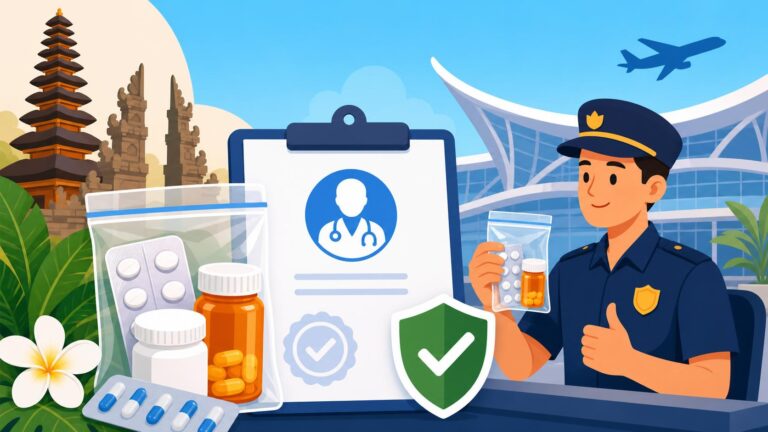
Always keep these copies in a dedicated folder. When you need a refill, you take the Copy Resep back to the pharmacy—it doesn't even have to be the same branch. However, for chronic conditions, it is much easier to frequent the same apotek so they get to know your history. For specialized supplements that aren't available locally, many expats supplement their local pharmacy visits by ordering from iHerb, which ships reliably to Indonesia, provided you stay within customs limits. You can find more details on this in our article on Bringing Medication Into Indonesia: Customs Rules, Limits, and Required Letters.
Dealing with Chronic Medication
If you have a long-term condition like hypertension or diabetes, the "iteration" (iter) system is your best friend. A doctor might write "Iter 2x" on the script, meaning you can fill it the original time plus two additional refills. If you run out of "iters," you must go back to the doctor for a new physical script. This is a common point of frustration, but it's a legal requirement to prevent the over-use of controlled substances. For those managing such conditions, it’s worth reading our deep dive on Managing Chronic Conditions: Diabetes, Hypertension, and Long-Term Medication.
| Pharmacy Chain | Best For | Typical Hours | English Proficiency |
|---|---|---|---|
| Kimia Farma | Hard-to-find generics & BPJS | 8 AM – 10 PM (Some 24h) | Moderate |
| K-24 | Late-night emergencies | 24 Hours | Variable |
| Century | Vitamins & imported OTC | Mall Hours | High (in tourist areas) |
| Guardian | Skin care & basic OTC | Mall Hours | High |
| Siloam Apotek | Specialist meds | 24 Hours (Hospital-based) | High |
Communication Strategies: Speaking to Your Pharmacist
Unless you are in the heart of Canggu or a high-end Jakarta neighborhood, the level of English at a local apotek can vary. However, the medical terminology is often derived from Latin or Dutch, which might sound familiar to you.
Key Phrases for the Pharmacy
Don't be afraid to use a mix of "Bahasa" and "Medical-ese." Here are the essentials:
- "Saya mau menebus resep ini." (I want to redeem this prescription.)
- "Apakah ada obat generik?" (Is there a generic version?) – This is important because "patent" brands can be 5x the price.
- "Berapa harganya?" (How much is the price?)
- "Aturan pakainya bagaimana?" (What are the instructions for use?)
- "Diminum sebelum atau sesudah makan?" (Should this be taken before or after a meal?)
If you find yourself struggling, remember that most pharmacists in Indonesia are very patient. They are used to explaining things to people from all walks of life. If you have a specific allergy, it is better to have it written down. For more on the specific vocabulary you might need, check out our Apotek Guide: Prescription Workflow, Refills, and Communicating with Pharmacists and also our guide on Finding English-Speaking Doctors in Indonesia: Reliable Directories and Vetting.
Asking for "Obat Paten" vs. "Obat Generik"
In Indonesia, "Obat Paten" refers to the original brand name drug (like Lipitor), while "Obat Generik" refers to the unbranded version (Atorvastatin). The pharmacist will often ask you which one you want. Legally, they must offer the generic if it’s available. For those on a budget or without comprehensive insurance, generics in Indonesia are high quality and strictly regulated. However, if your doctor specifically wrote a brand name, some pharmacists might be hesitant to swap it without your permission.
Costs, Insurance, and Payment Realities
The cost of medicine in Indonesia is generally lower than in the US but can be higher than in parts of Europe for branded imports. The government regulates prices through the HET (Harga Eceran Tertinggi or Maximum Retail Price), which you will often see printed on the box itself.
Paying Out-of-Pocket and Using Insurance
Most expats pay for their medications upfront using cash, debit, or QRIS (the local scan-to-pay system). If you have a private plan like Cigna Global, you will typically pay first and then submit the receipt for reimbursement. Direct billing at pharmacies is rare unless the pharmacy is located inside a major hospital like Siloam or Pondok Indah.
If you are a KITAS holder and enrolled in the public system, you can get many medications for free, but the process is different. You must go to your primary clinic (Faskes 1) first. To understand how that works, see BPJS Kesehatan for Expats: Registration, Costs, and the New KRIS System. While BPJS covers a lot, it often doesn't cover the high-end imported brands, which is why many expats choose to keep a private policy.
Using E-Wallets for Discounts
Surprisingly, using apps like GoPay or ShopeePay at pharmacies like Kimia Farma or Guardian can often net you significant "cashback" or discounts. It might feel strange to use a food-delivery app to pay for your antibiotics, but in the Indonesian digital economy, it’s standard practice. For more financial tips, have a look at Money in Indonesia for Foreign Residents: Banking, Tax, and Financial Setup (2027).
Safety, Quality Control, and Common Pitfalls
Indonesia has a robust regulatory body called BPOM (the equivalent of the FDA). However, "gray market" drugs do exist, especially online or in very small, unauthorized shops.
Checking for BPOM Registration
Every legitimate medicine sold in an apotek should have a BPOM registration number on the packaging. It usually starts with "NA," "TR," or "SD" followed by a string of numbers. If you are buying a supplement—perhaps something you usually get from iHerb but decided to try a local version of—always check for this seal.
Another tip: always check the expiry date (expired date) before you leave the counter. While big chains are good about rotating stock, in smaller towns, items can sit on the shelf for a while. If you notice a box looks faded or tampered with, don't be shy—ask for a different one. This is your health, and the phrase "I've been there" certainly applies to the time I accidentally bought sun-damaged eye drops in a small coastal town.
Handling "Obat Keras" (Hard Drugs)
In Indonesia, you will see a red circle with a "K" on many medicine boxes. This stands for Obat Keras (Hard Medicine). Technically, these require a prescription. However, the enforcement of this rule can be "flexible" for things like basic antibiotics or birth control in some local shops. I strongly advise against self-prescribing. Antibiotic resistance is a major issue in the region, and what you think is a simple infection might be something else. Always consult a professional. If it's a weekend and your regular doctor is out, you can find help via After-Hours Care: 24-Hour Clinics and Holiday Medical Services in Major Cities.
Storage in the Tropics
Finally, remember that the humidity in Indonesia is a silent killer for medications. If you live in a traditional Bali villa with open-air spaces, your pills will degrade much faster. Keep your medications in a cool, dry place, ideally in a room with 24/7 air conditioning. If you find your capsules sticking together, they’ve likely been compromised by the heat. For those moving into new homes, we cover more on this in Utilities and Setup: PLN Electricity, PDAM Water, and Home Internet in Indonesia.
Navigating the apotek system gets easier with time. Once you find a pharmacist who speaks a bit of English and understands your needs, stick with them. A little bit of "hubungan" (relationship) goes a long way in Indonesia, and before you know it, you'll be handling your refills like a seasoned local.
Disclaimer
The information provided in this guide is for informational purposes only and does not constitute professional medical or legal advice. While we strive to provide the most accurate and up-to-date information regarding the healthcare system in Indonesia, regulations and practices can change frequently. Always consult with a licensed medical professional or a qualified pharmacist before starting, stopping, or changing any medication. Ensure that you follow local laws regarding the purchase and possession of prescription drugs. The author and publisher are not responsible for any adverse effects or legal issues arising from the use of the information contained herein.