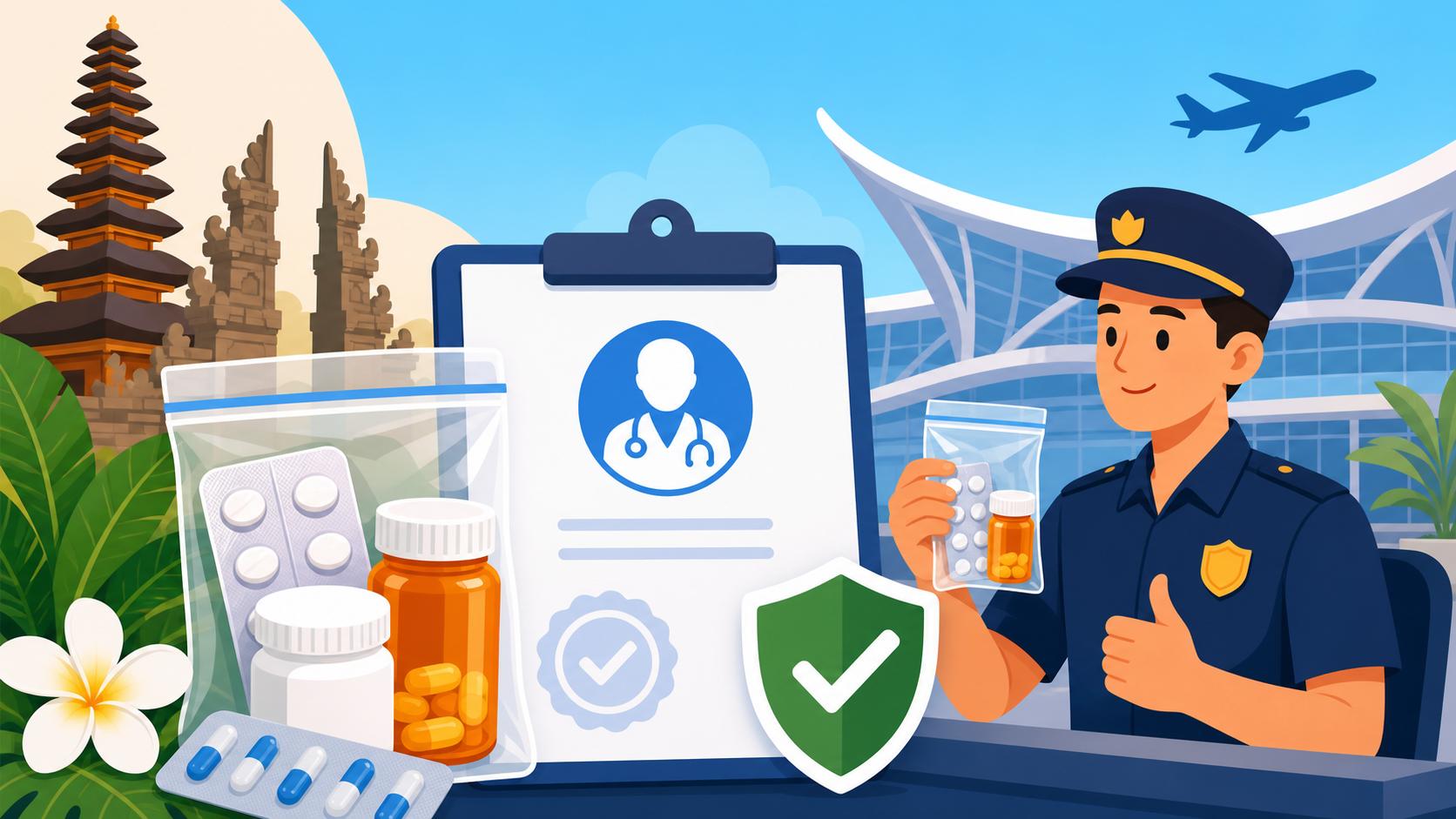
Bringing Prescription Meds into Ngurah Rai Airport: Customs Letter Checklist
Landing at Ngurah Rai International Airport with a suitcase full of prescription pills can feel like walking through a minefield, especially with Indonesia's notoriously strict drug laws. I remember the sweat prickling my neck the first time I flew into Denpasar with a six-month supply of asthma and blood pressure medication, wondering if a simple clerical error would lead to a room with no windows. This guide provides a definitive checklist for bringing your essential medications through Bali customs without the stress.
Understanding Indonesia’s Strict Narcotics and Psychotropic Laws
Indonesia does not play around when it comes to "drugs," and the legal system often fails to distinguish between a recreational substance and a life-saving prescription if the paperwork is missing. The cornerstone of your preparation must be understanding that you are entering a jurisdiction governed by Law No. 35 of 2009 on Narcotics and Law No. 5 of 1997 on Psychotropics. These laws categorize substances into groups, and while many common Western prescriptions are legal, they are "controlled," meaning they require a very specific set of proofs to clear customs.
For many of us moving here, the primary concern is Managing Chronic Conditions: Diabetes, Hypertension, and Long-Term Medication. If you are carrying insulin, high-dose painkillers, or cardiovascular meds, you are automatically on the radar of the Directorate General of Customs and Excise. They aren't looking to take away your health; they are looking to prevent the illegal diversion of controlled substances into the local market. This is why having a comprehensive Health Checklist for Your First 30 Days in Jakarta or Bali includes getting your medical documentation verified before you even board your flight.
The reality of Ngurah Rai is that it is a high-scrutiny port. Because Bali is a global tourism hub, customs officers are trained to spot anomalies in luggage. A large bottle of unlabeled pills is an immediate red flag. Even if you have a valid reason, the absence of a doctor’s letter can lead to the seizure of the medication, which, as any expat knows, is a disaster if that medication isn't easily found in a local Apotek. To ensure your long-term health is protected, many veterans in the community rely on Cigna Global to provide the kind of international coverage that assists when local supplies fail or when you need to fly out for specialized care because your specific brand of medication was confiscated.
The Distinction Between Narcotics and Psychotropics
It is vital to know which category your medication falls into. Narcotics include strong painkillers (like codeine or oxycodone), while psychotropics include many medications for mental health, such as benzodiazepines (Xanax, Valium) or ADHD stimulants. If you are carrying these, the scrutiny increases tenfold. You should read specifically about Controlled Substances: ADHD and Anxiety Meds Banned in Indonesia to ensure your specific brand isn't on the "no-entry" list, as some stimulants used in the West are strictly prohibited here, regardless of your prescription.
The 90-Day Rule for Personal Use
Generally, Indonesian customs allow a "reasonable amount" of medication for personal use, usually defined as a 30 to 90-day supply. If you show up with a two-year supply of anything, the officers will assume you are planning to sell it. If you need a longer supply, you must have a letter that specifically explains why a larger quantity is necessary for your specific journey. Even then, it is often safer to bring 90 days' worth and then learn the Apotek Guide: Prescription Workflow, Refills, and Communicating with Pharmacists to source the rest locally once you are settled.
The Essential Customs Letter Checklist
Your doctor’s letter is your "get out of jail free" card, but it has to be written perfectly. A vague note on a prescription pad will not suffice. The customs officers at Ngurah Rai see thousands of documents; they want to see professional, clear, and verifiable information. I always advise people to have their doctor write the letter on official clinic or hospital letterhead, signed in blue ink (which often looks more "original" to Indonesian officials than black ink).
Here is the exact checklist your doctor’s letter must satisfy:
- Patient Information: Your full name (exactly as it appears on your passport), date of birth, and passport number.
- Medical Necessity: A brief description of the medical condition being treated. It doesn't need to be an exhaustive history, but "Patient requires X for Chronic Hypertension" is essential.
- Medication Details: The generic name of the drug, the brand name, and the exact dosage.
- Quantity: The total amount of medication you are carrying (e.g., "180 tablets of 20mg Lisinopril"). This must match the amount in your bag.
- Doctor’s Credentials: The doctor’s full name, registration number, and direct contact details (email and phone).
- Translated Summary: While English is widely understood at the airport, having a simple Indonesian translation of the key points can smooth over any language barriers with more junior officers.
Beyond the letter, you must keep everything in its original packaging. I cannot stress this enough. If you put your pills into those plastic "Monday-Sunday" organizers to save space, you are asking for a secondary screening that could last hours. The officers need to see the manufacturer's label, the batch number, and the expiry date. If the label on the bottle matches the name on the prescription and the name on your passport, you are 95% of the way to a hassle-free entry.
Why Verification Matters
In the digital age, customs officers may occasionally attempt to verify the clinic exists. This is why having a reputable insurance provider is so helpful. For instance, Cigna Global often works with recognized international clinics, and having their insurance card alongside your doctor's letter adds a layer of "institutional legitimacy" to your presence in the country. It shows you are a documented resident or long-term visitor with professional backing, not a transient trying to bypass the rules.
Handling Over-the-Counter Supplements
Not everything needs a rigorous letter, but be careful with "herbal" supplements. Anything containing derivatives of hemp or poppy is a hard no. For your standard vitamins and minerals, you generally don't need a doctor's note, but keep them sealed. If you find yourself running low on quality supplements that meet Western standards, many expats use iHerb to ship reputable brands directly to their villas in Bali. It’s often easier to buy your Vitamin C or Magnesium through iHerb than to try and explain a suitcase full of unlabeled white powders to a suspicious customs official.
Navigating the Customs Red Channel at Ngurah Rai
Once you land and collect your bags, you will face the final hurdle: the customs declaration. You will likely fill this out digitally (the e-CD) before you even land or via a QR code in the arrivals hall. There is a specific question about whether you are carrying "narcotics, psychotropics, or other medicines."
My advice, based on years of living here: Always declare. If you have a prescription for a controlled substance and you tick "No," but they find it during an X-ray, you have technically committed a crime by making a false declaration. If you tick "Yes" and walk through the Red Channel (Goods to Declare), the worst that usually happens is they look at your letter, count your pills, and send you on your way.
| Category | Documentation Required | Recommended Supply | Customs Channel |
|---|---|---|---|
| General Meds (Antibiotics, etc.) | Original Prescription | 30 Days | Green (but declare on form) |
| Chronic Meds (Blood Pressure, Insulin) | Doctor's Letter + Prescription | 90 Days | Red Channel |
| Psychotropics (Anxiety, ADHD) | Detailed Medical Report + Letter | 30-60 Days | Red Channel (Mandatory) |
| Supplements/Vitamins | None (if in original bottles) | Personal use only | Green Channel |
When you enter the Red Channel, stay calm. The officers at Ngurah Rai are generally polite if you are respectful. Hand them your passport, the e-CD QR code, and your folder of medical documents immediately. If you act like you have nothing to hide, they usually treat it as a routine administrative task. If you are struggling with a language barrier or a particularly complex medical situation, having a comprehensive Healthcare in Indonesia for Foreign Residents: Complete System Overview (2027) saved on your phone can help you explain the local equivalents of your care.
What to Do If Medications Are Seized
In the rare event that an officer decides a medication is not permitted, do not argue aggressively. Ask for a formal receipt (Berita Acara) of the seizure. This document is essential if you need to claim the loss on your insurance. Having a policy with Cigna Global can be a lifesaver here, as they can often direct you to a local specialist who can re-prescribe a local equivalent or assist with the logistics of getting your health back on track.
If the medication was for an emergency, such as an EpiPen or heart medication, and it was taken, you must immediately seek Emergency Medical Care in Indonesia: Ambulances, ERs, and Evacuation Protocols. Do not wait until you feel symptoms; get to a reputable hospital like BIMC or Siloam in Bali right away to secure a local supply.
Pro-Tips for Long-Term Medication Management
After you have successfully cleared the airport, the challenge shifts to maintenance. Bali's humidity is a silent killer for medications. Many pills will degrade or become "sticky" within weeks if left in a bathroom cabinet. Keep your supplies in a cool, dry place, ideally in a small airtight container with a silica gel pack.
If you are on a specific brand that isn't available in Indonesia, you might be tempted to have friends mail it to you. Don't. Mailing prescription meds into Indonesia is a bureaucratic nightmare that often results in the package being held at the post office indefinitely. Instead, use your initial 90-day window to find a local doctor who can help you transition to a brand available in the Southeast Asian market. For those who require specific high-end vitamins or non-prescription support that local shops don't carry, iHerb remains the most reliable shipping method, as they handle the "BPOM" (Indonesian FDA) clearances much more efficiently than a private individual would.
Finding Support for Mental Health
If your medications are for psychiatric conditions, you may find that the local "equivalent" feels different. It is highly recommended to engage with Mental Health Care: Accessing Therapy and Psychiatry as an Expat in Indonesia early on. A local psychiatrist can bridge the gap between your home country's prescription and what is legally available at a Bali pharmacy.
Furthermore, if you are an expat who travels frequently, ensure your Cigna Global policy is updated to include international pharmacy "find and assist" services. Knowing that you can get a telehealth consultation to verify a local drug's safety can save you from a lot of "Bali Belly" style reactions to unfamiliar fillers in local pills.
Final Preparation Reminders
Before you zip up your suitcase, do one last check. Is the letter in your carry-on? (Never put your meds or the letter in checked luggage; if the bag is lost, you are in trouble). Do you have a digital backup on your phone and in the cloud? Is your insurance info, such as your Cigna Global policy number, easily accessible? If the answer is yes, you are as prepared as you can be.
Landing in Bali should be about the smell of frangipani and the excitement of a new chapter, not a panicked conversation with a customs official. By following the Bringing Medication Into Indonesia: Customs Rules, Limits, and Required Letters guidelines and keeping your paperwork impeccable, you can walk through Ngurah Rai with your head held high and your health fully protected. If you find yourself needing specialized items like gluten-free supplements or specific probiotics once you've landed, remember that iHerb is a reliable resource that most of us expats use to keep our "home comforts" stocked up without the airport drama.
Disclaimer
This guide is for informational purposes only and does not constitute legal or medical advice. Indonesian customs regulations are subject to change without notice. Always verify the current legality of your specific medications with the Indonesian Embassy or Consulate in your home country before traveling. The author and this website are not responsible for any legal issues, seizures, or health complications arising from the use of this information. Always consult with a qualified medical professional regarding your prescriptions and health needs while living abroad.