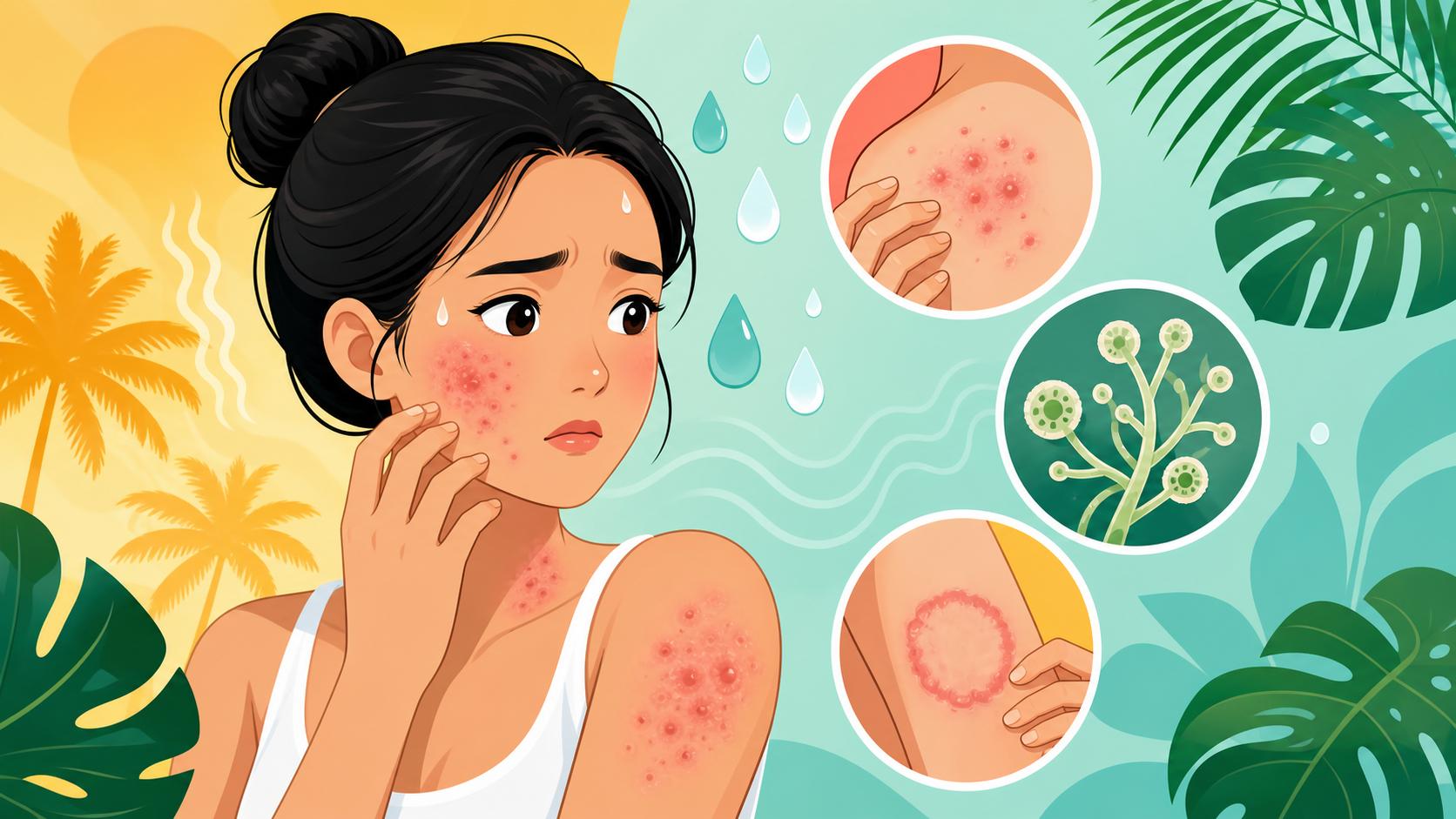
Dealing with Tropical Skin Conditions: Humidity, Rashes, and Fungal Infections
Stepping out of the airport in Jakarta or Denpasar, the first thing that hits you isn't the smell of incense or clove cigarettes—it's the wall of liquid air. I remember my first month in Bali, thinking my skin would eventually toughen up, only to wake up with a red, angry rash across my chest that felt like a thousand tiny needles. This guide solves the mystery of tropical skin irritations by identifying common culprits and providing a veteran's roadmap to recovery and prevention.
The Humidity Trap: Understanding Heat Rash and Sweat-Induced Irritations
Living in a climate where the humidity rarely drops below 75% means your sweat doesn't always have a place to go. When your sweat ducts become clogged, the moisture gets trapped under the skin, leading to what locals call biang keringat, or heat rash. It usually presents as tiny, fluid-filled blisters or deep, red lumps that itch intensely. During my early years in the humid suburbs of Tangerang, I made the mistake of applying heavy, oil-based moisturizers to these areas, which only served to seal the pores further and exacerbate the inflammation.
The most common form you will encounter is Miliaria Rubra. This is the "prickly heat" that feels like a constant stinging sensation. It often appears in areas where clothing rubs against the skin, such as the waistband, armpits, or the inner thighs. If you are a newcomer, your body hasn't yet calibrated its cooling system to the Indonesian furnace. You might find that your Health Checklist for Your First 30 Days in Jakarta or Bali should prioritize finding breathable, natural fabrics like linen or bamboo over the synthetic blends you might have packed from home.
Prevention is far more effective than cure when it comes to heat rash. Staying in air-conditioned environments during the peak heat of 11 AM to 3 PM is not just a luxury; it is a dermatological necessity. If you are active, you must shower immediately after sweating and use a gentle, fragrance-free cleanser. Many expats turn to iHerb to source specific salicylic acid washes or talc-free medicated powders that are harder to find in local supermarkets but essential for keeping the skin surface clear of debris.
Fungal Invaders: Managing Tinea and Yeast Infections in the Tropics
If the humidity causes the irritation, the local fungi are what often turn a simple rash into a long-term battle. The most common fungal infection expats face in Indonesia is Pityriasis Versicolor, known locally as Panu. It appears as small, discolored patches—either lighter or darker than your surrounding skin—and thrives on oily, sweaty backs and shoulders. I once spent three months wondering why I had white spots on my tan after a surfing trip in Lombok, only to realize the salt and sweat had created a perfect petri dish for yeast to flourish.
Then there is the dreaded Tinea Corporis, or ringworm. Despite the name, there are no worms involved; it is a fungal infection that creates a red, circular, itchy ring. In the tropical heat, these fungi spread with terrifying speed. If you frequent local gyms or use shared yoga mats in Canggu, you are at high risk. It is vital to understand that local pharmacies, or Apoteks, carry various anti-fungal creams, but knowing which one to ask for is key. Consulting an Apotek Guide: Prescription Workflow, Refills, and Communicating with Pharmacists can help you navigate the difference between a simple clotrimazole cream and more potent steroid-fungal combinations that might be overkill.
For persistent cases, specialized anti-fungal shampoos containing ketoconazole can be used as a body wash. You can often find these high-quality clinical formulations through iHerb, which provides a reliable way to get international brands delivered to your doorstep. If a fungal infection covers a large area of your body or involves your nails, you should not self-treat. Seeking professional help through a Jakarta Healthcare Guide for Expats: International Clinics and After-Hours Options is the safest way to obtain oral anti-fungal medications that require blood monitoring.
Bacterial Challenges and Environmental Triggers
Beyond the sweat and the fungi, Indonesia’s environment presents unique bacterial challenges. The most common is Folliculitis, an infection of the hair follicles that looks like a sudden breakout of acne on the legs, back, or buttocks. This is often caused by bacteria in improperly maintained swimming pools or even from the "road grime" that accumulates on your skin during a long scooter ride. I've found that using an antibacterial soap once or twice a week—not every day, as it can dry out your skin—helps keep the bacterial load in check.
You also have to contend with "Bali Belly for the skin," which is often just contact dermatitis from unknown plants or the infamous "Tomcat" (rove beetle). The Tomcat doesn't bite, but if you crush it on your skin, it releases a toxin called pederin that causes painful, linear blisters that look like a chemical burn. If you see a small, orange-and-black insect on your arm, blow it off; do not swat it. Treating these reactions usually requires a mild corticosteroid, which you can find at most clinics listed in a Bali Healthcare Guide: Hospitals, Clinics, and Emergency Contacts for Residents.
To help you distinguish between these conditions, I have compiled a comparison table based on common expat experiences in Indonesia:
| Condition | Local Name | Appearance | Primary Cause | Typical Treatment |
|---|---|---|---|---|
| Heat Rash | Biang Keringat | Tiny red bumps/blisters | Clogged sweat ducts | Calamine, cool showers |
| Tinea (Ringworm) | Kadas / Kurap | Red, itchy circular ring | Fungal infection | Anti-fungal cream |
| Pityriasis | Panu | White/dark skin patches | Yeast overgrowth | Ketoconazole wash |
| Folliculitis | Bisul Kecil | Acne-like bumps on hair | Bacterial infection | Antibacterial soap |
| Tomcat Burn | Terkena Tomcat | Linear, red blistering | Beetle toxin | Hydrocortisone cream |
Navigating the Indonesian Healthcare System for Skin Care
When a rash persists for more than a few days or begins to ooze, it is time to stop the DIY treatments. Indonesia has excellent dermatologists (Dokter Spesialis Kulit dan Kelamin), but the experience can vary. In major cities, you can find world-class facilities. If you are worried about the cost of specialists, having a robust international plan like Cigna Global can be a lifesaver. It allows you to skip the queues at public hospitals and head straight to private centers where English-speaking doctors are the standard.
I always recommend that new residents look into Siloam Hospitals Overview: What Expats Should Know About the Network because they have a presence in almost every major Indonesian city and their dermatology departments are usually very well-equipped. When you visit a doctor here, be prepared for them to prescribe a "cocktail" of creams. It is quite common for local doctors to provide a single jar containing a mix of anti-fungal, antibacterial, and steroid components. While effective, don't be afraid to ask for the specific breakdown of what is in the mix.
If you are struggling with language barriers, using a resource for Finding English-Speaking Doctors in Indonesia: Reliable Directories and Vetting will save you a lot of frustration. I once spent an hour trying to explain "prickly heat" to a pharmacist in a small village in Central Java, only to realize that showing a photo and using the term alergi (allergy) or gatal (itchy) was much more effective. However, for a complex diagnosis, an English-speaking specialist who understands expat skin types is worth the drive.
A Proactive Skincare Routine for the Indonesian Climate
To survive the Indonesian climate without constant skin issues, you need to rethink your entire routine. Back in Europe or North America, you might have used heavy creams to combat dry winter air. Here, that is a recipe for disaster. Your goal should be "hydration without occlusion." This means using water-based serums and light gels. I personally source my lightweight sunscreens and oil-free cleansers from iHerb because many local versions contain whitening agents (pemutih) which I prefer to avoid.
Sun protection is your first line of defense. Sunburn damages the skin barrier, making it significantly more susceptible to both fungal and bacterial infections. Use a high-SPF, "dry-touch" sunscreen that won't run into your eyes when you inevitably start sweating. If you do get a burn, treat it immediately with pure aloe vera—widely available at any Over-the-Counter (OTC) Medicine in Indonesia: Local Brands and Safe Alternatives outlet.
Finally, consider your internal health. The tropical humidity can lead to a "damp" internal state that some traditional practitioners believe contributes to skin issues. Staying hydrated with electrolytes and maintaining a diet low in processed sugars can help reduce the frequency of yeast-related issues like Panu. If you are already dealing with a flare-up, sometimes a short course of high-quality probiotics can help rebalance your system.
When your skin is healthy, it's easy to forget the challenges of the climate. But the moment the itching starts, it can ruin your experience of this beautiful country. Whether you are seeking a specialist through Finding Medical Care in Indonesia: Clinics, Hospitals, and International Facilities or just restocking your supply of tea tree oil, being proactive is the only way to stay comfortable in the "liquid air" of Indonesia. If you have international coverage through Cigna Global, don't hesitate to use it for even minor skin concerns; catching a fungal infection early can save you months of discomfort.
Disclaimer
The information provided in this guide is for educational and informational purposes only and is based on the personal experiences of expatriates living in Indonesia. It is not a substitute for professional medical advice, diagnosis, or treatment. Always seek the advice of your physician or another qualified health provider with any questions you may have regarding a medical condition. Never disregard professional medical advice or delay in seeking it because of something you have read in this article. The author and publisher are not responsible for any adverse effects resulting from the use of suggestions or products mentioned herein.