Getting a PCR or Antigen Test for Travel: Current 2026 Regulations
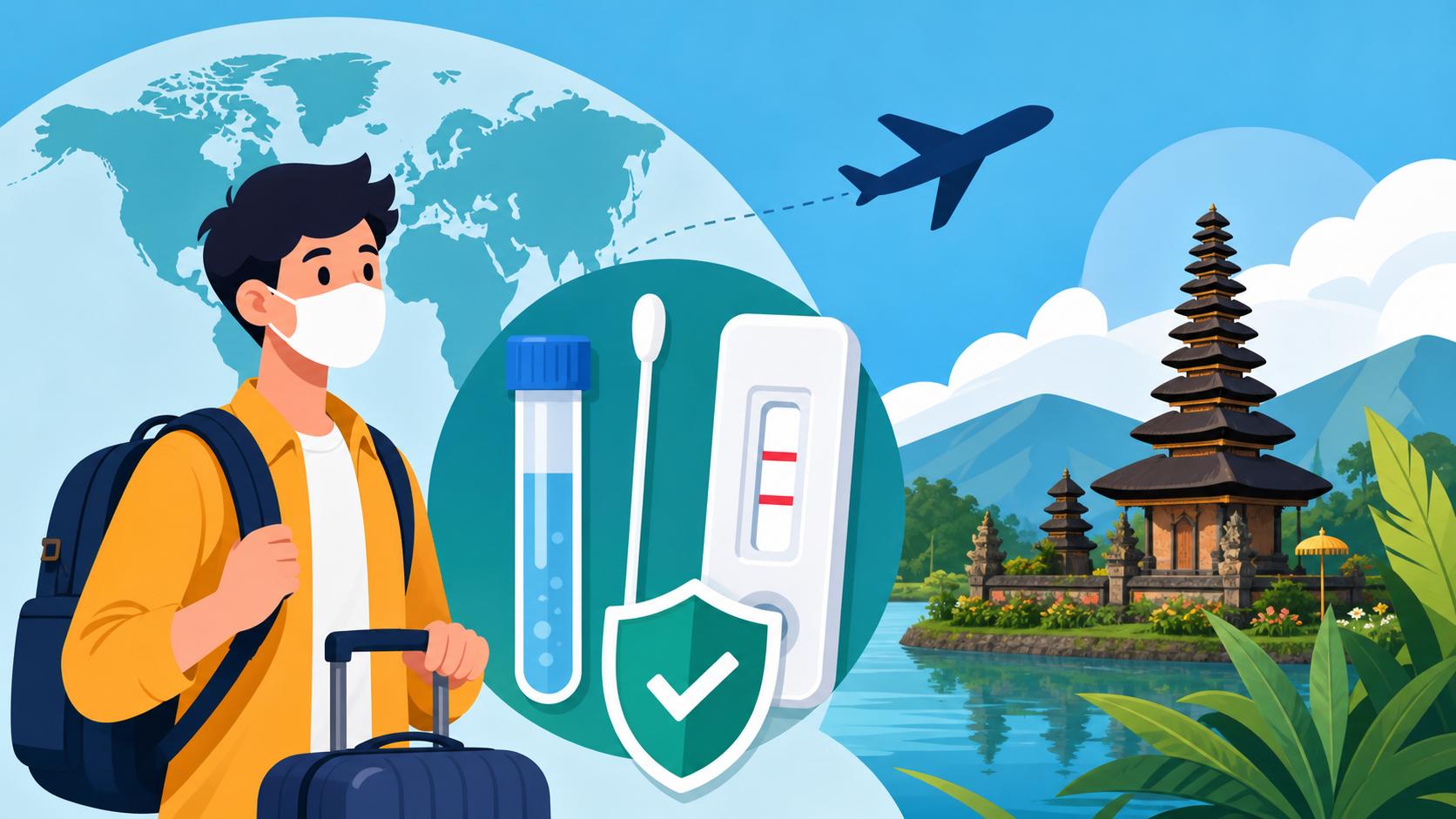
Nothing kills the pre-holiday buzz faster than realizing you’re one document short at the check-in counter. I’ll never forget the cold sweat I broke into at Soekarno-Hatta when I realized my digital test results hadn't synced to my phone properly. This guide breaks down exactly where to get a PCR or Antigen test in Indonesia and the current 2026 regulations to keep your travel stress-free.
Understanding Current Travel Requirements in Indonesia 2026
The landscape of travel in Indonesia has matured significantly since the chaotic days of the early 2020s. By 2026, the administrative hurdles have largely shifted from "blanket mandates" to "destination-specific requirements." Most domestic flights within the archipelago no longer require a routine PCR or Antigen test for vaccinated travelers, but international departures are a different story. Depending on your destination—whether you are heading to Australia, China, or parts of Europe—you may still find yourself needing a "Surat Keterangan" (health certificate) backed by a lab result.
The central nervous system of health documentation remains the SATUSEHAT app. Formerly known as PeduliLindungi, this app is where all your lab results must be uploaded. When you visit a lab for a test, the most critical question to ask is: "Does this lab sync with SATUSEHAT?" If they don’t, your result is essentially a piece of paper that many airline check-in systems will struggle to verify. Always ensure your passport number on the test result matches your travel document exactly, as even a minor typo can lead to a denial of boarding.
For those planning a move or a long-term stay, I highly recommend looking into Finding Medical Care in Indonesia: Clinics, Hospitals, and International Facilities to understand which networks are most reliable for administrative health tasks. While the system is efficient, the burden of proof is always on the traveler. If you are a frequent flyer, having a global policy from a provider like Cigna Global can offer an extra layer of security, especially if a positive test result forces you to cancel flights or seek sudden medical attention.
Where to Get Reliable Testing in Jakarta Bali and Beyond
Finding a lab in major cities like Jakarta, Surabaya, or Denpasar is easy, but finding one that understands the nuances of international travel timing is the real challenge. You generally have three choices: private dedicated labs, major hospital chains, or the "walk-in" booths still found near major transport hubs. For a seamless experience, the private labs like Prodia or Kimia Farma are the gold standard. They have branches everywhere and their digital integration is usually flawless.
In Bali, the situation is even more tailored to foreigners. Most clinics in areas like Canggu or Uluwatu offer "home service," where a nurse will come to your villa to perform the swab. This is a lifesaver if you are trying to maximize your last few hours of sun. You can find more specific local recommendations in our Bali Healthcare Guide: Hospitals, Clinics, and Emergency Contacts for Residents. In the capital, the options are more corporate but equally efficient. For those staying in the Big Durian, checking the Jakarta Healthcare Guide for Expats: International Clinics and After-Hours Options will give you a list of facilities that cater specifically to the expat community.
If you prefer a hospital setting, the Siloam network is a very safe bet. They have a dedicated department for "Medical Check-Ups" and travel testing. You can read a deep dive into their facilities in our Siloam Hospitals Overview: What Expats Should Know About the Network. They are particularly good at handling the documentation required for more "difficult" destinations that might require a specific stamp or a doctor’s signature in addition to the lab printout.
Recommended Testing Facilities and Comparison
| Provider Type | Best For | Result Turnaround | Digital Sync (SATUSEHAT) |
|---|---|---|---|
| Private Labs (Prodia/Kimia Farma) | Reliability & Accuracy | 6–24 Hours | High |
| International Hospitals (Siloam/BIMC) | Complex Documentation | 4–12 Hours | High |
| Villa/Home Service (Bali Only) | Convenience | 12–24 Hours | Medium (Verify First) |
| Airport Testing Booths | Last Minute Emergencies | 1–3 Hours (Antigen) | High |
Costs Logistics and Documenting Your Results
By 2026, prices for PCR and Antigen tests in Indonesia have stabilized. You are no longer paying the "emergency" premiums of years past. An Antigen test typically costs between IDR 100,000 and IDR 200,000, while a PCR test ranges from IDR 275,000 to IDR 500,000 depending on how fast you need the results. If you are quoted anything significantly higher, you are likely paying for a "VIP" or "Express" service.
One thing I learned the hard way is to always carry a physical printout of your result. While Indonesia is pushing for a paperless society, international gate agents in other countries often demand a physical "wet-signed" or stamped document. Most labs will email you a PDF, but you should ask them to provide a hard copy with an official stamp (stempel) if you are traveling to a country with strict entry protocols. If your Bahasa Indonesia is still a work in progress, you might find Medical Translation in Indonesia: When to Use It and Where to Find Interpreters useful to ensure the lab staff understands exactly what you need for your specific destination.
Logistically, you need to time your test perfectly. Most countries require the sample to be taken within 48 or 72 hours of departure. In Indonesia, "24 hours" usually means you will get your result the next day, not necessarily exactly 24 hours later. If your flight is on a Monday morning, getting tested on a Saturday morning is the safest window. Don't forget to stock up on basic travel health supplies before you head out; I usually grab my travel supplements and immune boosters from iHerb to ensure I stay healthy during the transit.
Navigating Common Travel Hurdles and Health Prep
What happens if the worst-case scenario occurs and you test positive right before a flight? First, don't panic. The current 2026 protocols in Indonesia generally require a period of self-isolation, but the strict government-mandated quarantine centers are mostly a thing of the past for asymptomatic cases. This is where your insurance coverage becomes vital. Having a plan with Cigna Global can help cover the costs of staying in a hotel for an extra week or rescheduling your flight without losing thousands of dollars.
To avoid a "false positive" or simply to ensure you’re in peak condition for your trip, I always recommend a solid health regimen in the weeks leading up to travel. The humidity and "Bali Belly" can sometimes wear down your immune system. I keep a steady supply of Vitamin C and probiotics from iHerb in my kit. You can find more tips on maintaining your health in our Pharmacies and Medication in Indonesia: Apotek Guide, Prescriptions, and Safe Use guide.
If you are new to the country, make sure you have your Health Checklist for Your First 30 Days in Jakarta or Bali completed. This includes knowing where the nearest 24-hour pharmacy is. For any last-minute medication needs, our Apotek Guide: Prescription Workflow, Refills, and Communicating with Pharmacists will help you navigate the local pharmacy system like a pro. Being prepared isn't just about the test result; it’s about the entire ecosystem of health that keeps you moving across borders safely.
Lastly, always check the official "Molina" or Indonesian Immigration websites 48 hours before you fly. Rules can change overnight in response to global health trends. While 2026 has been stable, the seasoned expat knows that in Indonesia, the only constant is change. Keeping your digital documents updated and having a back-up plan will save you from the stress I faced at the airport all those years ago.
Disclaimer
This guide is for informational purposes only and does not constitute legal or medical advice. Travel regulations in Indonesia are subject to change by the National COVID-19 Task Force (Satgas) and the Ministry of Health. Always verify specific entry requirements with your airline and the embassy of your destination country before booking travel.