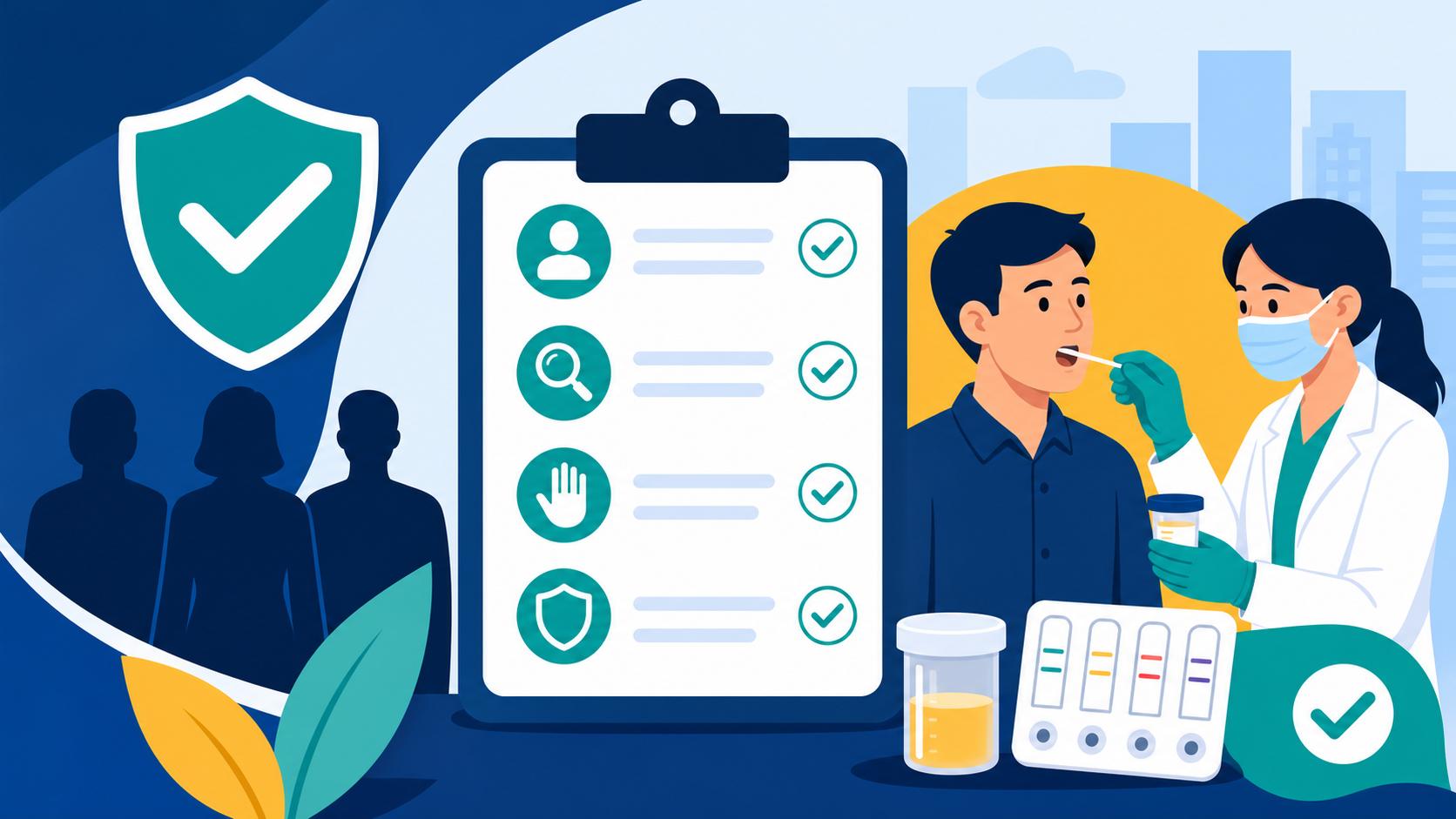
Standard Operating Procedures for Employer-Mandated Drug Testing
Finding out that your new job offer or contract renewal in Jakarta or Bali is contingent on a mandatory drug test can trigger an immediate wave of "bureaucratic anxiety." I remember my first time standing in a sterile clinic in Kuningan, clutching a plastic cup and wondering if my morning decongestant would accidentally end my career. This guide clarifies the standard operating procedures for employer-mandated drug testing in Indonesia so you can navigate the process without the stress of the unknown.
The Regulatory Landscape of Workplace Drug Testing in Indonesia
To understand why your employer is suddenly asking for a urine sample, you have to look at the Indonesian government’s aggressive stance on narcotics. The primary driver is the P4GN program (Prevention, Eradication of Abuse and Illicit Trafficking of Narcotics), spearheaded by the BNN (Badan Narkotika Nasional). Under Ministry of Manpower Regulation No. 11/MEN/VI/2005, employers are actually encouraged—and in some high-risk sectors, mandated—to implement drug-free workplace programs. This isn't just corporate policy; it’s a national security priority.
If you are working for a large corporation, specifically a Workplace Health and Safety: Pre-Employment Medical Exams (Pemeriksaan Kesehatan) is often the first gate you must pass. For those in the oil and gas, mining, or aviation industries, these tests are not one-off events. They are integrated into the annual medical check-up (MCU) and can also be triggered "for cause" or as part of a random sweep. While the idea of random testing feels invasive, it is a standard clause in most Employment Rights: PT PMA Contracts, Leave, and BPJS Ketenagakerjaan agreements.
Indonesian law gives employers significant leeway to ensure a safe working environment. If your role involves operating heavy machinery or managing sensitive data, the "Standard Operating Procedure" (SOP) will be rigid. Most companies partner with accredited third-party laboratories like Prodia or Kimia Farma to maintain a chain of custody. This is where your experience with Finding Medical Care in Indonesia: Clinics, Hospitals, and International Facilities becomes useful, as you’ll likely be sent to one of these well-known diagnostic centers rather than doing the test in an office broom closet.
The Standard Operating Procedure: What to Expect on Test Day
The actual procedure for a drug test in Indonesia is fairly clinical but involves strict "Chain of Custody" protocols to prevent tampering. Most expats will undergo a 6-parameter urine test, which typically screens for Amphetamines (AMP), Methamphetamines (MET), Cocaine (COC), Marijuana (THC), Morphine (MOP), and Benzodiazepines (BZD). In more stringent corporate environments, they may opt for a 10-parameter test or even hair follicle testing, though the latter is rare due to the high cost.
When you arrive at the lab, you will be asked to provide your KITAS and a referral letter from your employer. You’ll be required to sign a consent form. One hyper-local tip: make sure the name on your lab registration matches your passport exactly. I’ve seen cases where a middle name omission caused a three-day delay in Finding English-Speaking Doctors in Indonesia: Reliable Directories and Vetting to verify a result because the HR system couldn't "match" the lab file.
| Test Parameter | Common Detection Window | Sample Type | Reliability |
|---|---|---|---|
| Marijuana (THC) | 3 to 30 days | Urine | High |
| Amphetamines | 1 to 3 days | Urine | Moderate (False Positives common) |
| Benzodiazepines | 1 to 7 days | Urine | High |
| Cocaine | 2 to 4 days | Urine | High |
| Opioids/Morphine | 2 to 5 days | Urine | High |
| Alcohol | 12 to 24 hours | Breath/Urine | High |
During the collection, you may be asked to leave your bags and jacket in a locker. While Indonesian labs generally respect privacy, "monitored" collection is legal if there is a suspicion of tampering. Once the sample is provided, the technician will measure the temperature to ensure it’s fresh. You will then sign a seal that is placed over the container. It is vital that you see this seal being applied. Having a high-quality international insurance plan like Cigna Global can sometimes offer peace of mind if you need to seek a second opinion at a private hospital later, though the initial employer test is almost always paid for by the company.
Navigating False Positives and Prescription Medications
The biggest headache for the expat community involves prescription medications that trigger "false positives." If you are Managing Chronic Conditions: Diabetes, Hypertension, and Long-Term Medication, or if you take medication for ADHD or anxiety, you are in a high-risk category for a complicated test result. In Indonesia, the "6-parameter" rapid test often flags Ritalin as an amphetamine or Valium as a benzodiazepine.
The SOP for dealing with this is disclosure before the test. You must bring your original prescription and a Sick Leave (Cuti Sakit) in Indonesia: How to Get a Surat Keterangan Dokter that explains why you are taking the medication. Do not assume the lab technician will "note it down" and everything will be fine. You need to ensure the Medical Review Officer (MRO) at the lab sees your documentation. Many expats find that having their medical records consolidated and easily accessible through a global provider like Cigna Global helps speed up this verification process.
If a test comes back "Non-Negative" (the clinical term for a positive result), the lab is supposed to perform a Confirmatory Test, usually using Gas Chromatography-Mass Spectrometry (GC/MS). This is the gold standard that can distinguish between illicit methamphetamines and your prescribed ADHD meds. However, not all labs do this automatically. You may have to insist on it. Be aware that Controlled Substances: ADHD and Anxiety Meds Banned in Indonesia are a gray area; even with a prescription, some substances that are legal in the US or UK are strictly controlled here. If you use supplements from sites like iHerb, be cautious about "pre-workout" blends or hemp-derived products, as these have been known to cause unexpected flags in the highly sensitive Indonesian screening kits.
Consequences of a Positive Result and Your Rights
What happens if the result is positive and you cannot prove a legitimate medical reason? This is where the situation turns from a medical issue into a legal and immigration crisis. Under most Indonesian employment contracts, a confirmed positive drug test is considered "gross misconduct." This allows the employer to terminate the contract immediately without the usual Severance Pay (Pesangon): What Foreign Workers Are Entitled To Upon Termination protections.
Beyond the loss of your job, a positive drug test in a corporate setting can be reported to the BNN. For an expat, this almost certainly triggers an immigration review. If you are terminated for drug use, your employer is required to process an Exit Permit Only (EPO), and you may find yourself on a blacklist, preventing future entry into the country. The standard procedure for the company is to notify the Manpower Office and the local police if the substance is illegal under Law No. 35 of 2009.
If you believe the test was handled incorrectly, you have the right to request a re-test at an independent, government-approved laboratory. However, you must act fast. Most SOPs only allow a 48 to 72-hour window to challenge a result. During this time, I strongly suggest you avoid any "detox" products you might find on iHerb, as these can alter the pH of your urine and be flagged as an "Adulterated" sample, which is treated the same as a positive result. Instead, focus on gathering your medical evidence and seeking legal counsel if your Understanding the PT PMA Structure: Why Employers Must Be Foreign-Owned employer is not following the internal grievance procedures outlined in your company handbook.
Managing Your Health and Privacy During the Process
Privacy is a nuanced concept in Indonesia. While medical confidentiality (Rahasia Kedokteran) is protected by law, your employer generally has the right to see the final "Fit/Unfit" result of a mandated test. They do not necessarily have the right to see your full medical history, but the line gets blurry when a drug test is involved. If you are concerned about how your data is being handled, it’s worth checking if your company uses a reputable MRO to filter the results.
To keep your system clean and avoid unnecessary "non-negative" results, be mindful of what you consume in the weeks leading up to a scheduled MCU. Even poppy seeds in a bagel or certain Chinese traditional medicines can cause a Morphine flag. I always tell newcomers to stick to a clean diet and only use trusted supplements from reputable sources like iHerb to ensure there are no hidden contaminants. If you are feeling the "Expat Burnout and Stress" that often comes with Jakarta life, seek Mental Health in Indonesia: Counseling, Psychiatry, and Support for Expats rather than self-medicating with over-the-counter "sleep aids" that might contain restricted substances.
Finally, remember that the goal of the employer is usually risk mitigation, not a "witch hunt." By understanding the SOP, disclosing your prescriptions early, and ensuring you have a robust insurance safety net like Cigna Global to handle any secondary medical evaluations, you can treat the mandatory drug test as just another box to check in your Indonesian expat journey. It’s a hurdle, certainly, but one that is much easier to clear when you know exactly where the bar is set.
Disclaimer
This article is for informational purposes only and does not constitute legal or medical advice. Drug testing regulations and labor laws in Indonesia are subject to frequent changes. Always consult with a qualified legal professional or a licensed medical practitioner in Indonesia regarding your specific circumstances and rights. The author and publisher are not responsible for any actions taken based on the information provided in this guide.