Dealing with Local Pharmacies: When to Bargain and When Prices are Fixed
Finding the right medicine in Indonesia often feels like a high-stakes game of telephone where the price changes depending on which pharmacy you walk into and how confident you look. I remember standing in a small independent pharmacy in South Jakarta, desperately needing a specific inhaler, and being quoted a price three times higher than the chain store down the street. This guide solves the confusion by clarifying exactly when prices are fixed by law and where you have the leverage to negotiate.
Understanding the Indonesian Apotek Landscape
When you first arrive, the word apotek will become a staple in your vocabulary. However, not all pharmacies are created equal. In Indonesia, you generally deal with two distinct worlds: the large, corporatized chains and the smaller, independent "mom-and-pop" shops. Navigating these requires a bit of local "know-how" that goes beyond what you’d find in a travel brochure.
The massive chains, such as Kimia Farma, Century, Guardian, and Watsons, are the "safe bets" for most expats. They are brightly lit, air-conditioned, and usually have a standardized computer system for pricing. Kimia Farma, in particular, is state-owned and often follows the most rigid pricing structures. If you are looking for a reliable experience, especially for chronic conditions, these are your primary ports of call. You might find more detailed information on this in the Apotek Guide: Prescription Workflow, Refills, and Communicating with Pharmacists.
Independent pharmacies, on the other hand, are where things get interesting. These are often smaller, tucked away in local neighborhoods (kampungs) or attached to small clinics. While they can be significantly cheaper for generic medications, they are also where you are most likely to encounter price fluctuations. I’ve found that these shops are excellent for quick fixes, but you need to be aware of the HET system to ensure you aren't being overcharged simply because you are a foreigner.
The HET Rule: Your Secret Weapon
The most important thing to look for on any box of medication in Indonesia is the letters "HET," which stands for Harga Eceran Tertinggi (Maximum Retail Price). By law, every manufacturer must print the HET on the packaging. This is the absolute ceiling price that any pharmacy is legally allowed to charge you.
I always make it a habit to check the side or bottom of the box before handing over my money. If a pharmacist quotes you 150,000 IDR but the HET printed on the box says 120,000 IDR, you are being overcharged. In a chain pharmacy, this almost never happens because the barcodes are linked to the national system. However, in smaller shops, they might "forget" the HET if they think you don’t know better. Simply pointing to the HET and saying "Harganya sesuai HET, ya?" (The price follows the HET, right?) usually corrects the "error" instantly.
Chain vs. Independent Pricing Dynamics
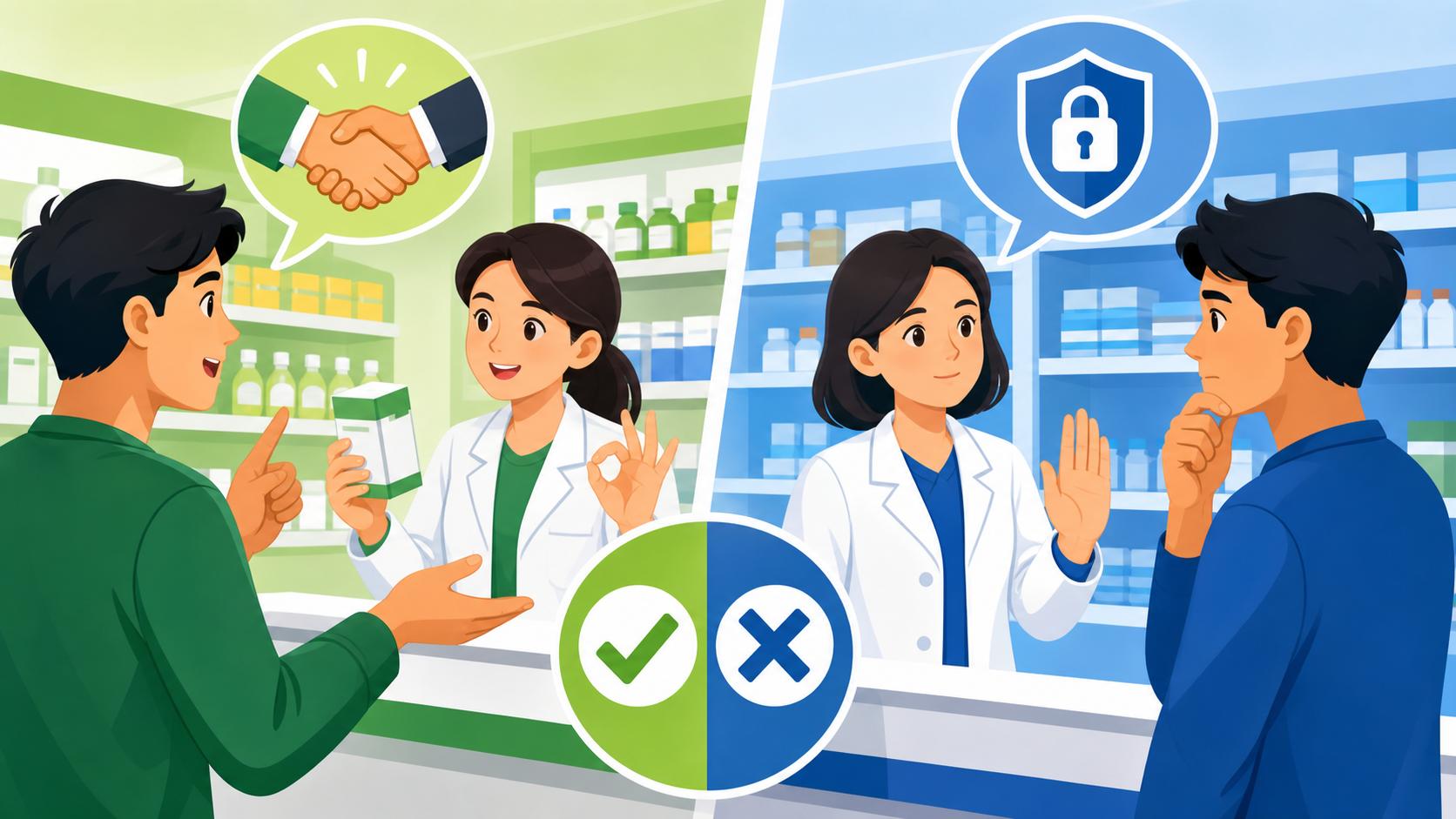
In the large chains like Guardian or Watsons, the price you see on the shelf is the price you pay. There is zero room for bargaining here, much like you wouldn't haggle at a pharmacy in London or New York. These stores often run "Buy 2 Get 1 Free" promotions on supplements or skincare, which can be a great way to save. However, for actual pharmaceutical drugs, the price is fixed.
In independent pharmacies, the price is "fixed" in theory but "flexible" in practice if you are buying in bulk or are a regular customer. For example, if you need a full box of Typical OTC Cold Medicines in Indonesia: Tolak Angin and Western Equivalents, the pharmacist might give you a "harga grosir" (wholesale price) if you ask. While you aren't exactly "haggling" like you would for a sarong on a beach in Bali, asking for a discount on a large purchase is perfectly acceptable in these smaller settings.
When to Bargain and When to Pay the Sticker Price
It is a common misconception that everything in Indonesia is negotiable. When it comes to your health, "bargaining" is less about aggressive haggling and more about price comparison and asking for available discounts. If you have international coverage through a provider like Cigna Global, you’ll likely be more concerned with getting a proper receipt (kwitansi) than saving a few thousand Rupiah, but for those paying out of pocket, the costs can add up.
If you are dealing with a life-saving medication or a specialized prescription, do not attempt to bargain. The priority should be the authenticity of the medicine. High-end hospitals and their internal pharmacies have the strictest quality controls, and their prices are non-negotiable. For everyday items, however, such as Painkillers in Indonesia: Accessing Ibuprofen, Paracetamol, and Local Brands, you have much more room to shop around.
Fixed Price Scenarios: Chains and Branded Goods
In any pharmacy located inside a major mall (like Grand Indonesia or Senayan City), prices are 100% fixed. These establishments have high overhead costs and standardized corporate policies. You should also expect fixed prices for imported Western brands. If you are looking for specific vitamins that are not locally produced, you might actually find better deals online through iHerb rather than paying the inflated import prices at a local boutique pharmacy.
Another scenario where prices are fixed is when you are using direct billing. If your insurance, such as Cigna Global, has a partnership with a hospital like Siloam or Medistra, the pharmacy will bill the insurer directly at a pre-agreed rate. In these cases, you don't even see the price negotiation—it happens behind the scenes between the provider and the hospital.
Negotiable Scenarios: Local Bulk Buys and Non-Medical Items
You have the most leverage when buying "strip" medications (blister packs) in quantity. Many Indonesians buy medicine in small amounts—sometimes just two or three tablets at a time. If you walk in and ask for five boxes of Tropical Allergies: Managing Reactions and Finding Antihistamines Locally, you are in a prime position to ask, "Bisa kurang harganya kalau beli banyak?" (Can the price be reduced if I buy a lot?).
Beyond the medicine itself, pharmacies in Indonesia often sell a variety of sundries, from medical devices like blood pressure monitors to orthopedic supports. These items often do not have an HET printed on them. This is where true bargaining can happen. I once saved 200,000 IDR on a knee brace just by mentioning that I saw it cheaper at a different apotek down the road. The pharmacist would rather make a smaller profit than lose the sale entirely.
| Pharmacy Type | Bargaining Potential | Best Used For | Payment Methods |
|---|---|---|---|
| Large Chains (Kimia Farma/Century) | None (Fixed) | Prescriptions, Trustworthy Brands | Cash, Card, QRIS, Insurance |
| Mall Pharmacies (Guardian/Watsons) | None (Fixed) | Toiletries, Supplements, Skincare | Cash, Card, QRIS |
| Local Independent Apotek | Low to Moderate | Generic Meds, Bulk Purchases | Cash, QRIS (rarely cards) |
| Hospital Pharmacies | None (Fixed) | Emergency, Specialized Meds | Cash, Card, Insurance Direct Billing |
Navigating the Prescription Workflow and Ethics
One of the most confusing aspects for newcomers is the "open" nature of Indonesian pharmacies. While laws are tightening, you will still find that some pharmacies are more "relaxed" about prescriptions than others. However, as an expat, it is vital to stay within the legal and ethical boundaries to avoid complications with your visa or insurance.
You should always aim to have a valid prescription from a local doctor. This not only ensures you are taking the right dosage but also provides the necessary documentation if you need to prove why you are carrying certain medications. For those who have just arrived, checking the Bringing Medication Into Indonesia: Customs Rules, Limits, and Required Letters guide is a must to avoid issues at the airport.
The Doctor-Pharmacy Loop
In Indonesia, the relationship between doctors and certain pharmacies can sometimes influence where you are sent to buy your medicine. Some private clinics have an "in-house" pharmacy where prices are notably higher. You are never obligated to buy your medicine at the clinic where you saw the doctor. You can always ask for a "copy resep" (copy of the prescription) and take it to a Finding 24-Hour Apoteks (Pharmacies) in Jakarta and Bali to find a better price.
I’ve learned the hard way that "shopping your prescription" can save you a fortune. I once had a specialist prescribe a brand-name antibiotic that cost 800,000 IDR for a course. By taking that prescription to a Kimia Farma and asking for the "generik" (generic) version, I paid less than 100,000 IDR for the exact same chemical compound. The pharmacist is usually happy to help you find the generic equivalent if you ask.
Ethical Considerations and Safety
While it might be tempting to "bargain" your way into getting medication without a prescription, this is increasingly difficult and highly risky. Antibiotics in Indonesia: Overprescription Risks and Pharmacy Practices is a serious issue, and reputable pharmacists will insist on seeing a doctor's note for anything stronger than basic painkillers or cough syrup.
Furthermore, if you are buying extremely cheap medication from an unverified source, you risk purchasing counterfeit goods. The "deal" you get at a tiny, dark stall in a back alley isn't worth the risk of ingesting chalk or worse. Stick to established apoteks that display their SIA (Surat Izin Apotek – Pharmacy License) clearly on the wall. If you are unsure about the local quality, sticking to imported supplements from iHerb can provide peace of mind for your daily wellness routine.
Actionable Tips for Expats at the Pharmacy
To truly master the local pharmacy scene, you need to use the tools available to modern residents in Indonesia. We are lucky to live in an era where technology has made price transparency much easier than it was a decade ago.
- Use Halodoc or Alodokter: Before you even leave your house, check the prices of your medication on the Halodoc app. This app is the gold standard for pharmacy delivery in Indonesia. It shows you the price of the medicine and which pharmacies near you have it in stock. Even if you plan to buy in person, having the Halodoc price on your screen gives you a "benchmark" to ensure the local shop isn't overcharging you.
- Carry Your KITAS and Insurance Card: Some pharmacies offer small discounts for members of certain insurance plans or corporate groups. Even if they don't have a direct billing agreement with Cigna Global, showing a professional insurance card sometimes signals that you are a resident who knows the system, rather than a one-time tourist.
- Ask for the "Struk": Always ask for a printed receipt (struk) or a handwritten one with the pharmacy's official stamp (cap). This is essential for insurance claims and also serves as a deterrent for pharmacists who might be tempted to pocket a "foreigner surtax."
- Check Expiry Dates: In smaller, independent shops, inventory might not move as fast as it does in the big chains. Always check the Tanggal Kadaluwarsa (expiry date) before you leave the counter.
Navigating Indonesian pharmacies is a skill that comes with time. By understanding the HET system, knowing where prices are fixed, and using apps to verify costs, you can ensure that you are getting the care you need without being taken advantage of. Whether you are dealing with Tropical Allergies: Managing Reactions and Finding Antihistamines Locally or just looking for a reliable source of vitamins, a little bit of preparation goes a long way in the "I've-been-there" reality of expat life.
Medical Disclaimer
The information provided in this guide is for informational purposes only and does not constitute professional medical advice, diagnosis, or treatment. Always seek the advice of your physician or other qualified health provider with any questions you may have regarding a medical condition. Never disregard professional medical advice or delay in seeking it because of something you have read in this article. The author and publisher are not responsible for any adverse effects resulting from the use of suggestions, products, or procedures discussed in this guide. Proper medical consultation in Indonesia is highly recommended before purchasing or consuming any pharmaceutical products.