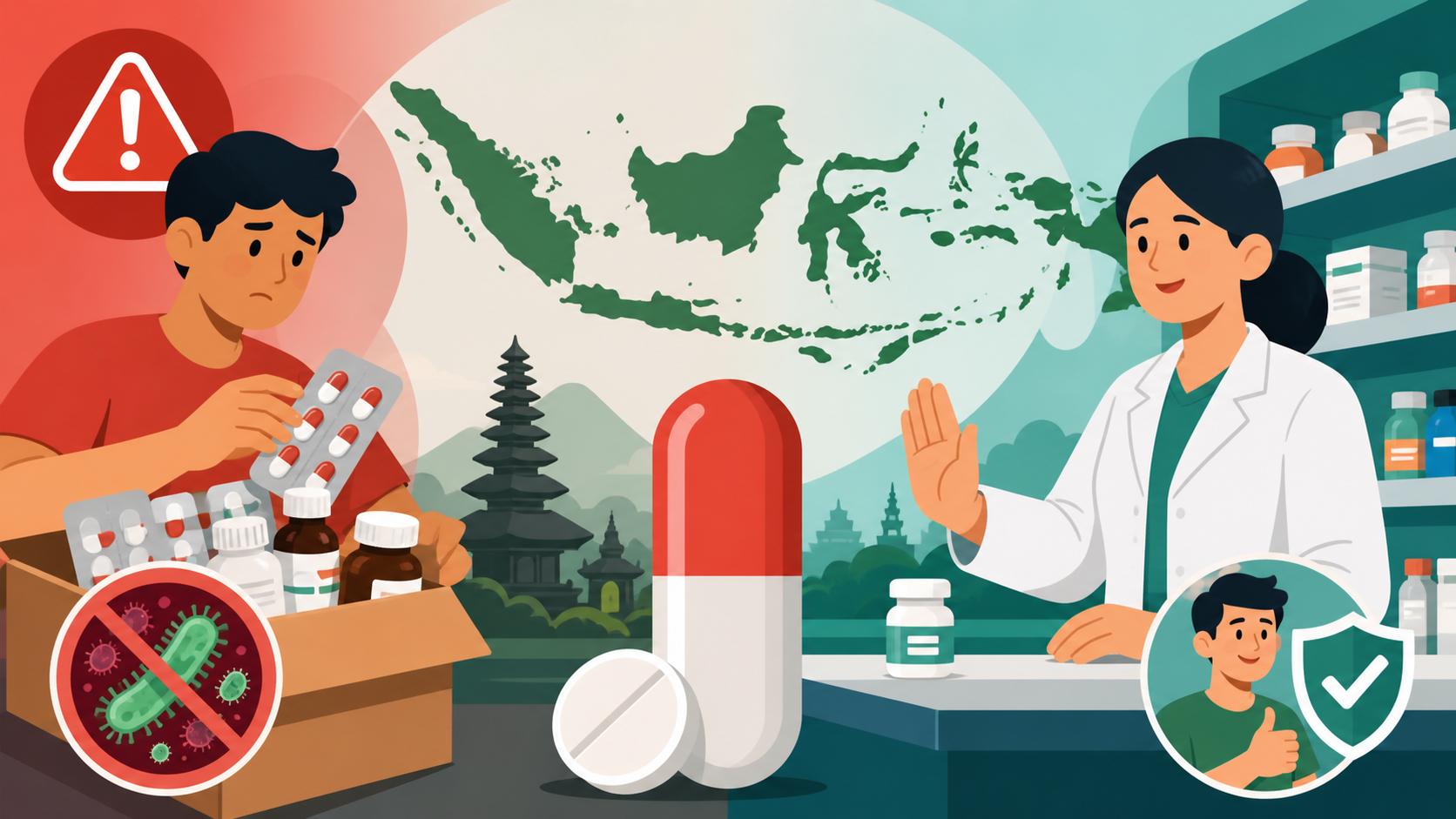
Antibiotics in Indonesia: Overprescription Risks and Pharmacy Practices
Navigating the Indonesian healthcare system often feels like a crash course in "more is better" pharmacology, especially when you are handed a fistful of pills for a minor sniffle. I remember my first bout of "Bali Belly" vividly; the local doctor prescribed a cocktail of five different medications, including two separate antibiotics, before even asking how long I’d been symptomatic. This guide clarifies the reality of antibiotic overprescription in Indonesia and teaches you how to advocate for your own health.
The Culture of Overprescription: Why You Are Always Handed a Script
If you have spent any significant time in Jakarta or Bali, you have likely noticed that a visit to a local clinic often ends with a prescription for antibiotics, even for clearly viral issues like the common cold or the flu. This phenomenon isn't just a quirk of local practice; it is deeply rooted in a complex mix of patient expectations and systemic pressures. Many local patients equate the "strength" of a doctor with the number of medications prescribed. If a patient leaves a clinic without a bottle of Amoxicillin or Cefadroxil, they might feel the doctor hasn't done their job. This puts immense pressure on healthcare providers to over-prescribe just to maintain patient satisfaction and ensure the patient doesn't simply go to a competitor.
Furthermore, the diagnostic process in many smaller clinics can be rushed. Instead of waiting for lab results from a blood panel to confirm a bacterial infection, many practitioners opt for a "shotgun approach." They prescribe broad-spectrum antibiotics immediately to cover all bases. While this might provide a sense of security, it leads to the massive problem of antibiotic resistance that is becoming increasingly prevalent across the archipelago. When you are looking into Finding Medical Care in Indonesia: Clinics, Hospitals, and International Facilities, it is vital to find doctors who prioritize evidence-based medicine over quick-fix prescriptions.
From a veteran expat’s perspective, you have to be the one to hit the brakes. I’ve learned to explicitly ask, "Is this a viral or bacterial infection?" and "Is this antibiotic strictly necessary?" You’ll find that when challenged gently, many doctors are willing to admit that the antibiotic is "preventative"—a practice that is widely discouraged by international health organizations but still common here. Having a robust plan with Private Health Insurance in Indonesia: Bridging the Gap When BPJS Isn't Enough can also help, as premium insurance providers often have networks of international-standard clinics where doctors follow stricter prescribing protocols.
Navigating the Apotek: Pharmacy Practices and Buying Antibiotics
The local pharmacy, or Apotek, is a fascinating place. In theory, antibiotics in Indonesia are prescription-only (G-labeled drugs). In practice, the enforcement of these regulations can be incredibly inconsistent. You might walk into a major chain like Kimia Farma or K-24 and be asked for a prescription, but a smaller, independent apotek in a residential neighborhood might sell you a strip of antibiotics as easily as a pack of gum. This accessibility is a double-edged sword; it is convenient when you have a recurring, confirmed condition, but dangerous for those who self-diagnose and contribute to the rise of "superbugs."
When you enter an apotek, you will see a wide range of generic and brand-name medications. Generic drugs (Obat Generik) are significantly cheaper and are the backbone of the public health system. However, many expats prefer brand-name medications, believing them to be of higher quality, though the active ingredients are often identical. For a deep dive into the logistics of buying meds, check out our Apotek Guide: Prescription Workflow, Refills, and Communicating with Pharmacists. It is also worth noting that many expats supplement their local medicine cabinet with high-quality vitamins and minerals from iHerb to support their immune system naturally, which can sometimes reduce the frequency of those clinic visits in the first place.
Modern technology has changed the game slightly with apps like Halodoc and Alodokter. These platforms allow you to consult with a doctor via chat and have medication delivered to your door within the hour. While this is incredibly efficient, the same risks of overprescription apply. The digital doctor might be just as likely to suggest an antibiotic for your "batuk" (cough) as a physical one. Learning How to Book a Doctor Appointment via Halodoc or Alodokter Apps is essential for every resident, but you must maintain your skepticism even when the service is this convenient.
| Medication Type | Common Indonesian Name | Common Use (Overused for) | Risk Level |
|---|---|---|---|
| Amoxicillin | Amoxilin / Amox | Common colds, sore throats | High (Resistance) |
| Ciprofloxacin | Cipro | Traveler's diarrhea, UTIs | High (Side effects) |
| Azithromycin | Mezatrin / Zithromax | Respiratory infections | Moderate |
| Cefadroxil | Cefat / Cefadroxil | Skin infections, throat | Moderate |
| Metronidazole | Flagyl | Parasitic infections | High (Misdiagnosis) |
Risks of Improper Use and Antimicrobial Resistance (AMR)
The casual attitude toward antibiotics in Southeast Asia has led to a significant increase in antimicrobial resistance. In Indonesia, the prevalence of "superbugs"—bacteria that are resistant to most common antibiotics—is a genuine concern for hospital-acquired infections. When people take antibiotics for viral infections or, perhaps more commonly, stop taking their pills as soon as they feel better (usually on day two or three), the strongest bacteria survive and multiply. This makes future infections much harder to treat, not just for the individual, but for the community at large.
Tropical realities also complicate things. In the heat and humidity, skin infections can turn nasty very quickly. Many expats get a small scratch from a scooter pedal or a coral cut and immediately reach for antibiotic creams or oral meds. While sometimes necessary, this "just in case" mentality is exactly what fuels the AMR crisis. It is often better to consult with a specialist at a reputable facility like those in the Siloam Hospitals Overview: What Expats Should Know About the Network to ensure you are treating the specific pathogen involved rather than guessing.
Beyond the community risk, there is the personal toll of gut health. Antibiotics are "scorched earth" for your microbiome. After a heavy round of Ciprofloxacin, I’ve seen many friends struggle with digestive issues for months because they didn't realize they were killing off all their good gut flora. This is another area where sourcing high-quality probiotics from iHerb can be a lifesaver. Being aware of Healthcare in Indonesia for Foreign Residents: Complete System Overview (2027) helps you understand that while the system is accessible, the burden of being a "smart patient" falls squarely on your shoulders.
Strategies for Expats: How to Manage Your Own Treatment Safely
So, how do you navigate this without becoming a medical hermit? The first step is to establish a relationship with a trusted primary care physician who understands Western medical standards. If you are living in the capital, Finding an English-Speaking Clinic in South Jakarta (Kemang and SCBD) is a great place to start your search for a doctor who won't just throw pills at you. These clinics often cater to the diplomatic and international business community and are well-versed in the "less is more" approach to antibiotics.
Secondly, always ask for a lab test if a doctor suggests an antibiotic for something that isn't glaringly bacterial. A simple CRP (C-Reactive Protein) test or a complete blood count (CBC) can often tell you if your body is fighting a bacterial or viral invader. Most major hospitals and labs like Prodia allow you to walk in and request these tests even without a referral. If the doctor refuses to wait for a test, it might be time for a second opinion. Companies like Cigna Global often provide access to telehealth services where you can get a second opinion from an international doctor, which can be invaluable when you are unsure about a local prescription.
Lastly, familiarize yourself with Over-the-Counter (OTC) Medicine in Indonesia: Local Brands and Safe Alternatives. Many symptoms can be managed with high-quality symptomatic relief rather than "curing" a virus with an antibiotic it can't even see. Keep a stash of reputable pain relief, decongestants, and rehydration salts. If you are covered by an international plan like Cigna Global, you can often get reimbursed for these consultations, allowing you to prioritize quality of care over the cheapest local option. Your health is your most valuable asset in the tropics; don't let it be compromised by a prescription you never needed in the first place.
Disclaimer
The information provided in this guide is for educational and informational purposes only and is not intended as medical advice. Always seek the advice of a qualified healthcare professional regarding any medical condition or treatment. Never disregard professional medical advice or delay in seeking it because of something you have read in this article. Indonesia's medical regulations and pharmacy practices can change rapidly; always verify current local laws regarding prescription medications.