Garbage and Recycling in Indonesia: Local Pickups and Private Waste Services
Dealing with mounting trash in a tropical climate isn't just an eyesore; it's a hygiene nightmare that attracts pests faster than you can say "macet." I remember my first week in Jakarta, staring at a pile of plastic bags on my curb, wondering why the truck hadn't come, only to realize I hadn't talked to the right person. This guide breaks down how garbage collection actually works here, from village chiefs to private eco-services.
Understanding the Informal Waste Economy in Indonesia
In many Western countries, waste management is a centralized, municipal service that you pay for through city taxes. In Indonesia, the reality is a fascinating, often confusing, and highly decentralized hybrid of government effort and informal labor. When you first move into a house, you might expect a sleek truck to roll by on a fixed schedule. Instead, you are more likely to see a man with a hand-pushed wooden cart (gerobak) or a small modified motorcycle.
The Role of the Tukang Sampah and the RT/RW System
The backbone of Indonesian residential waste management is the Tukang Sampah. These individuals are often hired directly by the neighborhood association, known as the Rukun Tetangga (RT). Each neighborhood has an RT head, a local resident who manages communal affairs. When you move in, one of your first tasks—after setting up your internet with Home Internet Providers: IndiHome, Biznet, and Starlink Options in 2027—is to introduce yourself to the RT head.
The Tukang Sampah usually makes rounds daily or every other day. They collect the bags from your bin and take them to a temporary transit point (TPS), where a larger municipal truck eventually hauls it to a massive landfill, like the infamous Bantar Gebang for Jakarta residents. This system is hyper-local. If the Tukang Sampah is sick or his cart breaks, the trash stays on your curb. It is a relationship-based service; a small tip (tip) or a cold drink during the holiday season goes a long way in ensuring your bin is never skipped.
How the Informal Scavenger Network Works
You will also notice people on motorbikes or foot sifting through bins before the official collection happens. These are the Pemulung (scavengers). While it might feel like an invasion of privacy at first, they are actually a critical part of the recycling ecosystem. They are looking for high-value materials: plastic bottles (PET), cardboard, aluminum cans, and scrap metal.
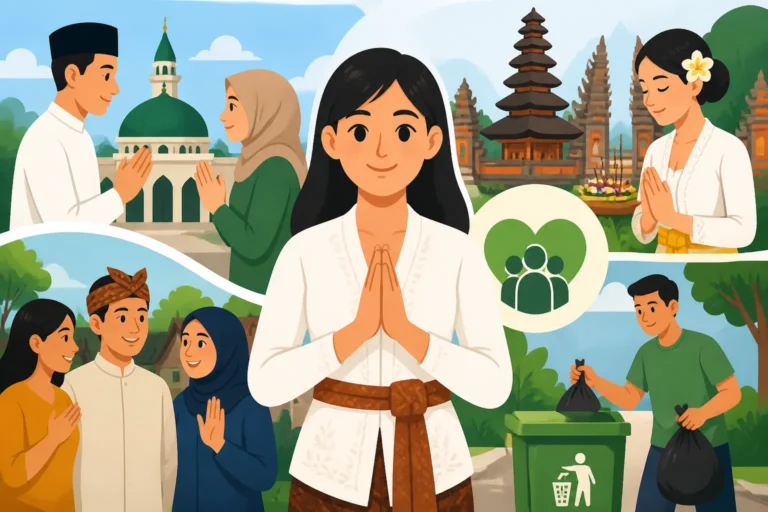
In a way, they are the most effective recyclers in the country. If you want to be an "expert" expat, start separating these items into a different bag and leave it on top of your bin. It makes their work dignified and faster, and it ensures those materials actually reach a processing facility rather than a landfill. Understanding these nuances is a key part of Everyday Etiquette: Religion, Culture, Garbage, and Community Norms.
Common Misconceptions About Public Disposal
Newcomers often assume that once the trash leaves their sight, it is sorted by the government. Unfortunately, the "all-in-one" bag approach usually leads to everything being dumped together in massive open-air landfills. The smell can be overwhelming if you live near a TPS, so when choosing a home, always check where the local collection point is located. If you are browsing villas on Agoda for a long-term rental, don't hesitate to ask the owner specifically about the proximity to the neighborhood trash hub.
Navigating Local Pickups and Community Fees
The financial side of trash collection is rarely handled through a formal utility bill. Instead, it is part of your Iuran—a monthly community fee. If you are Living in Indonesia as an Expat: The Complete Starter Guide (2027), you’ll find that these small cash transactions are the glue that holds the neighborhood together.
The Rukun Tetangga Fee Structure
The cost for garbage collection is usually bundled with security fees (keamanan). Depending on your neighborhood, this can range from IDR 50,000 to IDR 500,000 per month. In a local kampung or a middle-class housing estate, someone—usually a designated treasurer from the RT—will come to your door once a month to collect this in cash. They will give you a small paper receipt, which you should keep.
In more upscale areas, this might be handled by a management office. However, if you are Renting in Indonesia: The 1-Year Upfront Rule, Contracts, and Avoiding Scams, clarify with your landlord whether these fees are included in your rent. Usually, they are not. It’s your responsibility as the tenant to pay the monthly Iuran. If you fail to pay, you might find your trash bin remains full for weeks—a subtle but effective way the community enforces participation.
Household Waste Logistics in Gated Communities
If you live in a high-rise apartment or a "cluster" (a gated community with a single entry point), the process is much more streamlined. The management company handles everything. You typically leave your trash in a designated room on your floor or in a bin at the front of your driveway.
The downside here is that you lose the personal connection with the collectors, and you often have less control over where the waste goes. Some "green" buildings in Jakarta are starting to implement sorting, but it's still the exception rather than the rule. If you're moving into a house, make sure you have the right gear. You can find heavy-duty bins and biodegradable bags on Shopee; just make sure you get the ones with secure lids to keep the stray cats out.
Comparing Local and Private Waste Services
| Feature | Local RT Collection | Private Eco-Services |
|---|---|---|
| Cost | Low (IDR 50k – 200k/mo) | Moderate (IDR 150k – 500k/mo) |
| Frequency | Daily or Every 2 Days | Weekly or Bi-Weekly |
| Recycling | Informal (via Scavengers) | Formal (Sorting Facilities) |
| Reliability | Variable (Dependent on individual) | High (Scheduled via App/Contract) |
| Environmental Impact | High (Most goes to Landfill) | Low (Focus on Zero Waste) |
Moving Toward Sustainability: Private Waste Services
For many of us, the "dump it all in a hole" approach is hard to stomach. If you want to ensure your waste is handled responsibly, you’ll need to look beyond the neighborhood gerobak and hire a private service. This is especially popular in Bali and the more eco-conscious suburbs of Jakarta.
Eco-Conscious Pickups
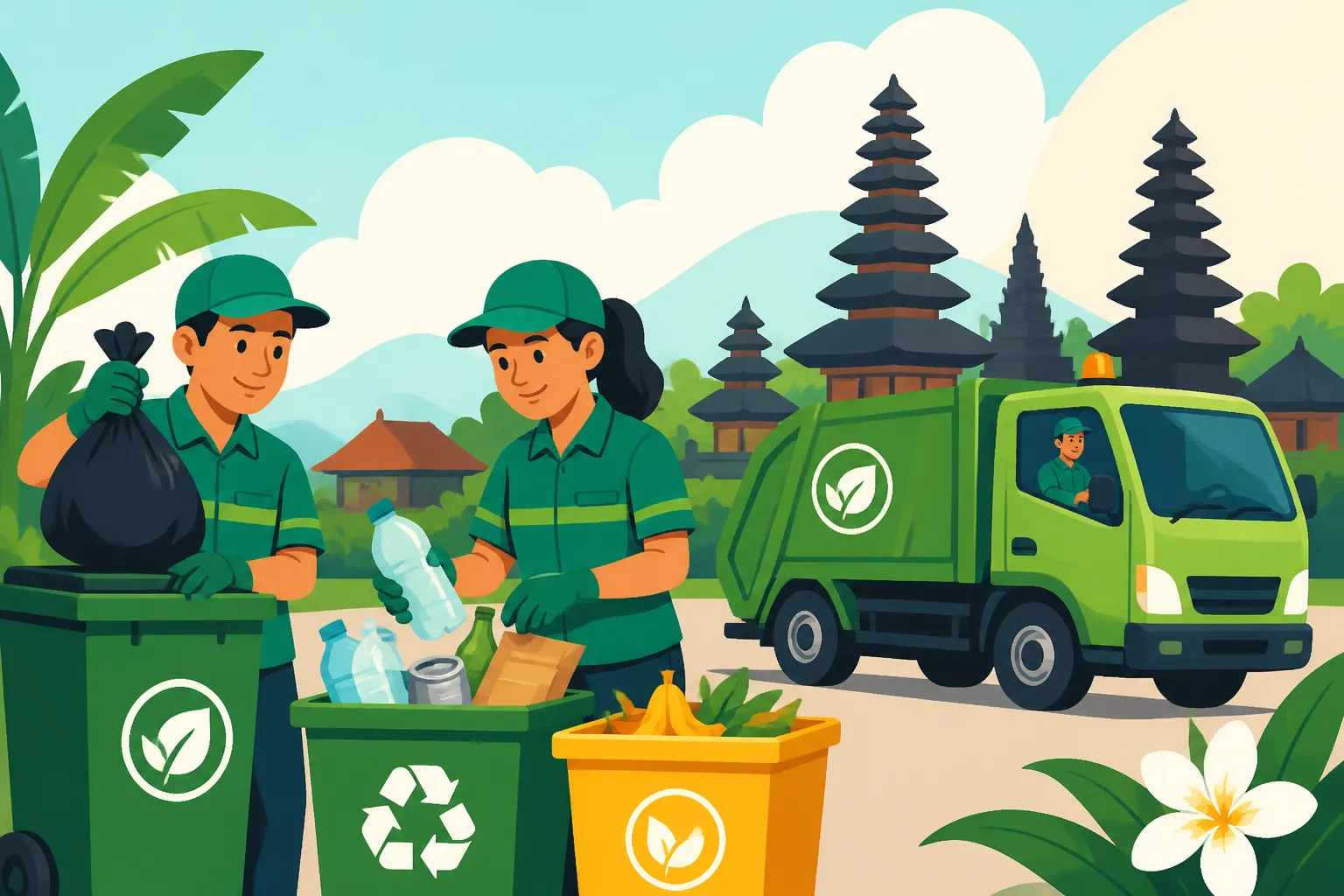
Companies like Waste4Change (Jakarta/Java) and Eco-Bali (Bali) have revolutionized the expat experience. When you sign up for these services, they provide you with separate bins for organics, paper, plastic, and glass. They operate on a strict schedule and provide data on how much of your waste was actually diverted from the landfill.
Using these services requires a bit more effort on your part. You have to rinse your plastic containers and ensure no food waste ends up in the recycling bin. If you are struggling to communicate your needs to the local staff or the service providers, having a reliable data connection via Airalo is essential for using translation apps or the service's own dashboard. These companies are a godsend for those who want to maintain their green habits from home while Living in Indonesia as an Expat: The Complete Starter Guide (2027).
Composting at Home in a Humid Climate
Given that 50-60% of Indonesian household waste is organic, composting is the single most effective way to reduce your footprint. However, composting in the tropics is different. The heat and humidity accelerate decomposition, but they also attract maggots and "Bali belly"-inducing flies if not managed correctly.
I highly recommend using a "Bokashi" system or a sealed composting bin. You can easily order these on Shopee. Bokashi uses an anaerobic process (no oxygen) with specialized bran to ferment the waste. It doesn't smell and can sit right in your kitchen or on a small balcony. Once fermented, you bury the waste in your garden, and it turns into rich soil in weeks. This is a great hobby to start while you're settling in and Connecting with the Local Community: Participating in Gotong Royong.
Recycling and Sorting: Realities vs. Expectations
One of the hardest "I've-been-there" lessons I learned was that putting a "Recycle" sticker on a bin doesn't mean it gets recycled. In the public system, everything is often tossed into the same truck. To actually recycle, you have to be intentional.
Where Does Your Plastic Actually Go?
Most plastic recycling in Indonesia is driven by the market value of the material. Clear PET bottles (water bottles) have the highest value and are almost always recycled. Low-value plastics, like snack wrappers or thin plastic bags, often end up in the ocean or being burned. This is why Garbage and Recycling in Indonesia: Local Pickups and Private Waste Services often emphasizes "refuse and reduce" over "recycle."
If you aren't using a private service, your best bet is to find a local "Bank Sampah" (Waste Bank). This is a community-run initiative where residents bring their sorted recyclables and "deposit" them. The weight is recorded in a little bank book, and you are paid a small amount of money or given credits for electricity tokens. It’s a fantastic way to see the local economy in action.
The Rise of Waste Banks
The Bank Sampah movement has grown significantly. Many schools and community centers now host them. It is a very Indonesian solution to a global problem—turning trash into a literal currency. If you have children, taking them to a waste bank is an excellent cultural experience and part of navigating School Health Requirements: Immunization Records and Medical Clearances and other local social norms.
Managing Specific Waste Streams
Sometimes you have waste that doesn't fit in a bag. Whether it's a dead laptop or an old mattress, knowing how to dispose of these responsibly will save you from a major headache (and potential fines).
Electronic Waste and Battery Disposal
Never throw batteries or electronics in your regular trash. In Indonesia, heavy metals often leach directly into the groundwater because many landfills lack proper liners. For e-waste, look for drop-off points in major malls like Senayan City in Jakarta or specific eco-hubs in Bali.
Some private waste companies also offer "E-waste collection days." If you're a digital nomad, managing your tech responsibly is just as important as Remote Work in Indonesia: The Complete E33G Digital Nomad Visa Guide. You can also find specialized e-waste recyclers who will come to your house for a small fee if you have a large volume of old gear.
Large Item Disposal
Got an old sofa? A broken fridge? Don't leave it on the curb. The Tukang Sampah with the hand-cart cannot take these. You have two main options:
- The Informal Hand-off: Find a local "tukang loak" (junk man). They circulate through neighborhoods on motorbikes, often calling out "Loaaak… loaaak!" They will actually buy your old appliances from you for scrap parts.
- The RT Request: Speak to your RT head. They can often arrange for a special pickup by a larger truck for a one-time fee (usually IDR 100,000 – 300,000).
Practical Tips for a Cleaner Expat Life
Living in Indonesia requires a shift in mindset. You are no longer a passive consumer of a city service; you are an active manager of your own waste stream.
Dealing with Pests and Tropical Hygiene
Because of the heat, food waste rots incredibly fast. If you leave a bag of trash inside overnight, you will likely wake up to ants or cockroaches.
- Double Bag: Use sturdy bags for wet waste.
- Freeze Your Scraps: A pro-tip many expats use is keeping a small bin in the freezer for meat scraps or smelly food waste, only taking it out on the morning of collection.
- Lidded Bins: Never use open bins outside. Stray dogs and cats are experts at ripping bags open, leaving you with a mess to clean up at 6 AM.
Essential Apps and Digital Solutions for Waste
Indonesia is highly digitized. Use apps like Halodoc for health, but also look for waste-related apps. Some cities are trialing apps where you can request a trash pickup or report illegal dumping. Keeping your phone topped up with a local SIM or Airalo ensures you can always coordinate with your RT or private service via WhatsApp—the primary tool for all communication in Indonesia.
Managing your household is more than just trash; it's about the whole ecosystem, from Utilities and Setup: PLN Electricity, PDAM Water, and Home Internet in Indonesia to how you interact with your neighbors. By taking control of your waste, you're not just keeping your home clean; you're respecting the beautiful country you've chosen to call home.
Disclaimer
This guide is for informational purposes only. Waste management regulations and services in Indonesia can change frequently based on regional government policies (especially in 2026). Always verify the specific rules with your local RT/RW or building management. We are not responsible for the service quality of any third-party private companies mentioned.