Connecting with the Local Community: Participating in Gotong Royong
Living in a gated community or a high-rise apartment in Jakarta can make you feel completely insulated from the vibrant, communal life that defines Indonesia. I remember spending my first six months in a South Jakarta condo feeling like a total ghost, never knowing why my neighbors were gathered downstairs every Sunday morning. This guide solves that disconnect by teaching you how to step out of the expat bubble and participate in Gotong Royong, the traditional system of mutual aid that keeps Indonesian neighborhoods thriving.
The Cultural Core of Gotong Royong
To live successfully in Indonesia, you have to understand that privacy is a very different concept here than in the West. Gotong Royong translates roughly to mutual cooperation, but that doesn't quite capture the weight of the social obligation it carries. It is the belief that a community is only as strong as its weakest link and that no task—whether it is clearing a clogged gutter or preparing for a neighborhood wedding—should be done alone. For many expats, the Living in Indonesia as an Expat: The Complete Starter Guide (2027) is their first introduction to these concepts, but seeing it in action is another matter entirely.
In most residential areas, your neighborhood is organized into units called RT (Rukun Tetangga) and RW (Rukun Warga). These aren't just administrative layers; they are your social safety net. If you want to be more than just a face behind a tinted car window, you need to engage with these structures. I’ve found that even a simple wave to the RT head can change your entire experience from being a "foreigner living here" to being a "neighbor." Using an eSIM from Airalo to stay connected while you are out exploring your local area ensures you can quickly translate phrases or look up local customs on the fly.
When you choose a place to live through platforms like Agoda, you might initially look for proximity to malls or offices. However, the real "Indonesian experience" happens in the gang (small alleys) where Gotong Royong is a daily reality. Participating in these communal efforts isn't just about being a good person; it’s about social insurance. When the rainy season hits and your street floods, it’s your neighbors, not a private service, who will be there to help you move your furniture to the second floor.
Practical Steps to Joining Kerja Bakti
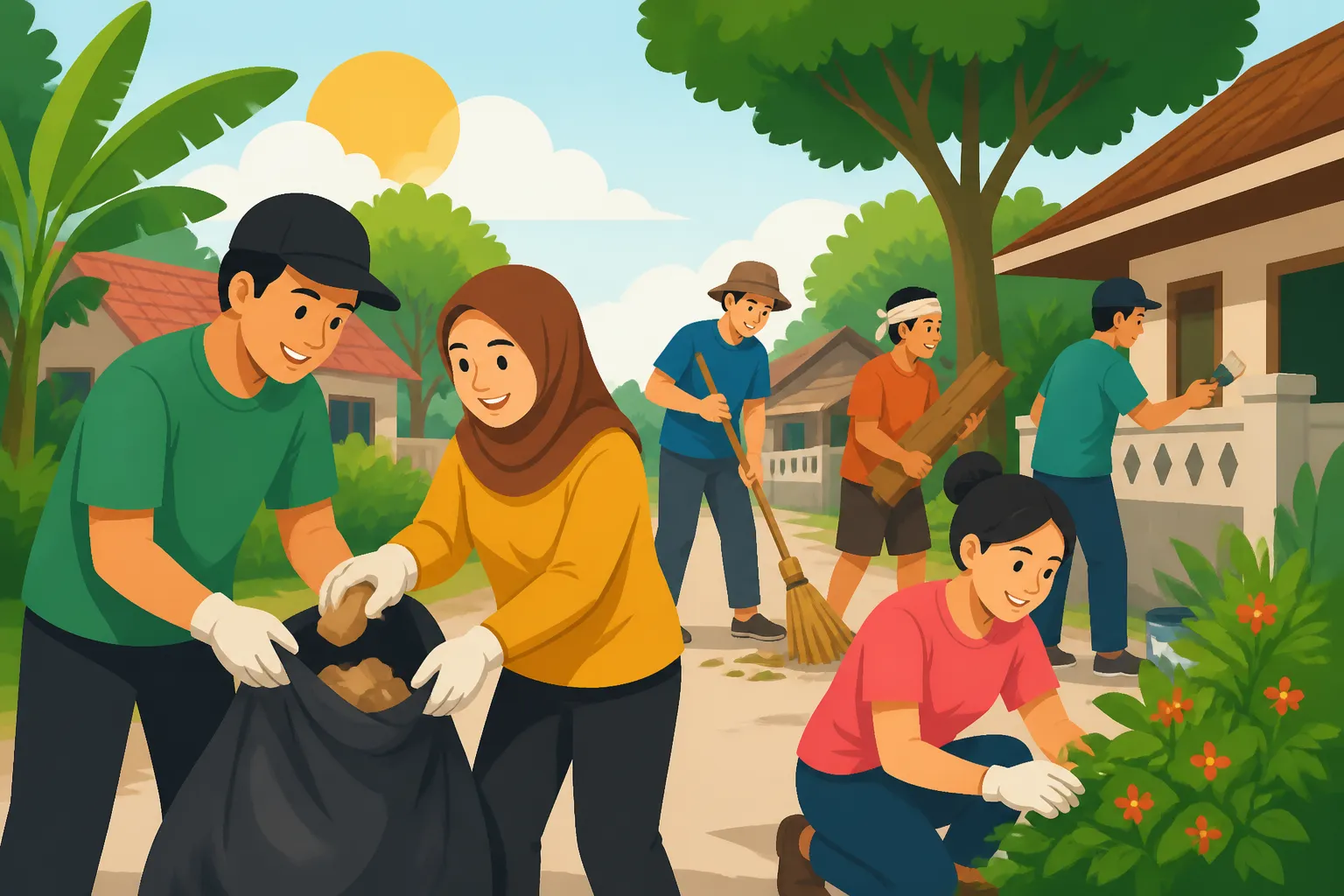
The most visible form of Gotong Royong is Kerja Bakti, which literally means "work of devotion." This usually happens on a Sunday morning, starting as early as 6:00 AM or 7:00 AM. You’ll hear a megaphone announcement from the local mosque or a knock on your gate. The community gathers to clean the drains, sweep the streets, and trim the overhanging trees. As an expat, your presence is often more important than your actual labor. Showing up with a broom—which you can easily order on Shopee if you don’t have one—shows that you respect the local hierarchy and community spirit.
Before you jump in, it is vital to understand Everyday Etiquette: Religion, Culture, Garbage, and Community Norms. You don't need to be an expert in the language, but you do need to understand the concept of "sopan" or politeness. Dress modestly; even if it's hot, avoid sleeveless shirts or very short shorts when participating in community work. You can find more specific advice on this in our guide on Dressing Modestly: What 'Sopan' Means Outside of Beach Resort Areas. Usually, the men will handle the heavy lifting and drain cleaning, while the women often gather to prepare snacks and drinks for the workers.
If you are living in a more traditional area, particularly in Bali, these obligations might be tied to the local Banjar. The expectations there are often stricter and more frequent due to the heavy calendar of religious ceremonies. We’ve detailed some of these regional differences in our look at Garbage Rules in Bali: Banjar Fees and Composting Initiatives. Whether you are in a Jakarta kampung or a Balinese village, the rule of thumb is the same: observe first, ask how you can help second, and always accept the offered tea or coffee, even if you only take a polite sip.
Managing Your Local Reputation and RT Relations
Your relationship with the community starts with Rukun Tetangga (RT) / Rukun Warga (RW): Registering with the Local Village Chief. This is a mandatory administrative step for all KITAS holders, but many expats treat it as a chore to be delegated to their agent or Hiring a Domestic Helper (Pembantu): Salaries, THR, and Live-In Arrangements. While a helper can facilitate the paperwork, I highly recommend going in person to meet the RT head (Ketua RT). Bring a small gift—nothing expensive, perhaps some fruit or snacks—and introduce yourself.
The RT head is the gatekeeper of the neighborhood. If you have a dispute with a neighbor over noise or a property line, the RT head is the one who will mediate. By participating in Gotong Royong, you build "social credit" with this individual. This is particularly useful when you need to navigate local bureaucracy or if you have questions about Garbage and Recycling in Indonesia: Local Pickups and Private Waste Services. People are much more willing to help the expat who helped clear the drains after the last big storm than the one who stays locked inside with the AC on.
If you are staying in different parts of the country to find your feet, perhaps booking monthly stays via Agoda, you’ll notice that the intensity of community life varies. In Jakarta Neighborhoods: Kemang, SCBD, Pondok Indah, and Menteng, the "gotong royong" might be more formal or even non-existent in high-security compounds. But if you move toward Bali Neighborhoods: Seminyak, Canggu, Sanur, Ubud, and the Bukit, particularly in the more residential parts of Sanur or Ubud, you will find the community bond is the primary pillar of daily life.
Food, Socializing, and Financial Contributions
Gotong Royong isn't always about physical labor; sometimes it’s about financial or material contribution. In many neighborhoods, there is a monthly "iuran" or community fee. This covers things like security (Hansip), trash collection, and a fund for community events like Independence Day (August 17th). Pay these fees promptly. If there is a neighborhood event and you cannot attend the physical work session, it is common and appreciated to contribute by providing snacks (gorengan) or crates of water for the workers. You can easily stock up on these items through Shopee to have them delivered directly to your home.
Socializing during these events is where you will truly learn the local "curhat" (confessions/gossip) and news. This is the best time to practice your Bahasa Indonesia. Don't worry about being perfect; the effort is what counts. Having a reliable data connection through Airalo is helpful if you need to quickly look up a word on a translation app mid-conversation. You’ll find that after a few hours of shared work, the barriers of "us vs. them" start to dissolve.
| Activity Type | Expat Expectation | Recommended Contribution |
|---|---|---|
| Kerja Bakti (Cleanup) | Attend at least once every few months | Physical labor or providing snacks/drinks |
| RT/RW Meetings | Usually optional, but good for visibility | Listening and introducing yourself |
| Independence Day | High expectation to attend/watch | Small donation to the local competition fund |
| Religious Holidays | Respectful observation | Sending small hampers to immediate neighbors |
| Emergency Aid | High expectation to help | Donation of goods, clothes, or funds |
Navigating the Challenges of Communal Living
While the "I've-been-there" reality of Gotong Royong is mostly positive, it can occasionally feel intrusive. You might be asked for donations for a neighbor’s funeral or a local youth group’s soccer tournament. It is okay to say no, but how you say it matters. A polite "maaf, belum bisa sekarang" (sorry, I can't right now) is better than a flat rejection. The goal is to remain a "good neighbor" without becoming a "payout target."
Another challenge is the early start times. Indonesians are generally early risers, and community activities reflect this. If you are a night owl, the 7:00 AM megaphone can be a shock to the system. However, showing up even for thirty minutes at the start of a Kerja Bakti before heading back inside is often enough to show your solidarity. Over time, these small gestures of participation will make your life in Indonesia significantly smoother. You’ll find that when you have an issue with your electricity or a lost delivery, your neighbors will be the first ones to step up and help you solve it.
Ultimately, participating in Gotong Royong is about moving from being a spectator to a participant in your own neighborhood. Whether you are buying supplies on Shopee for a local event or using Agoda to find a home in a more traditional "kampung" area, the effort you put into your local community will be returned to you tenfold in the form of security, friendship, and a true sense of belonging in your new home.
Disclaimer
This guide is intended for informational purposes only and reflects the personal experiences and observations of expat residents in Indonesia. Local customs, neighborhood rules, and the specific expectations of RT/RW units can vary significantly between different cities, islands, and even individual streets. Always consult with your local community leaders (Ketua RT) for the specific rules and traditions governing your immediate area. Participation in community activities should always be done with respect for local laws and religious sensitivities.