Buying and Registering a Car or Scooter in Indonesia on a KITAS
Finding yourself at the mercy of Gojek drivers in the pouring Jakarta rain or realizing your rented Bali scooter has bald tires and no brakes is a rite of passage every foreigner eventually grows tired of. I remember the absolute dread of my first month here, haggling with rental agencies that tried to charge me "tourist prices" for a bike that barely made it up the Uluwatu hills. This guide solves the complex, often opaque process of buying and registering a vehicle in your own name using your KITAS, ensuring you never have to overpay for a rental again.
The Reality of Vehicle Ownership for Expats
For years, the common wisdom among the expat community was that foreigners couldn't truly "own" a vehicle, leading many to resort to risky nominee agreements with local friends. Fortunately, those days are largely behind us. If you hold a valid Limited Stay Permit (KITAS), the Indonesian government recognizes your right to purchase and register a car or motorcycle in your own name. This shift is a massive win for long-term residents because it provides legal protection and, quite frankly, saves a significant amount of money over a two or three-year stay.
KITAS as the Golden Ticket for Registration
The most critical component of buying a vehicle is your NIK (Nomor Induk Kependudukan), which is found on your SKTT (temporary residence card). When you go to a dealership or a private seller, this number serves as your primary identity. Without it, the Samsat (the Indonesian DMV) cannot process the registration in your name. In my experience, some smaller dealerships might still look at a foreign face and say "must use local name," but you should stand your ground. As long as you have your KITAS and your domicile letter from the local village head, you are legally entitled to be the registered owner.
Owning the vehicle in your name also simplifies the process of getting your local driving credentials. If you haven't done so yet, you'll need to look into Converting a Foreign Driving License to an Indonesian SIM A or SIM C to ensure you are fully compliant with the law. Having the registration (STNK) match the name on your license and your KITAS makes interactions with traffic police significantly smoother. I’ve found that showing a complete set of documents in your own name often ends a roadside check in seconds, whereas nominee registration can lead to long, expensive explanations.
Why Ownership Beats Long-Term Renting
If you plan on staying in Indonesia for more than a year, the math almost always favors buying. A decent 150cc scooter might cost you 35 million IDR new, while a monthly rental for the same model can easily set you back 2.5 million IDR. In 14 months, you’ve paid for the bike in rental fees but have zero equity. Vehicles in Indonesia, especially popular models like the Honda Vario or Toyota Avanza, hold their resale value remarkably well. When it’s time to leave, you can often sell a well-maintained vehicle for 70-80% of its original price.
Beyond the finances, there is the issue of maintenance and safety. When you own the vehicle, you control the service schedule. You aren't relying on a rental shop that might be stretching the life of brake pads or using sub-standard oil. During my first year in Tangerang, I spent more time at the mechanic with my rental car than I did on the road. Once I bought my own vehicle, I was able to use apps like Shopee to order genuine parts and accessories, ensuring everything was up to my standards. This peace of mind is invaluable when navigating the chaotic traffic of major Indonesian cities.
Navigating the Buying Process: New vs. Used
The decision between a shiny new vehicle from a glass-walled dealership and a second-hand deal found on social media is the first major fork in the road. Both paths have their unique administrative hurdles. New vehicles offer simplicity in paperwork but come with a "hidden" waiting period for the registration to be processed. Used vehicles offer immediate mobility but require a deep dive into the history of the "BPKB" (the ownership logbook) to ensure you aren't buying a stolen or encumbered asset.
The Dealership Experience for New Vehicles
Walking into a Toyota or Honda dealership in Jakarta or Bali is a relatively straightforward experience. Most sales consultants at major branches are accustomed to dealing with KITAS holders. You will choose your model, negotiate the price (yes, there is some room for "diskon" even on new cars), and provide copies of your passport, KITAS, and NPWP (tax ID). If you are still setting up your local financial life, it's worth reading up on Money in Indonesia for Foreign Residents: Banking, Tax, and Financial Setup (2027) to understand how to handle the large transfer of funds for the purchase.
The "catch" with new vehicles is the timeline for the STNK (Surat Tanda Nomor Kendaraan) and the physical license plates. In Indonesia, you cannot drive a new vehicle off the lot with permanent plates immediately. It usually takes 2 to 4 weeks for the paperwork to clear the police department. Some dealers provide temporary "plat bantuan" (temporary plates), but these are technically restricted to certain areas. I once bought a bike in Denpasar and had to wait nearly a month to ride it legally. It’s a test of patience, but once that blue STNK folder arrives with your name on it, the vehicle is officially yours.
The Second-Hand Market and Scams
Buying used is where things get "creative." Platforms like OLX and Facebook Marketplace are the go-to spots, but they are also minefields. When buying used, you are looking for two things: the STNK (the registration you carry with you) and the BPKB (the heavy blue book that stays at home). Never, under any circumstances, buy a vehicle that "hanya STNK" (only has the registration). This almost always means the BPKB is being held by a finance company because the owner defaulted on a loan, or worse, the vehicle is stolen.
When you find a used car or bike you like, check the "Pajak" (tax) status. If the annual tax hasn't been paid for several years, you will be responsible for the back taxes and fines when you transfer the name. You can check this via local government apps by inputting the plate number. Before you commit, I recommend staying in a central area like Seminyak or Kuningan for a few days to view multiple options. Using Agoda to book a base camp for your vehicle search is a smart move, as it gives you the flexibility to travel to different sellers without the pressure of a long commute. Always insist on a test drive and, if possible, bring a local mechanic to check for flood damage—a common issue in Jakarta.
Registration and the Paperwork Maze
Once the money has changed hands, the real administrative work begins. In Indonesia, vehicle documentation is split into two distinct parts: the registration (which proves the tax is paid and the vehicle is road-legal) and the title (which proves ownership). Navigating the "Balik Nama" (name transfer) process can be a dizzying experience of photocopies, rubber stamps, and waiting in humid government offices.
STNK and BPKB: The Holy Grail of Documents
The STNK is the small strip of paper in a plastic sleeve that you must always have on you while driving. It contains the vehicle's details and the "Pajak" expiration date. The BPKB is the actual title. You should never keep the BPKB in the vehicle; if the vehicle is stolen and the thief has the BPKB, they can legally sell it. Think of the BPKB as the "deed" to your car. When you buy a used vehicle, you need to take the old BPKB, the STNK, the seller's ID copy, and your own KITAS documents to the Samsat office to begin the transfer.
The process involves a "Cek Fisik" (physical check) where an officer rubs a piece of paper over the engine and chassis numbers to verify they match the documents. It's a chaotic scene—hundreds of bikes lined up, people shouting, and various "helpers" offering to skip the line for a fee. If you're doing this yourself, ensure you have a reliable data connection, perhaps using an eSIM from Airalo, so you can use translation apps or look up the specific Samsat location's workflow. The paperwork usually takes about a week to process for the STNK, while the BPKB might take a month or more to be updated with your name.
The Essential Role of the Biro Jasa
If the paragraph above sounds like a nightmare, you aren't alone. Most expats (and many locals) use a "Biro Jasa." This is a licensed documentation agency that handles everything for you. You give them your documents and the vehicle, and they navigate the Samsat maze. They charge a fee, usually between 500,000 and 1,000,000 IDR plus the cost of the taxes, but it saves you two full days of standing in lines.
Using a Biro Jasa is especially helpful if your Bahasa Indonesia is still at a basic level. They know which windows to go to and how to handle any "irregularities" in the paperwork. However, vet your agent carefully. Ask other expats in your neighborhood for recommendations. A good agent will provide you with a receipt for your original documents and give you a clear timeline. For more on how to manage your daily life and administrative tasks, check out Living in Indonesia as an Expat: The Complete Starter Guide (2027), which covers the broader ecosystem of services available to help you settle in.
Financial Considerations and Hidden Costs
The purchase price of the car or scooter is just the beginning. To avoid any nasty surprises at the end of the year, you need to account for the ongoing costs of legal ownership. Indonesia has a unique system of annual renewals and five-year "major" renewals that every owner must follow.
Annual Taxes and Samsat
Every year, on the anniversary of your vehicle's registration, you must pay the annual tax. The amount depends on the value and age of the vehicle. For a standard scooter, it might be 300,000 to 500,000 IDR. For a luxury SUV, it can be several million. You can pay this at any Samsat office or even at some "Samsat Corner" booths in shopping malls. Failure to pay on time results in a monthly fine, and more importantly, it makes you a target for police during road inspections.
For a deep dive into this process, read Annual Vehicle Taxes (Pajak Kendaraan): How to Pay at Samsat. It’s also important to note that every five years, you must bring the vehicle in for a physical inspection to get new license plates (the "Plat Nomor"). This is a more involved process than the annual payment and usually requires a trip to the main Samsat office in your regency. Always keep your tax receipts tucked inside your STNK sleeve; the police will look for the most recent stamp whenever they pull you over.
Insurance Realities in Indonesia
Insurance is not technically mandatory for vehicle registration in Indonesia, which is a shock to many Westerners. However, given the "creative" way people drive here, skipping insurance is a massive risk. Most local insurance policies fall into two categories: TLO (Total Loss Only) and Comprehensive. TLO only pays out if the vehicle is stolen or more than 75% damaged. Comprehensive covers smaller accidents, scratches, and third-party liability.
I highly recommend foreigners opt for Comprehensive coverage. If you are involved in an accident with a local, there is often a cultural expectation that the "wealthier" party (the expat) pays, regardless of who was at fault. Having an insurance adjuster to handle the negotiations can save you from high-stress confrontations. You can find more details in Vehicle Insurance (Asuransi Mobil): Comprehensive vs Total Loss Only (TLO). It’s also a good idea to consider your own health during these transitions; make sure you understand Healthcare in Indonesia for Foreign Residents: Complete System Overview (2027) in case of any road-related mishaps.
Two Wheels vs. Four Wheels: What Fits Your Lifestyle?
Choosing between a car and a scooter isn't just about budget; it's about how you value your time and how much "adventure" you can handle daily. The geography of your chosen city will dictate this decision more than anything else.
| Feature | Scooter / Motorcycle | Car / SUV |
|---|---|---|
| Traffic Maneuverability | High (can lane-split) | Low (stuck in 'macet') |
| Cost of Purchase | 20M – 40M IDR (Avg) | 150M – 500M+ IDR |
| Maintenance | Cheap and frequent | Expensive but less frequent |
| Weather Protection | None (rain ponchos required) | High (AC and dry) |
| Parking | Easy (almost anywhere) | Difficult in crowded areas |
| Safety | Lower risk of collision, higher injury | Higher collision risk, lower injury |
Scooter Culture in Bali and Jakarta
In Bali, a scooter is almost non-negotiable. The roads in areas like Canggu and Uluwatu are simply too narrow for cars to move efficiently. You will spend your life behind a delivery truck if you choose a car. However, riding a scooter requires a high degree of situational awareness. You need to understand the unwritten rules of the road—like the fact that the person in front of you has the right of way, even if they merge without looking.
If you choose the two-wheeled life, please don't be the expat who rides in a bikini with no helmet. Not only is it dangerous, but it also violates Everyday Etiquette: Religion, Culture, Garbage, and Community Norms. Local communities are increasingly frustrated with tourists and residents who disrespect local customs and safety laws. Invest in a good helmet from a reputable shop (you can find these easily on Shopee) and always carry a rain poncho under your seat. You’ll also want to familiarize yourself with Renting a Scooter in Bali: Avoiding Fines, Helmet Laws, and Police Checks to understand what the police are looking for, even if you own your bike.
The Practicality of a Car in the City
If you live in Jakarta or Surabaya, a car is a bubble of sanity. The "macet" (traffic jam) in Jakarta is legendary, and being able to sit in air-conditioned comfort while listening to a podcast makes a two-hour commute bearable. Cars are also essential for families or anyone who needs to travel between cities. The toll road system (Jalan Tol) in Java is excellent and allows you to cross the island with relative ease.
The downside to car ownership is parking and "Preman" (unofficial parking attendants). Almost everywhere you park, a man with a whistle will appear to "help" you back out. It is customary to give them 2,000 to 5,000 IDR. While it feels like a small shake-down at first, these guys actually keep an eye on your car and help manage the flow of traffic. Embracing these small quirks is part of successful Living in Indonesia as an Expat: The Complete Starter Guide (2027).
Legal Compliance and Driving Rules
Owning the vehicle is only half the battle; staying legal on the road is an ongoing process. Indonesia is increasingly digitizing its law enforcement, with ETLE (Electronic Traffic Law Enforcement) cameras now common in major cities.
License Requirements and the SIM
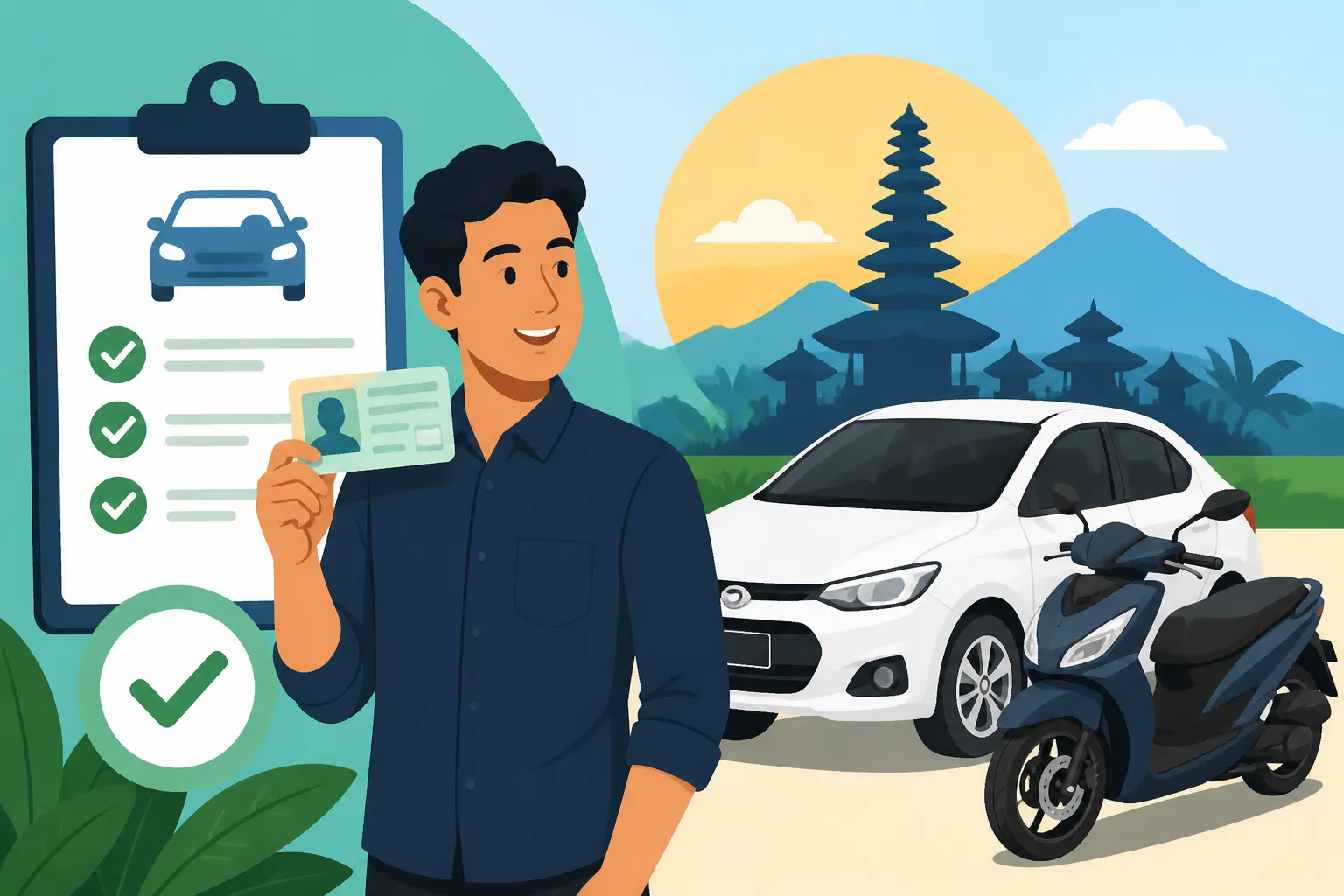
You cannot legally drive your own vehicle with just your home country's license. While an International Driving Permit (IDP) is technically accepted for tourists, as a KITAS holder, you are a resident. Most insurance policies will be void if you are driving without a valid local license (SIM). Obtaining a SIM A (for cars) or SIM C (for motorcycles) is a mandatory step in your ownership journey.
The process involves a visit to the local Polrestabes (police station), a simple medical check, and a theory/practical test. Many expats find the practical test for the SIM C—which involves weaving through cones on a narrow track—surprisingly difficult. For a step-by-step guide on how to navigate the police station without losing your mind, see Driving in Indonesia: Getting a SIM A/C License and Traffic Realities. Having this license tucked into your wallet alongside your STNK makes you "bulletproof" during the frequent "Razia" (police roadblocks) that happen around holidays.
Dealing with Traffic Stops
Even with all your papers in order, you will eventually be pulled over. It’s often just a routine check to see if your "Pajak" is up to date. Stay calm, be polite, and use your basic Bahasa Indonesia. "Selamat siang, Pak. Ini surat-surat saya" (Good afternoon, sir. Here are my documents) goes a long way. If you have done everything right—your registration is in your name, your tax is paid, and you have your local SIM—the officer will usually just wave you through.
There is a lingering "tipping" culture in some areas, but the government is working hard to eliminate it through the "slip biru" (blue slip) system, where you pay fines directly to a bank. If you are actually in the wrong, ask for the official ticket. It’s cleaner, legal, and prevents you from participating in petty corruption. For more on navigating these types of cultural and legal interactions, I recommend reading Everyday Etiquette: Religion, Culture, Garbage, and Community Norms. Ownership is a responsibility, and being a "good" expat driver helps everyone in the long run.
Disclaimer
The information provided in this guide is for educational purposes only and reflects the administrative procedures in Indonesia as of 2026. Regulations regarding vehicle registration, taxes, and visa requirements can change without notice. Always verify current requirements with your local Samsat office or a licensed legal consultant before making a purchase. The author and publisher are not responsible for any legal issues or financial losses incurred while following this advice.