Driving Legally: International Driving Permits (IDP) Validity in Bali
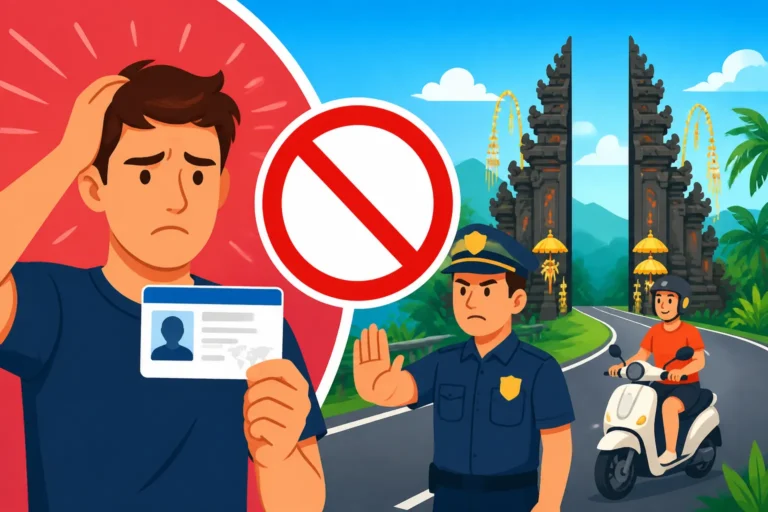
Few things trigger that specific, cold pit in an expat's stomach quite like rounding a corner in Canggu or Uluwatu and seeing the tell-tale neon vests of a police checkpoint. I remember my first month in Bali, sweating through my shirt as an officer asked for my "surat-surat," realizing too late that my home country license was essentially a fancy piece of plastic here. This guide clarifies the shifting legalities of International Driving Permits (IDP) in Bali to ensure you stay road-legal and stress-free.
Understanding the Legal Framework for Driving in Bali
The legal landscape for foreigners driving in Indonesia is often shrouded in myths, largely because enforcement can feel inconsistent depending on which island you are on. However, the law itself is quite specific. Under Law No. 22 of 2009 regarding Traffic and Road Transportation, every person driving a motorized vehicle on Indonesian roads must possess a valid driver’s license appropriate for the vehicle they are operating. For tourists and short-term residents, this usually means an International Driving Permit.
The 1968 Vienna Convention on Road Traffic
Indonesia is a signatory to the 1968 Vienna Convention on Road Traffic. This is a crucial piece of information because it dictates which type of IDP is technically recognized. While many countries issue IDPs based on the 1949 Geneva Convention, the 1968 version is the preferred standard for long-term international recognition. In practice, Bali police usually accept any valid IDP that is accompanied by your original national license, but if you are applying for one before you leave home, always aim for the 1968 version if your country offers both.
Recent 2025 and 2026 Policy Updates
Entering 2026, the Indonesian National Police (Polri) have become significantly more tech-savvy. We have seen a move toward electronic synchronization of traffic records. While the physical IDP remains the gold standard, there is increasing talk about digital versions. However, do not rely on a PDF on your phone just yet. Officers at a roadside "raziah" (raid) in Bali still expect to see a physical booklet. Furthermore, recent crackdowns on unruly tourist behavior have led to stricter document checks. If you cannot produce the physical IDP and your original license, the bike or car is often impounded on the spot.
The Myth of the Home Country License
A common misconception circulated in expat forums is that a license from an ASEAN country or a specific Western nation is "enough" because it is in English. While it is true that Indonesian Driver's Licenses Are Now Valid Across ASEAN (2025/2026 Rules), the reverse is not always automatically applied with the same leniency by a traffic officer on the Sunset Road at 2 PM. Without an IDP, you are technically driving without a valid permit, which voids your insurance and leaves you vulnerable to fines or "informal" settlement requests that are best avoided.
The International Driving Permit Requirements
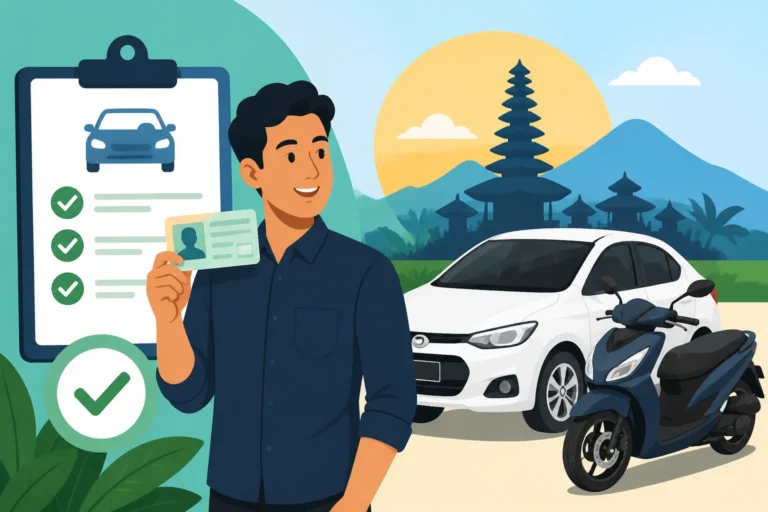
To drive legally as a tourist, the IDP is your primary shield. But simply having a booklet isn't the end of the story. The document must be valid, it must match the category of vehicle you are driving, and it must be supported by your passport and original license. If you are planning a long stay, you should also look into Converting a Foreign Driving License to an Indonesian SIM A or SIM C to avoid the constant need for IDP renewals.
Why Your Home Country License Is Not Enough
An IDP is not a standalone license; it is a legal translation of your domestic permit. The reason Indonesian law requires it is that it standardizes your driving categories into icons that are universally understood. If your Australian or British license says "Class C," a local officer might not know if that means a heavy truck or a 125cc scooter. The IDP clears this up. Driving without it is legally equivalent to driving without any license at all in the eyes of most insurance providers. If you have an accident and lack an IDP, your provider will likely deny your claim, leaving you with potentially life-altering medical bills.
Valid Conventions and Categories
When you look at your IDP, check the stamps. If you are riding a scooter, you must have a stamp next to the "A" category (motorcycles). Most expats make the mistake of bringing an IDP that only covers "B" (passenger cars). In Bali, the majority of "scooters" are 150cc or higher, which strictly requires a motorcycle endorsement. If you are caught riding a NMax with only a car license, the IDP will not save you from a fine. Before you even book your villa on Agoda, ensure your home license actually permits you to ride the vehicle you intend to rent.
Physical Copy vs Digital IDP Realities
We are living in a digital age, and companies like Airalo make it easy to stay connected the second you land at Ngurah Rai. However, the Bali police remain old-school regarding documentation. While some third-party websites sell "Digital IDPs," these are frequently rejected at checkpoints. You need the physical gray booklet issued by your home country's automobile association (like AAA in the US, RAC/AA in the UK, or NRMA in Australia). If you are already in Bali and forgot your IDP, you cannot legally obtain a "real" one from within Indonesia; it must be issued by the country that issued your original license.
Police Checkpoints and Enforcement in Bali
Enforcement in Bali is cyclical. You might go three months without seeing a single officer, and then encounter three checkpoints in a single day. These are often set up at major intersections in Seminyak, the bypass in Sanur, or the main arterial roads in Canggu. Understanding Renting a Scooter in Bali: Avoiding Fines, Helmet Laws, and Police Checks is essential for anyone who wants to avoid the stress of these encounters.
Common Checkpoint Locations and Behavior
Checkpoints are typically easy to spot. You will see a cluster of motorcycles pulled over and several officers in bright green vests. If you see one, do not try to pull a U-turn; this is a massive red flag and will likely result in a chase. Instead, slow down, flip up your helmet visor, and offer a polite "Selamat siang" (Good day). Being "sopan" (respectful and polite) goes a long way. The officers are primarily looking for three things: a helmet, a valid IDP/license, and the vehicle's registration (STNK).
Documents You Must Carry at All Times
Whenever you are on the road, you need a small "go-bag" of documents. This includes your original passport (or a very high-quality color photocopy if you are worried about theft), your original domestic driver's license, your valid IDP, and the STNK. The STNK is a small piece of paper, usually kept in a plastic sleeve, provided by the rental agency. Often, it’s tucked into a pocket under the seat of the scooter. Always check for this before you drive away from the rental shop. If the STNK is expired, you are the one who will face the fine, not the owner.
Fines and Legal Consequences of Non-Compliance
The official fine for driving without a license in Indonesia is currently around IDR 1,000,000, though this can vary based on court rulings. If you are stopped and don't have an IDP, the officer may issue a "tilang" (ticket). You will then have to attend a court date in Denpasar to pay the fine and retrieve your documents or vehicle. While some suggest that "informal payments" are a way out, the government has been actively trying to eliminate this practice with body cameras and stricter internal oversight. It is always better to insist on a formal ticket if you have the time, or better yet, simply carry the correct paperwork.
| Document Type | Necessity | Practical Tip |
|---|---|---|
| Original Home License | Mandatory | Must be valid and not expired. |
| International Driving Permit (IDP) | Mandatory | Must have the 'A' stamp for motorcycles. |
| STNK (Vehicle Reg) | Mandatory | Usually found in the bike's seat compartment. |
| Passport/KITAS Copy | Highly Recommended | Carry a digital backup on your phone as well. |
| Helmet with Chinstrap | Mandatory | Ensure it is SNI (Indonesian Standard) certified. |
Transitioning to a Local License (SIM A/C)
For those staying longer than a typical 30-day holiday—specifically those on a KITAS or KITAP—obtaining a local Indonesian driver's license (Surat Izin Mengemudi or SIM) is the smartest move. It eliminates the need for an IDP and serves as a valid form of local ID for domestic flights and hotel check-ins. You can learn more about Getting SIM A and C: Age Requirements, Medical Checks, and SATPAS Police Visits to prepare for the process.
Who Needs a Local License?
If you are a tourist on a Visa on Arrival (VoA), you generally cannot get a long-term SIM. You are expected to use your IDP. However, once you have residency status (KITAS), the law expects you to transition to local documentation. The SIM C is for motorcycles, and the SIM A is for private cars. Having these makes you look much more like a "resident" and less like a "tourist" at checkpoints, which often results in shorter interactions with the police.
The Process at SATPAS Police Offices
The process takes place at the Polresta (Police Headquarters) in Denpasar or the relevant SATPAS office for your regency. It involves a written test (now available in English in many locations), a practical driving test, a psychological evaluation, and a medical check (essentially a vision and blood pressure test). While it sounds daunting, the entire process can often be completed in half a day if you arrive early. You will need your original passport, your KITAS, and a bit of patience. You can buy any necessary gear for your bike, like gloves or a better helmet, on Shopee before you head out for your test to ensure you're fully prepared.
Costs and Agency Assistance
The official cost for a new SIM C is relatively low (around IDR 100,000 plus medical and psych fees), but many expats choose to use a "biro jasa" (service agency). These agencies help navigate the queues and ensure your paperwork is in order. While it costs more—sometimes between IDR 1,000,000 and 2,000,000—it saves hours of confusion. If you are a KITAS holder, this is a one-time investment for a license that is usually valid for five years. For more details on budgeting for these legalities, check out Costs and Fees for Converting a Foreign License Through an Agency.
Practical Tips for Road Safety and Insurance
Driving in Bali is not just about having the right paper; it's about surviving the unique road culture. From the "gang" (narrow alleys) shortcuts to the unpredictable movements of dogs and ceremonies, your legal status is only one part of the safety equation. It is also vital to understand how your legal standing affects your financial protection.
The Intersection of Legal Status and Insurance Coverage
This is the most critical point: No IDP = No Insurance. Almost every travel insurance policy and local vehicle insurance policy has a clause stating that the driver must be "legally authorized to operate the vehicle in that jurisdiction." If you are involved in a collision and you do not have an IDP with a motorcycle stamp, your insurance company can—and will—deny your claim. This includes "medevac" flights back to your home country. For more information on this, see Medical Evacuation (Medevac) Services in Indonesia: Costs and Insurance Coverage.
Scooter Rental Best Practices
When you rent a scooter, don't just look at the color. Check the tires for tread and ensure the brakes are responsive. Most importantly, ask the rental guy for the "surat" (STNK). If they tell you "no need, Bali is safe," find another rental shop. A reputable shop will also offer you a helmet. Please, for your own safety, don't use the thin "eggshell" helmets provided for free. Go to a store and buy a proper full-face or high-quality open-face helmet. It is a small price to pay for your life.
Navigating Bali's Unique Traffic Culture
Traffic in Bali follows a "flow" rather than strict lane discipline. Indicators are often ignored, but the "horn" is used politely to say "I am here" rather than "get out of my way." You must also be aware of the "Banjar" (local community) rules. If there is a religious ceremony or a funeral procession, the road will be closed, and you must wait or find a detour. Never honk at a ceremony; it is incredibly disrespectful and can lead to a very tense confrontation with local "Pecalang" (community security).
Transitioning to Long-Term Residency Driving
If you decide to make Bali your permanent home, your driving needs will evolve. You might find that Buying and Registering a Car or Scooter in Indonesia on a KITAS is more economical than renting monthly. This brings a whole new set of responsibilities, including paying annual vehicle taxes and maintaining the BPKB (ownership book).
Annual Vehicle Taxes (Pajak)
Every vehicle in Indonesia has an annual tax due on the anniversary of its registration. This is recorded on the STNK. If you own your bike, you must take the STNK and your ID (KTP WNA or KITAS) to the SAMSAT office to pay. If you are caught with an expired "pajak," the police can impound the vehicle. It is a simple process, but one that many expats forget until they are stopped at a checkpoint.
The Role of International Driving Permits for Residents
Even after you get a local SIM, keep your IDP and home license in a safe place. If you plan to travel to neighboring countries like Thailand or Vietnam, your Indonesian SIM might be recognized under ASEAN agreements, but having the IDP as a backup is always wise. It is also helpful if you ever need to rent a car back in your home country or in a non-ASEAN nation.
Final Thoughts on Road Legality
Living in Bali offers incredible freedom, but that freedom comes with the responsibility of following local laws. The "bule" (foreigner) who drives recklessly without a helmet or license is the first person the community—and the police—will turn against when things go wrong. By securing your IDP before you arrive, or transitioning to a SIM C once you have your KITAS, you are not just avoiding fines; you are showing respect for the country that has welcomed you. For more advice on settling in, see our Health Checklist for Your First 30 Days in Jakarta or Bali.
Disclaimer
The information provided in this guide is for general informational purposes only and does not constitute legal advice. While we strive to keep the information up to date and correct, Indonesian laws and local enforcement policies in Bali can change rapidly. Always verify current requirements with the Indonesian National Police (Polri) or your local embassy. Driving in Indonesia involves inherent risks; always prioritize safety and local compliance.