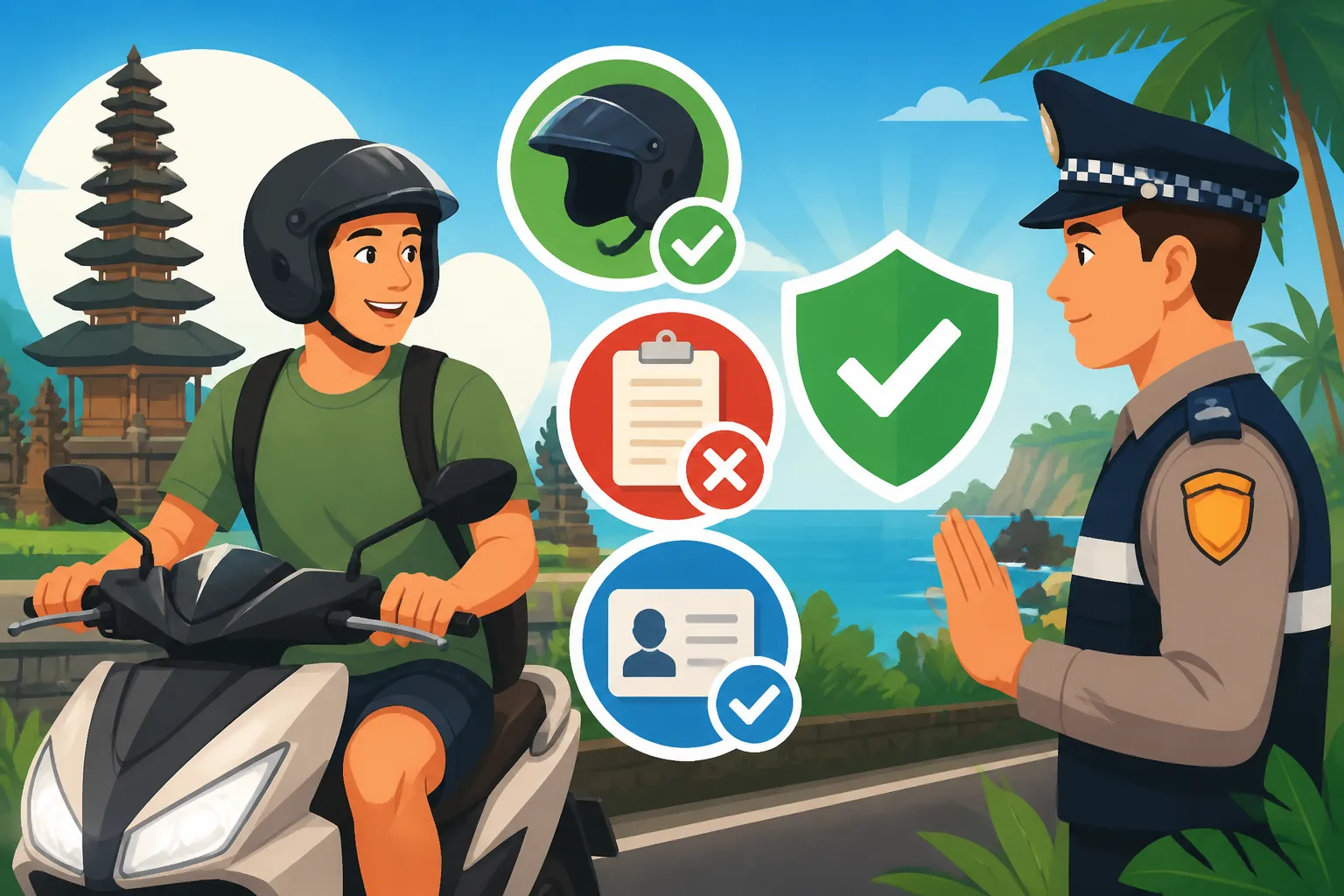
Renting a Scooter in Bali: Avoiding Fines, Helmet Laws, and Police Checks
You are cruising down a sun-drenched backroad in Canggu, the wind finally cutting through the tropical humidity, only to round a corner and see a row of neon vests and a handheld stop sign. I remember the first time my heart dropped into my stomach when a Balinese officer pulled me over because I didn't realize my "International Driving Permit" was actually just a piece of useless cardboard from a shady website. This guide settles the confusion once and for all, breaking down the reality of renting a scooter in Bali while helping you avoid fines, navigate police checks, and stay on the right side of the law.
The Legal Essentials for Scooter Rental in Bali
Renting a scooter in Bali is often the very first thing an expat or long-term traveler does after dropping their bags. It feels like the ultimate freedom, but the legal framework is stricter than the relaxed "island vibes" might suggest. To ride legally, you must possess a valid driving license from your home country that specifically includes a motorcycle designation, accompanied by a valid International Driving Permit (IDP). Many newcomers make the mistake of thinking a standard car license is enough; in the eyes of Indonesian law, if you aren't licensed for two wheels at home, you aren't licensed here.
Driving Licenses and the IDP Reality
The most common reason for a fine in Bali is the lack of a proper International Driving Permit. You must ensure your IDP is issued under the 1949 or 1968 Convention on Road Traffic, as Indonesia recognizes these. I have seen countless travelers present a "digital IDP" or a printout from a non-government sanctioned website, only to be told it is invalid. If you are staying long-term on a KITAS, you should seriously consider Converting a Foreign Driving License to an Indonesian SIM A or SIM C to avoid the constant hassle of renewing an IDP or carrying a passport.
When you are stopped, the police will ask for your "SIM" (Surat Izin Mengemudi). If you are using a foreign license plus an IDP, they must both be physical copies. Digging through your phone to find a PDF usually doesn't cut it during a roadside check. Before you even head out to find a bike, make sure your phone has a stable data connection via Airalo so you can access digital copies of your insurance or maps if you get turned around. Having that connectivity ensures you aren't stranded if you need to translate a specific legal term or find the nearest police station.
Understanding SIM C and Local Equivalents
In Indonesia, the license for a motorcycle is called a SIM C. While tourists can get away with an IDP for short stays, residents are legally required to have a local license. The process involves a trip to the Polresta (Police Station) in Denpasar, a health check, and a theory test which is now available in English. It might seem like a daunting administrative hurdle, but it is a rite of passage for any serious expat. Knowing you are fully compliant provides a level of peace of mind that no "shortcut" can match.
If you are just starting your journey and haven't secured a long-term bike yet, you might use Agoda to find a villa that includes a scooter rental in the package. This can be a great way to ease into the traffic, as these bikes are usually better maintained than the beat-up ones found at the cheapest street-side stands. However, regardless of where the bike comes from, the responsibility of the license rests entirely on you, the rider.
Registration Documents STNK and Why They Matter
Every scooter in Indonesia must carry its registration document, known as the STNK (Surat Tanda Nomor Kendaraan). When you rent a bike, the owner should provide you with a copy of this document, usually tucked into a small pocket under the seat or in the glove compartment. I once rented a bike in Kuta and forgot to check for the STNK; two days later, I was at a checkpoint and realized I had no proof the bike was legal. It took three hours of phone calls to the rental guy to get it sorted while the police held the keys.
Always verify that the STNK is not expired. You can check the date on the document itself. If a police officer asks for your "Surat-Surat," they want to see your license and this registration paper. If the bike doesn't have it, the police have the right to impound the vehicle immediately. This is one of those Housing & Living basics that sounds boring until you’re standing on the side of a busy road watching your ride get loaded onto a truck.
Navigating Helmet Laws and Safety Standards
It should go without saying, but wearing a helmet is the single most important thing you can do for your safety and your wallet in Bali. In recent years, the local government has significantly increased enforcement of helmet laws, especially in tourist hubs like Canggu, Seminyak, and Uluwatu. The "no helmet, no problem" era is firmly over. Beyond the legal fine, if you are involved in an accident without a helmet, almost every travel and health insurance policy will be voided instantly.
SNI Standards Not All Helmets Are Equal
Indonesian law requires helmets to meet the SNI (Standar Nasional Indonesia) criteria. Most rental bikes come with "half-face" helmets that are often flimsy and poorly fitted. If you are living here, I highly recommend buying your own high-quality helmet from a reputable shop or via Shopee, where you can find international brands that offer significantly better protection. A proper full-face helmet not only protects your jaw but also keeps the dust and tropical rain out of your eyes during the monsoon season.
I’ve seen many expats try to skirt the law by wearing "bogo" style helmets that look stylish but offer zero impact protection. While these might technically pass a police check if they have the SNI sticker, they won't help you much if you hit a patch of gravel in Bedugul. If you’re worried about theft, most modern scooters like the Honda Vario or Yamaha NMAX have under-seat storage (bagasi) large enough to fit a standard helmet.
Passenger Safety and Overloading
It is incredibly common to see three or even four people on a single scooter in Bali, but for foreigners, this is a magnet for police attention. Legally, a scooter is meant for two people. Both the driver and the passenger must wear helmets. If your passenger isn't wearing one, you are the one who will be fined. This is particularly important for parents moving to the island. Navigating Family Health in Indonesia: Pregnancy, Childbirth, and Pediatric Care includes thinking about how you transport your children; many expats eventually switch to a car once they realize the risks of "pilling" kids on a bike.
Furthermore, avoid carrying excessively large items on your scooter. While locals can seemingly transport a refrigerator on a Honda Scoopy, foreigners doing the same are often stopped for "unstable loading." If you have a lot of gear to move, it is much safer and cheaper in the long run to use Gocar vs Bluebird: Which is Safest and Most Reliable in Jakarta and Bali services rather than risking a spill.
Riding Gear for the Bali Macet
The word "Macet" means traffic jam, and you will become very familiar with it. While it’s tempting to ride in a bikini or board shorts, the "Bali Sarong" (road rash) is a painful reality for many. I always suggest at least wearing closed-toe shoes and a light jacket. If you are caught in a downpour, you can find affordable, heavy-duty ponchos on Shopee that will keep you dry and prevent you from shivering when the sun goes down in the highlands.
| Scooter Model | Engine Size | Average Daily Rate (IDR) | Best Use Case |
|---|---|---|---|
| Honda Scoopy | 110cc | 70,000 – 90,000 | Short beach hops and narrow alleys |
| Honda Vario | 125cc/160cc | 80,000 – 110,000 | All-rounder for commuting |
| Yamaha NMAX | 155cc | 150,000 – 200,000 | Long distance and expat comfort |
| Yamaha XMAX | 250cc | 250,000 – 350,000 | Touring the island or hilly areas |
Avoiding Fines and Managing Police Checks
Police checks, or "Razia," are a regular part of life in Bali. They are often set up at major intersections or near popular tourist shortcuts. The goal is usually to check for licenses, registration, and helmets. If you have all your documents and are wearing your gear, these checks are usually quick and professional. However, knowing how to conduct yourself is key to avoiding unnecessary stress.
Common Checkpoint Locations in Seminyak and Canggu
In South Bali, checkpoints are frequently positioned on Jalan Sunset Road, the intersection near the Kerobokan Jail, and the main roads leading into Uluwatu. There is often a "lookout" culture where people post the locations of active checks on social media groups. While this can be helpful, relying on it is a gamble. It is far better to ensure you are legal so that you can ride past a check with a simple nod and a smile.
If you do find yourself being flagged down, pull over calmly and safely. Do not try to speed away; this will lead to a much more serious situation and potentially a chase. Switch off your engine, remove your sunglasses, and be polite. Having your data sorted with Airalo allows you to quickly pull up a map or a contact if you need to explain your destination or call a friend who speaks better Bahasa Indonesia.
What to Do and Not Do When Pulled Over
The golden rule is: Stay calm and be respectful. Use "Pak" (for men) or "Bu" (for women) when addressing the officers. If you have committed an infraction, like forgetting your helmet or not having an IDP, the officer will explain the fine. In the past, there was a lot of talk about "on-the-spot" payments. However, the Indonesian police have been moving toward an electronic fine system called E-TLE.
Do not offer a bribe. This can lead to serious legal trouble. If the officer asks you to follow them to the station or issues a blue or red slip, follow the official procedure. If you are unsure of your rights, you can check Emergency Numbers in Indonesia: 118/119 for Ambulance and What to Expect and keep the number for your embassy or a legal aid service handy. Most of the time, if you are polite and show that you have most of your documents, the encounter will be straightforward.
Understanding Official vs On-the-Spot Fines
Official fines for traffic violations are generally quite reasonable—usually ranging from IDR 250,000 to IDR 1,000,000 depending on the severity. If you are issued an official ticket, you can often pay it at a local bank or through a mobile banking app. If you are staying at a place booked via Agoda, the staff can sometimes help you understand the instructions on the ticket if your Bahasa Indonesia is still a work in progress.
One thing to watch out for is the impounding of your license. The police may take your physical license and give you a ticket, which you then take to a court date (Sidang) to pay the fine and retrieve your ID. This is a standard process, though it can be time-consuming. This is why having a backup form of identification is essential. To understand more about the local legal landscape, you might want to look into Immigration Compliance: Address Changes, EPOs, Overstays, and Reporting to see how traffic offenses might (or might not) impact your visa status.
Practical Tips for a Smooth Rental Experience
Beyond the legalities, the physical state of the bike matters. Bali’s roads are unforgiving—potholes, loose gravel, and erratic dogs are everywhere. A bike with bald tires or spongy brakes is a death trap. I always do a "pre-flight" check before handing over any money. Test the lights, the horn, and both the front and rear brakes. If the bike looks like it’s been through a war, it probably has, and you should walk away.
How to Vet a Rental Agency
Don't just go with the guy standing on the corner with a sign. Look for established rental agencies with physical offices and good reviews. Many high-end agencies now offer online booking and will deliver the bike directly to your hotel or villa. If you are planning a long-term stay, you can often negotiate a monthly rate that is significantly lower than the daily price.
Check if the rental includes any form of insurance for the bike itself. Most don't, meaning you are liable for any scratches or dents. Take photos and a video of the bike from all angles before you drive off. This prevents the "you scratched this" scam when you return it. If you’re looking for gear to keep your bike safe, Shopee has a variety of disc locks and GPS trackers that are popular among the expat community to prevent theft in busy areas.
Insurance and Damage Protection
Your personal travel insurance is unlikely to cover your medical bills if you are riding illegally (without a motorcycle license or helmet). However, even if you are legal, many policies have exclusions for "extreme sports," which some insurers consider scooter riding in Asia to be. Look into specialized expat health insurance like Cigna Global to ensure you have comprehensive coverage that includes traffic accidents.
If you do crash, the local "rule" is often that the person with the most money pays, regardless of who was at fault. This is a frustrating reality of living here. Having a dashcam (which you can buy on Shopee) can be a lifesaver in providing evidence of what actually happened. Also, keep the contact details of a local clinic handy, such as those mentioned in our Bali Healthcare Guide: Hospitals, Clinics, and Emergency Contacts for Residents.
Fueling Up Pertamina vs Pertamini
You’ll see two main ways to get gas: official Pertamina stations and "Pertamini" stands (the little glass bottles or manual pumps outside small shops). Official stations are cheaper and the fuel is usually of better quality. I always try to fill up at a big station whenever I see one. The fuel types are usually Pertalite (90 octane) or Pertamax (92+ octane). For a modern NMAX or Vario, Pertamax is much better for the engine.
If you are running on empty in a remote village, the glass bottles (usually labeled "Pertalite") are fine in an emergency, but be aware that the fuel is sometimes diluted. When you're out exploring the island’s hidden gems, having a reliable map and data from Airalo ensures you can find the nearest "real" gas station before you’re stranded in the middle of a rice terrace at sunset.
Important Disclaimer
The information provided in this guide is for informational purposes only and does not constitute legal advice. Traffic laws and enforcement practices in Indonesia can change rapidly. Always verify the latest regulations with local authorities or a qualified legal professional before operating a motor vehicle in Indonesia. Riding a scooter carries inherent risks; prioritize your safety and the safety of others at all times.