Immigration Compliance: Address Changes, EPOs, Overstays, and Reporting
Staying compliant with Indonesian immigration rules often feels like walking a tightrope while juggling flaming torches. I remember my first year in Jakarta, realizing mid-move that I’d forgotten to report my new address to the local authorities, and the sheer panic that set in was overwhelming. This guide solves that anxiety by breaking down address changes, EPOs, overstays, and reporting requirements into manageable, actionable steps.
Understanding Your Reporting Obligations in Indonesia
The Indonesian immigration system is built on a foundation of "knowing where you are at all times." This isn't just about the stamp in your passport; it is about the physical address where you sleep every night. For many of us, the bureaucracy feels redundant, but in the eyes of the law, failing to update your location is a significant breach of your stay permit. Whether you are on a KITAS Explained: Working, Dependent, and Investor Temporary Stay Permits or a long-term visitor visa, your paperwork must match your reality.
The Domicile Reporting Rule and the SKSKP
One of the most misunderstood aspects of living here is the requirement to report your presence to the local police and neighborhood heads. This isn't just an immigration rule; it’s a civil administrative requirement. When you move into a house or apartment, you are technically required to obtain a Surat Domisili (Domicile Letter): How to Get it from the Village Head. This letter proves you live where you say you live. Once you have this, you may need to register for a SKSKP (Surat Keterangan Susunan Keluarga Pendatang), which is essentially a certificate for temporary residents.
In my experience, many expats ignore this until they need to renew their visa, only to find that the immigration office demands a current domicile letter. If you have moved and haven't updated this, your renewal can be frozen. Imagine trying to explain to an officer why your KITAS says "South Jakarta" while you’re clearly living in "Canggu." It’s a conversation you want to avoid. Always ensure your documents are translated accurately by professionals like RushTranslate to ensure that names and addresses match your passport exactly, as even a one-letter typo can cause a week-long delay.
Notifying Immigration of Residential Address Changes
If you move from one house to another, even within the same neighborhood, you have a legal obligation to notify the immigration office (Kantor Imigrasi or KanIm) within 14 days. This is not a suggestion; it is a hard deadline. The process involves submitting a change of address form along with your original passport and stay permit. The officer will update their internal database and, in some cases, print a new QR code or update the physical card.
The frustration often stems from the fact that you first need the domicile letter from the local "Banjar" or "RT/RW" before you can even walk into the immigration office. This two-step dance is where most people fail. You have to navigate the local neighborhood hierarchy first, then the national immigration system. If you are moving between cities—say, from the hustle of the SCBD to the beaches of Bali—the process is even more complex, often requiring a "moving out" letter from your current KanIm before the new one will "accept" your file. This is why Reporting Address Changes: Why Immigration Will Check Your Domicile Letter is a critical read for anyone planning a domestic move.
Employer Responsibilities and Reporting
For those of us here on a work permit, the burden of reporting isn't just on our shoulders; it’s on our sponsors. Your employer (usually a PT PMA) has a legal obligation to report your activities and employment status to the Ministry of Manpower and Immigration regularly. If your job title changes or if the company moves offices, this must be updated in the RPTKA (Expatriate Placement Plan).
I’ve seen cases where a director was promoted to a commissioner role, but the company forgot to update the Employer Sponsorship: Navigating the RPTKA and Work Permit Process. During a random inspection, the individual was found to be "working outside of their permitted scope." This can lead to heavy fines for the company and deportation for the expat. It is vital to have an open line of communication with your HR department. Don't assume they have handled the compliance; ask for copies of the updated reports for your own files.
Navigating the Exit Permit Only and ERP Processes
There comes a time for every expat when a chapter closes. Whether you are switching jobs, leaving the country for good, or upgrading to a different visa type, you will encounter the dreaded EPO (Exit Permit Only). The EPO is the formal process of "closing" your current stay permit. It signals to the government that your current sponsorship is over.
When and Why You Need an EPO
You cannot simply walk away from a KITAS. If you leave the country without an EPO, your permit remains "active" in the system, but since you aren't there to renew it, it eventually expires and becomes a "dead" permit. This sounds harmless until you try to return to Indonesia a year later on a new visa and find out you are blacklisted because your previous permit was never properly closed.
The EPO is a physical stamp or a digital notice that cancels your KITAS. It is usually initiated by your sponsor. For example, if you are Switching Jobs on a Work KITAS: The Cancel and Reapply Process, your old employer must issue an EPO before your new employer can begin the application for your new permit. It is a moment of vulnerability because once that stamp is in your book, you are on a very short countdown to leave the country.
The Difference Between EPO and ERP
Sometimes, life happens, and you find yourself outside of Indonesia when your contract ends or you decide not to return. In this case, you cannot get an EPO because your passport isn't physically in the country. This is where the ERP (Exit Re-entry Permit) comes in. An ERP is essentially an EPO done "in absentia."
Your agent or sponsor takes a copy of your flight ticket (showing you have already left) and your permit details to the immigration office to close the file remotely. This is a lifesaver for those who had to leave suddenly due to family emergencies or health issues. If you find yourself in this position, make sure your Cigna Global health insurance is updated to cover you in your new location, as your Indonesian-linked benefits will cease the moment that ERP is processed. Knowing the difference in Exit Permit Only (EPO) vs ERP: Closing Your Visa Before Leaving Indonesia can save you thousands in future legal fees.
The 7-Day Rule After EPO Issuance
This is the rule that catches everyone off guard. Once your EPO is processed and stamped into your passport, you generally have exactly seven days to leave Indonesia. Not ten days, not two weeks—seven days. This includes the day the stamp was issued.
I once knew a family who processed their EPO on a Monday, thinking they had until the following Monday to fly out. They booked a flight for Monday evening, only to be stopped at the airport and fined for an Overstaying Your Visa in Indonesia: IDR 1,000,000 Daily Fines and Deportation Risk. When you are in this seven-day window, you are essentially in a state of "legal transit." You cannot work, and you should not be traveling to remote islands where a flight delay might cause you to miss your exit window. Plan your packing and your farewell parties before the EPO is stamped.
Dealing with Overstays: Costs, Consequences, and Solutions
Overstaying is a terrifying word in the expat community, and for good reason. Indonesia has some of the strictest overstay penalties in Southeast Asia. While some countries might give you a "slap on the wrist" or a small fine, Indonesia treats it as a serious immigration violation that can have long-lasting effects on your ability to travel globally.
Calculating the Overstay Fine
As of 2026, the standard fine for overstaying is 1,000,000 IDR (approximately $65 USD) per day. This applies to everyone—from tourists who lost track of time in Bali to professionals whose HR departments messed up a renewal. If you overstay by three days, you pay 3,000,000 IDR at the airport. You cannot "negotiate" this fine; it is automated in the system at the immigration desk.
The real danger begins if your overstay exceeds 60 days. At that point, it is no longer just a matter of paying a fine. You may be detained, interrogated, and eventually deported at your own expense. If you find yourself in a situation where you might overstay, check the Visa on Arrival (VoA) and B211A Tourist Visas: What You Can and Cannot Do guidelines to see if there is any way to extend or convert your status before the clock hits zero. Using a service like iVisa can often help you understand the latest electronic filing options to prevent these errors before they happen.
Accidental vs. Intentional Overstays
Immigration officers have heard every excuse in the book. "I thought it was 30 days, not 29," or "My agent told me it was fine." While the fine is the same regardless of intent, your long-term status depends on how you handle the situation. An accidental overstay of a few days, handled politely at the airport with cash in hand for the fine, usually won't result in a blacklist.
However, an intentional overstay—where you stay for months, avoiding the authorities—will almost certainly result in a deportation and a multi-year ban. I always tell newcomers: check your passport expiry and your visa expiry every single month. Set a calendar alert. Don't rely on your office's "visa guy" to remember. If you are a US Citizens in Indonesia: FATCA Reporting and Banking Frustrations or from any other country with strict reporting, an immigration violation here can even complicate your background checks back home.
The Deportation and Blacklist Risk
Being "blacklisted" (Daftar Tangkal) means your name is entered into a national database that prevents you from entering Indonesia. The length of the blacklist varies—it can be six months, a year, or even a lifetime for serious offenses. Deportation is not like a regular flight home. You are often escorted to the gate by officials, and your passport may be marked.
This is why The Blacklist (Cekal): Reasons for Being Banned from Entering Indonesia is such a vital topic. Most people end up on the blacklist not because they are criminals, but because they were negligent. They ignored an address change, worked on a tourist visa, or failed to process an EPO. Once you are on that list, it is incredibly difficult and expensive to get off. You will need a lawyer and likely a high-level sponsor to petition the Director General of Immigration in Jakarta.
Staying Compliant with KITAS and KITAP Updates
Compliance isn't a "set it and forget it" task. As your life changes, your documents must evolve with you. This is especially true for long-term residents who might be transitioning from a KITAS vs KITAP: A Direct Comparison of Benefits, Renewals, and Rights.
Reporting Changes in Civil Status
If you get married, get divorced, or have a child while living in Indonesia, you must report this to immigration within a specific timeframe (usually 14 to 30 days). For expat families, the birth of a child is a major compliance event. The baby needs a passport from your home country, then an Indonesian stay permit that matches the parent’s visa.
Failing to report a marriage to a local can jeopardize a Spouse Sponsored KITAS: Marrying an Indonesian Citizen and Work Rights. The government needs to see that the marriage is registered both with the civil registry (Catatan Sipil) and with immigration. If you are going through these life changes, ensure all foreign certificates (like birth or marriage certificates) are translated and legalized. RushTranslate is often used for these specific legal needs because their certifications are recognized by most consulates.
Passport Renewals and Transferring Permits
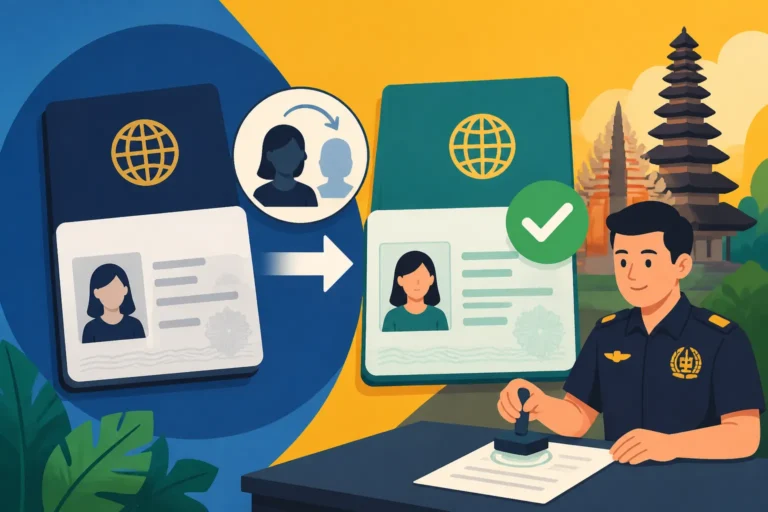
What happens when your passport runs out of pages or expires, but your KITAS is still valid? You get a new passport from your embassy, but your visa is in the old one. You cannot just carry both books and hope for the best. You must perform a "Permit Transfer" (Mutasi Paspor) at the immigration office.
They will link your old visa data to your new passport number. If you travel internationally before doing this, you might be stopped at the border. The officer needs to see the "linkage" in their computer system. This is a common hiccup for frequent flyers. Always check Renewing Your Passport in Indonesia: Transferring Your KITAS to the New Book before you head to the airport with a brand-new, empty passport.
Traveling Locally and Carrying Documentation
In many countries, you leave your passport in a hotel safe. In Indonesia, the law technically requires foreigners to carry their original passport and stay permit (or at least a very clear color copy and your original KTP-WNA) at all times. While you're unlikely to be stopped on a grocery run, if you are traveling between islands or staying in a new province, "Razia" (random checks) can happen.
If you are caught without your documents, you could be taken to the immigration office until someone brings them to you. I always suggest keeping high-quality digital scans on a secure cloud drive and having a KTP WNA (Foreigner ID Card): Why Banks Will Ask You For It in your wallet. It’s a small card that proves your residency and is much easier to carry than a bulky passport.
The Role of Local Communities and the Banjar
Indonesia is a communal society. While the "big" immigration office in the city handles your visa, the "small" leaders in your village or apartment building are the ones who actually keep tabs on your compliance.
Registering with the RT/RW and Village Head
In Jakarta and other major cities, the hierarchy is the RT (Neighborhood Head) and the RW (Community Head). In Bali, it is the Banjar. When you move in, it is customary (and often required) to introduce yourself to the RT or the Banjar head. You may be asked to provide a copy of your passport and visa and pay a small monthly security or garbage fee.
Ignoring this local level of government is a mistake. If immigration officials ever come to your neighborhood to do a check, the first person they ask is the RT. If the RT says, "I don't know who lives there," you are immediately flagged as suspicious. Participation in local life, even just a friendly "hello" to your neighbors, goes a long way. This is part of Everyday Etiquette: Religion, Culture, Garbage, and Community Norms that helps you blend in and stay safe.
The Role of Pecalang in Bali
In Bali, the Pecalang (traditional community security) have significant influence. They aren't police, but they work closely with them. During major ceremonies or events like Nyepi, they are the ones enforcing the rules. If you are living in a villa, the Pecalang will know if you are hosting unregistered guests or if you are working illegally.
Maintaining a good relationship with the Banjar means that if there is ever a misunderstanding with immigration, you have local "character witnesses" who can vouch for you. This is the "soft" side of compliance that isn't written in a manual but is essential for a peaceful life. Read more about Understanding the Role of Pecalang (Traditional Security) in Bali to understand how they interact with foreign residents.
Handling Immigration Checks (Razia)
Every so often, immigration will conduct a "Razia"—a sweep of certain areas (like Canggu, Kemang, or apartment complexes in North Jakarta) to check for visa violators. They might go door-to-door or set up a check in a popular co-working space.
If this happens, stay calm. If your paperwork is in order, your address is updated, and you aren't working illegally, you have nothing to fear. Show them your KTP WNA (Foreigner ID Card): Why Banks Will Ask You For It or your passport. Never offer a bribe; the anti-corruption drive in Indonesia is real, and attempting to pay off an officer can lead to immediate arrest. For more on what to do during these moments, see How to Handle Immigration Checks (Razia) at Nightclubs or Co-Working Spaces.
Practical Tips for Maintaining Flawless Compliance
After years of navigating this system, I’ve found that the difference between a "stress-free" expat and a "panicked" one usually comes down to organization.
Document Organization and Translation Needs
Keep a physical folder with every original document and a digital folder with scans of everything. This includes your RPTKA, your IMTA (if applicable), your Domicile Letter, and your NPWP (Tax ID). Because most of these documents are in Bahasa Indonesia, you might need them translated for your home country’s tax or legal requirements.
Using a certified service like RushTranslate ensures that the translations are "sworn," meaning they carry a legal weight that standard translations don't. This is especially important for Getting Academic Transcripts Translated and Legalized for Indonesian Visas if you are moving from a work permit to a student visa.
Working with Professional Visa Agents
While you can do everything yourself via the Molina system, a good "Biro Jasa" (visa agent) is worth their weight in gold. They know which offices are currently backed up, which officers are particularly strict about address updates, and they can often handle the legwork of visiting the RT/RW for you.
However, be careful. There are many "cowboy" agents who take your money and your passport and disappear, or who use forged documents. Always vet your agent. Ask for recommendations in expat groups and never give your passport to someone who doesn't have a physical office you can visit. A legitimate agent will always be transparent about Dealing with Immigration Agents: How to Vet Biro Jasa and Avoid Scams.
Using Digital Tools for Status Tracking
The Indonesian government has made great strides in digitization. The Molina website and the Mobile JKN app allow you to track some aspects of your status. Additionally, many expats use spreadsheet trackers to manage their expiry dates for their passport, KITAS, Driver’s License (SIM), and Cigna Global insurance policy.
Don't wait for a notification; the system won't always tell you when you are about to expire. Take control of your own compliance. If you are coming in as a digital nomad, stay updated on the Remote Worker Visa (E33G): Digital Nomad Requirements and Limitations to ensure you aren't accidentally breaching the terms of your stay by taking on local clients.
Compliance Categories and Potential Penalties
| Category | Requirement | Potential Penalty for Non-Compliance |
|---|---|---|
| Residential Address | Report change within 14 days | Administrative fines or delay in visa renewal |
| Stay Permit (KITAS) | Renew at least 30 days before expiry | 1,000,000 IDR per day fine (Overstay) |
| Exit Permit (EPO) | Process before leaving or switching jobs | Blacklisting or "dead" visa status |
| Work Scope | Only perform duties listed on RPTKA | Deportation and company sanctions |
| Civil Status | Report marriage/birth within 30 days | Invalidation of dependent status |
| Passport Update | Mutasi Paspor after receiving new book | Denial of entry/exit at the border |
Important Compliance Disclaimer
This guide is intended for informational purposes and reflects the general experiences and research of the author regarding Indonesian immigration procedures as of mid-2026. Immigration laws, fees (including overstay fines), and reporting requirements in Indonesia are subject to frequent changes by the Directorate General of Immigration. This article does not constitute legal advice. For specific cases or complex legal disputes, we strongly recommend consulting with a certified immigration attorney or a reputable, registered visa agency (Biro Jasa) in Indonesia. Always verify the latest regulations on the official Imigrasi website before making travel or residency plans.