Renewing a Passport in Indonesia: Transferring Your KITAS to the New Book
One of the most nerve-wracking moments for an expat is realizing your passport is nearly full or about to expire while your KITAS is still valid for months. I remember the cold sweat I broke into when I realized my home embassy in Jakarta was handing me a new book with a different number, effectively making my current visa "orphaned" in the system. This guide solves the confusion of how to legally transfer your stay permit so you don't get blocked at the airport.
The Logistics of Renewing Your Passport in Indonesia
Renewing a passport while living abroad is a rite of passage for long-term residents. Unlike a quick trip to a government office back home, doing this in Indonesia requires a two-step dance between your home country's embassy and the Indonesian Directorate General of Immigration. You cannot simply ignore the new passport number; the moment your old passport is cancelled by your embassy, your digital record in the Indonesian immigration database needs an update to remain compliant.
Timing Your Renewal to Avoid KITAS Expiry
The timing of your passport renewal is critical because Indonesian law generally requires your passport to be valid for at least six months to enter the country or to renew a stay permit. If you are approaching the end of your visa, you must secure the new passport first. I’ve seen expats wait too long, only to find they cannot renew their KITAS Explained: Working, Dependent, and Investor Temporary Stay Permits because their passport has only five months left. This creates a "deadlock" where you can't leave without an EPO and you can't stay because you can't renew.
Ideally, you should start the passport renewal process 9 to 12 months before it expires. Some embassies in Jakarta, like the US or British embassies, can process renewals in two to three weeks, while others might take months if the books are printed centrally in Europe or North America. During this waiting period, you will usually keep your old passport, but it will be marked as "in process" or eventually cancelled. Ensure you don’t have any international travel booked during the window where your passport might be held at the embassy.
If you find yourself in a bind where your passport is expiring and your visa is also due, you might need to apply for a provisional KITAS extension if your passport is about to expire. This is a rare and bureaucratic "bridge" that allows immigration to acknowledge you are in the process of getting a new book. However, it is much easier to simply stay ahead of the clock. Always keep a digital scan of every page of your old passport before you hand it over, as you’ll need those stamps for future KITAS to KITAP transitions.
Coordinating with Your Embassy in Jakarta or Bali
Most major nations have their primary consular services in Jakarta, though a few—like Australia, Japan, and the United States—maintain consulates in Bali or Surabaya. You will need to check if your embassy requires an appointment, which in the post-2024 era is almost universally managed through online portals like iVisa or the embassy’s own scheduling system. When you go to your appointment, emphasize that you are a resident in Indonesia; they will usually return your old passport to you (with the corners cut or a "Cancelled" stamp) because they know you need it for the immigration transfer.
If your embassy requires documents like birth certificates or marriage licenses to be translated into English or Indonesian for the renewal, make sure you use RushTranslate or another certified service. Indonesian authorities are particularly picky about "Penerjemah Tersumpah" (Sworn Translators) if you end up needing those documents for the immigration side later. Once you have the new book in hand, the real work begins. You now have two passports: the old one containing your physical KITAS stamp (if you have an older version) and the new one which is currently a "blank slate" in the eyes of the Indonesian government.
Document Requirements for the New Passport
While each country has its own rules, the Indonesian side of this process—the "Mutasi Paspor"—requires a specific set of documents from your renewal. You will need a formal letter from your embassy stating that passport X has been replaced by passport Y. Not all embassies provide this automatically, so you must specifically ask for a "Passport Replacement Note." This letter acts as the legal link between the two documents and is essential for the immigration officers at the "Kantor Imigrasi" (Kanim).
In addition to the embassy letter, you will need your current e-Visa and Molina System printouts. Even though everything is digital now, Indonesian bureaucracy still breathes on paper. You’ll need copies of the ID page of both the old and new passports, a copy of your current stay permit (E-ITAS), and a sponsorship letter from your employer or spouse. If you are on a Remote Worker Visa (E33G), you will act as your own point of contact, but you still need to provide the proof of income and bank statements that were used for your initial application.
Understanding the KITAS Transfer Process Mutasi Paspor
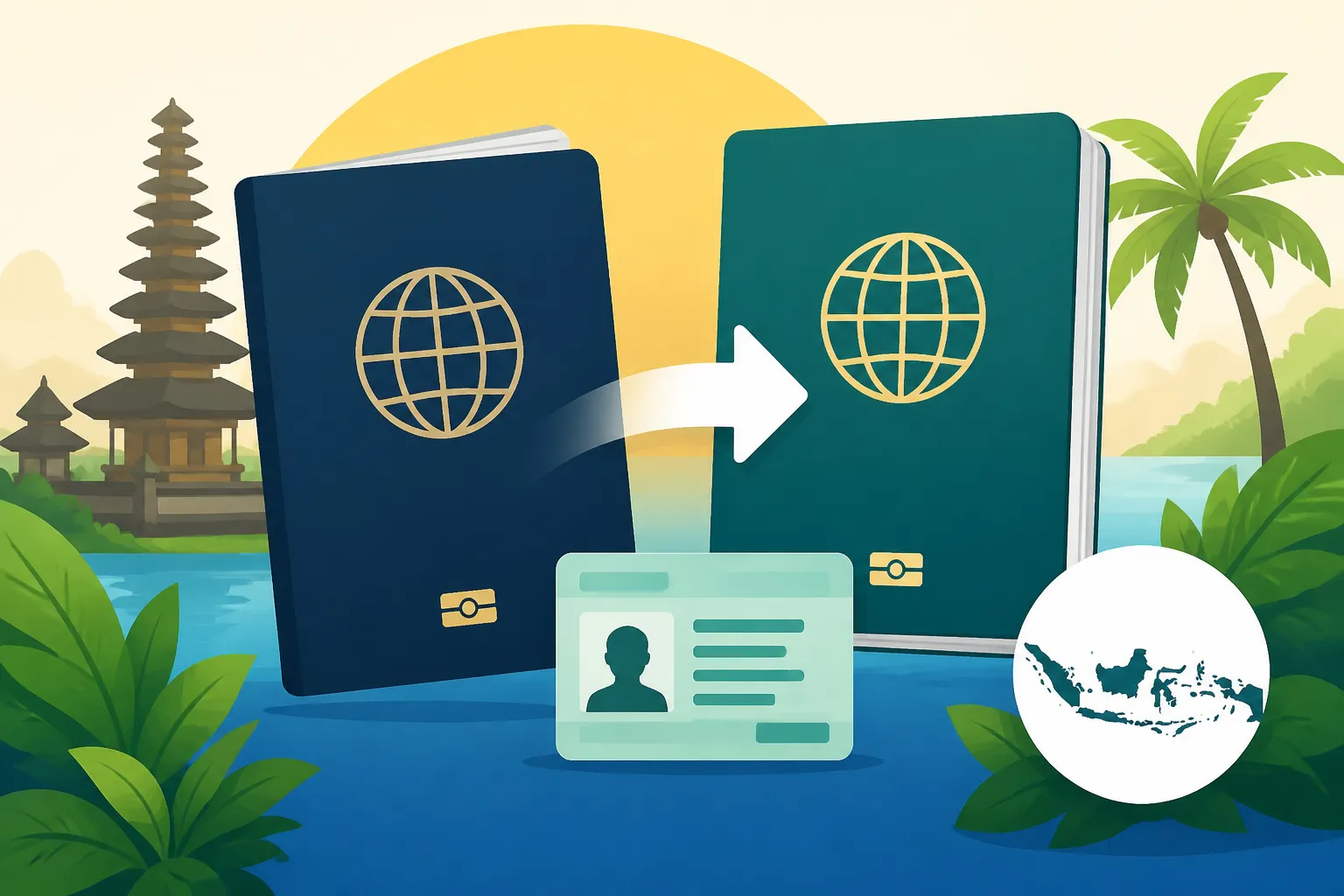
In Indonesian immigration terminology, transferring your visa details from an old book to a new one is called Mutasi Paspor. This is not just a courtesy update; it is a mandatory administrative requirement. Your E-ITAS is digitally linked to your passport number. When an airline agent at the check-in desk in Singapore or Perth scans your new passport, their system queries the Indonesian immigration database. If the numbers don't match, the system will show that you do not have a valid visa for Indonesia, and you will be denied boarding.
Why You Can't Just Carry Both Passports
Many newcomers think that carrying both the old cancelled passport and the new one is enough to satisfy the authorities. While this might work for a short-term Visa on Arrival (VoA) and B211A Tourist Visas, it is a dangerous game for KITAS holders. Immigration officers at the airport (TPI) have the discretion to let you in, but they will often give you a stern warning and a "Notice to Appear" at your local immigration office within 7 days. If you ignore this, you risk Overstaying Your Visa in Indonesia: IDR 1,000,000 Daily Fines and Deportation Risk.
The internal database must be updated so that your "NIK" (National Identification Number) or your immigration file ID is pointed to the new document. This ensures that when you process your Annual Tax Return (Formulir 1770) or update your KTP WNA (Foreigner ID Card): Why Banks Will Ask You For It, the government sees a consistent identity. In the past, this involved a physical "Mutasi" stamp in your new book, but today it is primarily a digital synchronization, though you still get a piece of paper confirming the change.
The Online Transition: Molina and Immigration Portals
The Directorate General of Immigration has made strides in digitizing these services through the Molina (Modul Lalu Lintas Orang Asing) platform. However, the Mutasi Paspor for KITAS holders still frequently requires a physical visit to the office where your visa was originally issued. You can often start the process online by uploading your new passport details, but you should expect to go in for a "biometrics" session where they scan your new passport and take a fresh photo.
If you are using the e-Visa and Molina System for a brand-new visa, the process is seamless. But for an existing KITAS, the system sometimes "locks" the record to the old passport number to prevent fraud. This is why the "Mutasi" process remains a bit of a manual hurdle. If you find the online portal rejecting your new passport number, don't panic. It usually just means the system requires a human officer to verify the embassy letter and manually override the old data.
The Role of the Regional Immigration Office Kantor Imigrasi
Your life during this process revolves around your local "Kanim." If you live in South Jakarta, you’ll likely head to Kanim Kelas I Khusus Jakarta Selatan. If you’re in the Bukit or Canggu, you’ll be dealing with the Ngurah Rai Immigration Office Guide: Dress Codes and Queue Tips. It is vital to go to the correct office; Indonesian immigration is strictly territorial. They will not process a passport transfer in Bali if your KITAS was issued in Jakarta unless you have officially moved and processed a change of domicile.
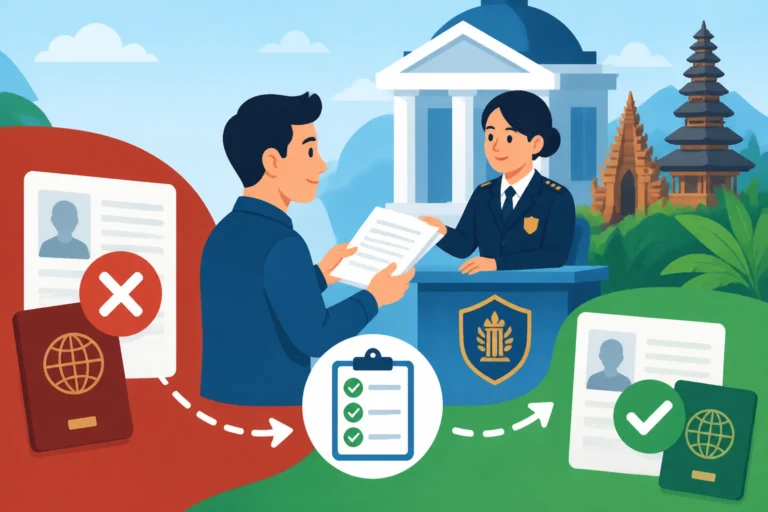
When you arrive at the Kanim, you are looking for the "Status Keimigrasian" (Immigration Status) section. Be prepared for a wait. Even with an appointment, the "Mutasi" process can take 3 to 5 working days. They will take your new passport and sometimes your old one, though they usually just need to see the old one and take copies. Once the process is complete, they will issue a "Surat Pemberitahuan Mutasi," a notification letter that proves your visa has been moved to the new book.
Step-by-Step Guide to Transferring Your KITAS
To make this as painless as possible, follow this sequence. I’ve refined this after helping dozens of fellow expats navigate the "Kanim" halls. The key is preparation; one missing photocopy can cost you an entire day in Jakarta traffic.
Gathering the Required Paperwork
Before you even book your Grab or Gojek to the immigration office, ensure you have the following in a neat folder. Indonesian officers appreciate organized applicants, and it often speeds up the "interview" phase.
| Document | Type | Note |
|---|---|---|
| Embassy Letter | Original + Copy | States the link between old and new passport |
| New Passport | Original + Copy | ID page and any new stamps |
| Old Passport | Original + Copy | ID page and the original KITAS stamp/sticker |
| E-ITAS | Printout | Your current electronic stay permit |
| Sponsorship Letter | Original | Signed by your sponsor (boss or spouse) with a Materai 10.000 |
| KTP of Sponsor | Copy | Or the ITAS of the primary holder if you are a dependent |
| Domicile Letter | Copy | Surat Domisili (Domicile Letter): How to Get it from the Village Head |
Make sure you have at least two copies of everything. There is usually a "Fotocopy" stand at every Kanim, but the lines are long and the heat is unforgiving. Also, ensure you have your NPWP (Tax ID) handy, as they sometimes ask for it to verify your residency status.
Submission and Biometrics Appointment
Once you submit the documents at the counter, the officer will verify the "Passport Replacement Note" from your embassy. If everything is in order, they will give you a payment slip. You can usually pay this at a nearby bank (BNI or Mandiri are common) or even at a post office (Pos Indonesia) booth inside the Kanim. The fee for a Mutasi Paspor is relatively low—usually around IDR 500,000 to IDR 1,000,000 depending on the current schedule of fees—but it must be paid before they proceed.
After payment, you will be scheduled for biometrics. This is the same process as your initial KITAS: fingerprints and a digital photo. They do this to ensure that the person holding the new passport is indeed the same person who was granted the original visa. Even if you haven't changed much, the system needs a fresh digital signature tied to the new passport's chip data.
Receiving Your Updated Electronic ITAS E-ITAS
A few days after your biometrics, you will receive an email containing your "new" E-ITAS. It’s important to look closely at this document. Your KITAS ID number (the FIN) will remain the same, but the passport number field should now reflect your new book. This is your "Golden Ticket." Print multiple copies and keep a high-resolution PDF on your phone.
You will also need to return to the Kanim to pick up your passports. Check the new passport for any stamps. While many offices are moving away from physical stamps for the Mutasi, some still place a small endorsement stamp on one of the back pages stating that the holder has an ITAS linked to the previous passport number. If they give you a physical "Surat Mutasi" (transfer letter), keep it tucked inside your new passport forever—or at least until that KITAS expires.
Common Challenges and Professional Support
Even with a perfect folder of documents, things can go sideways. Indonesia’s bureaucracy is famous for "hidden" requirements or sudden system outages. Knowing how to handle these hiccups is what separates a veteran expat from a frustrated newcomer.
Name Discrepancies and Spelling Errors
This is the most common headache. If your old passport said "Jonathon Smith" and your new one says "Jonathon A. Smith" because your embassy decided to include your middle initial this time, the Indonesian system will flag it as a mismatch. Immigration officers are trained to be extremely literal. If the names don't match exactly, they may refuse the Mutasi until you get an additional letter from your embassy confirming that both names refer to the same individual.
If you encounter this, don't try to argue with the counter officer. Simply ask exactly what wording they need in a "Correction Letter" and head back to your embassy. It’s frustrating, but remember that for them, a single letter difference could mean a different identity. If you have a complex name, consider using Certified Translators (Penerjemah Tersumpah) for Immigration Documents to provide a notarized explanation of your name structure if it differs from Indonesian norms.
When to Use an Immigration Agent Biro Jasa
If you are a busy professional or simply find the thought of navigating a Kanim overwhelming, hiring a "Biro Jasa" (service bureau) is a valid option. A good agent will take your passports, handle the queuing, and only call you in for the 10-minute biometrics appointment. They can also help if you are Switching Jobs on a Work KITAS: The Cancel and Reapply Process at the same time as your passport renewal, which is a bureaucratic nightmare to handle alone.
However, be careful. Only use agents that are officially registered. Ask for recommendations in expat forums or from your company’s HR department. A bad agent can lose your passport or, worse, provide fake documentation that gets you on The Blacklist (Cekal): Reasons for Being Banned from Entering Indonesia. Expect to pay a premium for their services—often double or triple the official government fee—but for many, the time saved is worth the expense.
Handling Passport Renewal During a KITAS Extension
If your passport renewal coincides with your annual KITAS extension, you should try to process them simultaneously. This is called a "Bundled Application." You provide the new passport and the embassy letter along with your extension paperwork. This saves you one round of biometrics and ensures that your new one-year or two-year stay permit is issued correctly from day one.
If you are on a Spouse Sponsored KITAS: Marrying an Indonesian Citizen and Work Rights, your Indonesian spouse will need to be present for this. Immigration often uses the extension/transfer window to conduct a mini-interview to ensure the marriage is still valid and you are living at the reported address. Make sure your Reporting Address Changes: Why Immigration Will Check Your Domicile Letter is up to date before you attempt this, as a surprise villa inspection during a passport transfer is not unheard of.
Living with Two Passports: Travel and Banking
Once the Mutasi is done, you might think you’re in the clear. However, the "two-passport life" continues until your old KITAS expires and you get a fresh one entirely based on the new book. Here is how to manage the transition in the real world.
Navigating Airport Immigration with Both Books
Until you get a brand-new KITAS stamp or E-ITAS that was initiated after you got your new passport, you should always carry both books when traveling internationally. When you approach the immigration counter at Soekarno-Hatta or Ngurah Rai, hand over both passports. The officer will look for the entry stamp or the old physical KITAS sticker in the old book, then scan the new book to verify the digital Mutasi.
If you try to use the automated E-Gates with a new passport that hasn't been properly "synced," the gate likely won't open. It's better to head to the manned "Foreigner/KITAS" line for your first few trips. Once you see that the officer scans your new book and the screen turns green without them asking for the old one, you know the digital sync is 100% complete. Always check your exit and entry stamps before walking away from the counter to ensure they haven't accidentally marked you as a tourist.
Updating Your Details with Banks and BPJS
Your passport is your primary ID for everything in Indonesia. Once you have the new book and the Mutasi letter, you must visit your bank (BCA, Mandiri, etc.) to update your "CIF" (Customer Information File). If you don't, you might find your mobile banking blocked or be unable to receive international wire transfers because the passport on file has "expired."
The same applies to BPJS Kesehatan for Expats: Registration, Costs, and the New KRIS System. While BPJS usually uses your NIK from your KTP WNA (Foreigner ID Card): Why Banks Will Ask You For It, they still keep your passport number on record. If you ever need to claim a high-value medical benefit or surgery, a discrepancy in passport numbers can lead to a "pending" status that you don't want to deal with while in a hospital bed. Take a morning to visit your bank and the BPJS office with copies of your new passport and the immigration transfer letter.
Proof of Travel and Exit Permit Only Considerations
If you decide to leave Indonesia permanently shortly after getting a new passport, the Exit Permit Only (EPO) vs ERP: Closing Your Visa Before Leaving Indonesia process becomes slightly more complex. You will need to provide both passports to the immigration office so they can "close" the file. They need to see the history of your stay, which is often spread across the stamps in the old book.
Also, keep in mind the Calculating the 183-Day Rule for Tax and Immigration Purposes. If you are counting days for tax residency, the stamps in your old passport are your primary evidence. If you lose that old book, proving your travel history to the tax office (DJP) becomes a long, arduous process of requesting "Travel Manifests" from immigration. Tape the old and new books together if you have to—just don't lose that history.
Disclaimer
The information provided in this guide is for general informational purposes only and does not constitute legal or professional advice. While every effort has been made to ensure the accuracy of the information as of 2026, Indonesian immigration laws and procedures are subject to frequent and unannounced changes. Users are strongly encouraged to verify current requirements with the official Directorate General of Immigration (Migrasi) or a licensed immigration consultant before making travel or residency arrangements. The author and publisher are not responsible for any visa denials, fines, or legal issues resulting from the use of this guide.