Annual Vehicle Taxes (Pajak Kendaraan): How to Pay at Samsat
Nothing induces a specific type of "expat anxiety" quite like realizing your Indonesian vehicle registration is about to expire and you have no idea where the local Samsat office is. I remember my first time trying to navigate this; I showed up with a folder full of photocopies only to be told I needed the original "blue book," which was locked in a safe across town. This guide eliminates that stress by breaking down exactly how to navigate the annual vehicle tax (Pajak Kendaraan Bermotor) process without losing your sanity.
Understanding the Samsat System and Why It Matters
If you own a scooter or a car in Indonesia, you are going to become very familiar with the acronym Samsat. It stands for Sistem Administrasi Manunggal Satu Atap, which translates to the One-Roof Integrated Administration System. It is a collaborative office where the National Police, the regional tax office, and the state-owned insurance company (Jasa Raharja) work together to process your vehicle's paperwork.
The most common reason you will visit or interact with Samsat is to pay your annual Pajak Kendaraan Bermotor (PKB). This is not just a tax; it is also the renewal of your Surat Tanda Nomor Kendaraan (STNK), which is the registration document you must carry whenever you are driving. If your STNK is not stamped for the current year, the police can fine you or even impound your vehicle during a random check.
While many expats choose to use a biro jasa (service agency) to handle this, doing it yourself is a fantastic way to understand the local bureaucracy and save a significant amount of money. Plus, with the rise of digital services, it is becoming easier every year. However, before you go, you need to ensure your phone is connected so you can check status updates. I usually recommend using an eSIM from a provider like Airalo if you have just arrived or are traveling between islands and need reliable data to navigate to the correct office.
The Two Types of Vehicle Tax Cycles
In Indonesia, there are actually two different cycles you need to keep track of regarding your vehicle. Failing to distinguish between them is a common mistake that can result in a wasted trip to the Samsat office.
The Annual PKB Payment
This is the standard annual tax. You pay the amount listed on the back of your STNK, plus a small fee for the mandatory road accident insurance (SWDKLLJ). This process is relatively simple and can often be done at "Samsat Keliling" (mobile vans) or even via digital platforms.
The Five-Year STNK Renewal
Every five years, your physical license plates (TNKB) expire. This is a much more intensive process. You cannot do this at a mobile van or an app. You must take the physical vehicle to a main Samsat office for a "Cek Fisik" (physical inspection), where an officer will scrape a rubbing of your engine and chassis numbers. You will receive a new STNK document and a fresh set of metal license plates. If you are currently in the process of Buying and Registering a Car or Scooter in Indonesia on a KITAS, you will need to pay close attention to which cycle your new-to-you vehicle is currently in.
Essential Documents for a Smooth Payment Process
The "Samsat Shuffle" usually happens because a resident arrives missing one crucial piece of paper. The requirements for foreigners are slightly stricter than for locals, so double-check this list before you leave your villa or apartment.
- Original STNK: This is the most important document. You need both the plastic-coated registration and the tax paper (the one with the hologram).
- Original BPKB: The Buku Pemilik Kendaraan Bermotor is your vehicle’s title. For annual payments at some offices, a copy might suffice if the original is held by a bank (leasing), but you should always bring the original if you have it.
- Identity Documents: For expats, this means your original Passport and your original KITAS or KITAP.
- Photocopies: Bring at least two copies of everything listed above. While some offices have a photocopy stand (Tukang Fotokopi) on-site, they are usually crowded and chaotic.
- Proof of Domicile: Sometimes, especially in Bali, the officer may ask for a Surat Domisili (Domicile Letter): How to Get it from the Village Head to verify your local address.
If you are using a vehicle registered in someone else’s name (which is common for expats who haven't yet processed their own registration), you will technically need the original KTP (National ID) of the person named on the STNK. This is a major hurdle for many and is why most people prefer Buying and Registering a Car or Scooter in Indonesia on a KITAS in their own name as soon as they have the legal standing to do so.
| Document Type | Annual Tax Requirement | 5-Year Renewal Requirement |
|---|---|---|
| Original STNK | Mandatory | Mandatory |
| Original BPKB | Recommended | Mandatory |
| Original KITAS/Passport | Mandatory | Mandatory |
| Physical Vehicle | Not Required | Mandatory (for Cek Fisik) |
| KTP of Owner (if not you) | Mandatory | Mandatory |
Navigating the Samsat Office: A Step-by-Step Guide
If you decide to go the traditional route and visit the Samsat office in person, here is the flow you can expect. Pro-tip: show up as early as possible. Most offices open at 8:00 AM, and the queue starts forming well before that.
Step 1: Document Verification
When you enter, look for a counter labeled "Loket Pendaftaran" or "Penetapan." You will hand over your folder of originals and copies. The officer will check for any outstanding fines and verify that the names match your ID. If you find the office is located far from your home, you might consider booking a stay through Agoda nearby for the night before so you can be the first in line.
Step 2: Payment (Kasir)
Once your documents are verified, you will be given a queue number or asked to wait until your name is called. When called, proceed to the "Kasir" (Cashier) window. They will tell you the total amount. While some Samsat offices in Jakarta now accept debit cards, many in regional areas still require cash. Always carry enough Rupiah to cover the tax plus a 10% buffer for "administrative fees."
Step 3: STNK Stamping and Collection
After paying, you will wait again. Finally, your name will be called at the "Penyerahan" (Handover) counter. You will receive your original STNK back with a new validation stamp in one of the four circles on the back, along with a new tax receipt printed on security paper. Check the dates immediately! Ensure the expiration year has been advanced by one year.
While waiting in these often-crowded halls, having a reliable internet connection is a lifesaver. I've spent many hours sitting on those plastic benches using an eSIM from Airalo to catch up on emails or stream a show to pass the time. It beats staring at the "No Smoking" signs for two hours.
Modern Alternatives: Apps and Drive-Thrus
If the idea of sitting in a government building for three hours sounds unappealing, you are in luck. Indonesia has made massive strides in "E-Samsat" services.
Samsat Drive-Thru
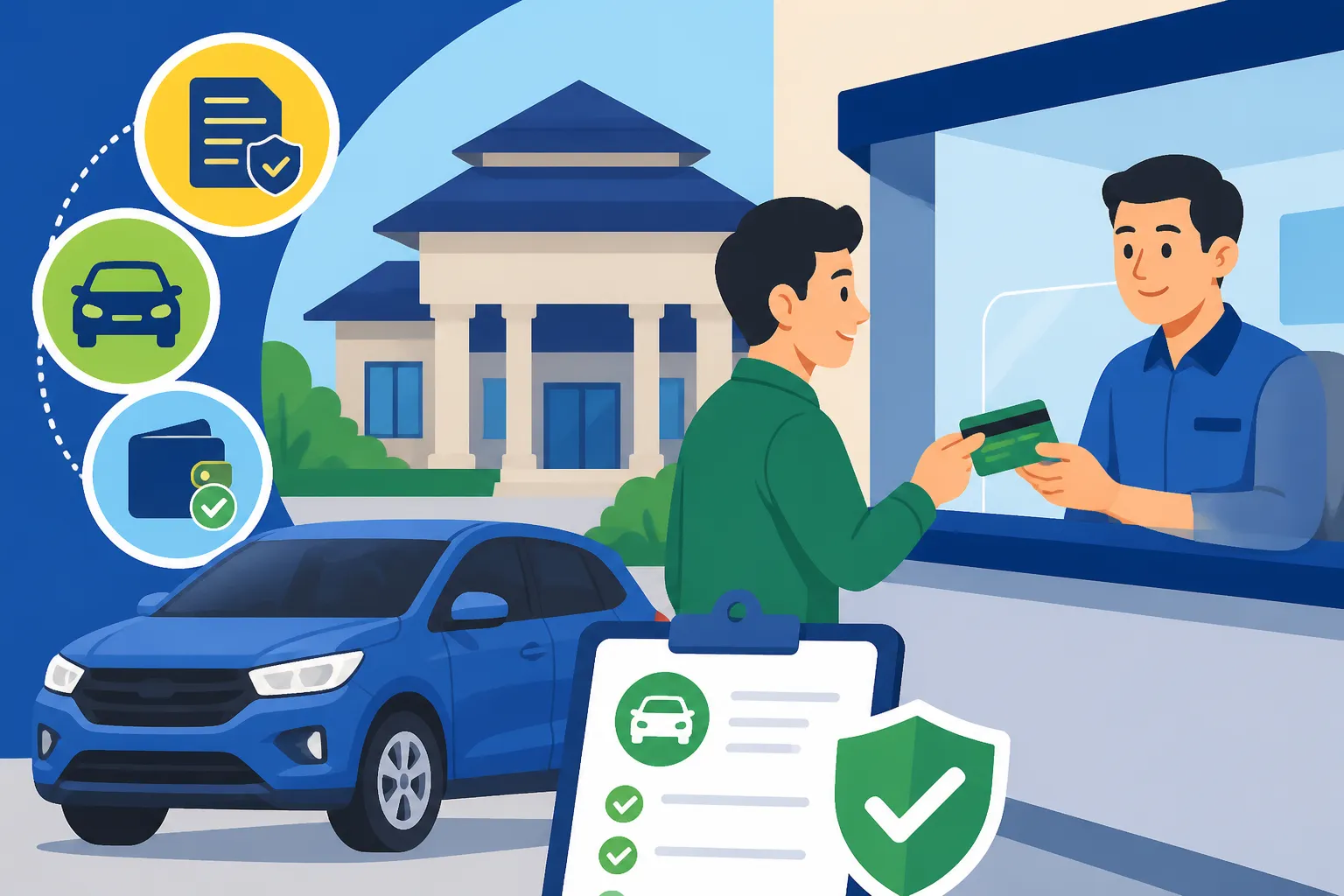
In major cities like Jakarta, Surabaya, and Denpasar, there are Drive-Thru Samsat facilities. You literally ride your scooter or drive your car up to a window, hand over your STNK, BPKB, and ID, pay, and get your stamp in less than 10 minutes. The catch? The vehicle must be registered in your name, and you must have the physical ID that matches.
Online Payments via Shopee and Signal
The "Signal" app (Samsat Digital Nasional) is the official government app for paying vehicle taxes. You can register your vehicle, see the tax amount, and pay via bank transfer or e-wallet. You can even pay through popular e-commerce platforms like Shopee under the "Pulsa, Tagihan & Hiburan" section.
Once you pay online, you will receive an e-Tanda Bukti Pelunasan Kewajiban Pembayaran (e-TBPKP). However, as a foreigner, you should still eventually go to a Samsat office or a Samsat Keliling to get the physical stamp on your STNK. Some police officers are okay with the digital proof, but others—especially in more rural areas—will insist on seeing the physical stamp.
Dealing with Fines and Late Payments
We’ve all been there—you forget to check the date, and suddenly you’re three months overdue. The good news is that the fines (Denda) in Indonesia are usually not as catastrophic as they are in the West, but they do add up.
The fine for late payment of the PKB is typically 25% of the annual tax amount if you are late by even one day, though this is sometimes prorated depending on the province. You also have to pay a fine for the SWDKLLJ (insurance), which is usually a flat fee around IDR 32,000 for motorbikes and IDR 100,000 for cars.
If you are significantly late (more than a year), you might want to wait for a "Pemutihan" (Tax Amnesty) period. Regional governments often hold these once or twice a year, where they waive all late penalties, and you only have to pay the principal tax amount. This is a common strategy for locals and savvy expats to save money on neglected vehicles. If you are struggling with these costs, you might need to look into Healthcare Budgeting: BPJS Caps, Out-of-Pocket Costs, and Private Copays or other ways to reallocate your monthly expenses.
Why Some Expats Prefer a Biro Jasa
Despite the digital options, many expats still choose to hire a biro jasa. Why? Because the Samsat office often requires a level of Bahasa Indonesia that can be intimidating. If you find Learning Bahasa Indonesia: BIPA Certification, Tutors, and Workplace Usage a bit slow-going, navigating the specific terminology at a tax office might be a bridge too far.
A biro jasa will pick up your documents from your house, handle the queues, and return your stamped STNK a few days later. They typically charge between IDR 150,000 and IDR 300,000 for the service, plus the actual tax amount. It is a small price to pay for the hours of time saved. Just ensure you are using a reputable agency; never give your original BPKB to someone you haven't vetted through the expat community.
If you are managing a household, you might even ask your staff for help. Sometimes Hiring a Domestic Helper (Pembantu): Salaries, THR, and Live-In Arrangements includes someone who knows a local runner who can handle these errands for you safely.
Final Checklist for Your Samsat Visit
To ensure you don't have to make a second trip, run through this final checklist:
- Check your expiration date: Is it just the annual tax or the 5-year plate renewal?
- Gather originals: STNK, BPKB, Passport, KITAS.
- Prepare copies: At least two of each.
- Check the name: Does the name on the STNK match your KITAS? If not, do you have the owner's original KTP?
- Cash is king: Bring more than you think you need.
- Tech ready: Have your Airalo data roaming or local SIM active for map navigation and entertainment.
If you are moving between islands, remember that you generally pay your tax in the province where the vehicle is registered. If you bought a bike in Jakarta but are now living in Bali, you may eventually need to "Mutasi" (transfer) the registration to Bali, which is a much more complex process involving "pulling" the file from the original province. For most, simply paying the Jakarta tax via an app or a friend in the city is the easier path.
Navigating the Samsat system is a uniquely Indonesian experience. It can be frustrating, but it is also a sign that you are truly settling into life here. Whether you choose to do it yourself or hire help, staying legal on the road is one of the most important aspects of Living in Indonesia as an Expat: The Complete Starter Guide (2027).
Disclaimer
This guide is for informational purposes only. While every effort has been made to ensure the accuracy of this information for 2026, Indonesian regulations and Samsat procedures can change frequently and without prior notice. Always verify current requirements with your local Samsat office or a registered legal consultant before proceeding with tax payments or vehicle registrations. The author and publisher are not responsible for any fines, legal issues, or complications arising from the use of this guide.