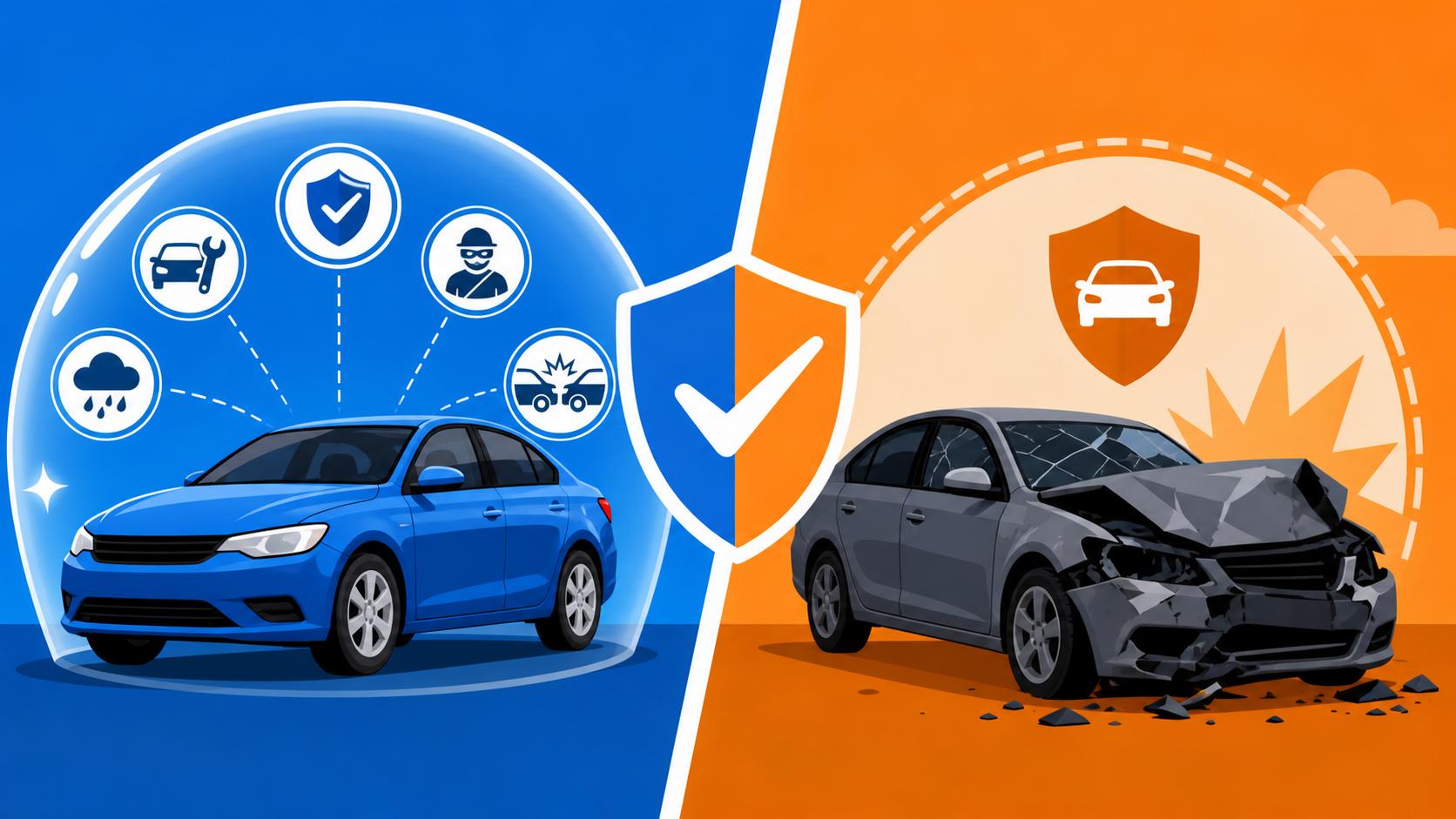
Vehicle Insurance (Asuransi Mobil): Comprehensive vs Total Loss Only (TLO)
Navigating the chaotic streets of Jakarta or the narrow, scooter-clogged lanes of Canggu is a sensory overload that often leads to one inevitable outcome: a dented bumper or a clipped side mirror. I remember my first week driving in Kuningan when a motorbike swerved so close it took my paint with it, leaving me standing on the curb feeling completely overwhelmed by the local bureaucracy. This guide solves the mystery of Indonesian vehicle insurance, breaking down the critical differences between Comprehensive and Total Loss Only (TLO) coverage so you can protect your assets and your sanity.
Understanding the Indonesian Vehicle Insurance Landscape
When you first arrive in Indonesia, the sheer volume of traffic can feel like an insurance nightmare waiting to happen. Unlike some Western countries where third-party liability is the absolute minimum and often integrated into your registration, Indonesian insurance is largely a private affair that you must proactively manage. The market is regulated by the OJK (Otoritas Jasa Keuangan), which sets the price floors and ceilings for premiums, but the actual experience of holding a policy can vary wildly depending on the provider you choose.
The reality of driving here is that "fender benders" are not a matter of if, but when. Whether it is a seasonal flood in South Jakarta or a stray gravel truck on the toll road to Bandung, your vehicle is constantly under threat. Most expats quickly realize that relying on the "goodwill" of other drivers to pay for damages is a losing game. Understanding the local terminology—specifically the difference between "All Risk" (Comprehensive) and "Total Loss Only"—is the first step toward securing your financial life here.
Safety isn't just about how you drive; it's about how you prepare for the environment. Just as you might use NordVPN to secure your digital footprint when accessing your Indonesian banking apps on public Wi-Fi, you need a robust insurance policy to secure your physical mobility. Without it, a single accident could derail your local budget and force you to dip into your international savings.
The Role of the OJK in Setting Premiums
In Indonesia, you won't find the massive price swings for insurance that you might see in the US or UK. The OJK mandates specific premium rates based on the region where the vehicle is registered and the price bracket of the car. For insurance purposes, Indonesia is typically divided into three regions: Region 1 (Sumatra and surrounding islands), Region 2 (Jakarta, Banten, and West Java), and Region 3 (the rest of Indonesia, including Bali and East Java).
This regulation means that if you are looking for quotes, they will often be quite similar across major providers like Allianz, AXA Mandiri, or Sinar Mas. The real difference lies in the quality of the "Bengkel Rekanan" (partner workshops) and the ease of their digital claim process. When you are paying for these premiums, using Wise can be a lifesaver for transferring funds from your home account into your local IDR account without getting hit by the predatory exchange rates offered by traditional banks.
Why Peace of Mind is a Local Commodity
Living as an expat means you are often a target for "foreigner pricing" at independent repair shops. Having a formal insurance policy levels the playing field. When you have a policy, you aren't negotiating with a local mechanic in broken Bahasa Indonesia; you are dealing with a corporate entity that has pre-negotiated rates. This is a massive relief when you are already trying to manage the complexities of Money in Indonesia for Foreign Residents: Banking, Tax, and Financial Setup (2027).
The psychological burden of driving in Indonesia is high. Knowing that your "All Risk" policy covers that scratched door from a tight parking spot in Grand Indonesia Mall allows you to focus on your work and life rather than obsessing over every minor blemish on your vehicle. It is an essential component of your Financial Checklist for Your First 30 Days in Indonesia.
Comprehensive Insurance: The All Risk Gold Standard
In the local market, Comprehensive insurance is almost universally referred to as "All Risk." This is a bit of a misnomer, as no policy truly covers every possible scenario, but it is the most inclusive option available. It is designed to cover everything from minor scratches and dents to major accidents and theft. For most expats driving late-model cars, this is the only sensible choice.
An All Risk policy is particularly valuable because of the high frequency of minor incidents in Indonesian cities. A typical claim might involve a "serempetan" (a side-swipe) where a motorbike clips your car in stationary traffic. Under a Comprehensive policy, you pay a small deductible—usually around IDR 300,000 per incident—and the insurance company handles the rest of the repair costs at an authorized workshop.
What Exactly Does All Risk Cover?
A standard All Risk policy covers partial damage. If someone throws a stone at your windshield or you accidentally reverse into a high curb, the policy triggers. It also includes protection against fire, lightning strikes, and theft of the vehicle. However, it is vital to read the fine print regarding what is inside the car. Usually, personal items left in the vehicle are not covered unless you add a specific rider.
One nuance of the Indonesian system is the "loading fee." If your car is older than five years, insurers will often apply an additional percentage to your premium because older parts are harder to source or the vehicle is seen as more prone to failure. If you are in the process of Buying and Registering a Car or Scooter in Indonesia on a KITAS, ensure you ask for a full breakdown of these fees before signing.
The Authorized Workshop Network
The most significant advantage of an All Risk policy is access to "Bengkel Resmi" (authorized brand workshops). If you drive a Toyota, you want your repairs done at Auto2000, not a roadside shack with a corrugated tin roof. Comprehensive policies usually allow you to choose these premium workshops, ensuring that genuine spare parts are used and your manufacturer's warranty remains intact.
When you are managing your vehicle repairs, you'll likely be using your phone to coordinate with agents. Staying secure is paramount, so I always recommend having NordVPN active when you're sending photos of your registration or ID cards over WhatsApp to insurance brokers, which is the standard way of doing business here.
Total Loss Only (TLO): The Budget-Friendly Alternative
Total Loss Only (TLO) insurance is exactly what it sounds like. It provides no compensation for minor scratches, broken mirrors, or dented fenders. It only pays out if the vehicle is stolen or if the cost of repairs exceeds a specific threshold—typically 75% of the vehicle's current market value.
For many, TLO feels like a gamble, but it has a specific place in the market. It is significantly cheaper than All Risk—often costing only a fraction of the premium. If you are driving an older vehicle that you've already accepted will have a few "battle scars" from the Jakarta traffic, TLO provides a safety net against the total disappearance of your investment without the high annual cost of Comprehensive coverage.
The 75% Rule Explained
The 75% threshold is the "magic number" in TLO policies. If you have a major accident, the insurance company will send an adjuster to estimate the repairs. If the car is worth IDR 200 million and the repair estimate is IDR 140 million, they will likely deny the claim under a TLO policy because the damage is only 70% of the value. You would be responsible for the entire IDR 140 million bill yourself.
This is why TLO is often perceived as "theft insurance." In a country where vehicle theft is a persistent concern in certain neighborhoods, TLO ensures that you aren't left with nothing if your SUV vanishes from a public parking lot. It’s a way to protect the "core" of your capital, much like how you might keep a portion of your long-term wealth in Interactive Brokers or Binance rather than having it all in a volatile local currency.
Why TLO is the Default for Older Vehicles
Most insurance companies in Indonesia will refuse to provide All Risk coverage for cars older than 10 or 12 years. At that point, the cost of repairing a minor dent might exceed the annual premium, making it a bad bet for the insurer. Consequently, if you are buying a second-hand "workhorse" for trips to the mountains or for your driver to use for errands, TLO might be your only legal option.
If you find yourself in this position, you need to be much more disciplined with your emergency fund. Since you won't have insurance for the small stuff, ensure you have a dedicated "repair" bucket in your local bank account. You can easily manage these transfers and monitor your spending using Top Banks for Expats: Comparing BCA, Mandiri, BNI, and Digital Banks (Jenius).
Comparative Analysis: Which One Should You Choose?
Choosing between All Risk and TLO depends on three factors: the age of your car, your budget, and your appetite for risk. If you are financing your car through a local bank, they will almost certainly mandate All Risk for the duration of the loan. If you are buying outright, the choice is yours.
| Feature | Comprehensive (All Risk) | Total Loss Only (TLO) |
|---|---|---|
| Minor Damage | Covered (with deductible) | Not Covered |
| Theft | Covered | Covered |
| Natural Disasters | Optional Add-on | Optional Add-on |
| Third-Party Liability | Optional Add-on | Optional Add-on |
| Typical Premium | 2.0% – 3.5% of car value | 0.4% – 1.0% of car value |
| Repair Threshold | Any damage > Deductible | Damage > 75% of value |
| Best For | New cars, Expat families | Old cars, tight budgets |
Factoring in Vehicle Age and Market Value
As a rule of thumb, if your car is less than five years old, go with All Risk. The depreciation on a new car in Indonesia is steep, but the cost of genuine parts for newer models (especially European brands) is astronomical. A simple headlight replacement on a modern SUV can cost more than two years of All Risk premiums.
If your car is older than eight years, the math starts to shift. You might find that the cumulative cost of premiums over three years equals 20% of the car's total value. In this case, TLO plus a "self-insurance" fund is often the more logical financial move. This is part of the broader strategy for Healthcare Budgeting: BPJS Caps, Out-of-Pocket Costs, and Private Copays, where you balance fixed premiums against potential out-of-pocket expenses.
Assessing Personal Risk and Driving Environment
Where do you live? If you are in a flood-prone area of Kemang, you don't just need All Risk; you need specific flood protection. If you are in a quiet gated community in BSD and only drive to the local mall, your risks are lower. However, remember that you aren't just insuring against your driving; you are insuring against the millions of other road users who may not have any insurance at all.
I have seen many expats opt for TLO to save money, only to regret it when they get into a medium-sized scrape that costs IDR 15 million to fix—a sum that would have been covered by a Comprehensive policy. Think of your insurance as a "sanity tax" that allows you to navigate Driving in Indonesia: Getting a SIM A/C License and Traffic Realities with a lot less stress.
Essential Add-ons (Perluasan) for Expats
A standard policy in Indonesia is often quite "stripped down." To get real protection, you need to add "Perluasan" or extensions. For an expat, some of these are not just "nice to have"—they are absolutely mandatory for responsible living.
Third-Party Liability (TPL): Your Most Critical Shield
In Indonesia, this is known as "Tanggung Jawab Hukum Terhadap Pihak Ketiga" (TJH Pihak Ketiga). Most standard policies only include a tiny amount of TPL, often as low as IDR 10 million. In a serious accident where you are at fault and someone is injured, that amount is woefully inadequate.
I always recommend boosting your TPL to at least IDR 50 million or IDR 100 million. It costs very little extra but protects you from massive personal lawsuits or "negotiations" at the scene of an accident. If an emergency does occur, you'll need to know the Emergency Numbers in Indonesia: 118/119 for Ambulance and What to Expect, but having the financial backing of a high TPL limit will handle the aftermath.
Natural Disasters: Floods and Earthquakes
Indonesia is the land of "Banjir" (floods). If your car is submerged during the monsoon season and you don't have the "Flood and Windstorm" extension, your insurance company will simply walk away. The same applies to earthquakes and volcanic eruptions. Given the geographical realities of the archipelago, skipping these extensions is a massive risk.
When a flood hits, you might also be dealing with power outages or internet disruptions. Having a backup plan for your digital life, including NordVPN for secure roaming and How to Pay Utilities via M-Banking Apps (BCA Mobile, Livin' by Mandiri) for keeping your home running, is part of a holistic survival strategy.
Riots and Civil Commotion (SRCC)
The SRCC (Strike, Riot, and Civil Commotion) rider is a unique feature of Indonesian insurance. While Indonesia is generally very safe, political demonstrations or local disputes can occasionally lead to property damage. This extension ensures that if your car is caught in the middle of a "demo" and suffers damage, you are covered. Most brokers will include this by default for expats, but always double-check.
How to Buy and Manage Your Policy
Buying insurance in Indonesia has become significantly easier with the rise of digital platforms, but the human element still dominates. You can buy directly from a bank, through a broker (Biro Jasa), or via apps like Traveloka or various "Insurtech" startups.
Documentation Needed for Foreigners
To get a policy, you will need to provide:
- A copy of your STNK (Vehicle Registration).
- A copy of your SIM A (Indonesian Driving License).
- A copy of your KITAS/KITAP or Passport.
- Photos of the vehicle from all four sides (to prove there is no pre-existing damage).
The process is usually handled via WhatsApp. You send the documents, they send a quote, and you pay via a virtual account. For making these payments, Using QRIS: The Cashless Payment System Revolutionizing Indonesian Commerce is often an option for smaller fees, but for major premiums, a bank transfer is standard.
Navigating the Claims Process
If you have an accident, the first thing you should do is take clear photos of the damage and the other party's license plate and ID. Do not leave the scene until you have contacted your insurance hotline. Most major insurers now have an app where you can upload photos and start the claim immediately.
Once the claim is "approved" in the app, you take the car to a partner workshop. You will pay the deductible (IDR 300,000) directly to the workshop, and the insurer pays the rest. The repair time can be lengthy if parts need to be ordered from Singapore or Japan, so be prepared to use GoCar or Grab for a few weeks. Managing these daily transport costs is easier when you've mastered the tips in Money in Indonesia for Foreign Residents: Banking, Tax, and Financial Setup (2027).
Financial Considerations and Premium Factors
Understanding how your money flows in the Indonesian insurance system will save you from surprises later. Premiums are typically paid annually upfront. There are rarely "monthly" payment plans like you might find in Europe or Australia, unless you are using a specific credit card promotion.
How OJK Regulations Set the Price Floor
As mentioned, you won't find "crazy deals" that are 50% cheaper than the competition. If a deal looks too good to be true, it's likely because the workshop network is poor or the TPL limits are non-existent. Stick to the reputable names. The OJK ensures that the companies have enough reserves to pay out, which is a level of security you want when dealing with significant assets.
If you are looking to maximize your financial efficiency, you might consider how your car insurance fits into your overall portfolio. Some expats choose to keep their "emergency" funds in high-yield environments like Interactive Brokers or even stablecoin accounts on Binance, pulling funds only when a deductible or an uninsured repair is needed.
Payment Methods and Currency Management
Most insurers will quote you in IDR. If you are receiving your salary in a foreign currency, the fluctuations in the Rupiah can affect your "real" cost. I suggest using Wise to lock in a good rate when the Rupiah is weak, so you have enough IDR in your local account (like BCA or Mandiri) to cover the annual premium. This prevents you from being forced to exchange money at a bad rate right when the bill is due.
Important Disclaimer
The information provided in this article is for informational purposes only and does not constitute legal, financial, or professional advice. Insurance regulations in Indonesia, governed by the OJK, are subject to change. Always read your specific policy wording carefully and consult with a licensed insurance broker or legal professional before making any financial commitments. The author and publisher are not responsible for any claims, losses, or damages resulting from the use of this information.