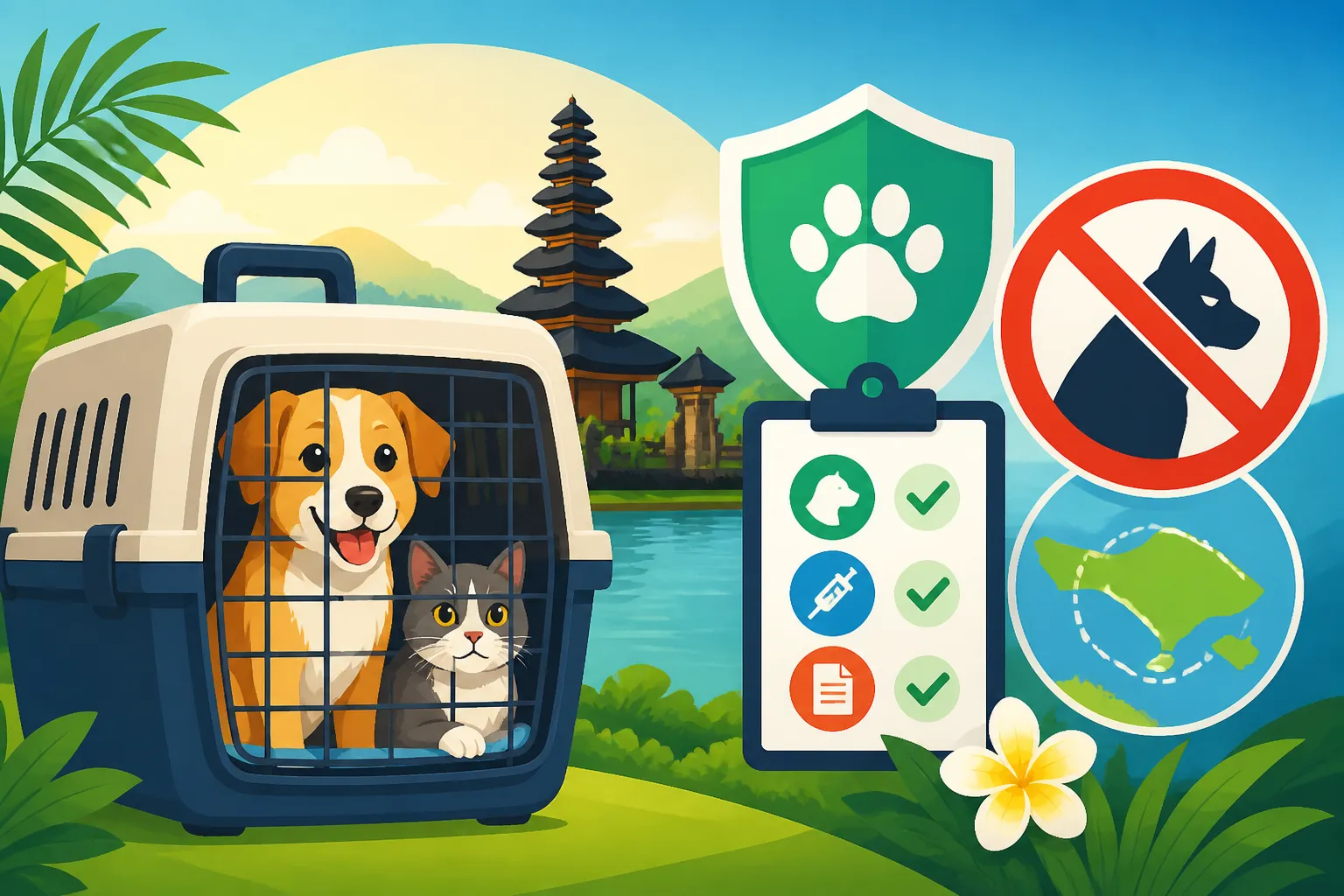
Pet Import Rules: Navigating Quarantine and Rabies-Free Zone Restrictions (Bali)
The nightmare of navigating Indonesian pet import rules is enough to make any expat consider leaving their furry family members behind. When I first moved here, I spent weeks untangling conflicting advice from agents and government websites while my dog sat in a kennel halfway across the world. This guide simplifies the process, specifically addressing the "impossible" hurdles of bringing pets into Bali.
The Foundations of Pet Importation in Indonesia
Moving a pet to Indonesia is not a weekend project; it is a complex administrative marathon that begins at least four to six months before your flight. The primary authority you will deal with is the Indonesian Quarantine Authority, known locally as Barantan. They oversee the entry of all animals and plants to prevent the spread of diseases, specifically rabies, which remains a significant concern in various parts of the archipelago.
One of the most jarring things for newcomers to realize is that Indonesia is divided into "Rabies-Free" and "Infected" zones. This classification dictates everything about your journey. If you are moving to a rabies-free area, the restrictions are exponentially tighter. Before you even book a flight, you must understand Living in Indonesia as an Expat: The Complete Starter Guide (2027) to realize how your location choice affects your administrative burden.
The paperwork involves obtaining an Import Permit (KH-16) from the Ministry of Agriculture. This permit is only valid for 30 days, meaning your timing must be surgical. If your flight is delayed or your pet’s health certificate is dated incorrectly, you are back to square one. I remember the panic of a 24-hour delay in Singapore and fearing my permit would expire while my cat was in transit. It is a high-stress environment that requires meticulous organization.
Mandatory Health Requirements and Timelines
Your pet must be a model of health on paper long before they touch Indonesian soil. The process starts with a microchip—specifically an ISO-compliant one. If your pet has an older chip, you will need to carry your own scanner, but generally, the 15-digit ISO 11784/11785 chips are the standard here.
Following the microchip, the rabies vaccination is the most critical component. It must be administered at least 30 days before arrival but no more than one year prior. However, simply having the shot isn't enough. Indonesia requires a Rabies Blood Titer Test (FAVN). This test measures the level of antibodies in your pet’s blood. The results must show a level of at least 0.5 IU/mL. Because these samples often have to be sent to approved labs in Europe or the US, this single step can take two months.
| Requirement | Timeline | Notes |
|---|---|---|
| ISO Microchip | Before any vaccinations | Must be 15 digits |
| Rabies Vaccination | 30 days to 1 year before entry | Must be a killed virus vaccine |
| Rabies Titer Test | At least 30 days after vax | Must be 0.5 IU/mL or higher |
| Health Certificate | Within 10 days of flight | Issued by government vet in origin country |
| Import Permit (KH-16) | 30 days validity | Issued by Indonesian Ministry of Agriculture |
Once the titer test is clear, you need a health certificate from your home country’s official veterinary department (like the USDA in the States or DEFRA in the UK). This certificate must be issued within 10 days of departure. For those managing the move from abroad, using Airalo to maintain a stable data connection is a lifesaver when you are constantly emailing scanned documents to agents in Jakarta while standing in a vet clinic in your home country.
The Bali Dilemma: Why Direct Entry is Prohibited
Bali is currently classified as a "Rabies-Free" zone (despite ongoing local challenges), which means that legally, pets are not allowed to be imported directly onto the island from abroad. This is the single most common point of heartbreak for expats. You might find a beautiful villa in Bali Neighborhoods: Seminyak, Canggu, Sanur, Ubud, and the Bukit, but getting your golden retriever there is a different story.
Currently, the only legal way to bring a pet into Indonesia is through Jakarta (Soekarno-Hatta International Airport). Your pet must undergo a mandatory quarantine period in Jakarta, usually lasting 7 to 14 days. During this time, they stay at the government facility in Galur or a private quarantine area approved by Barantan. I highly recommend visiting your pet if the facility allows it; it’s a lonely time for them, and the heat in Jakarta can be punishing.
The "illegal" transport of pets from Jakarta to Bali via overland "smuggling" routes is something you will hear whispered in expat forums. As a veteran who has seen the consequences, I urge you to be extremely cautious. If a pet is caught being moved into Bali without the proper provincial permits—which are currently almost impossible to get for foreign pets—they can be seized or, in worst-case scenarios, euthanized by authorities. Always seek the most current 2026 regulations from a reputable pet relocation agent who specializes in Moving Logistics: Domestic Shipping, Customs, and Bringing Pets to Indonesia.
The Quarantine Experience and Costs
Quarantine is the most expensive and emotionally draining part of the process. You are not just paying for a kennel; you are paying for the "Urusan" (administration), the veterinary checks, and the blood tests conducted upon arrival. Expect to pay anywhere from $1,500 to $3,000 USD per pet for a full-service relocation agent who handles the permit and the quarantine stay.
While your pet is in quarantine, you will likely be staying in a hotel. I found that using Agoda to find pet-friendly apartments in Jakarta near the airport area helped me stay close to the facility. It allows you to drop off fresh food or familiar toys to help your pet settle. The officials at the quarantine station are generally professional, but they deal with a massive volume of animals. Providing your own high-quality food is essential to avoid stomach upsets during an already stressful time.
During the quarantine, your pet will be tested again for rabies and other parasites. If any issues are found, the stay can be extended indefinitely. This is where your financial planning comes into play. Make sure you understand Healthcare Budgeting: BPJS Caps, Out-of-Pocket Costs, and Private Copays for your own needs, but keep a significant "pet emergency fund" for these unexpected quarantine extensions.
Settling into Your New Home with a Pet
Once the quarantine officer signs the release papers, the relief is overwhelming. But the transition isn't over. The Indonesian environment poses new risks: tropical ticks, heartworm, and heatstroke. You will need to find a reliable local vet immediately. In Jakarta, several international-standard clinics exist, but in Bali, you may have to look harder for specialized care.
For supplies, don't pack five bags of dog food. Use Shopee once you arrive. You can find almost any international brand of kibble, tick prevention (like Bravecto or Nexgard), and high-end beds on the platform. It is much cheaper than buying from boutique pet shops in expat enclaves. Just ensure you have your Taxes in Indonesia for Expats: NPWP, PPh 21, and the 183-Day Rule sorted so you can easily register for local e-commerce accounts and banking.
You also need to be aware of Everyday Etiquette: Religion, Culture, Garbage, and Community Norms. In many parts of Indonesia, dogs are seen differently than in the West. Walking a dog in a strictly observant neighborhood might draw looks or requires you to be extra sensitive about where your pet "does its business." Always keep your dog on a leash and be mindful of local stray populations (the "Bali Dogs"), which can be territorial and may carry diseases that your pampered pet isn't used to.
Final Preparations and Professional Help
Can you do this alone? Technically, yes. Should you? Absolutely not. The bureaucracy in Indonesia is built on relationships and specific "know-how" that change weekly. A good agent has the "WA" (WhatsApp) number of the head of quarantine and can solve problems that would take you months to navigate.
When choosing an agent, ask for references from recent 2026 imports. The rules around the Golden Visa and other new residency streams have shifted some import priorities, so you want someone who is up to date. Verify their credentials with the IPATA (International Pet and Animal Transportation Association). This isn't just about convenience; it's about the safety of your best friend.
Before you fly, ensure your pet’s crate is IATA-approved and that they have had plenty of time to acclimate to it. The flight to Jakarta is long, and the humidity at the cargo terminal can be intense. Seeing your pet walk out of those quarantine doors and finally into your new Indonesian home makes every cent and every stressful email worth it.
Disclaimer
This guide is for informational purposes only and reflects the experiences of expats and the regulatory environment as of 2026. Pet import laws in Indonesia are subject to sudden change without notice. Always consult with the Indonesian Ministry of Agriculture and a certified pet relocation specialist before making travel arrangements for your animals.