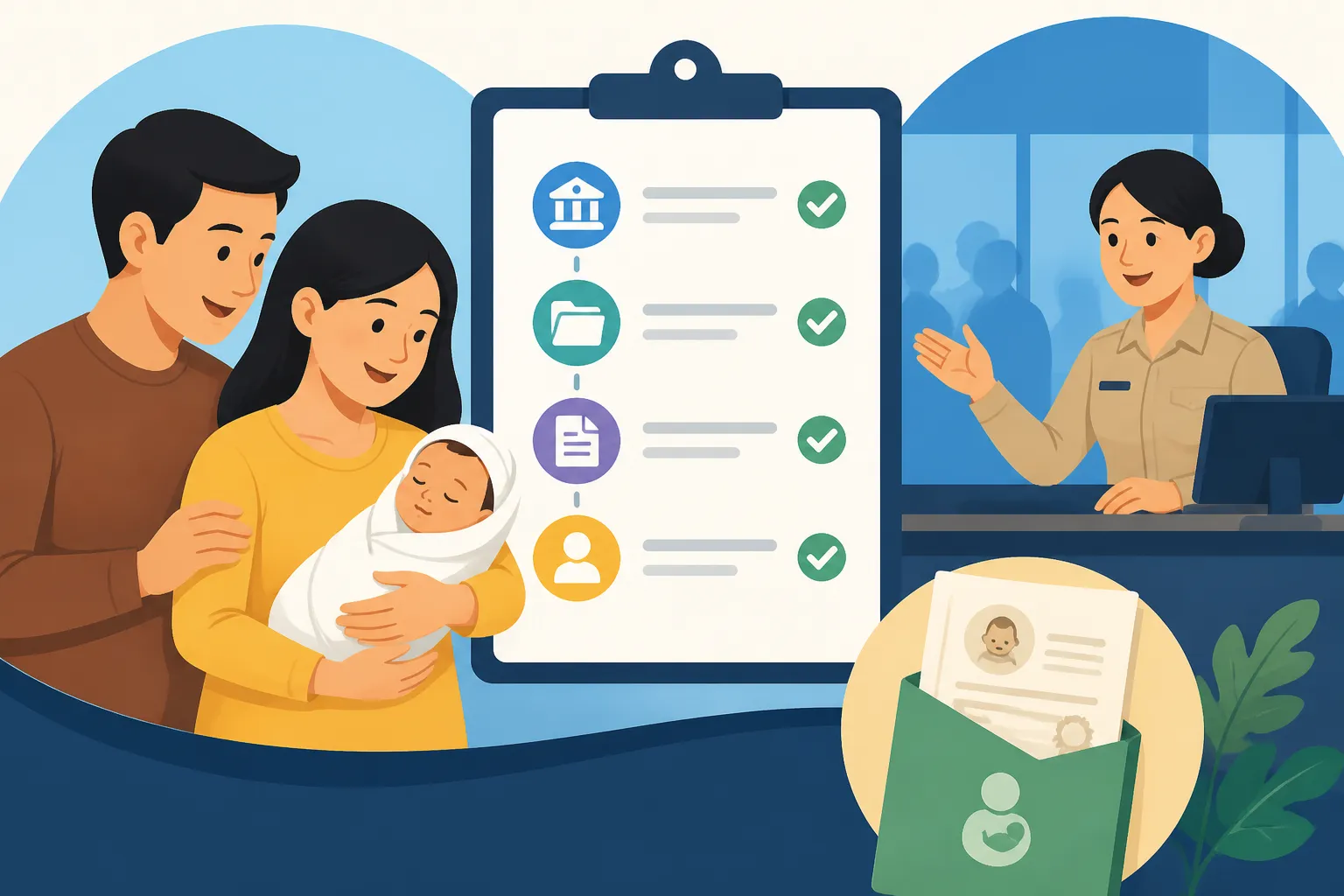
Navigating the Bureaucracy of Registering a Newborn Baby Born in Indonesia
Welcoming a child into the world is an overwhelming experience, but doing so as an expat in Indonesia adds a layer of administrative complexity that can feel like a second job. I remember sitting in a hospital waiting room in South Jakarta, exhausted and holding a three-day-old infant, while clutching a folder of documents I barely understood. This guide solves the mystery of the post-birth paper trail so you can focus on your new baby.
The Immediate Step: The Hospital Birth Record
The very first piece of paper you will receive is the Surat Keterangan Lahir, which is the official statement of birth issued by the hospital or clinic. This is not your child’s legal birth certificate, but it is the foundational document required for every subsequent step. You must ensure that the names of both parents on this document match your passports exactly. Even a minor typo can cause a cascade of rejections at the Civil Registry or your embassy later on.
In many high-end facilities like Siloam or RS Bunda, the administration staff are familiar with the needs of foreign residents. They will often ask for copies of your passports and KITAS early in the process. If you are still in the planning stages of your journey, I highly recommend reading up on Pregnancy and Childbirth in Indonesia: Prenatal Care, Birth Options, and Hospitals to understand which facilities provide the best administrative support for expats. Some hospitals even offer a concierge service to help handle the initial local filings, which is a lifesaver when you are operating on two hours of sleep.
It is also during this hospital stay that you need to finalize the baby's name. In Indonesia, there is often pressure to provide a name immediately for the hospital records. Unlike some Western countries where you might have weeks to decide, the Surat Keterangan Lahir needs a name to be generated. If you are coming from a remote area to a major city for the delivery, you might have booked a nearby apartment via Agoda to stay close to the specialists; ensure your "domicile" address is clearly established, as the hospital will list this on their forms.
Navigating the Civil Registry for the Akta Kelahiran
Once you have the hospital's statement, the next hurdle is the Dinas Kependudukan dan Pencatatan Sipil, commonly known as Disdukcapil. This is the government office responsible for issuing the Akta Kelahiran (the official Indonesian Birth Certificate). Even if your child will not hold Indonesian citizenship, every child born on Indonesian soil must be registered with the local authorities. This document acts as the legal proof of birth within the country's jurisdiction.
The process for foreigners is slightly different than for locals. You will need to provide the original hospital birth record, legalized copies of the parents' marriage certificate, and copies of your passports and stay permits. If your marriage certificate is not in Indonesian or English, you will likely need to engage Certified Translators (Penerjemah Tersumpah) for Immigration Documents to provide an official version. Be prepared for multiple visits to the Disdukcapil office, or better yet, hire a reputable agent to handle the legwork. The "I've been there" reality is that these offices can be crowded and the requirements can occasionally shift depending on the specific municipality.
While navigating this, you might realize you need a few extra supplies for the baby to keep them comfortable during the wait. I spent many hours browsing Shopee for portable fans and diaper bags that could survive the heat of a government office queue. Once the Akta Kelahiran is issued, check every single letter of the name and the date of birth. Correcting an error on an official birth certificate months later is a bureaucratic nightmare involving court orders in some cases. This document is also vital for future Family Health in Indonesia: Pregnancy, Childbirth, and Pediatric Care needs, as it is often required for insurance enrollment and hospital registrations.
Securing the Foreign Passport and Reporting to the Embassy
After the Indonesian birth certificate is in your hands, the clock starts ticking for the international side of the process. Your child needs a passport from your home country before they can be granted a legal stay permit in Indonesia. Every embassy has its own set of rules and timelines. Some, like the US or British embassies, require an appointment for a "Consular Report of Birth Abroad." This is often the most time-consuming part of the process, as you may have to wait weeks for an appointment and several more weeks for the passport to be printed and shipped from overseas.
During this waiting period, your baby is essentially in a legal limbo. They have an Indonesian birth certificate but no travel document or visa. It is crucial to keep your embassy’s confirmation of the passport application handy in case of any immigration inquiries. To stay connected with family back home and keep track of embassy updates while on the move, I found that using an eSIM from Airalo was much easier than swapping physical SIM cards while juggling a stroller and a diaper bag.
While you wait for the passport, you should also consider the broader health requirements for your newborn. You will likely need to visit a pediatrician for initial checkups and vaccinations. For a detailed look at what to expect from the local healthcare system for your little one, check out Pediatric Care in Indonesia: Mandatory Vaccines, Checkups, and Child-Friendly Clinics. This transition period is also the right time to look into Women’s Health: Gynecology, Birth Control Access, and Routine Screenings for the mother’s postpartum recovery, as many international clinics offer integrated care for both mother and child.
The Final Hurdle: Indonesian Immigration and the ITAS
The final, and perhaps most critical, step in the bureaucracy is securing the baby’s stay permit. In Indonesia, a child born to foreign parents does not automatically receive a visa. You must apply for a "Follow Father" or "Follow Mother" ITAS (Limited Stay Permit). Generally, you have a 60-day window from the date of birth to complete this process without incurring significant fines or complications.
The application involves taking the baby to the immigration office (Kantor Imigrasi) for biometrics—yes, they will take a photo and fingerprints of a tiny infant. It can be a comical and stressful experience trying to keep a newborn still for a passport-style photo. You will need the baby’s new passport, the Akta Kelahiran, the parents' passports/KITAS, and a sponsorship letter from the parent’s employer. Understanding the nuances of KITAS Explained: Working, Dependent, and Investor Temporary Stay Permits is essential here, as the baby’s visa is tied directly to the primary visa holder’s status.
Once the ITAS is issued, the baby is officially a legal resident. This status allows you to add them to your family’s private health insurance or even the national system. If you are exploring public options, you can read more about BPJS Kesehatan for Expats: Registration, Costs, and the New KRIS System. Most expats choose to keep their children on a Dependent KITAS: Bringing Your Family to Indonesia on a Work Permit to ensure they have the same rights and duration of stay as the rest of the family.
Summary of Required Documents for Newborn Registration
| Document Name | Issuing Authority | Purpose | Estimated Timeline |
|---|---|---|---|
| Surat Keterangan Lahir | Hospital / Clinic | Foundation for all other documents | Issued at discharge |
| Akta Kelahiran | Disdukcapil | Legal proof of birth in Indonesia | 7–14 business days |
| Passport | Parents' Home Embassy | Proof of nationality and travel | 2–6 weeks |
| ITAS (Stay Permit) | Immigration Office | Legal residency for the child | 10–14 business days |
| SKTT (Green Card) | Disdukcapil | Local residential registration | 3–5 business days |
Important Disclaimer
This guide is based on personal expat experiences and general administrative practices in Indonesia. Immigration and civil registry laws are subject to frequent changes. Always consult with your company's HR department, a licensed immigration agent, or your respective embassy to confirm current requirements and deadlines. This information does not constitute legal advice.