Second Home Visa Property Ownership Route: Rules, Values, and Proof
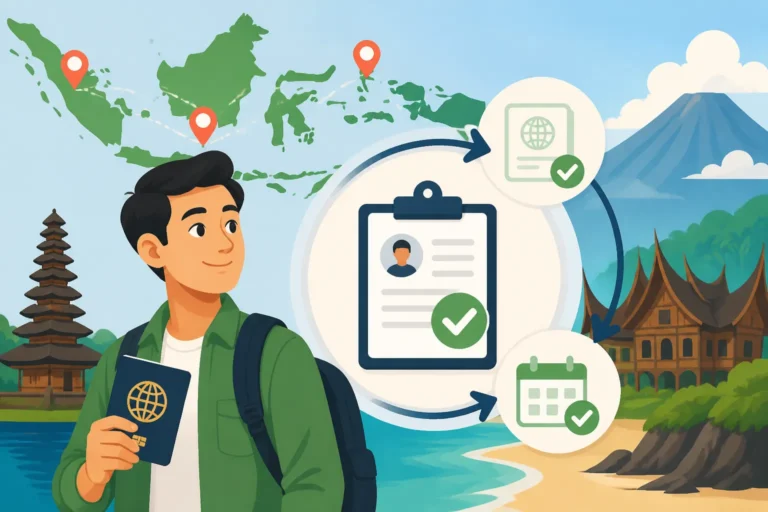
Trying to secure a long-term future in Indonesia often feels like navigating a maze where the walls keep moving. I remember the sheer exhaustion of my first KITAS renewal, sitting in a humid waiting room, clutching a folder of documents and wondering if my "proof of funds" would be rejected because of a missing stamp. This guide solves the confusion surrounding the Second Home Visa property ownership route, detailing exactly how to leverage your real estate investment for long-term residency.
Understanding the Second Home Visa Property Route in 2026
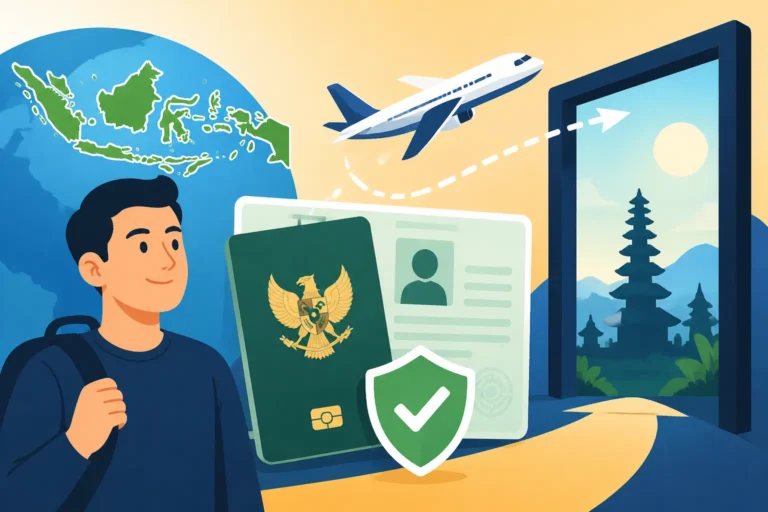
The Second Home Visa (SHV) was introduced as a prestige category for those who want to call Indonesia home without the traditional ties of a local employer or a complex business structure. In the past, foreigners mostly relied on retirement visas, but the landscape has shifted toward a more "investment-focused" residency model. The SHV is essentially a 5-year or 10-year stay permit designed for high-net-worth individuals, digital nomads with significant assets, and retirees who want more stability than the standard annual renewal cycle provides.
What makes this visa unique is the "Proof of Funds" requirement. While many expats focus on the Second Home Visa: Navigating the IDR 2 Billion Deposit Requirement which involves placing cash in an Indonesian state-owned bank (HIMBARA), the property ownership route offers a more tangible alternative. Instead of letting your capital sit in a low-interest savings account, you can use the value of your Indonesian real estate to satisfy immigration. This is a game-changer for those who have already invested in a luxury villa in Bali or a high-end apartment in Jakarta’s SCBD.
However, the property route is not as simple as showing a sales receipt from a developer. Immigration requires very specific types of titles and valuations to ensure the investment is legitimate and meets the government's economic thresholds. If you are looking for even higher-tier options, you might also compare this with the Golden Visa (E28C) for Individuals: $350k Bonds vs $1M Property Route, as the SHV acts as a more accessible middle ground for many long-term residents.
Eligible Property Types for the Second Home Visa
The most common mistake I see newcomers make is assuming they can buy any "rumah" (house) and use it for their visa. Indonesia has very strict rules on foreign land ownership. To qualify for the Second Home Visa property route, the real estate must be held under a specific legal framework that the government recognizes for foreigners. You cannot use a "nominee" agreement or a basic rental contract; the property must be registered in your name under the correct title.
Decoding Hak Pakai or Right to Use
Under Indonesian law, foreigners are generally restricted from Hak Milik (Freehold), which is reserved for Indonesian citizens. For the Second Home Visa, the gold standard is Hak Pakai (Right to Use). This is a title that is registered at the National Land Office (BPN) in your own name. When you use this route, immigration looks for the Sertifikat Hak Pakai. This document proves you have the legal right to occupy and use the property for a set period, usually 30 years with extensions available.
If you are currently in the process of buying, make sure your Notaris (Notary) understands that the purchase is intended to support an SHV application. They will need to ensure the title is transitioned correctly. For those navigating complex family situations, it’s also worth looking into Pre-Nuptial Agreements (Pisah Harta): Protecting Property Rights Before Marriage to ensure your investment remains clearly defined as your own asset for visa purposes.
Luxury Apartments and Condominiums
Apartments are often the easiest path for the SHV property route, especially in cities like Jakarta or Surabaya. Foreigners can own units under the Sarkirsa (Right of Ownership over Stacked Units) on top of Hak Pakai or Hak Guna Bangunan (Right to Build) land. These are often referred to as "Strata Title" units. To qualify for the visa, the apartment must be categorized as "luxury," which usually means it meets a certain price point per square meter or total value determined by regional regulations.
When applying, you will need to provide the physical certificate of the unit. I’ve seen cases where developers take years to issue the final certificate (the "blue book"). If you only have a PPJB (binding sale and purchase agreement), immigration might reject your application. You need the final, registered deed. To streamline this, many expats use services like iVisa to check their document readiness before submitting to the Molina portal.
Landed Houses and Residential Restrictions
You can also use a landed house for the Second Home Visa, but the requirements are steeper. The house must be located on land with a Hak Pakai title and must meet the minimum price threshold for foreigners, which varies by province. For example, in Bali, the minimum price for a foreigner to buy a landed house is often significantly higher than for an apartment.
The property must also be used for residential purposes. You cannot use a commercial warehouse or a small shop (Ruko) as your primary proof for a Second Home Visa. It has to be a "home." If you are unsure if your current residence qualifies, you should consult with Buying Property as a Foreigner: Hak Pakai, Hak Milik Nominees, and Risks to avoid an expensive legal mistake.
Minimum Value Requirements and Market Reality
The "value" of your property is the most scrutinized part of the SHV property route. In 2026, the baseline for the Second Home Visa remains anchored to the equivalent of IDR 2,000,000,000 (2 Billion Rupiah). However, this isn't just about what you paid for the house five years ago; it’s about the current certified value and how that aligns with regional minimums for foreign ownership.
The 2 Billion IDR Threshold
For the SHV, your property must have a minimum value of at least IDR 2 Billion. It is important to note that this is the minimum for the visa, but the government's minimum price for foreign ownership might actually be higher depending on the location. For instance, in Jakarta, the minimum purchase price for a foreign-owned house might be IDR 10 Billion. In this scenario, the visa requirement is easily met, but the legal entry point into the market is much higher.
This creates a "sweet spot" for high-end apartments which often have lower entry prices for foreigners but still comfortably exceed the IDR 2 Billion visa requirement. If you are shopping around, always ask the developer for the NJOP (Tax Object Sale Value) as well as the market price. While immigration usually looks at the purchase price on the deed, a massive discrepancy between the NJOP and the purchase price can trigger additional questions during the verification phase.
Calculating Value Appraisal vs Transaction Price
Immigration typically requires the Sale and Purchase Deed (Akta Jual Beli or AJB) as proof of the property's value. This document, signed in front of a PPAT (Land Deed Official), states the official transaction price. If you bought the property years ago and it has appreciated significantly, you may need an official appraisal from a registered Indonesian appraiser (KJPP) to prove it now meets the SHV thresholds.
I’ve met expats who tried to "bundle" multiple smaller properties to reach the 2 Billion mark. Currently, the regulations generally favor one substantial property rather than a collection of small studios. To see how these values compare with higher-level residency, check out Golden Visa (E28C) Property Purchases: Which Apartments Qualify for $1M? for a look at the ultra-luxury tier.
| Property Category | Typical Min. Value for Foreigners | SHV Eligibility | Document Required |
|---|---|---|---|
| Apartment (Jakarta) | IDR 3 Billion | Yes | Strata Title Certificate |
| Landed House (Bali) | IDR 5 Billion | Yes | Hak Pakai Certificate |
| Apartment (Other Cities) | IDR 2 Billion | Yes | Strata Title Certificate |
| Landed House (Regional) | IDR 1 – 2 Billion | Case by Case | Hak Pakai Certificate |
Documentation and Proving Ownership
Once you have the property, the "administrative nightmare" begins. Indonesian immigration is famous for its love of paperwork, and the Second Home Visa is no exception. Every document must be perfectly formatted, and in many cases, translated into Bahasa Indonesia.
The Role of the Agrarian and Spatial Planning Ministry (BPN)
The most critical document you will need is the land certificate issued by the BPN. For the property route, immigration will cross-reference your submission with the BPN database. This is why "nominee" structures fail; the system will show the property is owned by an Indonesian citizen, not you. You must ensure your name is clearly listed as the titleholder.
You will also need a valid passport with at least 36 months of validity remaining. Since you are applying for a long-term visa, immigration won't issue a 5-year permit if your passport expires in two years. If you find yourself needing to translate your home-country property documents or financial records, I highly recommend using Certified Translators (Penerjemah Tersumpah) for Immigration Documents to ensure the translations are legally recognized in the Molina system. RushTranslate is often a solid choice for getting these done quickly and accurately.
Certified Translations and Legalization
If your proof of investment involves documents from abroad (for example, if you are using an international bank statement to supplement your property proof), these must be legalized. Indonesia recently joined the Apostille Convention, which has simplified things immensely. You no longer need to visit multiple embassies for most documents; an Apostille stamp from your home country is often sufficient.
However, for the property deeds themselves, these are Indonesian documents and don't need an Apostille. They do, however, need to be high-quality color scans. I once saw an application delayed by three weeks because the scan of the "blue book" was slightly blurry and the officer couldn't read the BPN stamp. If you're unsure about the new rules, read up on Consular Legalization vs Apostille: Indonesia’s New Apostille Rules Explained.
Using Foreign Property as Proof (The Nuance)
There is often talk in expat circles about using "overseas property" as proof for the Second Home Visa. While the regulations have evolved, the "Property Route" for the SHV is almost exclusively designed for investment within Indonesia. The goal of the visa is to encourage foreign capital inflow into the Indonesian real estate market. If you own a chateau in France, that might help prove your "general wealth," but it usually won't satisfy the specific property ownership requirement for the SHV unless you convert those assets into the cash deposit route.
The Application Workflow and Molina System
The SHV application is handled through the "Molina" (Modul Lalu Lintas Orang Asing) website. This is a centralized e-Visa portal that has replaced the old, manual embassy applications. While it’s more efficient, it’s also very rigid.
Navigating the Online Portal
When you log into the Molina system, you will select the Second Home Visa (Index C319 or similar for 2026). You will be asked to upload your passport, a recent photograph, and your "Statement of Commitment." For the property route, this statement is a formal declaration that you own the property and will maintain that ownership throughout the duration of your stay.
The system will then prompt you to upload your property certificates and proof of value. Once submitted, you will pay the visa fee (which is significantly higher than a standard KITAS Explained: Working, Dependent, and Investor Temporary Stay Permits) via a credit card or a virtual account. The processing time usually takes between 7 to 14 working days. If approved, you receive an e-Visa that you can use to enter the country.
Transitioning from Other ITAS Types
If you are already in Indonesia on a different visa—perhaps a retirement visa or a work permit—you can often transition to the SHV "onshore." This means you don't have to leave the country. However, you will need to go through the "Conversion" process at your local immigration office (Kantor Imigrasi). They will take your biometrics again and eventually issue your new KTP WNA (Foreigner ID Card): Why Banks Will Ask You For It. This card is vital; it’s your local ID for everything from opening bank accounts to getting a local driver's license.
Managing Family and Dependents
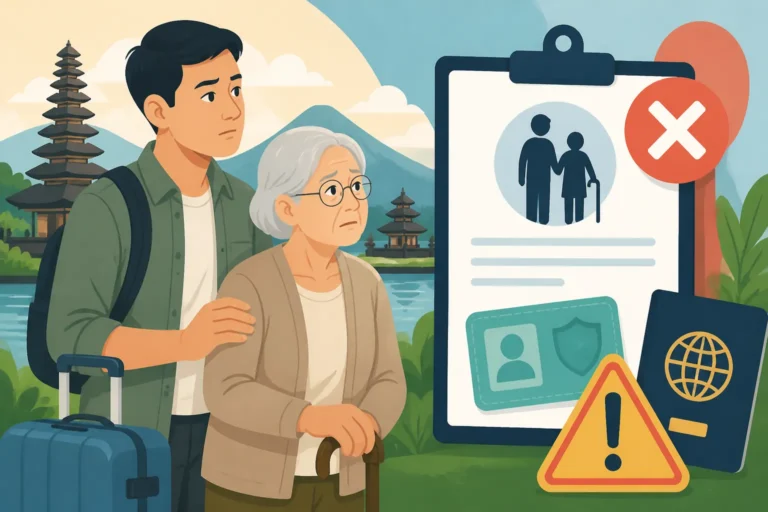
One of the biggest perks of the Second Home Visa is how it handles families. Unlike some other visas where each person needs a separate, complex sponsorship, the SHV allows the primary holder to bring "Follower" dependents.
Adding Spouses and Children
Your spouse and children (under 18) can join you under your Second Home Visa. They will receive their own ITAS, which is linked to yours. You will need to provide marriage certificates and birth certificates, all of which must be translated and legalized. If you are living in a villa you own, you will also need to provide a Surat Domisili (Domicile Letter): How to Get it from the Village Head for each family member to register them with the local neighborhood (RT/RW).
Having your family on this visa provides a level of security that the year-to-year KITAS simply can't match. It’s also important to have a solid international health insurance policy like Cigna Global, as the SHV doesn't automatically grant you access to the public healthcare system for free, though you will eventually need to register for BPJS.
Rights to Work and Business Activities
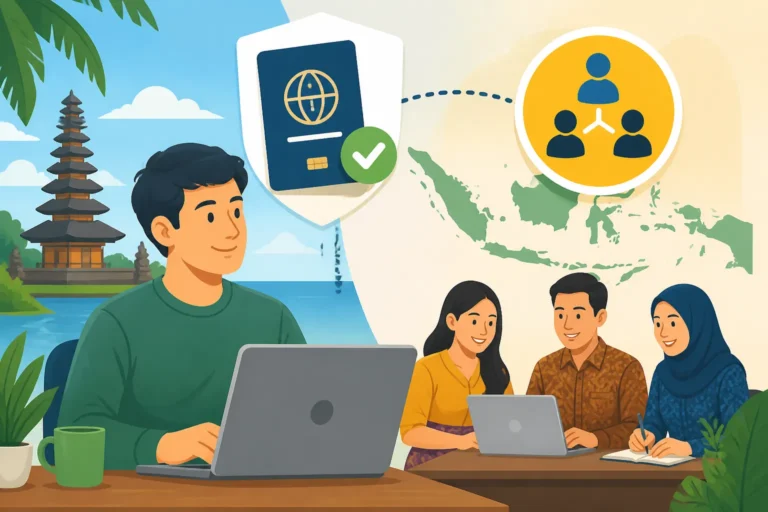
This is where the "realistic" part of being an expat blogger comes in: The Second Home Visa is technically a "non-working" visa. It is designed for residents, not employees. If you plan to work for a local Indonesian company, the SHV is not the right fit—you would need a traditional work KITAS.
However, many SHV holders are digital nomads or retirees who manage their own global investments. As long as your income is derived from outside Indonesia and you aren't competing with local labor, you are generally in the clear. If you want to start an Indonesian company, you would typically look into an Investor KITAS instead. The SHV is about the lifestyle—the ability to stay in your Bali villa for a decade without worrying about your visa expiring next month.
Second Home Visa Property Route Disclaimer
The information provided in this guide is for general informational purposes only and does not constitute legal, financial, or immigration advice. Indonesian visa regulations, property laws, and minimum value thresholds are subject to frequent change by the Ministry of Law and Human Rights and the National Land Office (BPN). Always consult with a certified immigration consultant or a qualified Indonesian lawyer before making significant financial investments or submitting visa applications. Reliance on the content of this article is at the reader's own risk.