Obtaining Indonesian Citizenship: Naturalization Rules and Dual Citizenship Bans
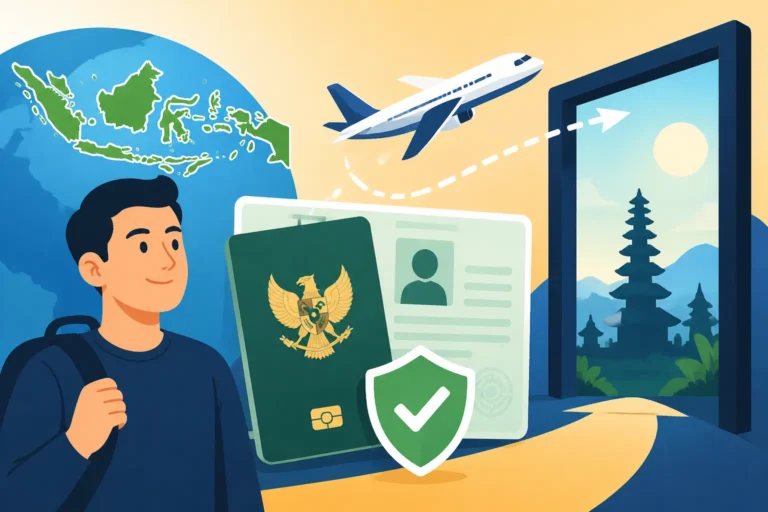
You have been living in the humid, beautiful chaos of the archipelago for years, and eventually, the endless cycle of visa extensions starts to feel like a heavy weight. I remember sitting in a small warung in South Jakarta, nursing a warm Teh Botol, and realizing I knew the street food vendors better than I knew my own neighbors back home. But as much as I loved the "Gotong Royong" spirit, the legal barrier of being a "Warga Negara Asing" (Foreign Citizen) never truly goes away until you consider the ultimate step: becoming an Indonesian citizen.
The Long Road to Naturalization and the Residency Hurdle
For most of us, the journey toward an Indonesian passport is not a sprint; it is a decade-long marathon that tests your patience, your paperwork organization skills, and your genuine love for this country. The Indonesian government does not hand out citizenship lightly. Unlike some Western nations where a few years of tax records might suffice, Indonesia requires a profound commitment to physical presence. You must have resided in the territory of the Republic of Indonesia for at least five consecutive years or ten years intermittently by the time you submit your application.
The "five consecutive years" rule is where most expats stumble. If you have been moving between a KITAS Explained: Working, Dependent, and Investor Temporary Stay Permits and frequent trips abroad, you need to be very careful. A single break in your residency—such as an Exit Permit Only (EPO) that isn't immediately followed by a new stay permit—can reset your clock to zero. I have seen friends who were in their fourth year of residency lose their "consecutive" status because of a simple administrative error by their company’s HR department. This is why securing a KITAP (Permanent Stay): Eligibility, 5-Year Validity, and How to Upgrade is almost always a prerequisite in the eyes of the Ministry of Law and Human Rights (Kemenkumham).
The administrative burden of proving this residency is immense. You will need every original passport you have used during your stay in Indonesia, every stay permit stamp, and a clear record from the Directorate General of Immigration. Before you even start the naturalization process, it is wise to use a service like iVisa to check your current entry/exit records if you have lost track of your historical travel data. Having a digital trail is helpful, but the Indonesian authorities will always demand the physical "Buku Kuning" or the digital equivalent of your immigration history.
The Absolute Dealbreaker: The Dual Citizenship Ban
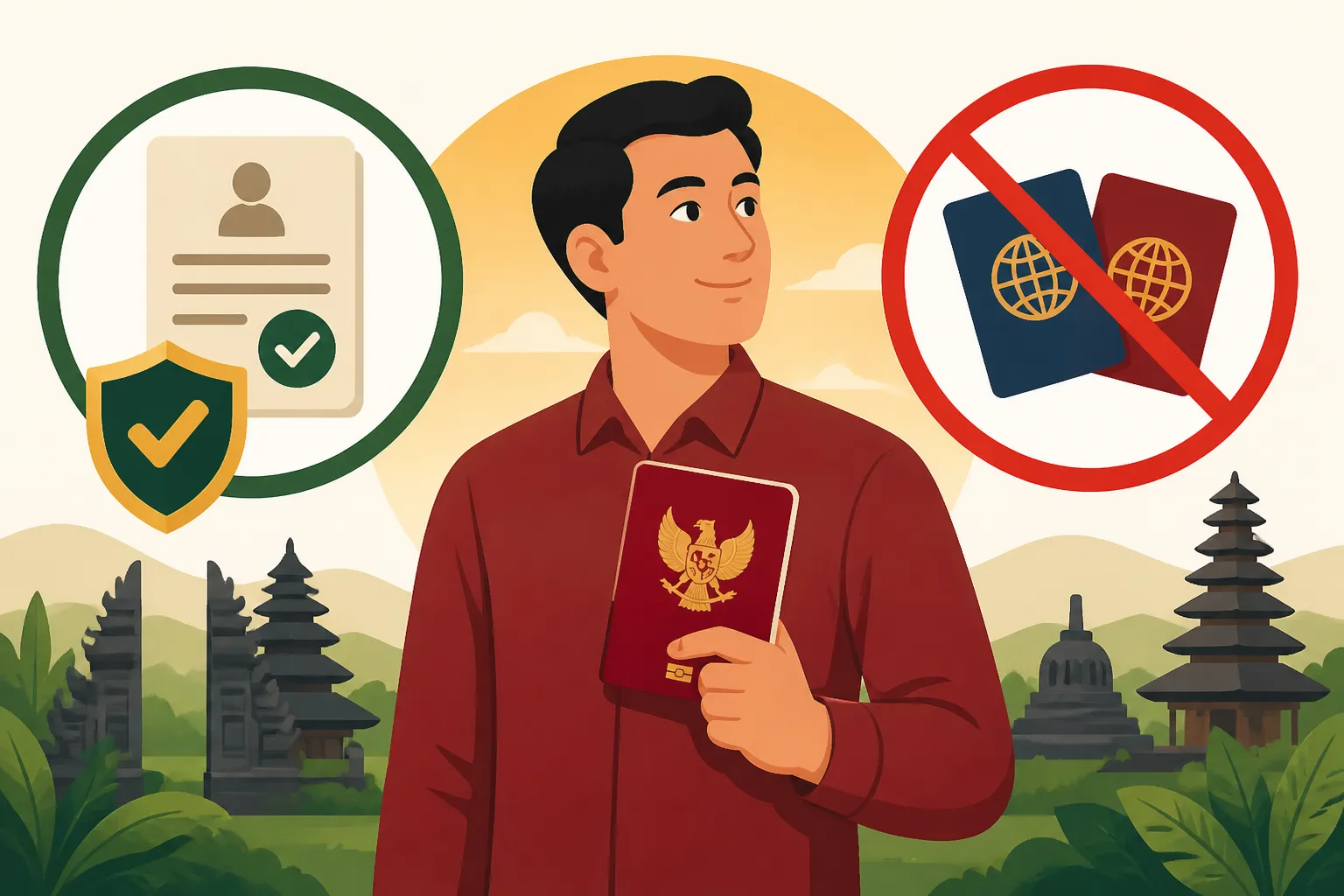
We need to have a very honest conversation about the biggest obstacle to becoming Indonesian: Law No. 12 of 2006 regarding Citizenship. Indonesia follows the principle of single citizenship (Asas Kewarganegaraan Tunggal). This means that, unlike many European or American countries, Indonesia does not recognize dual nationality for adults. If you want the red and white passport, you must legally and officially renounce your original citizenship.
This is a gut-wrenching decision. Renouncing your citizenship means giving up your right to live, work, or even retire in your home country without a visa. It means you are effectively an alien in the land where you were born. I have met countless expats who were deeply integrated—fluent in the language, married to locals, and running successful businesses—who ultimately walked away from the naturalization process because they couldn't bear to lose their original passport. The psychological weight of this "point of no return" is the most common reason the expat community remains on a KITAP (Permanent Stay): Eligibility, 5-Year Validity, and How to Upgrade indefinitely rather than choosing full naturalization.
The process of renunciation is also a logistical nightmare. You have to provide proof from your home country’s embassy that you have initiated the process of giving up your citizenship. This documentation must be perfect. Since these documents are often in English or another foreign language, you must use Certified Translators (Penerjemah Tersumpah) for Immigration Documents to ensure the Indonesian Ministry of Law and Human Rights accepts them. Brands like RushTranslate can be invaluable here for the initial drafting, but ensure the final version is stamped by a local "Tersumpah" translator recognized by the Indonesian government.
| Requirement Category | Naturalization Detail | Expat Reality Check |
|---|---|---|
| Age | Minimum 18 years old or married | Most applicants are 30+ with deep roots. |
| Residency | 5 years (consecutive) or 10 years (intermittent) | A single EPO can reset the 5-year clock. |
| Health | Physically and mentally healthy | Requires a rigorous check at a state hospital. |
| Language | Fluent in Bahasa Indonesia | You must pass a formal interview/exam. |
| Loyalty | Acknowledge Pancasila and the 1945 Constitution | This is an emotional and legal oath. |
| Criminal Record | No prison sentence of 1 year or more | Even minor legal troubles can cause a rejection. |
| Employment | Fixed income or employment | You must prove you aren't a financial burden. |
| Citizenship | Must renounce all other citizenships | This is the "Point of No Return." |
The Cultural and Language Proficiency Test
If you think you can skip through the process with basic "Pasar" Indonesian, think again. Naturalization involves a formal assessment of your integration into Indonesian society. You are required to speak Bahasa Indonesia fluently and possess a foundational knowledge of Indonesian history and the state ideology, Pancasila. During the interview stage at the regional office of the Ministry of Law and Human Rights, officials will converse with you to gauge your level of "Indonesian-ness."
They are looking for more than just vocabulary; they are looking for cultural alignment. You should be prepared to discuss the 1945 Constitution (UUD 1945) and demonstrate that you understand the social fabric of the country. Many expats find it helpful to undergo formal Learning Bahasa Indonesia: BIPA Certification, Tutors, and Workplace Usage before even considering the application. Being able to explain the nuances of "Bhinneka Tunggal Ika" (Unity in Diversity) in the national language is often the "make or break" moment in the interview room.
Furthermore, you need to prove that you are an asset to the nation. This means showing that you are gainfully employed or have a stable source of income. The government wants to see that you contribute to the economy and that your presence is beneficial to the Republic. If you have been working on a Spouse Sponsored KITAS: Marrying an Indonesian Citizen and Work Rights, your financial records and tax filings (NPWP) will be scrutinized heavily. They want to ensure that a new citizen will not become a ward of the state.
Mixed Marriage and the Rights of Children
The most common path toward citizenship in Indonesia is through marriage to an Indonesian citizen. However, even marriage doesn't grant you an automatic passport. It merely provides a smoother residency track via the Spouse Sponsored KITAS: Marrying an Indonesian Citizen and Work Rights and eventually a KITAP. After being married for at least two years and living in Indonesia, the requirements for naturalization remain largely the same, including the renunciation of your original nationality.
Where the law gets interesting—and a bit complicated—is regarding children born to mixed-marriage couples. Under current laws, children of mixed marriages are granted limited dual citizenship. They can hold two passports until they turn 18. At that point, they are given a three-year window (until age 21) to decide which citizenship they want to keep. This is a stressful time for many "Third Culture Kids" in Jakarta and Bali, as they are forced to choose between the two halves of their identity.
For parents, this means you must be diligent about The Civil Registry (Catatan Sipil): SKTT and KTP WNA Explained and the "Affidavit" process for your children. If you miss the registration deadlines for a child's dual citizenship status, they could be treated as purely foreign, which complicates their right to live in Indonesia long-term. Many families also choose to secure Pre-Nuptial Agreements (Pisah Harta): Protecting Property Rights Before Marriage to ensure that if the foreign spouse does not naturalize, the Indonesian spouse’s right to own land (Hak Milik) is protected.
The Health and Financial Security Requirement
To become a citizen, you must be "physically and mentally healthy." This isn't just a box you tick; it involves a comprehensive medical examination at a designated Indonesian government hospital (RSUD). They will screen for chronic illnesses, infectious diseases, and mental health stability. During this transition period, it is vital to maintain high-quality private insurance. While you are in the "limbo" between being a foreign resident and a citizen, having a policy from Cigna Global ensures that you are covered for any major health issues that could otherwise disqualify your application or drain your finances.
Financial stability is equally important. You must show that you have paid your Indonesian income taxes (PPh 21) diligently. The authorities will look at your "SPT Tahunan" (Annual Tax Return) for the last several years. If there are discrepancies in your tax filings or if you have been working "under the table" on a tourist visa, your naturalization application will be rejected instantly.
Once you are a citizen, you will also transition from being a foreign user of the healthcare system to a full participant in the national social security scheme. Understanding Healthcare in Indonesia for Foreign Residents: Complete System Overview (2027) is essential because, as a citizen, your relationship with the BPJS Kesehatan system changes. You move from being an "obligatory expat member" to a "citizen member," which can affect your access to certain public facilities and subsidized care.
Step-by-Step Procedure for the Naturalization Application
The physical process of applying for naturalization (Pewarganegaraan) is a multi-stage bureaucratic journey that usually takes between 18 and 36 months. It is not for the faint of heart.
- Submission of Application: You submit a written application in Bahasa Indonesia, addressed to the President of the Republic of Indonesia through the Minister of Law and Human Rights. This must be done at the regional office (KanWil) where you reside.
- Document Verification: This is the "Paperwork Mountain." You will need your birth certificate, marriage certificate, residency history, and criminal record clearance (SKCK) from the National Police. All foreign documents must be legalized via the Apostille process or at an Indonesian embassy abroad.
- The Interview and Examination: As mentioned, you will be tested on your language skills and knowledge of the state. You will also be asked about your reasons for wanting to become an Indonesian citizen.
- The Ministerial Recommendation: If the regional office approves, your file is sent to the Ministry of Law and Human Rights in Jakarta. They will coordinate with the State Intelligence Agency (BIN) and the Ministry of Home Affairs to conduct a background check.
- The Presidential Decree (Keppres): If the Minister approves, the application is forwarded to the President. If the President grants the naturalization, a Presidential Decree is issued.
- The Oath of Allegiance: Within three months of the decree, you must take the "Sumpah Setia" (Oath of Loyalty) at a designated government office. You will dress in formal Indonesian attire (Batik or Kebaya) and swear to protect the Republic of Indonesia.
- Renunciation Confirmation: After the oath, you have a limited window to return your foreign passport to your embassy and provide proof of renunciation to the Indonesian authorities.
- New Identity Documents: Finally, you can apply for your Indonesian KTP (ID card), Kartu Keluarga (Family Card), and the elusive dark green Indonesian passport.
If this sounds too daunting, many wealthy expats opt for the Golden Visa (E28C) Guide: Investment Thresholds and Long-Term Residency instead. While it doesn't grant a passport, it provides a 5 to 10-year residency with many "citizen-like" perks without requiring you to give up your original nationality.
Life After the Sumpah Setia
Once the ceremony is over and you are holding your Indonesian KTP, your life changes in subtle but profound ways. You no longer need to worry about immigration raids or the Immigration Compliance: Address Changes, EPOs, overstays, and Reporting rules that dictate the lives of the foreign community. You can finally own land under "Hak Milik" (Freehold), which is a massive financial advantage. You can vote in the local and national elections, and you can work in any sector without a restrictive work permit.
However, the "foreigner" label doesn't disappear overnight. Even with a local ID, you will likely still be greeted as a "Mister" or "Bule" in the streets. But there is a deep, quiet satisfaction in knowing that you are no longer a guest. You are a "Warga Negara Indonesia." You have chosen this country—not by birth, but by will. It is a long, expensive, and often frustrating road, but for those who truly call these 17,000 islands home, it is the only way to truly belong.
Disclaimer
This guide is for informational purposes only and does not constitute legal advice. Indonesian immigration and citizenship laws are subject to frequent changes and vary based on individual circumstances. Always consult with a qualified legal professional or a registered "Biro Jasa" before making significant life decisions regarding your citizenship or residency status in Indonesia. Information is current as of June 2026.