Accidental Overstay: What to Tell Immigration at the Airport Departure Desk
You are standing in the departure queue at Ngurah Rai or Soekarno-Hatta, your flight leaves in two hours, and the officer suddenly frowns at your passport. I have felt that exact cold sweat soak through my shirt when I realized I had miscounted my days by forty-eight hours. This guide explains exactly what happens at the immigration desk during an accidental overstay and how to navigate the process without losing your cool or your flight.
The Moment of Discovery at the Departure Gate
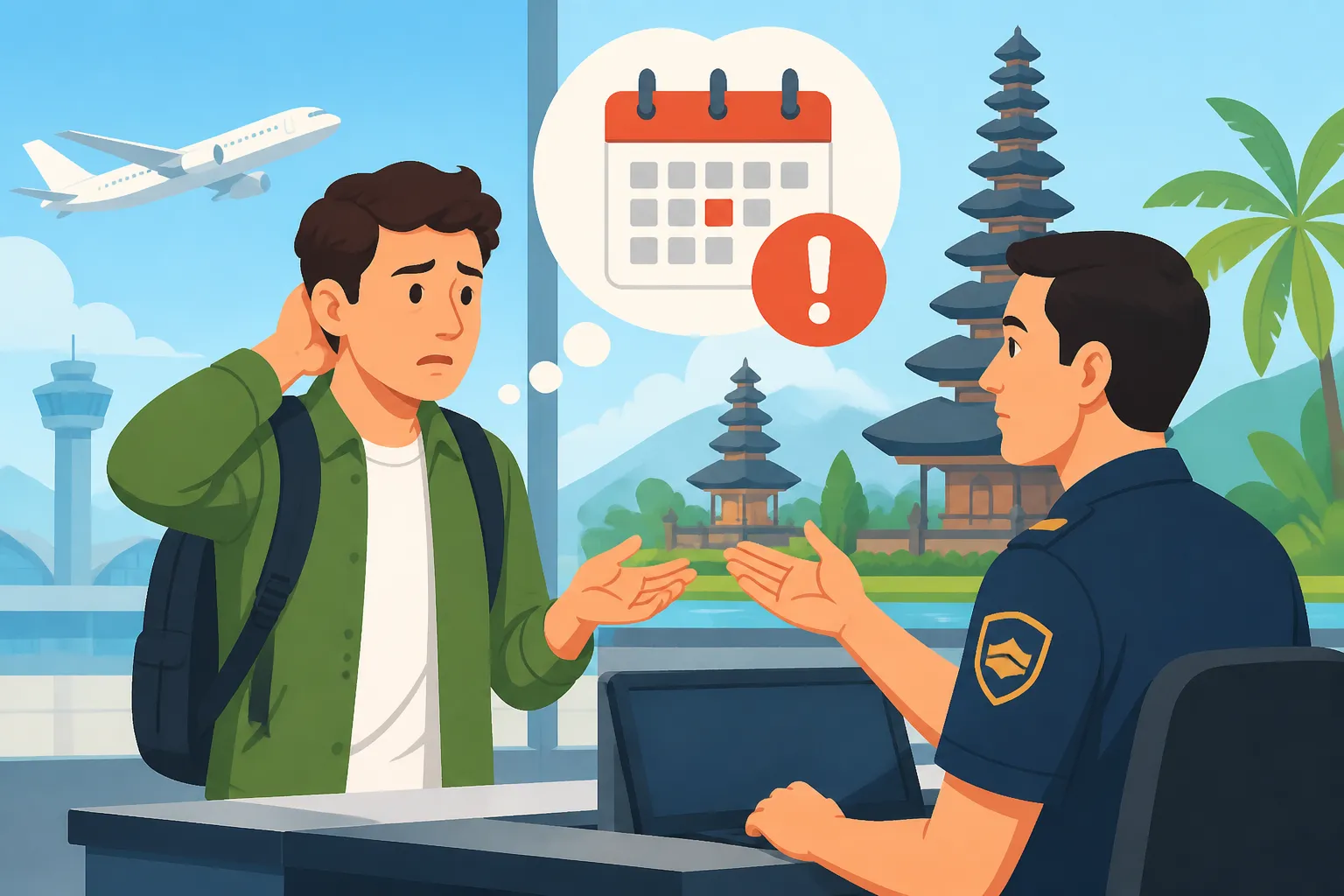
The realization that you have overstayed usually happens in one of two places: at the airline check-in counter or the immigration booth. Airline staff are increasingly diligent about checking visa validity because they can be fined for transporting passengers with irregular documentation. However, the definitive "reckoning" occurs at the immigration desk. If the officer sees that your permitted stay has expired, they will not process you through the gate. Instead, they will call a supervisor.
It is vital to understand that a short-term overstay—specifically anything under 60 days—is considered a civil administrative violation, not a criminal one. You are not being "arrested" in the traditional sense, but you are being detained for administrative processing. You will likely be asked to step out of the line and follow an officer to the "Ruang Khusus" or the immigration office located within the terminal. This is a standard procedure, and while the fluorescent lights and somber atmosphere are intimidating, maintaining a calm, respectful demeanor is your best asset.
Understanding How You Miscalculated
Most accidental overstays in Indonesia happen because travelers confuse the "30-day" rule with a calendar month. If you arrived on the 10th of a 31-day month, your visa does not necessarily expire on the 10th of the following month. Furthermore, the day you land counts as Day One, regardless of whether you landed at 1:00 AM or 11:55 PM. Many expats have been caught out by this "Day One" rule, assuming their stay started the morning after arrival.
Another common pitfall is relying on automated systems that might not account for Indonesian public holidays or the specifics of the Visa on Arrival (VoA) and B211A Tourist Visas: What You Can and Cannot Do. If you are using a third-party service like iVisa to manage your initial applications, they often provide reminders, but the ultimate legal responsibility for the "stamp" in your passport lies with you. Always check the physical stamp or the digital PDF of your e-Visa the moment you receive it to verify the "Stay Until" date.
The 60 Day Threshold
The severity of your situation depends entirely on whether you have overstayed by more or less than 60 days. If your overstay is 59 days or fewer, the process is handled entirely at the airport via a fine. If you hit that 60-day mark, the airport staff cannot simply "fine" you out of the country. You will likely be referred to the main immigration office (Kantor Imigrasi), which involves a much more complex process, including interviews and formal deportation proceedings.
For most tourists and short-term residents, the "accidental" category falls within a few days or weeks. In these cases, the primary concern is Overstaying Your Visa in Indonesia: IDR 1,000,000 Daily Fines and Deportation Risk. As of 2026, the fine remains a steep 1,000,000 IDR per day. This adds up incredibly fast, and if you cannot pay it on the spot, you will not be allowed to board your flight.
What to Say and How to Behave in the Special Room
When you are taken to the immigration office within the airport, the officers will perform a brief interview. Their goal is to determine if the overstay was a genuine mistake or a deliberate attempt to bypass the law. The most important rule is: do not lie. These officers see hundreds of people a month; they know every excuse in the book. If you miscounted, say you miscounted. If you were confused by the e-Visa and Molina System: How to Apply Online Without Visiting an Embassy, explain that clearly.
Being "Sopan" (polite/respectful) is the most powerful tool in your arsenal. In Indonesian culture, losing your temper or "losing face" by shouting at an official will almost certainly make your situation worse. It could turn a simple fine into a deeper investigation or a notation in your file that leads to a blacklist. Smile, apologize for the oversight, and ask clearly what the next steps are for payment.
Documenting Valid Reasons for Overstay
If your overstay was caused by circumstances beyond your control, such as a medical emergency or a canceled flight, you must provide proof. If you were hospitalized, have your medical reports ready. If these reports are in a foreign language, having them translated by a service like RushTranslate can be helpful, though at the airport, officers are usually looking for the hospital's official stamp and dates.
For those with chronic conditions who might have been incapacitated, showing that you have a comprehensive policy with Cigna Global can sometimes help demonstrate that you are a responsible resident who simply had a health crisis. However, even with a valid medical reason, you are often still required to pay the fine, though the officers may use their discretion regarding the administrative record of your departure.
Language Barriers and Translation
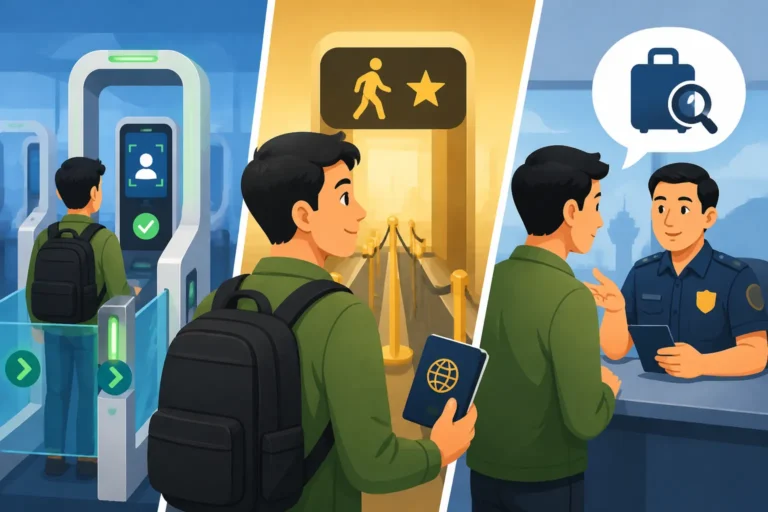
If your Bahasa Indonesia is limited, the officer will likely speak enough English to explain the fine. However, do not feel pressured to sign documents you do not understand. You can politely ask for a moment to use a translation app or ask if there is an officer with better English proficiency. If you are a long-term resident on a KITAS, you should mention your status, as the process for Airport Immigration: E-Gates, Fast Tracks, and Handling Customs Questioning differs slightly for permit holders versus tourists.
The Logistics of Paying the Fine
Once the officer calculates your overstay, they will issue an official invoice. You cannot simply hand cash to the officer at the desk; this is a common misconception and attempting to do so can be interpreted as a bribe, which is a serious criminal offense. You will be directed to a specific payment counter or asked to pay via a bank transfer or a designated ATM within the terminal.
| Overstay Duration | Consequence | Processing Location |
|---|---|---|
| 1 – 59 Days | 1,000,000 IDR per day fine | Airport Immigration Office |
| 60+ Days | Detention and Deportation | Kantor Imigrasi (City Office) |
| Intentional / Fraudulent | Blacklisting and Fine | Full Investigation |
The financial sting is the most immediate hurdle. If you have overstayed by 10 days, you owe 10,000,000 IDR (roughly $650 USD). Many travelers find themselves without the daily withdrawal limit on their cards to cover this. If this happens, you may need to call your bank to increase your limit immediately or have a friend in Indonesia send you funds via a local bank app. For more details on the mechanics of this, see our guide on Paying the Overstay Fine: Credit Cards, Cash, and ATM Procedures.
Managing Your Flight and Luggage
While you are being processed, your flight is likely boarding. Immigration officers will not rush the process just because your gate is closing. If you are within 60 minutes of departure, there is a high probability you will miss your flight. If you have checked luggage, the airline may have to "offload" your bags for security reasons if you are not cleared by immigration in time.
If you realize you will miss the flight, ask the officer for a brief moment to call your airline or use their app to rebook. Most airlines in Indonesia are familiar with this situation, but they will not hold the plane for you. Having a flexible travel mindset is essential here. Once the fine is paid and your passport is stamped with the "Overstay Paid" remark, you are free to leave, but you will need a new ticket.
The Risk of the Blacklist
A few days of accidental overstay rarely results in a "Pencekalan" (blacklist). However, the officer has the discretion to note your file. If you have a history of frequent Visa on Arrival (VoA) and B211A Tourist Visas: What You Can and Cannot Do "border runs" or previous overstays, they may decide to ban you from re-entry for six months to a year. You can check the general rules on Banned from Indonesia: How Long Does a Deportation Blacklist Last? to see where you might stand. Usually, for a first-time accidental overstay of less than a week, you will be allowed to return to Indonesia in the future without issue.
Preventing Future Overstay Issues
The best way to handle an overstay is to never have one. As a veteran expat, I now set three separate calendar alerts for every visa entry: one for ten days before expiry, one for three days before, and one for the day of. If you are on a social visa that requires extensions, you need to know How Early Should You Apply for a B211A Visa Extension? because the process can take up to two weeks, and you can easily drift into overstay territory while your passport is at the immigration office.
Using a reputable agency can mitigate these risks. While you can handle things yourself, many expats prefer Dealing with Immigration Agents: How to Vet Biro Jasa and Avoid Scams to ensure that a professional is tracking the dates and handling the physical trips to the immigration office. Agencies often provide a "safety buffer" and will alert you well in advance of your expiry date.
Digital Tracking Tools
The Indonesian immigration system is increasingly digital. You can often check your status via the Molina portal if you applied for an e-Visa. Additionally, services like iVisa offer dashboard tracking for travelers who juggle multiple visas across Southeast Asia. Even if you are a "DIY" traveler, taking a photo of your entry stamp the moment you pass through the gates is a habit that can save you millions of Rupiah.
What to Do If You Can't Pay
If you truly do not have the funds to pay the daily fine, you will not be allowed to leave the country. You will be transferred from the airport to an immigration detention center or the nearest Kantor Imigrasi. From there, you will have to contact your embassy. The embassy will not pay your fine for you, but they can help you contact family members to arrange a transfer. This is a nightmare scenario that can be avoided by always keeping an emergency fund—at least enough to cover a week of overstay fines—in a reachable account.
Important Disclaimer
The information provided in this article is for general informational purposes only and is based on personal experiences and observations of the Indonesian immigration landscape. Immigration laws and enforcement practices in Indonesia are subject to frequent changes without prior notice. This guide does not constitute legal advice. For specific legal concerns or complex immigration issues, we strongly recommend consulting with a certified legal professional or a registered immigration agent in Indonesia. Always verify current regulations through the official website of the Directorate General of Immigration (Direktorat Jenderal Imigrasi) before making travel arrangements.