Airport Immigration: E-Gates, Fast Tracks, and Handling Customs Questioning
Landing in Jakarta or Bali after a grueling long-haul flight only to face a stagnant sea of people at the immigration hall is a rite of passage every expat knows too well. I remember standing in a two-hour queue at Ngurah Rai, sweat-soaked and clutching a stack of papers, wondering if I’d actually make it to my villa before sunset. This guide solves the "arrival anxiety" by deconstructing the 2026 e-gate systems, fast-track realities, and how to navigate customs questioning with confidence.
The Digital Transformation of Indonesian Entry Points
The days of franticly searching for a pen to fill out a crumpled paper arrival card are, thankfully, largely behind us. As we move forward, the Indonesian Directorate General of Immigration has doubled down on digitalization, meaning your arrival experience starts days before you actually touch down on the tarmac. The integration of the Molina system has changed the workflow at major hubs like Soekarno-Hatta (CGK) and Ngurah Rai (DPS), shifting the heavy lifting of document verification from the physical desk to the digital cloud.
For many travelers, using a streamlined service like iVisa to secure an electronic Visa on Arrival (e-VoA) or a pre-approved tourist visa is the first step in avoiding the dreaded "payment counter" line. When you land with an e-visa already linked to your passport, you bypass the initial queue where people are still fumbling with credit cards and currency exchange. This digital-first approach is the foundation of the new airport flow, but it requires you to be meticulous with your data entry. A single digit typo in your passport number on the e-Visa and Molina System: How to Apply Online Without Visiting an Embassy portal can lead to a red light at the gate and a stressful redirection to the manual desk.
Beyond the visa itself, the "SatuSehat" health protocols and the Electronic Customs Declaration (ECD) have become mandatory fixtures of the arrival process. Veteran expats know to keep screenshots of every QR code on their phones. Relying on airport Wi-Fi to pull up a customs form while standing in front of a stern-faced officer is a rookie mistake I’ve seen play out dozens of times. The goal is to have a digital folder ready to go, ensuring that your transition from the plane to the baggage carousel is as frictionless as possible.
Navigating Soekarno-Hatta vs Ngurah Rai
While both airports follow national mandates, the "vibe" and physical layout differ significantly. At Soekarno-Hatta Terminal 3, the scale is massive. You will likely walk nearly a kilometer from your gate to the immigration hall. The e-gates here are plentiful, but the sheer volume of international flights arriving simultaneously—especially the "Middle East peak" in the late afternoon—can still lead to bottlenecks. In contrast, Bali’s Ngurah Rai has a more compact arrival hall that can feel overwhelming when several wide-body jets land at once. The heat in the Bali arrival hall is also more noticeable, making the speed of the e-gates even more precious.
Understanding the E-Visa Workflow
If you’ve secured your visa through iVisa, the system usually syncs your biometric data. However, you should still carry a physical printout. I once had my phone battery die exactly as I reached the front of the line; having that paper backup saved me from a very long wait at the charging station. The officers appreciate the redundancy, and it shows you are a prepared traveler who understands the local administrative expectations.
Mastering the E-Gate and Autogate Systems
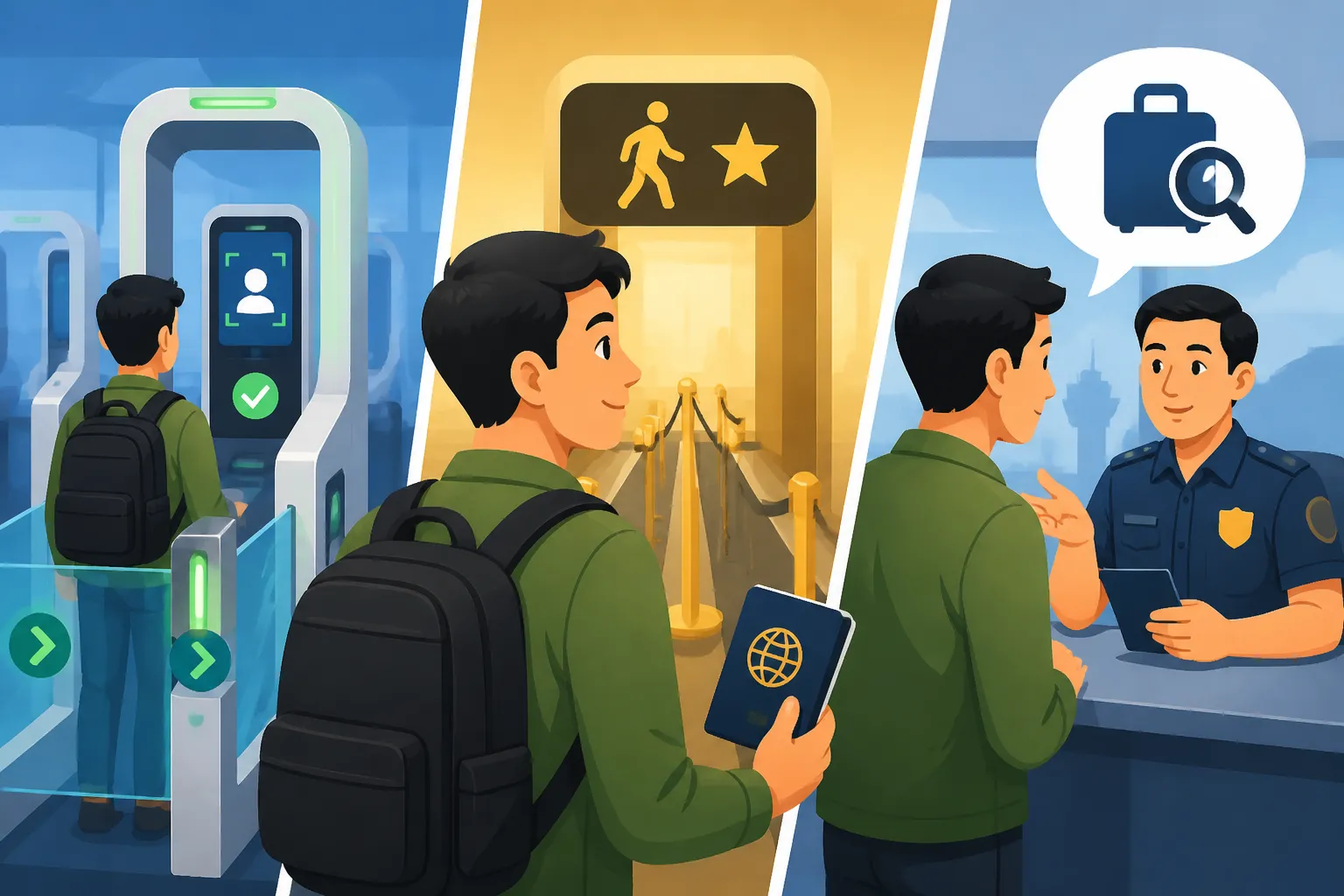
The introduction of the new "Autogates" in late 2024 and their expansion throughout 2025 and 2026 has been a game-changer for KITAS holders and tourists from eligible countries. These machines use facial recognition and biometric scanning to process passengers in under 30 seconds. For the seasoned resident, seeing that blue light flash as the gates swing open is a small victory after a long trip. However, the system is not without its quirks, and understanding how to interact with the machine is vital.
To use the e-gate successfully, you must ensure your passport is placed flat on the glass scanner, pushed all the way to the top left corner. You’ll need to remove glasses, hats, and even masks. The facial recognition software is sensitive; I’ve seen travelers get rejected simply because they were looking down or had hair covering their foreheads. If the gate rejects you three times, a red light will signal an officer to escort you to a nearby manual override desk. Don't panic—this usually just means the system couldn't verify your thumbprint or face against the database, often due to a poor-quality scan during your initial visa application.
For those on a long-term permit, the e-gate is also your primary method of recording your entry without needing a physical stamp in your passport. However, always check your email for the digital "entry sticker" or "landing slip" that the system sends automatically. This digital record is crucial for future administrative tasks, such as when you need to provide proof of entry for The Civil Registry (Catatan Sipil): SKTT and KTP WNA Explained or for opening local bank accounts. If you don't receive that email within an hour of landing, it’s worth visiting the immigration office later to ensure your Multiple Exit Re-Entry Permit (MERP): Leaving Indonesia Without Losing Your KITAS status has been correctly updated in the system.
Who is Eligible for E-Gates in 2026?
Eligibility has expanded significantly. Most holders of the e-VoA (Visa on Arrival), as well as those on Working, Investment, or Spouse KITAS, can now use the gates. Additionally, citizens from ASEAN countries and several dozens of "low-risk" nations are now pre-cleared for autogate usage. If you are arriving on a more complex visa, such as a Second Home Visa or a specialized Remote Worker Visa (E33G), your first entry may still require a manual desk visit to finalize your biometrics before you can use the e-gates for subsequent trips.
Troubleshooting E-Gate Failures
If the machine refuses to read your passport, check for physical damage to the chip or the photo page. In 2026, the machines are more sensitive to "E-passport" integrity than ever before. Another common issue is a name mismatch; if your e-visa has a middle name but your passport’s machine-readable zone (MRZ) handles it differently, the gate might flag it for manual inspection. In these cases, remain calm and follow the officer's instructions to the manual desk. They are used to these glitches and will usually process you quickly once they see your Arriving on an E-Visa: What to Show the Immigration Officer documentation is in order.
| Entry Method | Processing Time | Human Interaction | Documentation Needed |
|---|---|---|---|
| E-Gate / Autogate | 30 – 60 Seconds | None | Passport, Digital QR Code |
| Manual Desk (e-VoA) | 3 – 5 Minutes | Minimal | Passport, Visa Printout, Return Ticket |
| Manual Desk (KITAS) | 5 – 10 Minutes | Moderate | Passport, KITAS (Digital/Physical), MERP check |
| VIP Fast Track | 10 – 20 Minutes | Guided | All Documents (Handled by Agent) |
The Customs (Bea Cukai) Gauntlet and Questioning
Once you’ve cleared immigration and grabbed your bags, the final hurdle is Customs, or Bea Cukai. Indonesia has become much more stringent about the import of electronics and luxury goods. Every traveler must complete an Electronic Customs Declaration (ECD) before exiting. Most people do this on the plane or at the kiosks near the baggage carousels. The QR code generated is your ticket out of the airport.
Customs questioning often feels more "interrogative" than immigration. The officers are looking for two main things: high-value items for resale and unregistered mobile phones. If you are bringing in a new iPhone or a high-end laptop, be prepared to prove it’s for personal use. If the value exceeds $500 USD per person, you technically owe import duties. I once brought in a professional-grade camera lens still in the box, and I spent forty minutes explaining that I was a hobbyist, not a commercial photographer. If you are moving here, understanding the Mandatory IMEI Registration: The 90-Day Rule and Airport Customs Process is non-negotiable if you want your foreign phone to work on local SIM cards after the first 90 days.
Medication is another sensitive area. While common over-the-counter meds are fine, anything involving stimulants (like ADHD medication) or strong painkillers requires a doctor’s letter and a clear prescription. To avoid any "lost in translation" moments with a skeptical officer, I always recommend using a service like RushTranslate to have your medical documents translated into Bahasa Indonesia. This small step can prevent your necessary medication from being confiscated at the border. You can find more details on this in the guide to Bringing Medication Into Indonesia: Customs Rules, Limits, and Required Letters.
Handling the "Red Channel" vs "Green Channel"
If you have nothing to declare, you follow the green arrow. However, scanning is now mandatory for almost everyone in Bali and a large percentage of passengers in Jakarta. If the X-ray tech sees something suspicious, you’ll be asked to open your bags. My advice: don't try to hide things. If you have a high-value item, declare it. The fines for non-declaration are significantly higher than the actual tax. If you’re unsure, ask an officer before you put your bag on the belt. They generally appreciate honesty and are often willing to waive small overages if you are polite and transparent.
The IMEI Registration Reality
If you plan to stay in Indonesia for more than three months, registering your phone's IMEI at the airport is the smartest move. If you do it before leaving the customs area, you get a $500 tax exemption. If you wait until you're already in the city, you lose that exemption and have to visit a local customs office, which is a bureaucratic nightmare I wouldn't wish on my worst enemy. Make sure you have your KTP WNA (Foreigner ID Card): Why Banks Will Ask You For It or your passport and KITAS ready to speed up this process.
VIP Fast Track Services: Are They Worth It?
For many, the idea of paying to skip the line is incredibly tempting, especially after a 17-hour journey with kids in tow. In 2026, the landscape of "Fast Track" services has shifted. The government has cracked down on "unofficial" fixers who used to meet you at the gate. Today, legitimate VIP services are usually managed by airport-sanctioned companies like Joupa or via premium airline partnerships. These services can cost anywhere from $30 to $100 USD per person.
A legitimate VIP service will meet you as you exit the jet bridge, take your passport, and whisk you through a dedicated diplomatic or "VIP" lane. They will often handle the baggage collection and customs declaration for you as well. This is particularly helpful if you are arriving on a complex visa or if you have a tight domestic connection. I’ve used these services when flying with my elderly parents; the lack of standing in line and the assistance with heavy bags made the cost well worth it for their comfort and health.
However, you must be careful. There are still "ghost agents" who promise fast track on WhatsApp but have no actual authority. If someone asks you to "pay in cash" inside the immigration hall without a proper uniform or badge, walk away. Using an unverified fixer can lead to trouble with immigration authorities. Always book through a reputable agency or your hotel's concierge beforehand. If you have a comprehensive health plan through Cigna Global, check if your premium concierge services include airport assistance, as some high-end expat packages do.
When Fast Track is a Must
I highly recommend fast track during the peak arrival windows: 3:00 PM to 6:00 PM in Jakarta and midday in Bali. During these times, three or four A380s or 777s can land within minutes of each other, dumping 1,500 people into the hall simultaneously. If you are traveling with infants or have mobility issues, the "priority" lane is usually free, but it's not always "fast." The paid VIP service is the only way to guarantee a 10-minute transit from gate to car.
The Airline VIP Connection
If you are flying Business or First Class on Garuda Indonesia, Emirates, or Singapore Airlines, you may already have access to a form of fast track. Check with your airline before you land. Some provide a "priority voucher" that allows you to use a shorter queue. This can save you the expense of a private agent while still giving you a significant head start on the crowd at the luggage belt.
Dealing with Immigration Officers and Common Questions
Even with e-gates, you may find yourself sitting across from an immigration officer. This usually happens if your biometrics don't match, if you're activating a new KITAS, or if you're entering on a social-cultural visa. The key here is "Sopan"—a local term for being respectful and polite. A smile, a "Selamat siang" (Good afternoon), and organized documents go a long way. These officers see thousands of faces a day; being the one person who isn't complaining about the heat or the wait makes a difference.
Common questions include: "Where are you staying?", "What is the purpose of your visit?", and "How long will you stay?". For expats, they might ask about your employer or your family. If you are on a work permit, ensure you know the name of your sponsoring company and your job title. If you've recently moved, be aware that Reporting Address Changes: Why Immigration Will Check Your Domicile Letter is a legal requirement, and the officer might ask if your current address matches what's in the system.
If you are entering on a tourist visa but plan to work remotely, be very careful with your wording. While the Remote Worker Visa (E33G) provides a legal pathway for digital nomads, entering on a standard tourist visa and telling an officer you are here to "work" can lead to immediate denial of entry or a very uncomfortable secondary inspection. Always be truthful but precise about your visa's permitted activities. If you are here for a holiday, you are here for a holiday. If you are here for business meetings, ensure you have your business visa ready.
Preparing Your "Pitch" for Secondary Inspection
On the rare occasion you are pulled into "secondary inspection" (the little room in the back), don't panic. It's usually a routine check of your sponsorship documents. Have your sponsor’s phone number ready. If you are on a spouse visa, have a photo of your marriage certificate on your phone. Most of the time, they just want to verify that your "intention to stay" matches your visa category. Having a clear, consistent story is your best defense.
Documentation Checklist for the Desk
If you end up at the manual desk, have the following in a clear folder:
- Physical Passport (valid for at least 6 months).
- Printout of your E-Visa or KITAS/KITAP.
- Proof of a return or onward flight (for tourists).
- Address of your accommodation (hotel booking or rental contract).
- Proof of health insurance—I always keep my Cigna Global card handy to show I won't be a burden on the Healthcare in Indonesia for Foreign Residents: Complete System Overview (2027) if I fall ill.
Post-Arrival: Setting Up for Success
Once the "Immigration" or "Entry" stamp is secured (either physically or digitally), your journey as a resident or long-term visitor begins. The first 48 hours after landing are critical for administrative compliance. If you are on a new KITAS, your agent will likely need your passport to finalize the process at the local immigration office. However, never let a random courier take your passport; ensure it's a trusted representative from your company or a vetted agency.
You should also take this time to verify your digital footprint. Log into the Mobile JKN app to check your health coverage status and ensure your Emergency Medical Care in Indonesia: Ambulances, ERs, and Evacuation Protocols plan is active. If you’ve registered your IMEI, restart your phone once you insert a local SIM (Telkomsel or XL are usually best for coverage) to ensure the network recognizes your device.
Finally, remember that the airport is just the gatekeeper. The real beauty of Indonesia lies beyond those sliding glass doors. Whether you’re heading to the high-rises of Sudirman or the surf breaks of Uluwatu, navigating the airport with a veteran’s mindset sets the tone for your entire stay. You’ve done the hard part—now it’s time to enjoy the reward.
Disclaimer
The information provided in this guide is for general informational purposes only and does not constitute legal or professional advice. Immigration regulations in Indonesia are subject to frequent change. Always consult with the official website of the Indonesian Directorate General of Immigration or a certified legal professional before making travel or residency arrangements. The author and publisher are not responsible for any issues arising from the use of this information.