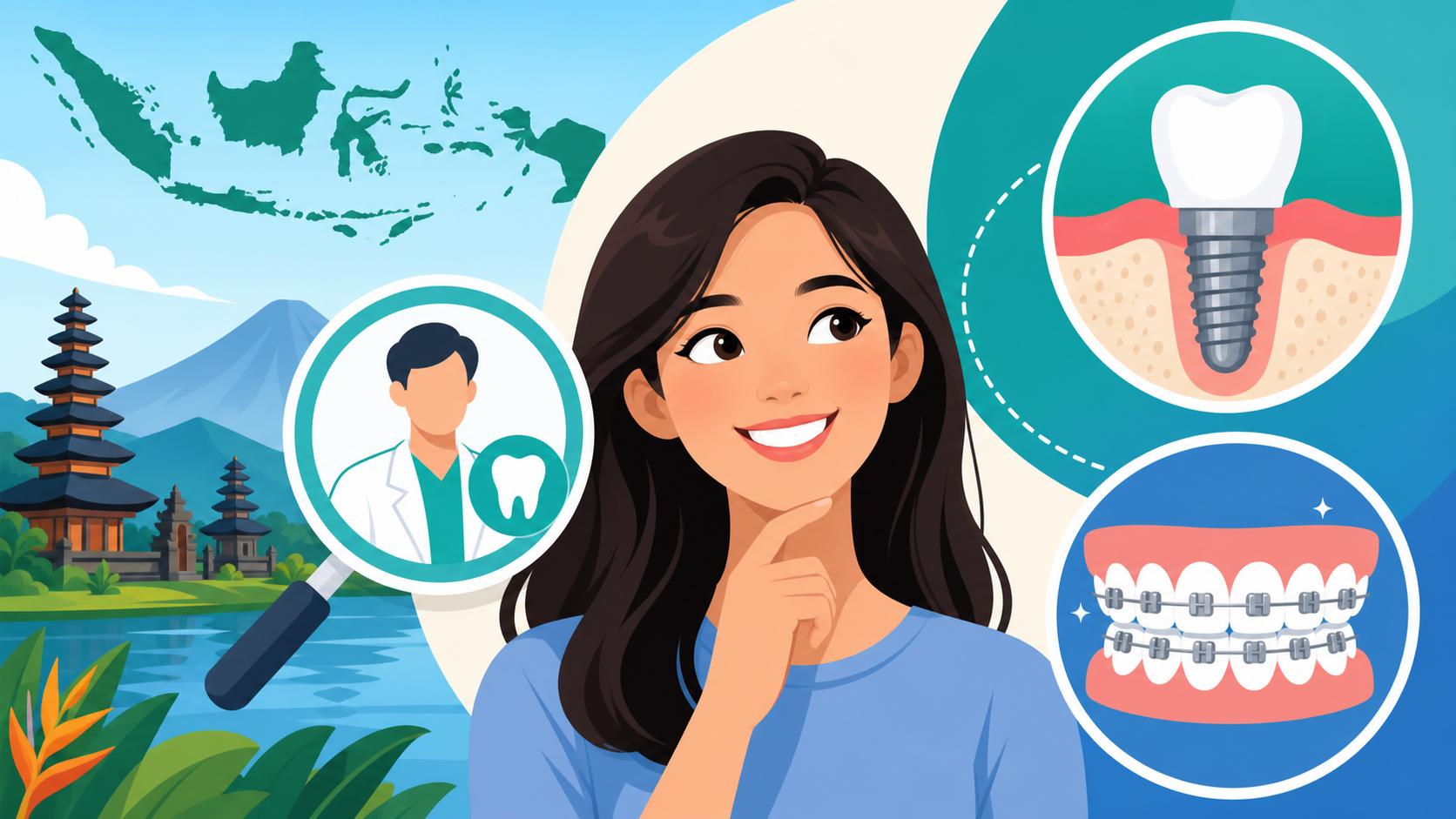
How to Find a Dentist Specializing in Implants and Orthodontics in Indonesia
Waking up with a throbbing jaw or realizing your child needs corrective braces while navigating the chaotic streets of Jakarta or the humid backroads of Bali is a unique kind of stress. I remember sitting in a waiting room in South Jakarta, clutching my jaw and wondering if the local "drg" on the sign was actually qualified to drill into my bone for an implant. This guide solves the confusion of the Indonesian dental system, helping you distinguish between general practitioners and the high-level specialists required for implants and orthodontics.
Navigating the Indonesian Dental Specialist Hierarchy
When you first start looking for dental care here, you will notice that almost every street corner has a sign that says "Praktek Dokter Gigi" (General Dentist Practice). However, for complex work like dental implants or long-term orthodontic alignment, a general dentist is often not enough. In Indonesia, dentistry is highly stratified, and understanding the acronyms after a doctor’s name is your first line of defense. A general dentist is titled "drg." (Dokter Gigi), but for specialized work, you must look for the "Sp." designation.
For dental implants, you generally have three types of specialists to choose from. A Periodontist (Sp.Perio) specializes in the gums and supporting bone, which is crucial if you have bone loss. An Oral and Maxillofacial Surgeon (Sp.BM) is the "heavy hitter" for complex surgeries, including sinus lifts and difficult implant placements. Finally, a Prosthodontist (Sp.Pros) focuses on the "prosthetic" or the crown that goes on top of the implant. I have found that the best clinics in Jakarta and Bali often use a team approach, where the Sp.BM places the post and the Sp.Pros designs the tooth. If you are starting from scratch, reading up on Finding a Dentist in Indonesia: Costs, BPJS Coverage, and English-Speaking Clinics will give you a baseline of how these offices operate.
Orthodontics follows a similar path. While many general dentists offer "behel" (braces), you should exclusively seek out a "Dokter Gigi Spesialis Ortodonsia" (Sp.Ort). Orthodontics in Indonesia has become a bit of a fashion statement in recent years, leading to a rise in unqualified "tukang gigi" (tooth artisans) or general dentists offering cheap packages. A true Sp.Ort has undergone years of additional university training to understand the mechanics of jaw alignment. If you are moving to the capital, check out the Jakarta Healthcare Guide for Expats: International Clinics and After-Hours Options to find clinics where these specialists are in-house and speak fluent English.
The Vetting Process: Verifying Credentials and Technology
You cannot always rely on a shiny website or a high-end mall location to guarantee quality in Indonesia. I have seen beautiful clinics in Seminyak that lacked basic sterilization protocols, and humble-looking offices in Menteng that housed world-class surgeons. The most reliable way to vet a specialist is through the KKI (Konsil Kedokteran Indonesia) online database. Every licensed specialist must be registered here. You can search by their name to ensure their "Sp." title is legitimate and their license is active.
Beyond the license, the technology available in the clinic is a major indicator of specialist quality. For dental implants, ask if the clinic performs a CBCT (Cone Beam Computed Tomography) scan. Unlike a standard 2D X-ray, a CBCT provides a 3D image of your jawbone, which is non-negotiable for safe implant placement to avoid hitting nerves or sinus cavities. For orthodontics, high-end specialists will use digital scanners like iTero rather than messy putty molds. This level of technology is more common in expat-heavy areas, and you can find more details in the Bali Healthcare Guide: Hospitals, Clinics, and Emergency Contacts for Residents if you are based on the island.
Language is the final piece of the vetting puzzle. You do not want a "lost in translation" moment when discussing the torque of a titanium screw in your jaw. Most specialists who have studied abroad or work in "International" labeled clinics speak excellent English. During your first consultation, pay attention to whether they explain the risks and the "why" behind the procedure. If they push for the most expensive option without explaining the alternatives, it is a red flag. Always cross-reference their reputation with expat forums or the Finding English-Speaking Doctors in Indonesia: Reliable Directories and Vetting list to see what other long-term residents have experienced.
Comparing Costs and Insurance Realities for Specialists
Cost is often the primary reason foreigners seek dental care in Indonesia, as even the highest-end specialist work is significantly cheaper than in the US, UK, or Australia. However, for implants and orthodontics, you get what you pay for. A "cheap" implant often uses a generic, non-branded post that may be difficult to find replacement parts for if you move to another country later. High-end clinics typically use global brands like Straumann (Switzerland), Nobel Biocare (Sweden), or Osstem (South Korea).
The financial aspect of specialized dentistry is rarely covered by basic local schemes. For instance, Healthcare Budgeting: BPJS Caps, Out-of-Pocket Costs, and Private Copays explains that while BPJS might cover a simple extraction, it will never cover an implant or braces for cosmetic or complex functional reasons. This is where private health insurance becomes essential. Providers like Cigna Global offer dental modules that can significantly offset the cost of major restorative work. I have found that having Cigna Global allows you to choose the "VIP" clinics that would otherwise be a massive out-of-pocket hit.
| Procedure | Est. Cost (Jakarta Specialist) | Est. Cost (Bali Specialist) | Est. Cost (Western Countries) |
|---|---|---|---|
| Single Dental Implant (Titanium) | IDR 15,000,000 – 25,000,000 | IDR 18,000,000 – 30,000,000 | USD 3,000 – 5,000 |
| Metal Braces (Full Arch) | IDR 10,000,000 – 18,000,000 | IDR 12,000,000 – 20,000,000 | USD 4,000 – 6,000 |
| Invisalign (Comprehensive) | IDR 45,000,000 – 80,000,000 | IDR 50,000,000 – 85,000,000 | USD 5,000 – 8,000 |
| Bone Graft (Per Site) | IDR 5,000,000 – 10,000,000 | IDR 6,000,000 – 12,000,000 | USD 800 – 2,000 |
When budgeting, remember that orthodontics requires monthly visits for "tightening" or "check-ups." If you live in a remote area, the cost of travel to a major city like Jakarta, Surabaya, or Denpasar needs to be factored in. For those relying on specialized care while managing a budget, understanding Private Health Insurance in Indonesia: Bridging the Gap When BPJS Isn't Enough is crucial for long-term planning.
Post-Procedure Care and Maintenance in a Tropical Climate
After-care in Indonesia presents specific challenges, mostly due to the humidity and the risk of infection from local water. For dental implants, the "healing" phase is critical. Most specialists will provide a prescription for antibiotics and an antiseptic mouthwash. You can learn more about how to handle these prescriptions in our Apotek Guide: Prescription Workflow, Refills, and Communicating with Pharmacists. Avoid using tap water for rinsing immediately after surgery; always use bottled or filtered water to minimize the risk of bacterial contamination in the surgical site.
Maintaining orthodontics and implants also requires specific tools that aren't always available at your local Indomaret. I personally rely on iHerb to ship in specialized high-fluoride toothpastes, interdental brushes, and water flossers that can be hard to find or significantly overpriced in Indonesian malls. iHerb is a lifesaver for expats here because the local selection of dental hygiene products is often limited to basic whitening pastes. For those looking for local benchmarks on routine upkeep, Dental Cleaning Costs in Bali vs Jakarta: Private Clinic Benchmarks provides a good comparison for the maintenance phase.
Finally, be prepared for the "macet" (traffic) when scheduling your follow-ups. If you are getting braces in Jakarta, try to find a specialist near your home or office. A 20-minute adjustment can easily turn into a 3-hour ordeal if you have to cross the city during rush hour. Many expats choose clinics in areas like Kemang, Pondok Indah, or the SCBD specifically to avoid this. If you are in Bali, the same applies to the Canggu-Seminyak corridor, where afternoon traffic can make a simple dentist visit feel like a day-long expedition.
Disclaimer
The information provided in this article is for educational and informational purposes only and does not constitute professional medical or dental advice. Always seek the advice of a qualified healthcare provider in Indonesia regarding any medical or dental condition or treatment. Regulations and costs in Indonesia change frequently; please verify all credentials and pricing directly with the clinics mentioned or through official government channels.