Working in Mining and Energy: Opportunities in Kalimantan and Sumatra
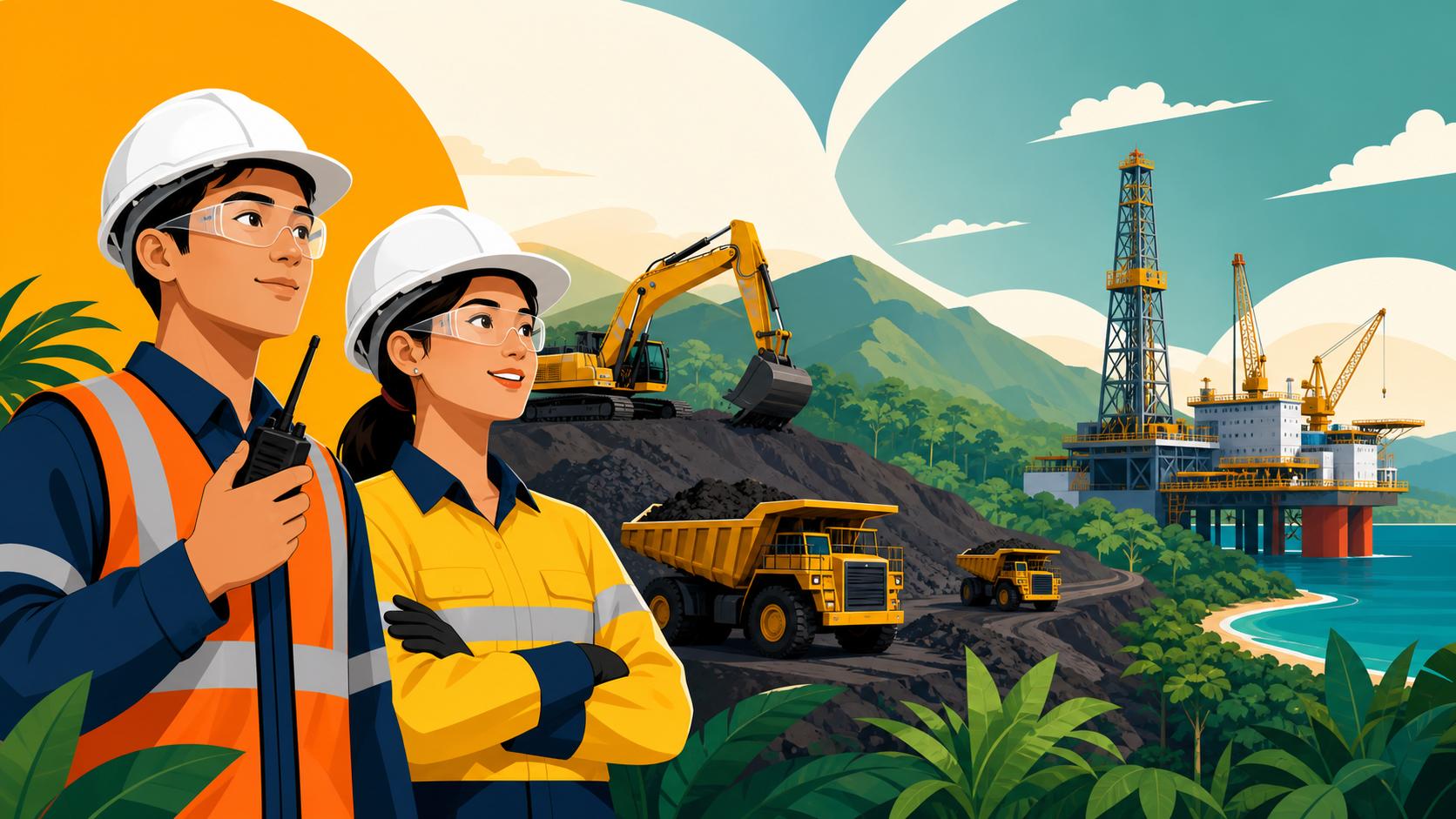
Finding yourself assigned to a remote mining site in Kalimantan or an oil rig off the coast of Sumatra can feel like being dropped onto another planet, especially when you realize the nearest Western-style grocery store is a two-hour helicopter ride away. I remember my first stint in East Kalimantan, staring at a wall of mud and wondering how I’d ever navigate the complex bureaucracy of the local manpower office. This guide provides a deep dive into the operational, legal, and cultural realities of working in Indonesia’s resource sector.
The Geographical Powerhouses of the Indonesian Resource Sector
To understand the opportunities in this region, one must first recognize that Kalimantan and Sumatra are not monoliths; they are massive territories with very distinct industrial identities. Kalimantan is the undisputed king of coal and, increasingly, the hub for the massive nickel processing boom. Sumatra, on the other hand, remains the historic heart of Indonesia’s oil and gas production, while also hosting significant geothermal and gold mining operations.
Key Commodities and Regional Hubs in Kalimantan
Kalimantan is divided into five provinces, each with a different focus. East Kalimantan is the heavy hitter, anchored by the city of Balikpapan. If you are a petroleum engineer or a mining consultant, Balikpapan will likely be your gateway. It is one of the few places in the region that feels somewhat "expat-friendly" due to its long history with international oil majors. South Kalimantan is where the coal giants reside, with Banjarmasin serving as a primary logistics hub.
In recent years, North Kalimantan has seen a surge in "Green Industrial Park" developments, focusing on hydropower to fuel smelting operations. Working here often means being at the absolute frontier. You aren't just managing a mine; you are often helping build the very infrastructure—roads, ports, and power grids—that allows the mine to exist. For those in English-Speaking Jobs in Indonesia: Realistic Paths Outside English Teaching, specialized roles in logistics, environmental safety, and project management in these areas are currently in high demand.
The Oil, Gas, and Geothermal Landscape of Sumatra
Sumatra offers a different flavor of professional life. The Riau province, specifically around Pekanbaru and Duri, has been the center of Indonesian oil production for decades. While the fields are maturing, the transition of major blocks from international firms like Chevron to the state-owned Pertamina has created a unique environment for foreign consultants who specialize in Enhanced Oil Recovery (EOR).
South Sumatra and Lampung are increasingly focused on the "energy transition," with significant investments in geothermal energy and coal-to-gasification projects. If you are a geologist or a drilling specialist, you might find yourself in the highlands of North Sumatra or the rugged terrain of Kerinci. These locations are breathtakingly beautiful but administratively challenging, as you often deal with local communities and forest conservation regulations that are far stricter than in the industrial zones of Kalimantan.
Comparing the Two Islands for Resource Professionals
| Feature | Kalimantan (The Frontier) | Sumatra (The Established Heart) |
|---|---|---|
| Primary Commodities | Coal, Nickel, Gold, Iron Ore | Oil, Gas, Geothermal, Gold |
| Infrastructure | Developing; heavy reliance on river transport | More established road networks and older facilities |
| Expat Hubs | Balikpapan, Samarinda | Pekanbaru, Palembang, Medan |
| Climate | High humidity, dense rainforest | Volcanic highlands to swampy lowlands |
| Career Focus | New project builds and massive earthmoving | Optimization of mature assets and green energy |
Navigating the Administrative Hurdles for Specialized Roles
Working in the "hinterlands" of Indonesia adds a layer of complexity to your immigration status that a corporate worker in Jakarta rarely sees. The Ministry of Manpower (Kemnaker) keeps a very close eye on the resource sector to ensure that foreign experts are not taking jobs that could be filled by locals.
RPTKA and the KITAS for Technical Experts
Your journey begins with the RPTKA (Rencana Penggunaan Tenaga Kerja Asing), which is your employer's plan to hire a foreigner. In mining and energy, these plans are scrutinized heavily. You must prove that your skillset—whether it’s subsea engineering or high-wall stability analysis—is not currently available in the Indonesian labor pool. Once the RPTKA is approved, you will proceed to get your Work KITAS.
A common frustration I’ve seen is the "location" restriction on the permit. If your KITAS is registered for a specific site in Central Kalimantan, you cannot legally perform work at a different site in West Kalimantan without a formal amendment. This is why understanding Employer Sponsorship: Navigating the RPTKA and Work Permit Process is critical before you sign your contract. Make sure your HR department has accounted for any cross-province travel you might need to do.
The Pendamping Requirement and Knowledge Transfer
Indonesia has a legal requirement that for every foreign worker hired, the company must appoint at least one Indonesian "counterpart" (Pendamping) for the purpose of knowledge transfer. In the mining camps of Sumatra and Kalimantan, this isn't just a paper requirement; it is a daily reality. You will be expected to mentor local engineers and supervisors.
Failure to show progress in this knowledge transfer can lead to difficulties when it comes time for your KITAS renewal. It’s also worth noting that your Employment Rights: PT PMA Contracts, Leave, and BPJS Ketenagakerjaan still apply in remote areas, even if the "local rules" of the mine site feel more informal. Always ensure you have a physical copy of your permit with you, as immigration "razia" (inspections) can happen even in the middle of a jungle clearing.
Local Content and Community Relations
In the mining and energy sectors, "local content" isn't just about the equipment you buy; it’s about the people you hire. Companies are under immense pressure from local "Banjars" (in Bali terms) or "Lembaga Adat" (in Kalimantan/Sumatra) to hire from the immediate villages. As an expat manager or specialist, you will often be caught in the middle of these negotiations.
You might find that a certain percentage of your workforce is hired not because they have the best technical skills, but because of community agreements. Navigating this requires a high level of cultural empathy and a deep understanding of Indonesian Work Culture: Communication, Hierarchy, and Career Dynamics. You aren't just an engineer; you are a diplomat.
Remote Site Life: Reality vs. Expectations
The "mining camp" lifestyle is a polarizing experience. For some, the camaraderie and the intensity of the work are exhilarating. For others, the isolation and the 12-hour shifts in 35-degree heat with 90% humidity are a recipe for burnout.
Fly-In Fly-Out (FIFO) vs. Residential Roles
Most expat roles in Kalimantan and Sumatra operate on a FIFO basis. A common schedule is 4 weeks on-site followed by 2 weeks off, or 6 weeks on and 3 weeks off. The company usually handles your transport from the site to a major hub like Jakarta, Singapore, or your home country. This is where Remote Work in Indonesia: The Complete E33G Digital Nomad Visa Guide can be a confusing topic—while the E33G is for nomads, resource workers must stay strictly on their sponsored Work KITAS.
Residential roles are rarer and usually reserved for high-level management in places like Balikpapan or Pekanbaru. In these cases, you might bring your family. However, be prepared for the reality of International Schools in Indonesia: Jakarta and Bali Curriculum and Fee Guide; outside of the major hubs, your options will be extremely limited, often necessitating boarding school or homeschooling.
Health, Safety, and Emergency Protocols in the Jungle
On a remote site, the "Safety First" signs aren't just for show. Malaria and Dengue are real risks in the forests of Sumatra and Kalimantan. Most major sites have an on-site clinic, but for anything serious, you are looking at a Medevac. I always tell newcomers to memorize the Emergency Medical Care in Indonesia: Ambulances, ERs, and Evacuation Protocols because when you are six hours away from the nearest hospital, knowing the protocol is a literal lifesaver.
Furthermore, you must ensure your employer provides comprehensive Private Health Insurance in Indonesia: Bridging the Gap When BPJS Isn't Enough. While the government-mandated BPJS is a legal requirement, it is often insufficient for the level of care required after a serious industrial accident in a remote province.
The "Camp" Social Dynamic
Life in a mining camp is a bit like being in the military. You eat in a "mess hall," your laundry is done for you, and your social circle is limited to the people you work with. Alcohol is often banned or strictly rationed on-site due to safety regulations and local cultural sensitivities. To keep your sanity, many expats turn to digital hobbies. This is a great time to focus on professional development or language skills. Using a resource like IndonesianPod101 during your downtime can drastically improve your ability to lead your local teams, as even a small amount of Bahasa Indonesia goes a long way in gaining the respect of the "lapangan" (field) workers.
Cultural Integration and Language Barriers in the Field
In the skyscrapers of Jakarta, you can get by with English. In the coal pits of East Kalimantan, you cannot. The language barrier is the single biggest cause of project delays and safety incidents in the Indonesian resource sector.
Communicating with Local Labor and Unions
Your workforce will largely consist of local Indonesians, many of whom may speak a regional dialect (like Dayak or Melayu) as their first language and Bahasa Indonesia as their second. English is often non-existent among the operators and technicians. If you cannot communicate basic instructions, you are a liability.
I’ve found that the most successful expats are those who spend their first month learning the "Bahasa Lapangan" (Field Indonesian). Using IndonesianPod101 to master the basics of Bahasa Indonesia for Business: Kehormatan, Emails, and Meeting Etiquette is a good start, but you also need to learn the specific technical terms for your industry. When you can tell a crane operator to "angkat sedikit lagi" (lift a little more) in his own language, the tension on the site drops significantly.
Understanding Workplace Hierarchy and the "Bapak" Culture
The Indonesian workplace is deeply hierarchical. The "Bapak" (Father/Leader) or "Ibu" (Mother/Leader) is expected to provide direction and also take care of the welfare of their subordinates. As an expat specialist, you are automatically placed in this "Bapak" category. This means people may be hesitant to tell you "no" or to point out a mistake you’ve made, as it would cause you to "lose face."
This "indirectness" can be infuriating when you are trying to hit a production deadline. You have to learn to read between the lines. If a foreman says "Saya usahakan" (I will try my best), he often means "It is impossible, but I don't want to upset you." This is where Indonesian Work Culture: Communication, Hierarchy, and Career Dynamics becomes your most important manual.
Navigating Religious and Local Holidays
Sumatra and Kalimantan are deeply religious. In many parts of Sumatra, Islamic traditions are the backbone of daily life, while in parts of Kalimantan, there is a mix of Dayak traditions and Islam. You must respect the prayer times and the impact of Ramadan on productivity. During the fasting month, heavy manual labor slows down, and you must adjust your project timelines accordingly.
Don't forget the importance of Understanding THR (Tunjangan Hari Raya): The Mandatory Religious Bonus. Even if your workers are in the middle of a remote forest, they expect their "13th-month salary" before the major holidays. Failing to process this on time is the fastest way to trigger a strike or a mass resignation.
Salary, Benefits, and Financial Logistics for Site Workers
Working in the mud and heat has to be worth it financially. Expat packages in the Indonesian mining and energy sectors are generally much higher than corporate roles in the city, but the tax implications are also more complex.
Hardship Allowances and Expat Packages
A typical "Resource Package" includes your base salary plus a "Hardship Allowance" (often 10-25% of base), a "Location Allowance," and fully covered housing and transport. If you are on a residential contract, your company might also cover Cost of International Schools: Budgeting USD 8,000 to USD 30,000+ Annually for your children, though as mentioned, this usually means school in Jakarta or Singapore.
Always negotiate your contract "Net of Tax." Indonesia uses a progressive income tax system that goes up to 35%. If you are a high-earning specialist, the difference between your gross and net pay can be staggering. Familiarize yourself with Taxes in Indonesia for Expats: NPWP, PPh 21, and the 183-Day Rule to ensure you aren't surprised by your first payslip.
BPJS and Social Security for Remote Workers
Even if you have the best international insurance, your employer is legally mandated to enroll you in BPJS Kesehatan (Health) and BPJS Ketenagakerjaan (Employment/Social Security). For remote workers, the BPJS Ketenagakerjaan: Calculating JKK, JKM, JHT, and Pension Contributions is actually quite beneficial, as the "JKK" (Work Accident Insurance) provides specific coverage for industrial incidents.
Many expats view these deductions as a "tax," but the "JHT" (Old Age Savings) can actually be withdrawn when you eventually leave Indonesia. It’s a nice little "forced savings" account that can amount to thousands of dollars after a few years in the field.
Managing Money in Remote Areas
In the camps of Kalimantan, your credit card is useless. You are in a "cash is king" environment. However, many remote sites are now becoming part of the digital revolution. You’ll see local vendors in even the smallest villages using QRIS. Setting up a local account is essential; Top Banks for Expats: Comparing BCA, Mandiri, BNI, and Digital Banks (Jenius) will help you choose a bank that has a good ATM network in the provinces. Mandiri and BNI generally have the best coverage in remote mining areas.
Career Longevity and Transitioning to Corporate Roles
The "field life" is usually a young man's or woman's game, or at least one for those without young families. Most expats do 3-5 years in Kalimantan or Sumatra before looking to move "into the city."
Moving from the Field to Jakarta HQ
If you work for a major like Pertamina, Adaro, or Freeport, there is often a pathway to move into a regional office in Jakarta (SCBD or Kuningan). The transition can be a culture shock in reverse—moving from steel-toed boots to business casual and from the silence of the jungle to the "macet" (traffic) of the capital.
When you make this move, your focus will shift from technical execution to "Government Relations" and strategy. You will need to understand Working in Jakarta: SCBD Salaries, Commuting, and Corporate Lifestyle and how the decisions made in the Ministry of Mines (ESDM) affect the guys back at the site.
Networking within the Industry
The mining and energy community in Indonesia is small. Everyone knows everyone. Networking often happens at the "Bimasena" club in Jakarta or the expat bars in Balikpapan. Maintaining your reputation for being "lapangan-ready" (field-ready) while also being able to navigate a boardroom is the key to career longevity here.
If you are looking for your next role, don't just look at job boards. Focus on Networking in Jakarta: Business Chambers, Events, and Professional Referral. Groups like BritCham, AmCham, and the Indonesian Mining Association are where the real hiring happens.
Using Your Experience for Future Opportunities
Experience in the Indonesian resource sector is highly valued globally. If you can manage a project in the middle of a Sumatra swamp while navigating Indonesian labor laws and cultural nuances, you can work anywhere. It proves your resilience, your cultural intelligence, and your technical adaptability. While you are there, keep a log of your "knowledge transfers." Showing that you’ve successfully mentored local staff is a massive "plus" for any future PT PMA Structure that needs an expat leader who actually understands how to build local capacity.
Health and Safety Disclaimer
Working in the mining and energy sectors involves significant physical and environmental risks. The information provided in this guide is for general informational purposes only and does not constitute professional safety, legal, or medical advice. Always follow your employer’s specific Safety Management System (SMS) and consult with certified Indonesian legal and immigration experts regarding your specific Work KITAS and contract conditions. Conditions on remote sites can change rapidly due to weather, local regulations, or social unrest; always maintain an updated emergency evacuation plan.