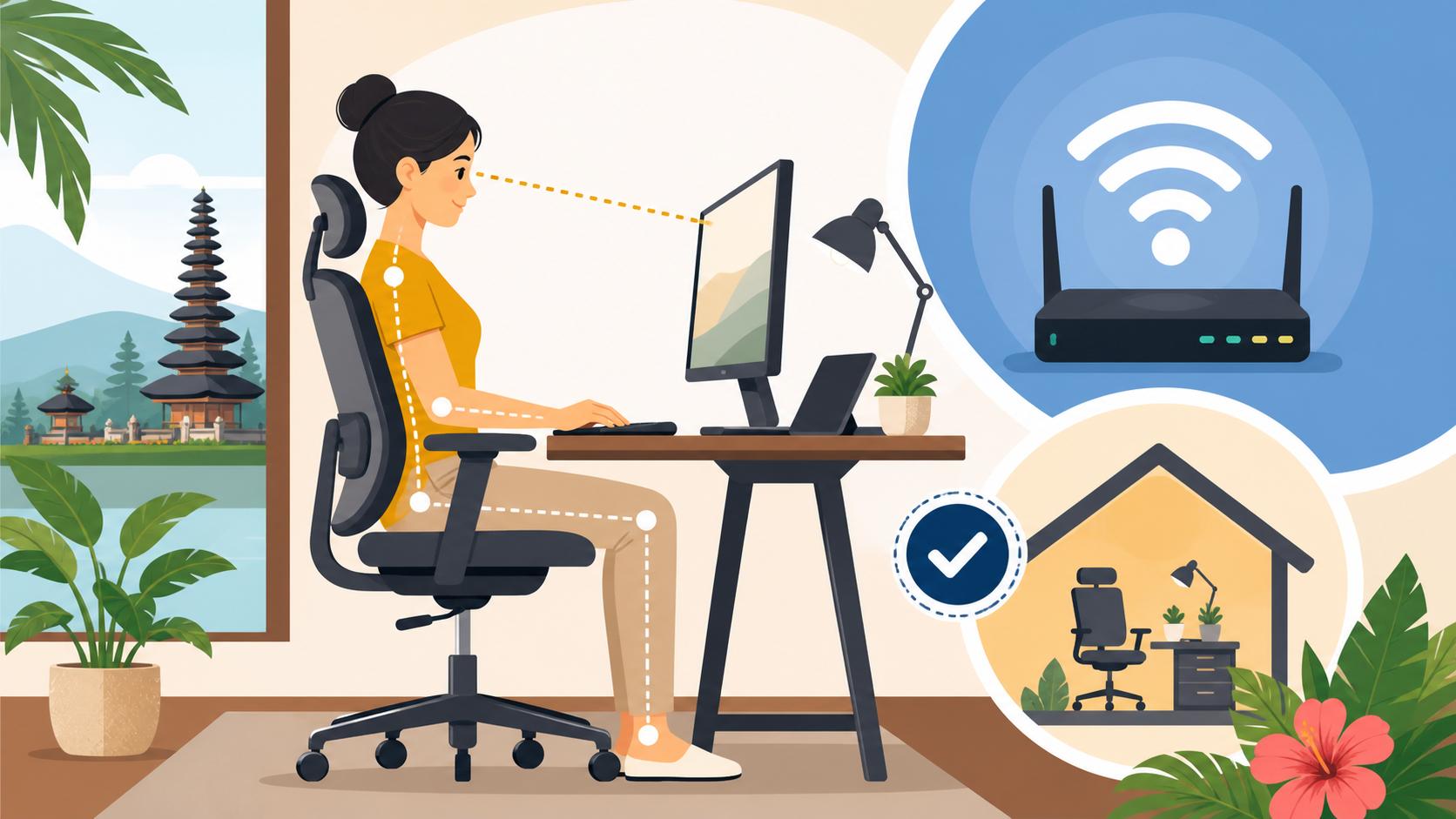
Setting Up a Home Office in Indonesia: Ergonomics and Internet Connectivity
Trying to join a high-stakes board meeting while your internet drops for the fourth time because of a tropical downpour is a rite of passage no one wants. I remember sitting in my humid Ubud living room, sweat dripping onto my laptop, as my neighbor’s rooster competed with my Zoom presentation. This guide solves the logistical nightmare of building a stable, ergonomic, and high-speed home office in Indonesia.
Navigating the Indonesian Internet Landscape
The first hurdle any remote worker faces in Indonesia is the sheer inconsistency of the web. While Jakarta and parts of Bali have seen massive infrastructure upgrades, the "last mile" of connectivity—the actual wire entering your house—is often the weak link. You cannot simply assume that a "high-speed" listing on a rental site means you can stream 4K video.
Choosing the Right Internet Service Provider
In major hubs like Jakarta, Surabaya, or Denpasar, you generally have three main players: Biznet, IndiHome (by Telkomsel), and the rising popularity of Starlink. Biznet is widely regarded by the expat community as the "gold standard" for stability and symmetrical upload/download speeds, which is crucial if your work involves heavy file transfers or constant video conferencing. However, their coverage is limited to specific residential pockets.
IndiHome has the widest reach, even into more remote villages, but it is notorious for throttling certain sites and having asymmetrical speeds where your upload is a fraction of your download. If you are moving into a villa or apartment, your first task is to check which Home Internet Providers: IndiHome, Biznet, and Starlink Options in 2027 are actually wired into your specific building. Do not take the landlord's word for it; ask to see a speed test result from the actual router in the room where you intend to work.
The Necessity of a Redundancy Plan
Even with the best fiber optic connection, the Indonesian power grid and local construction can lead to "mati lampu" (power outages) or accidental cable cuts. I’ve learned the hard way that you must have a secondary and even tertiary backup. A Telkomsel or XL Axiata SIM card with a massive data plan is non-negotiable.
Using a dedicated mobile router (MiFi) rather than just tethering your phone can save your battery life and provide a more stable signal. Many expats are also turning to Starlink as a primary or secondary backup, especially in Bali where "banjar" (local council) issues can sometimes delay fiber repairs for days. Having these backups ensures that even if a tropical storm knocks out the local lines, you remain online.
Optimizing Your Internal Network
Standard routers provided by local ISPs are often underpowered for the thick concrete and brick walls common in Indonesian architecture. If your home office is on a different floor from the router, you will experience significant signal drop. Investing in a high-quality Mesh Wi-Fi system is one of the best upgrades you can make. This allows you to maintain a seamless signal as you move from your desk to the kitchen for another coffee. During your breaks, you might even find time to brush up on your local interactions by using IndonesianPod101 to practice the "Bahasa Kantor" (office language) you’ll need if you ever decide to transition into Working in Indonesia as a Foreigner: Jobs, Corporate Culture, and Hiring (2027).
Ergonomics in a Tropical Environment
Setting up a desk isn't just about the height of the chair; it is about surviving the climate. Many newcomers make the mistake of buying beautiful, locally-made bamboo or rattan furniture that looks amazing on Instagram but offers zero lumbar support for an eight-hour workday.
Selecting Furniture That Lasts
Indonesia is a world leader in furniture production, but "aesthetic" does not always mean "ergonomic." If you are in Jakarta, visiting the massive IKEA in Alam Sutera or browsing the high-end office showrooms in SCBD is your best bet for finding adjustable chairs. In Bali, search for "office supply" stores rather than "interior design" boutiques.
You need a chair with breathable mesh backing. Leather or high-quality synthetic "gaming" chairs will make you overheat within twenty minutes if your AC isn't at full blast. Additionally, be aware of Humidity and Mold: Preventing Damage to Clothes and Leather in the Tropics, which can quickly ruin expensive ergonomic chairs if they are made of organic materials and kept in poorly ventilated rooms.
Desk Height and Setup Scenarios
Consider a standing desk converter or a locally commissioned teak standing desk. Teak is incredibly durable in high humidity and won't warp like cheaper MDF (medium-density fiberboard) will. If you are working on the Remote Work in Indonesia: The Complete E33G Digital Nomad Visa Guide framework, you are likely spending a significant amount of time at your station.
Ensure your monitor is at eye level to prevent "tech neck." Because electricity costs can add up, especially with multiple monitors and an AC unit running, it’s wise to understand how to manage your Utilities and Setup: PLN Electricity, PDAM Water, and Home Internet in Indonesia effectively. Using a laptop stand and an external keyboard/mouse is a simple way to transform a basic table into a professional workstation.
| Item | Recommended Specification | Why It Matters in Indonesia |
|---|---|---|
| Internet Speed | Min 50 Mbps Symmetrical | Video calls and large uploads |
| Power Backup | 1200VA UPS or Power Station | Protects against frequent surges/outages |
| Chair Material | Breathable Mesh | Prevents overheating and mold growth |
| Desk Material | Solid Teak or Treated Wood | Resists warping and termite damage |
| Voltage Stabilizer | 500W – 1000W | Essential for protecting sensitive electronics |
Protecting Your Gear and Power Stability
The Indonesian power grid is "dirty," meaning the voltage fluctuates significantly. This is the silent killer of MacBooks, iMacs, and expensive PC builds. If you see your lights flicker during a thunderstorm, that same surge is hitting your computer.
The Critical Role of a Voltage Stabilizer
In most Western countries, you plug a computer into the wall and forget it. In Indonesia, you must use a "Stabilizer" or a UPS (Uninterruptible Power Supply). A stabilizer ensures that the 220V coming out of the wall stays at 220V, protecting your motherboard from frying during a spike.
A UPS goes a step further by giving you 10 to 20 minutes of battery life when the power cuts, allowing you to save your work and shut down properly. I personally use a 1200VA UPS for my main workstation and a smaller stabilizer for my router. It is a small investment compared to the cost of replacing a fried logic board. This is a common part of Everyday Budgeting in Indonesia: Cost of Living in Jakarta vs Bali vs Regional that many forget to calculate.
Managing Heat and Airflow
Dust and humidity are the enemies of cooling fans. If you are running a high-performance laptop, it will throttle its speed if it gets too hot. Always use your home office in a room with a well-maintained AC unit. Make sure to stay on top of AC Maintenance: Routine Servicing and Freon Rules for Tropical Climates to ensure your workspace stays at a crisp 22 to 24 degrees Celsius.
If you prefer to work with the windows open to enjoy the garden view, be prepared to clean your hardware with compressed air every month. The fine dust and salt air (if you're near the coast in Bali) can corrode internal components surprisingly fast.
Audio Privacy and Environmental Noise
The "Indonesian Soundscape" is vibrant, but it is rarely quiet. From the 4 AM call to prayer to the "tahu bulat" snack vendors with their loud speakers and the constant "macet" (traffic) honking, your microphone will pick up everything.
Soundproofing and Mic Selection
Unless you live in a high-end, sound-insulated apartment in Mega Kuningan, you will need to manage noise. Thick curtains and rugs can help dampen the echo in rooms with tile floors (which are standard here). However, the best solution is a high-quality noise-canceling headset.
Standard laptop microphones are too sensitive to the high-pitched "tokek" lizards that live in the rafters of Indonesian homes. A unidirectional boom mic will focus on your voice and ignore the rooster next door. If you are struggling with local distractions, reading up on Dealing with Neighborhood Noise: Mosques, Roosters, and Construction Etiquette can help you understand the cultural context and how to politely manage expectations with neighbors.
Virtual Backgrounds and Professionalism
In Indonesian business culture, "sopan" (politeness/etiquette) is highly valued. Even if you are working from a beach hut, a professional virtual background is often expected during formal calls. If you are networking or looking for English-Speaking Jobs in Indonesia: Realistic Paths Outside English Teaching, maintaining a professional "home office" appearance on camera is vital.
During your down moments, listening to IndonesianPod101 can help you pick up the nuances of formal Indonesian addresses like "Bapak" and "Ibu," which you should use in your digital communications.
Legal and Administrative Integration
Setting up an office is one thing; being allowed to work in it is another. The Indonesian government has become much stricter about visa compliance for those working from home.
Visa Compliance for Remote Workers
You cannot legally work from a home office on a standard tourist visa. You should be looking at the E33G Remote Worker Visa: Eligibility, Tax Status, and Activity Restrictions if you are employed by a foreign company. This visa specifically allows you to live in Indonesia while working for an overseas entity.
If you are a freelancer, navigating the Freelancing in Indonesia: The Legal Gray Area and Doing Business Compliantly section of the law is essential to avoid "razia" (immigration raids) that occasionally happen in popular co-working hubs or residential areas known for high expat concentrations.
Building a Community Beyond the Home Office
Working from home in a foreign country can be isolating. While your home office should be your primary hub, I always recommend spending at least one day a week at local Co-working Spaces in Bali: Finding High-Speed Internet and Community. This provides a change of scenery and allows you to network with other professionals who have dealt with the same "mati lampu" and internet issues you are facing.
It is also a great place to practice what you've learned on IndonesianPod101 with real people. Building these local connections can help you find the best "tukang" (handyman) when your office AC inevitably leaks or your desk needs a custom modification.
Professional Disclaimer
The information provided in this guide is for informational purposes only and is based on personal experiences and local conditions. Internet availability, visa regulations, and local laws in Indonesia are subject to frequent change without prior notice. Always consult with official government sources, licensed immigration agents, or professional tax consultants before making significant financial or legal commitments regarding your residency or work status in Indonesia. The author is not responsible for any equipment failure, legal disputes, or loss of income resulting from the application of the advice contained herein.