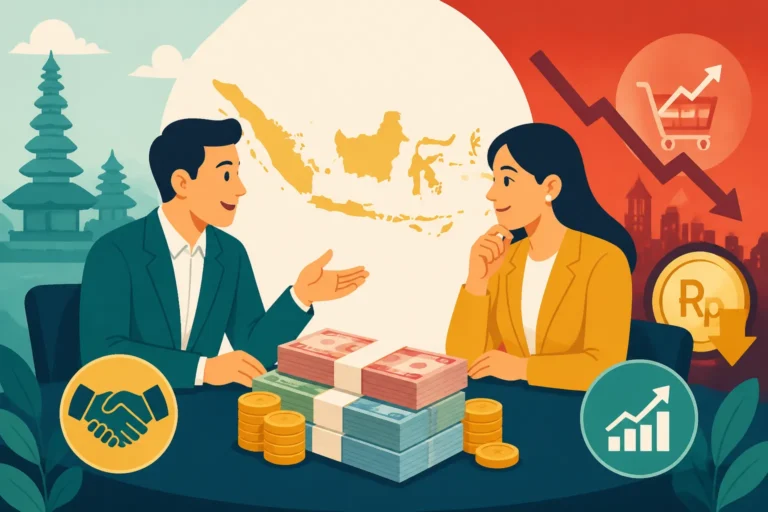
Everyday Budgeting in Indonesia: Cost of Living in Jakarta vs Bali vs Regional
Moving to Indonesia often begins with the paralyzing realization that your dream villa requires two years of rent paid in cash upfront. I spent my first three nights in Jakarta frantically calling my home bank to increase my transfer limits while sweating in a budget hotel. This guide solves the mystery of the Indonesian price tag by breaking down every hidden cost from the SCBD to the rice fields of Ubud.
The Cost of Living Reality Check
When you first land in Indonesia, the currency—the Indonesian Rupiah (IDR)—can feel like Monopoly money. With millions of Rupiah equating to just a few hundred dollars, it is incredibly easy to lose track of spending. The reality of budgeting here is that Indonesia is a land of extremes. You can survive on a few dollars a day eating at local street stalls, or you can easily burn through a Manhattan-sized budget by living in the "expat bubble" of high-end malls and international schools. Understanding these layers is the first step to financial sanity.
Jakarta: The Corporate Grind and High-End Living
Jakarta is a beast unlike any other city in Southeast Asia. For many of us, it’s the place we move to for work, and the budget reflects that professional necessity. In South Jakarta neighborhoods like Senopati or Kemang, you aren't just paying for a roof; you are paying for the proximity to work to avoid the legendary traffic. The cost of living is heavily weighted toward lifestyle choices. If you want the "Executive Life," you’ll be spending a significant portion of your salary on Cost of Living in Jakarta 2026: Rent, Schooling, and Lifestyle Benchmarks just to maintain a standard of comfort that includes high-speed internet, gym memberships, and imported groceries.
The hidden drain on your Jakarta budget often comes from social obligations and convenience. Because the city is not walkable, you will find yourself using ride-hailing apps constantly. Those small IDR 20,000 trips add up when you’re doing six of them a day. Furthermore, the mall culture in Jakarta is a major financial trap. When the humidity hits 95% and the pollution is high, the air-conditioned malls become your only refuge, leading to "lifestyle creep" through expensive coffees, cinema tickets, and boutique shopping.
However, Jakarta also offers the most opportunities for saving if you are willing to "go local." Navigating the city’s complex infrastructure requires a strategy. While high-end apartments in the SCBD are astronomical, moving just a few blocks away into a more residential area can slash your rent by 40%. The key is finding a balance between the luxury the city offers and the grounded reality of being a resident.
Bali: The Island Premium and Digital Nomad Life
Bali has undergone a massive transformation in the last five years. What used to be a budget-friendly backpacker haven has become a premium global destination. If you are moving to Canggu, Uluwatu, or Pererenan, you must prepare for the "Island Premium." In these areas, the Cost of Living in Bali 2026: Budgeting for Digital Nomads and Retirees has skyrocketed due to the influx of remote workers and investors. A simple cafe breakfast that cost IDR 50,000 a few years ago is now easily IDR 120,000 once you add the mandatory 10% tax and 5-7% service charge.
Budgeting in Bali requires a different mindset than in the city. Your biggest expenses will be your villa and your transport (usually a scooter). Unlike Jakarta, where you might have a fixed office, Bali life is fluid. You might spend your mornings in a co-working space, your afternoons at a beach club, and your evenings at a high-end fusion restaurant. This fluidity makes it very easy for money to leak out of your account. You aren't just paying for food; you’re paying for the "aesthetic" and the community.
To live sustainably in Bali, you have to venture outside the "bule" (foreigner) enclaves. Sanur and parts of Ubud still offer more traditional pricing, but even there, the costs are rising. The true cost of Bali often lies in the maintenance of the "dream." Between visa runs, scooter insurance, and the occasional need for a specialized doctor, the expenses can be surprisingly high if you aren't tracking them meticulously.
Regional Hubs: Living Large in Bandung and Surabaya
If you really want to see your Rupiah go further, you have to look at regional hubs like Surabaya, Bandung, or Yogyakarta. These cities offer a high quality of life with a fraction of the price tag found in Jakarta or Bali. In Surabaya, the "West Surabaya" estates offer luxury living that would cost triple in Jakarta. The food is cheaper, the traffic (while still bad) is more manageable, and the local markets are far more accessible.
In Bandung, the "Paris of Java," the cooler climate actually helps your budget because you spend significantly less on electricity for air conditioning—a hidden killer of expat budgets in the lowlands. The lifestyle here is more relaxed, focusing on nature and local culinary scenes rather than the high-stakes corporate networking of the capital. For retirees or those working remotely for local companies, these regional hubs are the secret to a high-savings lifestyle in Indonesia.
The challenge with regional living is the "convenience gap." You may find fewer English-speaking doctors, fewer imported goods at the supermarket, and a more limited selection of international schools. However, for many of us who have lived here long enough, the trade-off is worth it. You get a more authentic experience and a bank account that actually grows every month.
Housing and Accommodation: The Biggest Budget Item
In most countries, you pay rent monthly. In Indonesia, the rental market is a different beast entirely. It is standard practice—and often mandatory—to pay your entire lease upfront. Whether it is a one-year or two-year contract, you are expected to have the cash ready before you even get the keys. This is the single biggest shock to a newcomer's budget and requires significant liquidity.
Understanding the One-Year Upfront Rule
The upfront payment rule exists because many landlords use the lump sum to invest or pay off their own debts. From an expat perspective, this is a massive financial risk. If the roof leaks or the AC breaks a month into your stay, you have very little leverage because the landlord already has your money. This is why you must read a guide on Renting in Indonesia: The 1-Year Upfront Rule, Contracts, and Avoiding Scams before signing anything.
When budgeting for your first year, you need to set aside not just the rent, but also a security deposit (usually one month's rent) and potentially an agency fee if you used a broker. Negotiating monthly payments is sometimes possible in high-rise apartments owned by corporations, but for landed houses or private villas, it is almost unheard of. I always advise newcomers to have at least 18 months of their projected rent sitting in a liquid account like Wise before they even start looking at properties, as the exchange rate fluctuations can also bite you if you’re moving money last minute.
Luxury Apartments vs. Traditional Landed Houses
In Jakarta, the choice usually comes down to an apartment (Apartemen) or a landed house (Rumah). Apartments offer convenience, security, and amenities like pools and gyms. However, they come with "Service Charges" (IPL) that can be surprisingly high—sometimes $200 to $500 a month just for maintenance and security, on top of your rent. Landed houses in "compounds" offer more space and a garden but require you to manage your own maintenance, which can lead to unexpected repair costs.
In Bali, the choice is usually between a villa or a "Kos" (a boarding house). Villas are the dream, but they are expensive to run. You are responsible for the pool cleaner, the gardener, and often the "Banjar" (local community) fees. A Kos is a fantastic way to save money, especially for singles or digital nomads. A high-end Kos in Canggu can be found for IDR 7 million to 10 million a month, including utilities and cleaning, which is a fraction of a villa's cost.
Hidden Costs: Service Charges and Utilities
Never trust the "sticker price" of a rental. Always ask about the "hidden" utilities. In Indonesia, electricity is often paid via a token system (Prabayar). You buy a 20-digit code at a minimarket or through your banking app and "top up" your meter. It sounds simple, but a three-bedroom house with the AC running 24/7 can easily eat IDR 3 million ($200) a month in electricity.
Water is another variable. Some houses use city water (PDAM), while others use a deep well (Sumur Bor). If you have a well, you need to budget for filter replacements, as the mineral content in Indonesian groundwater can be very high. Don't forget the internet; while fiber is becoming more common, getting a stable connection in a new villa can involve "pole fees" or installation bribes that aren't mentioned in your lease.
Food, Groceries, and the Expat Diet
Your food budget in Indonesia will be a direct reflection of how much you miss home. If you insist on eating Australian steak, French cheese, and American cereal, your grocery bill will be higher than it was in Sydney or New York. If you embrace the local markets and seasonal produce, you can live incredibly cheaply.
Dining Out: Warungs to Fine Dining
The backbone of Indonesian dining is the "Warung"—a small, family-run eatery. A meal of Nasi Campur (rice with various side dishes) at a local warung will cost you between IDR 20,000 and 35,000 ($1.50 – $2.50). It is nutritious, delicious, and the ultimate budget-saver. However, you must be careful with Bali Belly and Food Safety: Avoiding and Treating Stomach Bugs when you are first adjusting to the local bacteria.
On the other end of the spectrum, Jakarta and Bali have world-class fine dining. A dinner for two at a trendy spot in Senopati or Seminyak can easily hit IDR 2,000,000 ($130) without even trying. The "hidden" cost of dining out is the tax and service. Almost every restaurant will add 10% PPN (VAT) and 5-10% service charge to the bill. This means the price on the menu is never what you actually pay. Always add 17-21% to the menu price in your head to avoid surprises.
Grocery Shopping: Local Markets vs. Premium Supermarkets
For daily essentials, you have three levels of shopping. The "Pasar Tradisional" (traditional market) is where you get the freshest produce at the lowest prices. You’ll need to go early (5:00 AM to 7:00 AM) and be prepared to haggle. The second level is the local supermarket chains like Indomaret or Alfamart for basic snacks, toiletries, and drinks.
The third level—and the one most expats frequent—is the premium supermarket like Grand Lucky, Ranch Market, or Pepito. These stores carry the imported goods we crave. A box of imported cereal might cost $10, and a small block of cheddar cheese can be $15. If you shop exclusively here, your grocery budget will be IDR 10 million to 15 million a month for a family. Balancing your shopping between the pasar and the premium stores is the only way to keep the budget under control.
The Alcohol Tax: Budgeting for Social Life
Alcohol is heavily taxed in Indonesia because it is a Muslim-majority country. Beer is relatively affordable (a Bintang at a supermarket is about IDR 25,000), but wine and spirits are luxury items. A decent bottle of imported Australian wine that costs $15 back home will be $40 to $50 here. If you enjoy a glass of wine with dinner, this will likely be one of the largest line items in your monthly budget.
Many expats turn to local brands like Sababay or Two Islands, which are grown in Bali and processed locally, to avoid the heavy import duties. They are significantly cheaper and surprisingly good. If you are hosting a party, be prepared: the cost of a few bottles of gin or vodka can easily exceed the cost of the food for twenty people.
Transportation: Navigating the Macet
Transportation in Indonesia is a lesson in patience and digital literacy. Whether you are dealing with the "Macet" (traffic jams) of Jakarta or the narrow "Gang" (alleys) of Bali, how you move around will dictate both your stress levels and your monthly expenses.
Ride-Hailing Apps and Public Transport
The two giants of Indonesian transport are Gojek and Grab. You cannot live here without these apps. They offer everything from motorbike taxis (GoRide) to premium cars (GoCar Luxe). For a single person, using motorbikes is the fastest and cheapest way to get around. A 20-minute ride usually costs less than $1.50.
In Jakarta, public transport has seen a massive upgrade. The MRT is clean, efficient, and very cheap. If you live and work near an MRT station, you can slash your transport budget significantly. Combining the MRT with Commuting in Jakarta: Surviving the MRT, TransJakarta, and Macet (Traffic) is the gold standard for savvy city dwellers. In Bali, however, there is virtually no public transport, meaning you are at the mercy of your own vehicle or the ride-hailing apps.
Car Ownership vs. Monthly Rentals
Buying a car in Indonesia is an expensive endeavor due to high luxury taxes. A basic Toyota Avanza costs significantly more here than a similar model would in Europe or the US. Furthermore, as an expat, you must deal with the complexity of registering the vehicle in your name or your company's name.
Many expats prefer long-term rentals. In Jakarta, you can rent a car with a driver for about IDR 10 million to 15 million a month. While this sounds like a lot, it saves you from the stress of driving in Jakarta traffic and the liability of accidents. In Bali, scooter rentals are the norm, costing between IDR 1.5 million and 4 million a month depending on the model. Just ensure you are licensed, as the police often target foreigners for "donations" if paperwork isn't perfect.
Domestic Travel and Staying Connected
Indonesia is an archipelago of 17,000 islands, and you will want to see them. Budgeting for domestic travel is essential. Flights to places like Labuan Bajo or Raja Ampat are not cheap, often costing more than a flight to Singapore or Kuala Lumpur.
Staying connected is relatively affordable, but you must register your phone's IMEI with customs upon arrival, or your foreign phone will be blocked from local networks after 90 days. A monthly data plan with 50GB of data usually costs less than $10. For digital nomads in Bali, using a service like NordVPN is a non-negotiable budget item to ensure security when working from cafes and to access home-country streaming services that are geo-blocked.
Healthcare and Education: Planning for the Long Term
If you are moving with a family, these two categories will likely consume 40% of your total budget. Indonesian public services are rarely used by the expat community, meaning you will be paying "out-of-pocket" for private, international-standard facilities.
Private Insurance vs. BPJS
As a resident (KITAS holder), you are legally required to join the national health insurance system, BPJS Kesehatan. It is very cheap—a few dollars a month—but the service levels and wait times are often not what Westerners are used to. Most of us maintain a private international policy for major issues. You can read more in our Healthcare in Indonesia for Foreign Residents: Complete System Overview (2027).
A typical visit to an English-speaking GP at a clinic like SOS Medika or Siloam will cost between IDR 500,000 and 1,000,000 ($35 – $70). This doesn't include tests or medicine. If you have a chronic condition, the costs can escalate quickly. Many expats also use Binance or other crypto platforms to keep an "emergency fund" in stablecoins, providing an extra layer of liquidity that isn't tied to the Indonesian banking system's sometimes slow international processing.
International School Fees and Childcare
Education is the "big one." If you want your children to attend schools like JIS (Jakarta Intercultural School) or BSJ (British School Jakarta), be prepared to pay between $20,000 and $35,000 per year, per child. There are often "Capital Levy" fees on top of tuition that can be $5,000 a year just to maintain the buildings.
For a comprehensive look at the landscape, see our guide on International Schools in Indonesia: Jakarta and Bali Curriculum and Fee Guide. Even "mid-tier" international schools will still cost at least $8,000 to $12,000 a year. On the plus side, childcare is very affordable. Hiring a full-time, live-in Nanny (Suster) will cost between IDR 3.5 million and 6 million a month, which is a life-changing convenience for many expat parents. For more details on the math, check out Cost of International Schools: Budgeting USD 8,000 to USD 30,000+ Annually.
Managing Health Maintenance and Wellness
Beyond emergencies, you need to budget for "lifestyle health." Gym memberships in Jakarta malls are surprisingly expensive, often $60-$100 a month. Yoga in Bali can be $10-$15 per class. However, massages and spa treatments are incredibly cheap compared to the West. A one-hour full-body massage at a local parlor will cost you IDR 100,000 ($7). It’s one of the few areas where you can feel like royalty on a modest budget.
Taxes and Financial Infrastructure
Living in Indonesia means dealing with the Directorate General of Taxes (DJP). If you are a tax resident (staying more than 183 days), you are technically liable for tax on your worldwide income, though there are specific exemptions for "foreign experts" in certain fields.
Navigating PPh 21 and NPWP Requirements
Your salary will be subject to PPh 21 (income tax), which is a progressive rate starting at 5% and hitting 35% for high earners. You must have an NPWP (Tax ID number). Without it, your tax rate is automatically 20% higher than the standard rate. It is vital to understand Money in Indonesia for Foreign Residents: Banking, Tax, and Financial Setup (2027) before your first payday, as catching up on back taxes is a nightmare.
For many of us, the banking system is the most frustrating part of life. Local banks like BCA or Mandiri are great for local payments via QRIS (the ubiquitous QR code system), but they are terrible for moving money internationally. This is where Wise becomes an essential tool. Using it to convert your home currency to Rupiah—or vice versa—will save you thousands of dollars in bank fees and terrible exchange rates over the course of a year.
Banking and International Remittances
Most day-to-day transactions in Indonesia are now done via QRIS or E-wallets like GoPay and OVO. You should budget for these as "digital cash." I usually keep IDR 2,000,000 in my GoPay at all times for food deliveries and quick rides.
For long-term savings, many expats do not keep large sums in Indonesian banks due to the volatility of the Rupiah. Using an international brokerage like Interactive Brokers allows you to invest your savings in USD or EUR-denominated ETFs while living in Indonesia. This is the best way to ensure that your time in Indonesia actually builds your net worth rather than just funding a tropical lifestyle.
Investing and Future-Proofing While Resident
Indonesia is a high-growth economy, and there are local investment opportunities in property and startups. However, these come with high risk and complex legal structures for foreigners. Most of us stick to a "Core-Satellite" strategy: keep the majority of your wealth in global markets through Interactive Brokers and use a small "satellite" portion of your Rupiah income for local ventures or high-interest Rupiah time deposits (which can sometimes offer 5-6% interest).
Domestic Help and Lifestyle Services
One of the greatest shocks—and eventually, joys—of living in Indonesia is the affordability of domestic help. For the cost of a few nice dinners in London or San Francisco, you can have a full-time housekeeper who cooks, cleans, and does your laundry.
Hiring Household Staff and the THR Bonus
A full-time "Pembantu" (maid) will cost between IDR 2.5 million and 5 million a month, depending on whether they live in or out. A driver will cost about the same but will expect overtime pay if they work late or on weekends. It is essential to learn about Everyday Etiquette: Religion, Culture, Garbage, and Community Norms to manage these relationships well.
The biggest "hidden" cost here is the THR (Tunjangan Hari Raya). This is a mandatory 13th-month bonus paid before the major religious holiday (Idul Fitri for Muslims, Christmas for Christians). You must budget for this from day one. Failing to pay it is not just a breach of labor law; it’s a massive cultural faux pas. Learn the specifics in Giving the 13th Month Bonus (THR) to Your Maid and Driver Legally.
Wellness, Gyms, and Personal Care
Personal care is where you can really save or splurge. A haircut at a local "Barbershop" costs $3. A haircut at a high-end salon in a Jakarta mall costs $50. The same goes for skincare and dental work. Indonesia has excellent private dentists, and many expats find it much cheaper to have major dental work done here than in their home countries.
Socializing is the final budget category. Tipping is not "mandatory" in the American sense, but it is highly expected for delivery drivers and spa staff. Usually, rounding up the bill or giving an extra IDR 10,000 to 20,000 is sufficient. See our guide on Tipping Culture in Indonesia: Gojek Drivers, Waitstaff, and Spa Therapists for the unwritten rules.
Monthly Budget Comparison (Estimated)
| Expense Category | Jakarta (High-End) | Bali (Canggu/Ubud) | Regional (Surabaya/BDG) |
|---|---|---|---|
| Rent (2-3 BR) | IDR 25,000,000 | IDR 35,000,000 | IDR 12,000,000 |
| Utilities & Net | IDR 4,000,000 | IDR 3,500,000 | IDR 2,500,000 |
| Groceries | IDR 8,000,000 | IDR 7,000,000 | IDR 5,000,000 |
| Dining & Social | IDR 10,000,000 | IDR 12,000,000 | IDR 4,000,000 |
| Transport | IDR 5,000,000 | IDR 3,000,000 | IDR 2,000,000 |
| Domestic Staff | IDR 5,000,000 | IDR 4,500,000 | IDR 3,500,000 |
| Total (Monthly) | IDR 57,000,000 | IDR 65,000,000 | IDR 29,000,000 |
| USD Equivalent | ~$3,650 | ~$4,150 | ~$1,850 |
Disclaimer
This guide is intended for informational purposes only and does not constitute financial, legal, or tax advice. Costs in Indonesia are subject to high volatility due to inflation and exchange rate fluctuations. Always consult with a certified local tax professional (Konsultan Pajak) and a legal advisor before signing long-term contracts or making significant investments in the country. Standards of living and associated costs are based on expat-focused lifestyle benchmarks as of 2026.