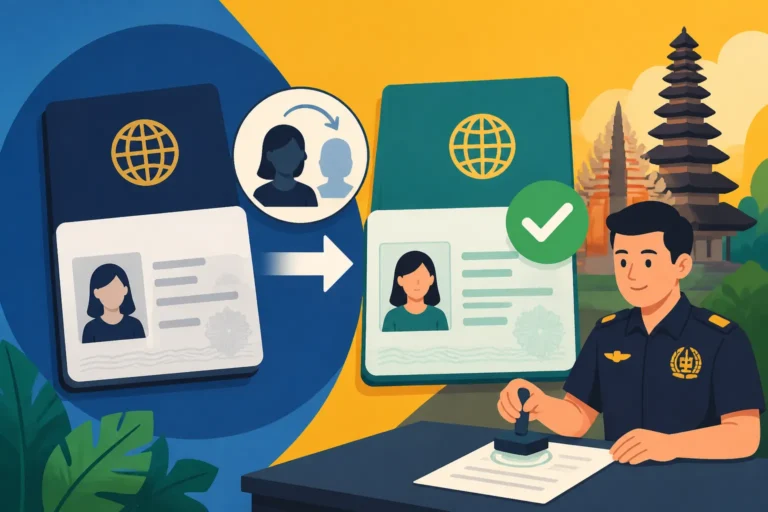
Switching from a Tourist Visa to an E33G Remote Worker Visa
Many expats arrive in Bali or Jakarta on a standard 30-day visa, only to realize within a week that they never want to leave. I remember that sinking feeling well—sitting in a humid cafe, looking at my expiring entry stamp, and wondering if I’d have to fly to Singapore just to keep my laptop open. This guide solves the stress of the "visa run" by detailing exactly how to transition from a temporary tourist status to the much-coveted E33G Remote Worker Visa.
The Reality of the Digital Nomad Life on a Tourist Visa
For years, foreigners in Indonesia operated in a legal gray area. We would enter on a Visa on Arrival (VoA) and B211A Tourist Visas: What You Can and Cannot Do and try to stay under the radar. But as someone who has dealt with the sudden "razia" (inspections) at co-working spaces, I can tell you that the stress of being "just a tourist" while managing a global career is exhausting. The E33G Remote Worker Visa was designed specifically to end this anxiety, offering a legal pathway for those employed by companies outside of Indonesia.
The Limitations of Your Current Tourist Entry
If you entered using a standard VoA, your time is strictly limited to 30 or 60 days. While platforms like iVisa make getting these initial entries seamless, they are not designed for long-term residency. A tourist visa does not grant you a NIK (National Identification Number) or the ability to easily open a local bank account. More importantly, it doesn’t provide the peace of mind that comes with a formal stay permit. When you are on a tourist visa, you are a guest; when you have an E33G, you are a resident.
Why the E33G is the Correct Solution
The E33G is often referred to as the "Digital Nomad Visa," but its official classification is for remote workers. Unlike the KITAS Explained: Working, Dependent, and Investor Temporary Stay Permits, the E33G doesn't require you to have a local Indonesian company as your sponsor. This is a massive win. It means you don't have to deal with the complexities of the Employer Sponsorship: Navigating the RPTKA and Work Permit Process because your income comes from abroad. Switching to this visa allows you to stop looking over your shoulder and start focusing on your work.
Eligibility and Documentation for the E33G Transition
Transitioning from a tourist entry to an E33G is not just about filling out a form; it is about proving your economic value and stability. Since you are already in the country, you need to ensure your paperwork is impeccable to avoid being told you must leave and re-enter.
The $60,000 Annual Income Requirement
The biggest hurdle for many is the income threshold. Immigration requires proof that you earn at least $60,000 USD per year. They are very specific about how this is documented. You will need your employment contract and at least three months of bank statements showing your salary deposits. If your contract is not in English or Indonesian, you should use a service like RushTranslate to provide a certified translation that Indonesian officials will accept. I have seen applications rejected simply because a bank statement was in a language the officer couldn't verify.
Health Insurance and Financial Solvency
Beyond your salary, you must show a bank balance of at least $2,000 USD to prove you can support yourself locally. Additionally, while not always strictly enforced at the initial upload, having comprehensive health insurance is a cornerstone of responsible expat life here. I highly recommend looking into Cigna Global for coverage that meets the standards immigration expects for long-term residents. Being caught without insurance during a medical emergency in a foreign country is a nightmare you want to avoid, especially when trying to prove you are a "high-quality" resident.
Remote Worker Visa E33G Checklist
- A passport valid for at least 6 months.
- Proof of income ($60,000+ USD per year).
- Employment contract with a company outside Indonesia.
- Recent color photograph (passport style).
- Proof of a $2,000 USD balance in your personal account.
The Step-by-Step Transition Process Onshore
The beauty of the current system is the "Molina" (Modul Lalu Lintas Manusia) portal. In the old days, we had to spend hours at the KanIm (Immigration Office), but much of this has moved online. However, doing this while already in Indonesia (onshore) requires a specific sequence of events.
Initiating the Switch on the Molina Portal
You will need to create an account on the official immigration website. If you used iVisa for your initial entry, you might already be familiar with how these digital interfaces work. You must select the E33G category and upload your documents. The system will then generate a billing code (billing code). Paying this fee promptly is critical. You can pay via local bank transfer or even at some "Minimarkets" if you have a local bank account already set up.
The Physical Appointment at KanIm
Even though the application starts online, you will eventually need to visit your local immigration office for "biometrics"—this means photos and fingerprints. Whether you are at the Ngurah Rai Immigration Office Guide: Dress Codes and Queue Tips or in South Jakarta, the process is the same. You’ll receive a notification to come in. My advice? Wear a shirt with a collar, avoid flip-flops, and arrive 30 minutes early. Showing respect for the local bureaucracy goes a long way in making the process smoother.
Receiving Your Digital ITAS
Once the biometrics are done, your Remote Worker Visa (E33G): Digital Nomad Requirements and Limitations will be processed. You will receive an electronic ITAS (e-ITAS) via email. This digital document is your lifeline. It’s what you’ll show if you’re ever asked for your papers, and it’s the key to getting your KTP WNA (Foreigner ID Card): Why Banks Will Ask You For It.
Comparison Table: Tourist Visa vs. E33G Remote Worker Visa
| Feature | Tourist Visa (VoA / B211A) | E33G Remote Worker Visa |
|---|---|---|
| Validity | 30 – 60 Days | 1 Year (Renewable) |
| Work Rights | Strictly No Work Allowed | Remote Work for Foreign Firms |
| Local ID (NIK) | No | Yes |
| Bank Account Access | Limited / Hard to Open | Full Access to Local Banks |
| Exit/Re-entry | Single Entry (usually) | Multiple Entry (MERP included) |
| Income Proof | Generally Not Required | $60,000 USD / Year Required |
| Health Insurance | Recommended | Mandatory for Residency Mindset |
Navigating Common Pitfalls and Compliance
The transition doesn't end when you get the visa. Living in Indonesia as a resident brings new responsibilities that you didn't have as a tourist. If you ignore these, your next renewal will be a struggle.
Tax Implications and the 183-Day Rule
One of the most misunderstood aspects of the E33G is taxation. Once you spend more than 183 days in Indonesia within a 12-month period, you are technically a tax resident. For a deeper dive, you should read Digital Nomad Taxes: E33G Visa Holders and Indonesian Tax Obligations. While your income comes from abroad, Indonesia has specific rules about reporting. Staying compliant is essential if you ever plan to upgrade to a KITAP (Permanent Stay): Eligibility, 5-Year Validity, and How to Upgrade in the future.
Reporting Your Domicile
As a tourist, the hotel handles your reporting via the "Sistem Informasi Pendataan Orang Asing" (SIPO). As a resident on an E33G, you are responsible for your own Surat Domisili (Domicile Letter): How to Get it from the Village Head. If you move from a villa in Canggu to an apartment in Jakarta, you must notify immigration. I have seen people get fined because they moved house and didn't update their address on their ITAS. It seems like a small detail, but in Indonesia, the paperwork must match the reality of your life.
The Role of Professional Support
While you can do this alone, many expats prefer to use a "Biro Jasa" (agent). An agent can help you navigate the Molina System: How to Apply Online Without Visiting an Embassy effectively. If you choose this route, ensure they are reputable. Using a service like RushTranslate for your legal documents and ensuring your health coverage is through a global leader like Cigna Global will make any agent's job much easier and reduce the risk of your application being flagged for "low-quality" documentation.
Managing the Transition Timeline
Timing is everything when you are switching visas. If you wait until your tourist visa has only two days left, you are going to have a bad time. You will likely face Overstaying Your Visa in Indonesia: IDR 1,000,000 Daily Fines and Deportation Risk, which is an expensive and stressful way to start your residency.
When to Start the Application
I recommend starting the E33G application process at least 14 to 21 days before your current tourist visa expires. This gives you enough buffer for the "pending payment" status on the Molina portal or any requests for additional documents. If your tourist visa expires while the E33G is "in process," you are generally in a safe zone, but you must have the proof of application and payment ready to show any immigration officer.
The Multiple Exit Re-Entry Permit (MERP)
One of the best "hidden" benefits of the E33G is that it comes with a Multiple Exit Re-Entry Permit. As a tourist, if you left the country, your visa was often cancelled (unless you had a specific multiple-entry B211A). With the E33G, you can fly to Singapore for a weekend or head home for the holidays without worrying about your visa status. Just make sure you understand the Exit Permit Only (EPO) vs ERP: Closing Your Visa Before Leaving Indonesia protocols for when you eventually decide to leave for good.
Final Thoughts on Making the Move Permanent
Switching from a tourist visa to an E33G Remote Worker Visa is a significant milestone in your expat journey. It represents a move from being a "visitor" to being a "contributor" to the local economy. It allows you to rent a house for a year, buy a scooter legally, and truly settle into the rhythm of Indonesian life. By following the steps in this guide, maintaining your Immigration Compliance: Address Changes, EPOs, overstays, and Reporting, and ensuring your paperwork is translated and insured correctly, you’ll find that the "Administrative Hurdles" of Indonesia are much easier to clear.
Disclaimer
This guide is for informational purposes only and does not constitute legal or immigration advice. Indonesian visa regulations, including those for the E33G Remote Worker Visa, are subject to frequent change without notice. Always verify the latest requirements with the official Directorate General of Immigration (Direktorat Jenderal Imigrasi) or a certified legal professional before making travel or residency plans. Individual experiences may vary based on specific circumstances and the discretion of local immigration officers.