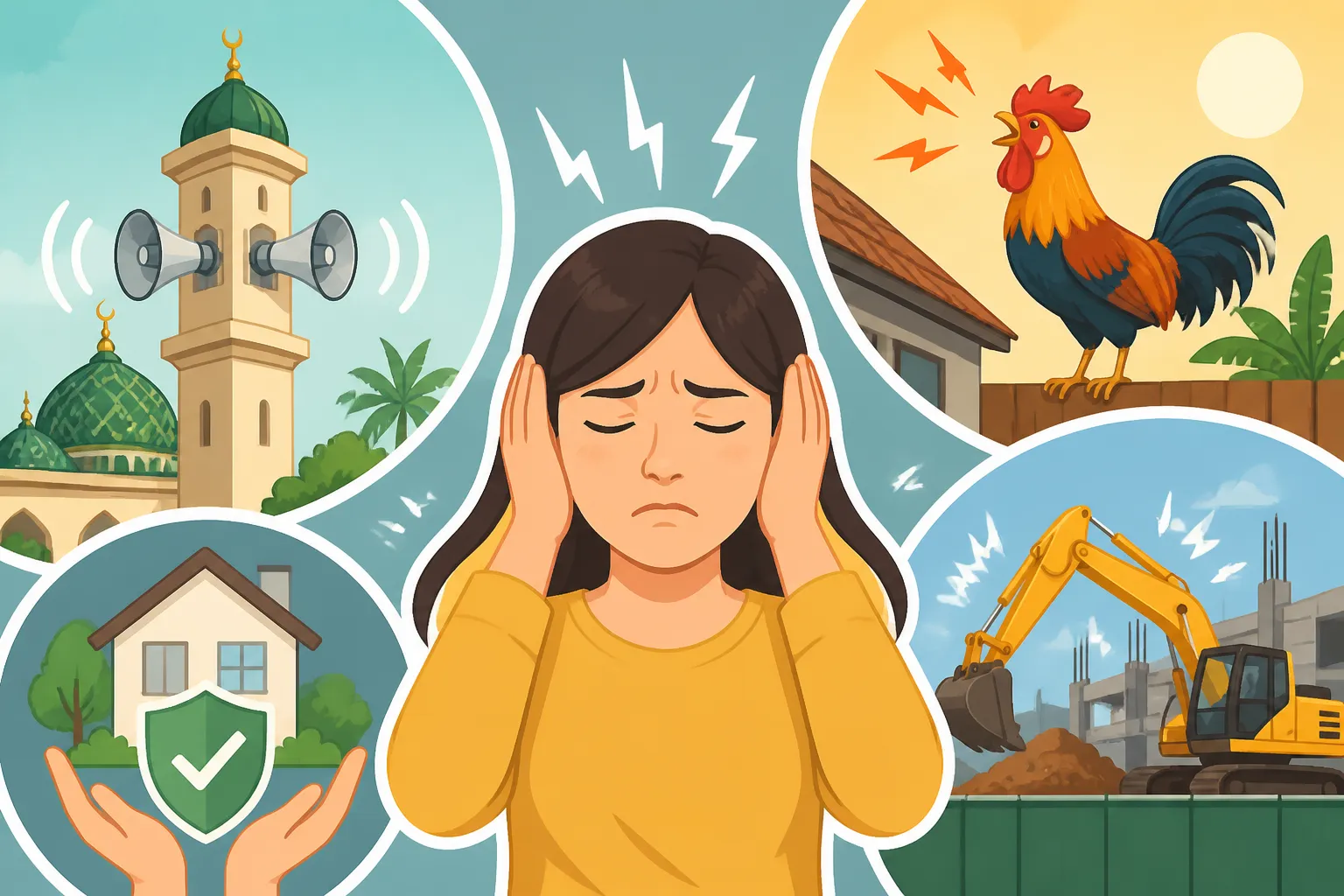
Dealing with Neighborhood Noise: Mosques, Roosters, and Construction Etiquette
Living in Indonesia is a dream until the 4 AM call to prayer hits your bedroom wall like a physical force. I remember my first week in Jakarta, staring at the ceiling in the pre-dawn darkness, wondering if I would ever experience a full night of sleep again. This guide solves the noise dilemma by providing deep cultural context and practical survival strategies for the sensory overload of Indonesian neighborhoods.
The Cultural Context of Rame
In the West, we often view silence as a luxury or a basic right. In Indonesia, the prevailing cultural concept is often the opposite: "Rame." This word translates to bustling, lively, or crowded, and for many Indonesians, a "rame" atmosphere is a sign of a healthy, vibrant community. Silence can sometimes be perceived as lonely or even auspiciously "kosong" (empty). Understanding this shift in perspective is the first step toward maintaining your sanity.
When you are Living in Indonesia as an Expat: The Complete Starter Guide (2027), you quickly realize that the acoustic boundaries of your home are much thinner than back home. Whether you are in a high-end villa in Canggu or a leafy suburb in South Jakarta, the sounds of the neighborhood will find their way in. It is not just about the volume; it is about the constant presence of human and animal activity. This is not a lack of consideration by your neighbors; it is simply the rhythm of life in a communal society where the "private bubble" is a foreign concept.
Navigating the Religious Soundscape
The most prominent feature of the Indonesian auditory experience is the Azan, or the call to prayer. Since Indonesia is home to the world’s largest Muslim population, mosques (Mesjid) and smaller prayer rooms (Mushola) are everywhere. The call occurs five times a day, with the Fajr (dawn) prayer being the most challenging for newcomers.
The Dawn Call and Beyond
The Fajr call usually happens between 4:00 AM and 5:00 AM, depending on the time of year. It is important to know that it is not just a three-minute call. Many mosques broadcast the "Pengajian" (pre-dawn chanting or Quranic reading) for thirty minutes before the actual Azan. If you are sensitive to sound, your choice of residence is critical. Before signing a lease, as detailed in Renting in Indonesia: The 1-Year Upfront Rule, Contracts, and Avoiding Scams, you must visit the property at 4:30 AM.
If you find yourself living next to a particularly enthusiastic mosque, the worst thing you can do is storm over and complain. In Indonesian culture, religious sounds are protected by a deep social contract. Complaining directly can lead to significant friction with the community and, in rare, extreme cases, legal trouble under blasphemy or social disharmony laws. Instead, focus on what you can control: your environment. Investing in high-quality earplugs or a white noise machine from Shopee is a standard expat rite of passage.
Ceremonies and Gamelan
In Hindu-majority Bali, the noise takes a different form. You will encounter frequent temple ceremonies involving the Gamelan—a traditional percussion orchestra. These sounds are beautiful but can be incredibly loud and go on late into the evening. Unlike the predictable Azan, Balinese ceremonies follow a complex lunar calendar. You might find your street blocked by a procession and the air filled with bells and gongs for three days straight.
Adapting to this requires a shift in mindset. Instead of seeing it as a disturbance, try to see it as a free cultural performance. However, for those days when you truly need quiet for a Zoom call or a headache, knowing the schedule is helpful. You can check the Understanding the Balinese Calendar: Nyepi (Day of Silence) Rules for Expats to get a sense of when the major (and loudest) festivals occur throughout the year.
The Animal Kingdom in Your Backyard
If you thought the city was loud, wait until you move to a "quiet" tropical village. The wildlife and livestock in Indonesia do not adhere to a 9-to-5 schedule.
The 2 AM Rooster
The Indonesian rooster (Ayam Kampung) is a biological anomaly that appears to crow whenever it feels like it, often starting around 2:00 AM. Many locals keep chickens in their backyards, even in relatively urban areas of Jakarta. There is no zoning law that will save you from a neighbor’s rooster.
This is where your relationship with the local community leaders becomes vital. If a neighbor’s animals are genuinely encroaching on your property or causing an exceptional nuisance, you don't go to the neighbor first. You speak with the head of the Rukun Tetangga (RT) / Rukun Warga (RW): Registering with the Local Village Chief. The RT is the neighborhood mediator. A veteran expat knows that a small gift of fruit or cakes to the RT head goes a long way when you eventually need to ask for help with a "rooster situation."
Street Dogs and Geckos
In Bali, street dogs (Anjing Kampung) can form midnight choirs that echo through the rice paddies. While individual barking is one thing, the communal howling can be piercing. Additionally, you will likely share your home with the Tokay gecko. This large lizard makes a startlingly loud "To-Kay!" sound that can reach 70-80 decibels. It’s a shock the first time it happens in your bedroom at midnight, but locals consider them good luck. If you can’t handle the geckos, you might prefer Apartment vs Landed House (Rumah Tapak): Pros and Cons for Expats, as high-rise apartments tend to have fewer reptilian roommates.
Construction Etiquette and the Jam Karet Factor
Indonesia is a nation in a constant state of "renovasi." Because labor is relatively affordable, many homeowners are perpetually adding a second floor, fixing a roof, or tiling a pool.
Understanding Working Hours
Construction in Indonesia often starts early—around 7:00 AM or 8:00 AM—to beat the midday heat. It usually wraps up by 4:00 PM or 5:00 PM. However, "Jam Karet" (rubber time) applies here too. If a pour of concrete needs to be finished, the crew might work until 10:00 PM.
The etiquette here is subtle. If you are the one doing the construction, it is customary to inform your neighbors beforehand. In some neighborhoods, it’s even common to provide a small "money for coffee" or snacks to the immediate neighbors to apologize for the coming noise. If your neighbor is the one building, a polite inquiry to the "Tukang" (foreman) about the expected duration of the loudest phase is acceptable. If the noise violates the quiet hours of a managed complex, you should contact the building management rather than the workers directly.
Finding Quiet Zones
If you are a digital nomad or someone who works from home, construction noise can be a dealbreaker. Before you commit to a long-term villa, use Agoda to book a few nights in the exact neighborhood you are considering. Spend your days there with a laptop. Use an Airalo eSIM to ensure you have a constant connection while you test the "acoustic footprint" of the area at different times of the day. A place that is silent at 2:00 PM might be a construction zone at 8:00 AM.
| Noise Source | Typical Time | Volume Level | Expat Survival Strategy |
|---|---|---|---|
| Azan (Call to Prayer) | 4 AM, 12 PM, 3 PM, 6 PM, 7 PM | Very High | Soundproof windows and white noise |
| Roosters | 2 AM – 7 AM | High/Intermittent | Earplugs and heavy curtains |
| Construction | 8 AM – 5 PM | Sustained/High | Noise-canceling headphones (Sony/Bose) |
| Street Vendors | 10 AM – 9 PM | Moderate/Musical | Embrace the convenience of food at your door |
| Temple Ceremonies | Variable (Lunar) | High/Festive | Join the celebration or head to a mall |
The Symphony of Street Vendors
One of the most unique sounds of an Indonesian neighborhood is the "Tok-Tok" or "Ting-Ting" of the street vendors (Kaki Lima). Each type of food has its own specific sound. The Bakso (meatball soup) man hits a wooden block. The Sate man might use a bell. The Bread man has a distinct horn.
For a new expat, this can feel like a constant interruption. However, most veterans grow to love this. It is the sound of convenience. If you are hungry, you simply step outside and your meal is ready for a dollar. If you are trying to sleep or record a podcast, however, it’s a different story. These vendors are part of the informal economy and have been patrolling these streets for decades. You cannot ask them to stop making noise; it is how they earn their living. This is part of the charm and the frustration of Bali Neighborhoods: Seminyak, Canggu, Sanur, Ubud, and the Bukit or the busy streets of Surabaya.
Practical Noise Mitigation for Your Home
Since you cannot change the neighborhood, you must change your house. Most Indonesian houses are built with single-pane glass and ventilated gaps above the doors (ventilasi), which are essentially "noise highways."
Architectural Fixes
- Seal the Gaps: Use rubber weather stripping from Shopee to seal the gaps around your doors and windows. This is the single most effective way to reduce incoming sound.
- Double Glazing: If you own your home or have a long-term lease in a place like Where to Live in Jakarta: Neighborhood Guide for Expat Families and Singles, consider installing double-glazed windows. It’s an investment, but it can reduce noise by up to 70%.
- Heavy Drapes: Use "blackout" curtains with a heavy thermal lining. The density of the fabric helps absorb high-frequency sounds like roosters and bells.
- Acoustic Foam: If you have a dedicated home office, adding acoustic panels can stop the "echo" effect that makes external noise feel louder inside.
Technological Fixes
Never underestimate the power of a dedicated white noise machine. While phone apps work, a standalone machine with a deep "brown noise" setting can effectively mask the low-frequency thumping of a nearby mosque speaker. Additionally, keep a pair of high-quality noise-canceling headphones charged at all times. When the neighbor starts their karaoke session (a common weekend occurrence), you will be glad you have them.
When and How to Complain
There is a right way and a wrong way to handle noise disputes in Indonesia. The wrong way is to lose your temper (marah). In Indonesia, "losing face" by shouting or being aggressive will almost always result in the other person digging their heels in or the community turning against you.
If the noise is truly excessive—say, a neighbor hosting a loud party until 3:00 AM on a Tuesday—the correct path is "Musyawarah," or communal discussion. You go to your RT head. Explain the situation calmly. "Pak, I have work early in the morning and the music is very loud, I am having trouble." The RT head will then be the one to go to the neighbor. This removes the direct conflict between you and the neighbor and puts the "authority" of the community in charge.
This is especially important in Where to Live in Bali: Canggu, Sanur, Ubud, and the Bukit, where the "Banjars" (local community councils) have significant power. Respecting their hierarchy is the key to a peaceful life.
Conclusion: Finding Your Zen in the Chaos
Living in Indonesia requires a degree of "Pasrah"—a sense of surrender to things you cannot change. The noise is a manifestation of the country’s energy, its religious devotion, and its tight-knit communal life. While the 4:00 AM wake-up call is never truly pleasant, you will eventually find that the silence of a Western suburb feels strangely lonely after a few years in the "rame" of Indonesia.
By choosing your location wisely using resources like the Jakarta Healthcare Guide for Expats: International Clinics and After-Hours Options to ensure you're near quiet zones, and by arming yourself with the right gear from Shopee, you can create a sanctuary within the soundscape. Acceptance is the final piece of the puzzle. Once you stop fighting the sound, you can start hearing the music of the culture.
Disclaimer
This guide is intended for informational purposes only. Local laws, community regulations, and social norms regarding noise and neighborhood conduct can vary significantly across different regions of Indonesia. Always consult with your local RT/RW or property management for specific rules governing your area. Global expat experiences are subjective and your personal situation may differ.