How to Spot WhatsApp Phishing and Local E-Commerce Delivery Scams
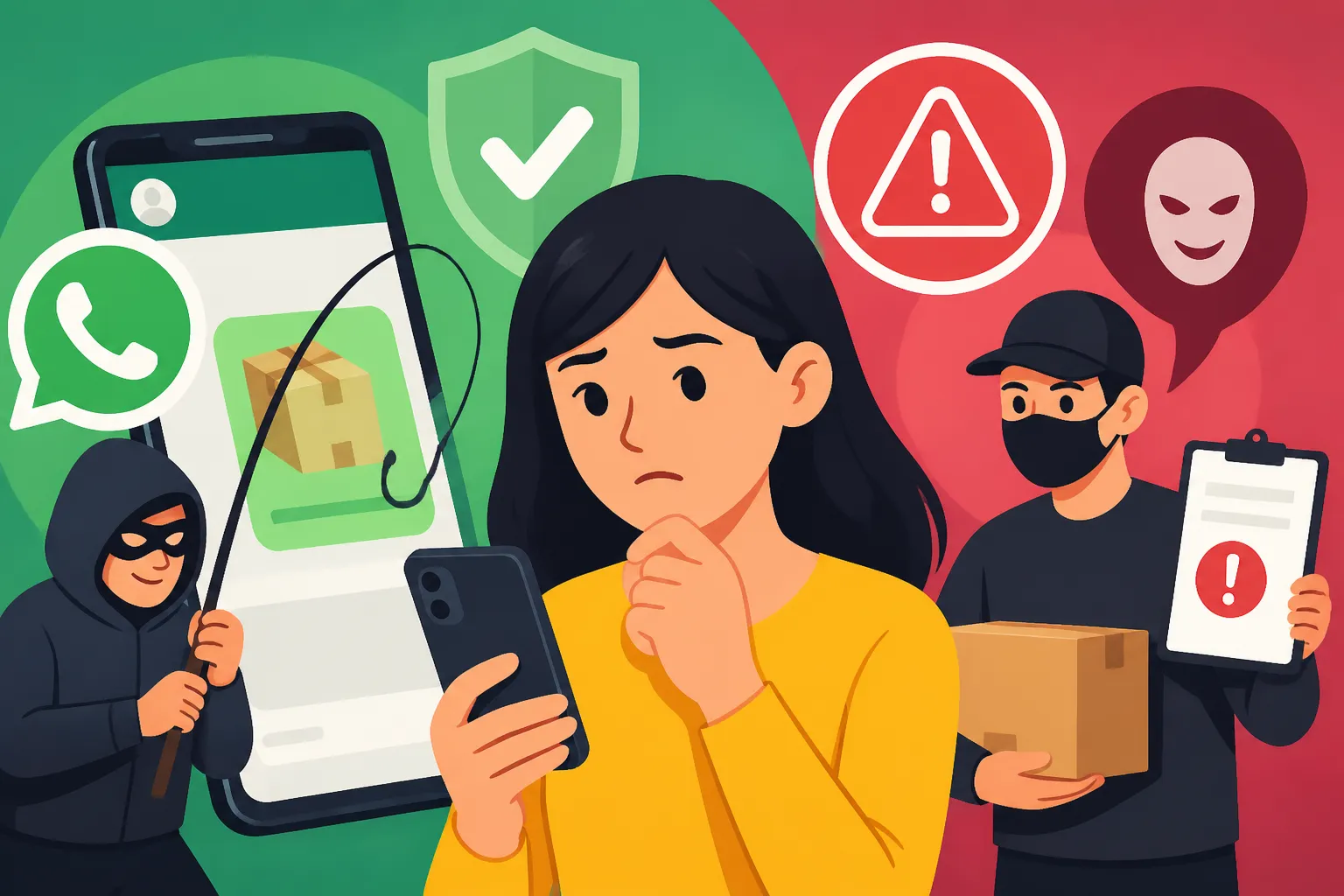
You are sitting in the back of a Bluebird taxi, stuck in the legendary Jakarta macet, and your phone pings with a WhatsApp message from an unknown number. I once nearly clicked a suspicious "shipping invoice" file during my first month in Bali simply because I was expecting a delivery and didn't want to seem rude to the courier. This guide solves the mystery of Indonesian digital fraud, helping you identify WhatsApp phishing and e-commerce delivery scams before they compromise your bank account.
The Psychological Trap of Indonesian Courier Culture
In Indonesia, the relationship between a resident and their courier (kurir) is remarkably personal. Unlike in many Western countries where a package is simply dropped at the door, Indonesian logistics often involve a back-and-forth conversation on WhatsApp. Couriers will frequently message you to ask for a "share location," a photo of your house, or to notify you that they are leaving the package with your security guard (satpam). This culture of constant communication creates a massive vulnerability that scammers exploit with surgical precision.
As an expat, you likely rely heavily on apps like Shopee for everything from imported snacks to home office supplies. Because we are often waiting for multiple packages, a message saying "Pak/Bu, your package has arrived, please check the attachment" feels completely normal. Scammers use this familiarity to bypass your natural defenses. They adopt the polite, service-oriented tone typical of Indonesian logistics staff, using formal greetings like "Selamat Siang" and addressing you as "Kak" or "Boss." This social engineering is designed to make you feel like you are dealing with a hardworking local employee rather than a digital predator.
The pressure to respond quickly is another factor. In a country where the "fast-paced" nature of e-commerce is celebrated, we often feel the need to clear our notifications immediately. When you combine this with the general anxiety of navigating a new country, it is easy to see why so many foreign residents fall for these traps. Understanding this cultural context is the first step in building your digital "fortress" in Indonesia. To further secure your physical and digital surroundings, you should also review Safety 101: Petty Theft, ATM Skimming, and Home Security in Indonesia to ensure your overall protection is comprehensive.
The Infamous APK Malicious File Scam Explained
The most dangerous scam currently circulating in Indonesia is the APK (Android Package Kit) scam, often disguised as a "Kurir Paket" (Package Courier) message. The attacker sends a message claiming there is an issue with your delivery and attaches a file that looks like a photo or a PDF. However, if you look closely at the file extension, it ends in .apk. This is not a document; it is an application file designed to install malware on your smartphone.
Once you click and install this file, the malware gains permission to read your SMS messages. This is the "holy grail" for scammers in Indonesia because almost all local banks and e-wallets use SMS-based One-Time Passwords (OTP) for transaction verification. The attacker can then trigger a "forgot password" request on your banking app, intercept the OTP via the malware, and drain your accounts in minutes. I have seen savvy professionals lose years of savings because they thought they were simply downloading a digital receipt.
Identifying a malicious file attachment requires a disciplined eye. Legitimate couriers from companies like J&T, JNE, or Sicepat will never send you an application file to track a package. They will provide a tracking number (resi) that you can enter on their official website or app. If you receive any file ending in .apk, .bin, or .exe on WhatsApp, it is a scam. Even if it has a PDF icon, check the file name carefully. If you are ever in doubt about the legitimacy of a delivery service, consult our guide on Navigating Gojek and Grab: Food Delivery, Transport, and Package Courier for a better understanding of how official logistics apps operate in the country.
E-Commerce Frauds on Shopee and Other Platforms
While the platforms themselves are generally secure, scammers often use Shopee to lure victims into "off-platform" transactions. The scam usually begins when you see an item—often a high-end electronics piece or a designer bag—listed at a price that seems too good to be true. After you place the order or send an inquiry, the seller will message you on WhatsApp, claiming there is a problem with the system or offering a "special discount" if you pay via a direct bank transfer instead of through the app's secure payment gateway.
This is a massive red flag. The moment you move the transaction away from the official app, you lose all buyer protection. The seller will often send a fake "official" screenshot or a forged invoice to prove their legitimacy. They might even use a business profile on WhatsApp to look professional. Once the money is transferred, the seller disappears, and the account on the platform is deleted. Always remember that legitimate sellers on major platforms will never ask you to pay outside the app's ecosystem.
Another common tactic is the "Cash on Delivery" (COD) trap. You might receive a package you never ordered, with a courier demanding a significant amount of cash. The package often contains low-value items like a cheap t-shirt or even pieces of cardboard. Scammers obtain your address and phone number from leaked databases and bet on the fact that you (or your household staff) might pay for the package without checking its contents or origin. If you have helpers at home, it is vital to educate them on your Everyday Etiquette: Religion, Culture, Garbage, and Community Norms and specifically instruct them never to pay for a COD package unless you have explicitly authorized it.
Recognizing Phishing Red Flags and Technical Indicators
Scammers are getting better at mimicking official communications, but they almost always leave "digital breadcrumbs." One of the most obvious signs is the phone number. Official corporate accounts in Indonesia usually have a verified green checkmark next to their name on WhatsApp. While this can be faked in some sophisticated cases, a lack of a checkmark on a message claiming to be from "Bank Mandiri" or "Shopee Customer Service" is a dead giveaway. Furthermore, check the country code. If you receive a message about an Indonesian delivery from a +234 or +1 number, delete it immediately.
The language used in phishing messages often contains subtle errors. While the scammers use templates, they occasionally mix up formal and informal Indonesian or use awkward phrasing that a native professional wouldn't use. For example, they might use "Anda" (formal) in one sentence and "Kamu" (informal) in the next. They also use high-pressure tactics, such as "Your account will be blocked in 2 hours if you don't verify." This sense of urgency is a hallmark of a scam.
When you are traveling or recently arrived, you might be using an eSIM from a provider like Airalo to stay connected while sorting out your local Phones and Tech: IMEI Registration, SIM Cards, and Duty Tax Explained. Using a dedicated data line can sometimes shield you from the initial wave of local "spam" messages that often hit new local SIM cards. However, once you have an Indonesian number, your data is likely to end up in a marketing database. Being aware of how your data is shared is crucial for long-term digital safety.
| Feature | Legitimate Courier/Service | Phishing/Scam Message |
|---|---|---|
| Sender Number | Often a short-code or verified business account | Standard +62 or foreign personal mobile number |
| File Attachments | Links to official websites or simple JPG photos | .APK, .BIN, or suspicious "Document" files |
| Tone | Informational and professional | Urgent, threatening, or overly persistent |
| Action Required | Check app or provide "Share Loc" | Click a link, install a file, or give an OTP |
| Payment Request | Handled via the official platform/app | Direct bank transfer or "outside the app" payment |
Agoda and Travel-Related Booking Scams
Phishing isn't limited to physical packages; your travel plans are also a target. Many expats use Agoda to book weekend getaways to Bali or Labuan Bajo. Scammers have been known to send WhatsApp messages or emails that look like "Booking Confirmations" or "Payment Failures." They might claim that your credit card was rejected and provide a link to a "secure portal" to re-enter your details.
These portals are designed to look identical to the real booking site. Once you enter your card information, the attackers have your full details, including your CVV. I always recommend that instead of clicking any link in a message, you should open the Agoda app directly or type the website address into your browser. If there is a real issue with your booking, it will be clearly flagged within your account dashboard on the official platform.
The same applies to airline bookings. With the frequent "Cuti Bersama" (long weekends) in Indonesia, travel demand is high, and so is the volume of travel-related scams. Be particularly wary of messages offering "Exclusive Vouchers" or "Flash Sales" that require you to log in with your social media or banking credentials. These are often "credential harvesting" schemes meant to take over your digital identity. If you are managing your finances through Digital Banking and E-Wallets: How to Register for GoPay, OVO, and Dana, any compromise of your phone’s security can lead to unauthorized access to your funds.
Damage Control: What to Do if You’ve Been Compromised
If you realize you have clicked a link or installed a suspicious file, the first thing to do is to disconnect your phone from the internet. Turn on Airplane Mode immediately. This prevents the malware from communicating with the attacker's server or sending out your data. If you have installed an APK, you should ideally factory reset your phone after backing up essential photos (manually, via cable to a computer) to ensure the malware is completely removed.
The next step is to contact your bank. You must freeze your accounts and report the incident. In Indonesia, you can also report scam numbers to the authorities via the website "Patrolisiber.id" or by texting the suspicious number and the scam details to the service provided by the BRTI. Keeping your Opening a Bank Account in Indonesia: Document Checklists (KITAS, NPWP, Passport) paperwork handy is helpful when you need to verify your identity with the bank’s fraud department during this process.
Finally, change every password associated with your device, starting with your primary email and banking apps. Enable Two-Factor Authentication (2FA) using an authenticator app (like Google Authenticator) rather than SMS-based OTP whenever possible, as malware cannot easily intercept the codes generated within a secure app. Living in Indonesia is an incredible adventure, but it requires a "security-first" mindset. By staying skeptical and verifying every request for data or payment, you can enjoy the convenience of the country's digital economy without becoming a statistic.
Disclaimer
The information provided in this guide is for educational purposes only and reflects the digital security landscape in Indonesia as of 2026. While every effort has been made to ensure accuracy, scammers constantly evolve their tactics. Readers are encouraged to consult with professional cybersecurity experts and their respective financial institutions for specific security advice and to remain updated on the latest official warnings from the Indonesian government.