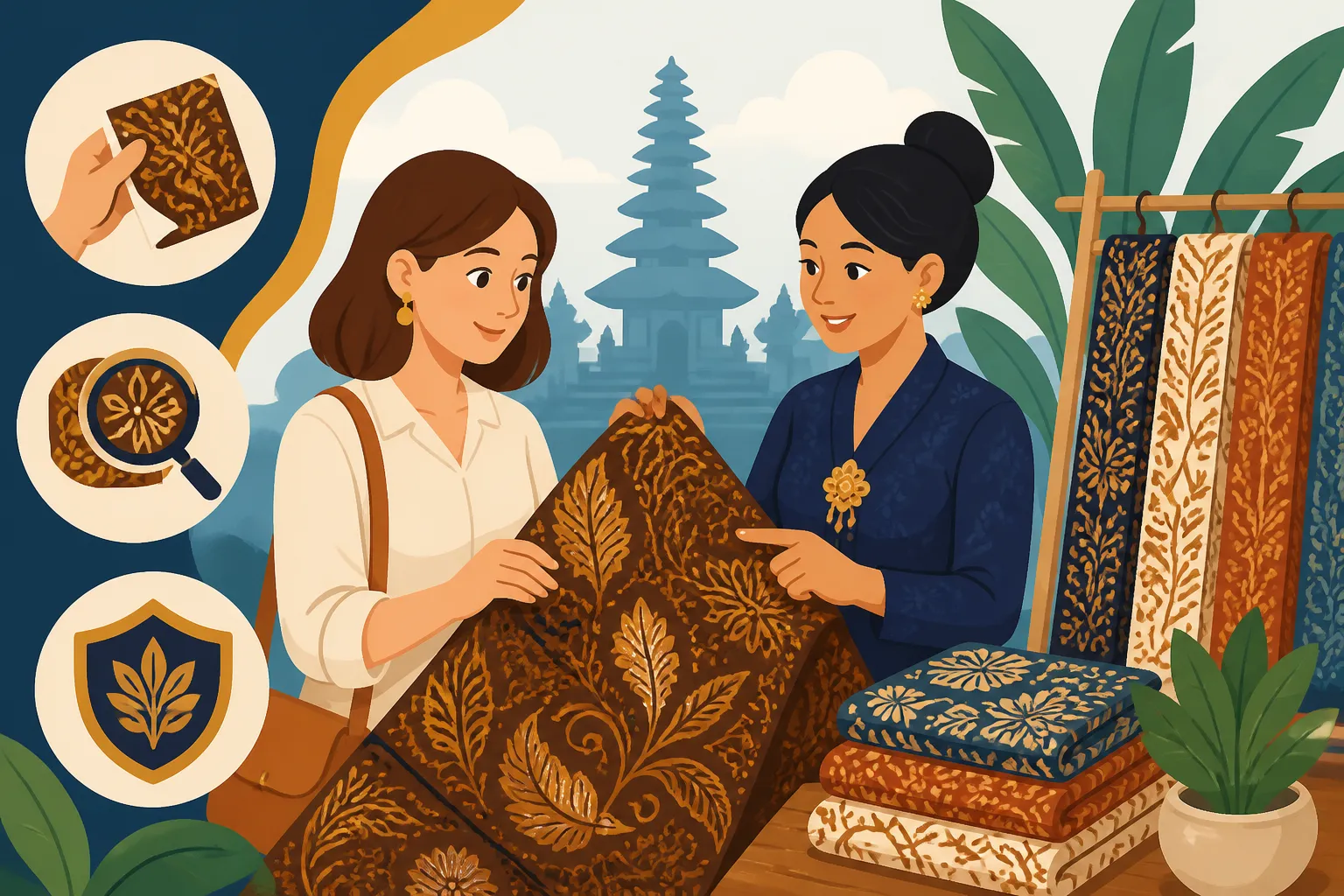
Purchasing Authentic Indonesian Batik: A Guide for Expats
Walking into a sprawling Indonesian textile market for the first time is an assault on the senses that often leaves expats clutching a "batik" shirt that is actually just cheap screen-printed polyester. I remember my first month in Jakarta, proudly wearing a bright pattern to a gala, only to have a local friend kindly explain I was essentially wearing the textile equivalent of a photocopy. This guide solves the complex mystery of identifying, sourcing, and respecting authentic Indonesian batik so you can invest in heritage pieces rather than fast-fashion imitations.
Understanding the Craft Hand-Drawn versus Stamped
When you first start exploring Indonesian textiles, the word batik is thrown around casually by every vendor from Tanah Abang to the boutiques of Seminyak. However, true batik is not a pattern; it is a process. The word itself comes from "amba" (to write) and "titik" (dot). To be authentic, the fabric must have undergone a wax-resist dyeing process. If the pattern was simply printed onto the fabric by a machine without the use of hot wax, it is technically "textile with a batik motif," not actual batik. As you navigate Everyday Etiquette: Religion, Culture, Garbage, and Community Norms, understanding this distinction is the first step toward cultural literacy.
Batik Tulis The Masterpiece of Patience
Batik Tulis is the pinnacle of the art form. "Tulis" means "written," and these pieces are created by an artisan using a canting—a small copper tool filled with hot, liquid wax—to draw intricate designs by hand on both sides of the fabric. I’ve sat in workshops in Yogyakarta watching women spend three months on a single piece of silk. Because it is hand-drawn, no two lines are perfectly identical. You will see slight variations in the thickness of the "cecek" (dots) and "lowongan" (lines).
When you find a genuine piece of Tulis, it feels like holding a piece of history. These items are expensive, often starting at several million Rupiah, but they are considered heirlooms. In the expat community, owning a Tulis shirt or scarf is a significant marker of your appreciation for local culture. If you are staying in a cultural hub, you might use Agoda to find a heritage hotel near the "Kampung Batik" areas in Solo or Jogja to see this process firsthand. The smell of the melting wax and the silent focus of the artists is something you won't forget.
Batik Cap The Artisanal Middle Ground
If Tulis is the high-end oil painting, Batik Cap (pronounced "chap") is the high-quality lithograph. This method uses copper stamps dipped in hot wax to apply the pattern. It is much faster than the hand-drawn method but still requires a skilled artisan to align the stamps perfectly across meters of fabric. You can identify Batik Cap by looking for the "seams" where the stamp edges meet; there is usually a slight overlap or a tiny gap that reveals the human hand at work.
For daily office wear or attending a Navigating the Traditional Market (Pasar Tradisional) Early Morning Rush, a Cap shirt is the perfect balance of authenticity and affordability. It is breathable, usually made on high-quality Primissima cotton, and smells faintly of the wax used in the process. Unlike mass-produced prints, the dye in a Cap piece penetrates the fibers, meaning the pattern is almost as vivid on the inside of the shirt as it is on the outside.
The Batik Print Trap
Let’s be honest: 90% of what you see in tourist souvenir shops is Batik Print. This is factory-made fabric where the "batik" design is printed using modern textile machinery. There is no wax involved, no artisanal skill, and often, the fabric is a synthetic blend that doesn't breathe well in the Indonesian humidity. While these are fine for a casual beach cover-up, they are generally avoided by locals and long-term expats for formal events.
You will see thousands of these options on Shopee for the price of a cup of coffee. While Shopee is a fantastic resource for household goods, be very cautious when the price of a "Batik Tulis" shirt seems too good to be true. If it costs 150,000 IDR, it is a print, regardless of what the description says. True authenticity has a floor price that reflects the weeks of labor involved.
Where to Shop for Authenticity
Finding the right place to buy batik depends entirely on your budget and your comfort level with the local "hustle." Jakarta and Bali offer vastly different experiences. In Jakarta, you are looking for specialized malls and textile districts, while in Bali, the focus is often on contemporary "resort batik" that blends traditional wax-resist techniques with modern silhouettes. If you are traveling between cities to find the perfect piece, ensuring your Airalo eSIM is active will help you navigate the backstreets of Solo or Pekalongan without losing your way.
Traditional Markets and the Art of Bargaining
For the adventurous expat, Thamrin City in Jakarta or Pasar Beringharjo in Yogyakarta are the ultimate proving grounds. These markets are labyrinthine, hot, and crowded, but they hold the best treasures. You will find entire floors dedicated to different regions—Sogan batik from Solo with its deep browns and creams, or the vibrant, floral Megamendung patterns from Cirebon.
This is where you must master Tipping and Haggling: Navigating Markets (Pasar) and Service Industries. Never accept the first price in a traditional market. I usually start by offering about 50% of their asking price and settling at 70%. However, be respectful; if you are looking at a genuine Tulis piece, the artisan's labor deserves a fair wage. Always ask, "Ini asli batik atau batik print?" (Is this real batik or a print?). A reputable seller in a market will respect you more for knowing the difference.
Modern Boutiques and Shopping Malls
If the thought of a crowded market makes you break a sweat, Indonesia has incredible high-end boutiques that take the guesswork out of authenticity. Brands like Danar Hadi, Batik Keris, and Iwan Tirta are the gold standards. Walking into a Danar Hadi showroom in Jakarta Neighborhoods: Kemang, SCBD, Pondok Indah, and Menteng is like entering a museum. Every piece is labeled clearly as Tulis, Cap, or Print, and the staff are usually highly trained in the history of the patterns.
In Bali, you might look toward Bali Neighborhoods: Seminyak, Canggu, Sanur, Ubud, and the Bukit for boutiques that specialize in "Batik Gentong" or natural dyes. These shops often feel more like art galleries. While the prices are fixed and higher than in the markets, you are paying for a curated selection and a guarantee of quality. It’s a much more relaxed experience for a newcomer who isn't yet confident in their "fabric feel" skills.
Online Shopping and Digital Verification
Once you know your size and preferred motifs, shopping online becomes a viable option. Many famous artisans now have official stores on Shopee or Instagram. The key here is to look for "Penerus" (successors) of famous batik families. Buying online allows you to compare prices across different regions without leaving your AC.
When buying online, always check the "Penilaian" (reviews). Look for photos posted by other buyers. If the back of the fabric looks white or faded compared to the front, it is a print. Authentic batik should have nearly identical color intensity on both sides. This is a crucial tip that has saved me plenty of money. Navigating these apps is also a great way to practice using Digital Banking and E-Wallets: How to Register for GoPay, OVO, and Dana, which makes the checkout process seamless.
Caring for Your Batik and Integrating into Expat Life
So, you’ve invested in a beautiful piece of hand-stamped or hand-drawn batik. Now comes the hard part: keeping it from fading or shrinking. I’ve seen many expats ruin a $300 silk Tulis shirt by throwing it in the washing machine with their gym clothes. Batik is alive—the dyes, especially natural ones like indigo or soga, are sensitive to chemicals and heat.
Washing and Maintenance Tips
The golden rule of batik care is to never use regular detergent. Standard powders and liquids contain bleach and enzymes that will strip the wax-resist dyes within three washes. Instead, you need "Lerak." This is a traditional soap made from soapnuts. You can find it in small bottles at any batik boutique or on Shopee. It has a distinct, slightly vinegary smell and is incredibly gentle.
Always hand wash your batik in cold water. Do not wring it out harshly; instead, give it a gentle squeeze and hang it to dry in the shade. Never, ever hang your batik in direct Indonesian sunlight, as the UV rays will bleach the colors faster than you can say "terima kasih." If you have a Cost of Living in Jakarta 2026: Rent, Schooling, and Lifestyle Benchmarks that includes a live-in helper, make sure you personally show them how to wash these pieces. Many helpers are used to heavy-duty washing for daily clothes and might accidentally ruin your delicate silks if not instructed.
When to Wear Your Batik
In Indonesia, batik is more than just a shirt; it’s a social passport. You will notice "Batik Friday" is a national tradition where office workers from the SCBD to the smallest government outposts wear their best patterns. As an expat, wearing batik to the office on Friday shows a wonderful level of integration and respect for local norms.
Beyond the office, batik is the standard attire for weddings, funerals, and formal "makan malam" (dinners). If an invitation says "Batik Formal," it means a long-sleeved shirt for men (never tucked in) and a dress or a kebaya/sarong combination for women. Understanding Dressing Modestly: What 'Sopan' Means Outside of Beach Resort Areas is vital here; while a short-sleeved batik shirt is fine for a casual lunch, the long-sleeved version is the equivalent of a suit and tie. If you are in Bali, you might also find yourself wearing specific motifs during Understanding the Impact of Galungan and Kuningan on Daily Life in Bali.
| Feature | Batik Tulis | Batik Cap | Batik Print |
|---|---|---|---|
| Method | Hand-drawn with wax | Copper stamp with wax | Machine-printed ink |
| Uniqueness | 100% unique (minor human errors) | Repetitive but handmade | Perfectly identical patterns |
| Back of Fabric | Same color as the front | Nearly same color as front | Much lighter/white back |
| Scent | Smells of bees wax/malam | Smells of bees wax/malam | Smells of chemicals/ink |
| Price Point | High (IDR 2M – 50M+) | Moderate (IDR 300k – 1.5M) | Low (IDR 50k – 200k) |
| Best For | Weddings, Galas, Heirlooms | Office wear, Formal dinners | Casual beachwear, Pyjamas |
Regional Styles to Look For
As you become more comfortable with your Cost of Living in Bali 2026: Budgeting for Digital Nomads and Retirees, you might start collecting regional styles. Javanese batik is often more conservative and symbolic, with patterns like "Parang" (the machete/slope) once being reserved only for royalty. In contrast, "Batik Pesisir" (coastal batik) from places like Pekalongan is much more colorful and influenced by Chinese, Dutch, and Indian aesthetics.
If you see a pattern with birds, flowers, and bright pinks or blues, it’s likely coastal. If you see geometric, earthy tones of indigo and ochre, it’s likely from the royal courts of Central Java. Learning these stories makes the shopping experience so much more rewarding. It turns a simple transaction into a deep dive into the soul of your host country.
Disclaimer
The information provided in this guide is for educational and informational purposes only. While every effort has been made to ensure the accuracy of the advice regarding textile identification and market practices in Indonesia, the author and publisher are not responsible for any financial losses, counterfeit purchases, or damage to clothing resulting from the use of this information. Always verify the reputation of vendors and test cleaning products on a small, inconspicuous area of fabric first.